Showing posts with label readers. Show all posts

Tuesday, March 31, 2026

New Publications: An A-Z

Allan, Jonathan A. (2026). "Men’s Dress in Popular Romance Novels." The Intellect Handbook of Men’s Fashion. Ed. Ben Barry, Andrew Reilly and José Blanco F. Intellect Books. [This is due to be published on 10 April, 2026. More details about the volume can be found here.]

Bhatta, H. (2026). "To what extent does age-gap romanticization in modern BookTok romance fiction normalize predatory dynamics?. Sudurpaschim Spectrum, 3(1-2), 90–102. [I am not going to provide a direct link to this because I was upset to discover that some of the works cited do not exist/do not exist as cited. I did not check all the works, because I felt I had done enough work to engender doubts about the quality of the research. Details can be found in the entry at the RSDB.]

Clasen, Tricia (2026) "Changing the Scripts: An Overview of Gender and Romance in Young Adult Literature " The Oxford Handbook of Young Adult Literature, Ed. Victor Malo-Juvera and Crag Hill. Oxford: Oxford University Press. 99-112. [Excerpt available here.]
 
Evans, Anne-Marie (2026). "Romancing the First Lady " The First Lady in Contemporary Popular Culture, ed. Anne-Marie Evans and Sarah Trott. New York: Bloomsbury. 113-128. [Links here.]
 
Gow, Alicia Giselle Jeanneta and Friska Dita (2026). "Piper Bellinger as a Round Character in Tessa Bailey’s It Happened One Summer." BLESS: Bilingualism, Language, and Education Studies 6.1:25-31.

Jackson, Nicole M. (2026). "Love in Black and Black: A Brief History of Black Romance." 2026 African American Booklist. Detroit Public Library.

Jones, Cerys (2026). "Romance Readers and the Politics of Literary Taste in Twentieth Century Britain." Plurality 4: 46-53. 

Kamblé, Jayashree (2026). "Recolouring the romcom: humor, respectability, and race in a 1986 American category romance novel." Comedy Studies. Online First. [Abstract here.]
 
Leigh, Alicia (2026). "Romancing the Darkness: Understanding Trauma in the Romance Genre." Journal of Popular Romance Studies.
 
Maji, Susmita (2026) "Critiquing Heteronormativity in Queer Young Adult Fiction of Casey McQuiston’s Red White & Royal Blue." Shodhpatra: International Journal of Science and Humanities 3.3:34-39. 
 
Maranto Hill, Emily (2025). Reading the Romance Reader: Booktok, Algorithmic Subjugation, and the Fight for Cultural LegitimacyMaster of Arts thesis, Old Dominion University.

Miller, Jessica (2026). "Vulnerability and Chronic Illness in Three Contemporary Romance Novels." The Journal of Medical Humanities. [Abstract here.] 
 
Schell, Heather et al (2026). "Defining the Trope in Romance Fiction." Journal of Popular Romance Studies. Online First. 
 
Yulianti, Fiki Indah (2025). "Digital Wattpad Culture In Indonesia: Youth, Romance, And The Changing Practices Of Reading And Writing." Journal of Literary Prose and Society 2.2.
 
Zhang, Yue (2026). "A Semantic and Communicative Translation Analysis of Chapter Eight of The Love Hypothesis." Literature, Language and Cultural Studies 4.3: 104-110. 

Saturday, February 07, 2026

New Publications: Autism, Book Selling, Dark Romance, Ethnicity, Happiness, History, Readers

Bogaert, Anthony F.,  Jessie E. Hernder and , Jessica R. Johnson (2026). "Who “Feels Sexy” in the Google Books Corpus? Text-Mining Evidence for Gender Differences in Object of Desire Self-Consciousness." Archives of Sexual Behavior. [Abstract here.]

Datta, Sreepurna (2026). "Around the world on Amazon: Locating diasporic Indian romance novels published by Harlequin Mills & Boon." Literature, Critique, and Empire Today.

Deane,  Katie (2026). "Dark romance: an introduction." Porn Studies.

Eimannsberger, Angelina (2026). "The Romance Shop Around the Corner: How Women Readers Created a New Kind of Independent Bookstore." The New Americanist 4.1-2.  [Abstract here.] 

Grant, Ania (2025). Evolution, Feminism, and Romantic Fiction: From Mr. Darcy to Mr. Big London: Routledge. [Abstract here.]

Handley-Cousins, Sarah (2026). "Love Is a Battlefield: Civil War Memory in Modern Romance Novels." They Are Dead and Yet They Live: Civil War Memories in a Polarized America. Ed. John M. Kinder and Jennifer M. Murray. Lincoln: University of Nebraska Press. 152-169. [Excerpt here.]

Majidi, Nikki (2026) "Fast Fiction": Booktok, Artificial Intelligence, and the Profit-driven Reinvention of the Romance Genre. Undergraduate Dissertation, California State University, Long Beach.
 

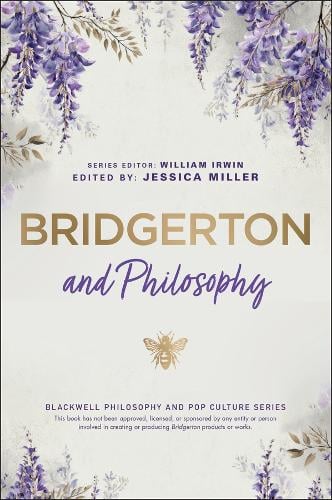
Miller, Jessica (2026). ""I Shall Be Very Happy, Indeed": The Meanings of Happiness in Bridgerton" Bridgerton and Philosophy: Dukes, Debutantes, and Deep Questions . Ed. Jessica Miller. Wiley. [This article is free online. The remained of the volume is not. I have more details about that volume here. It won't be available until March.]
 
Musiał-Pudełko, Aleksandra (2026) "'You and Me and History': Queer Romance and Liberal Fantasy in Casey McQuiston's Red, White & Royal Blue." Erotic Discourses in History, Culture and the Arts. Ed. Aleksandra Musiał-Pudełko, Nina Augustynowicz, Agnieszka Podruczna. New York: Routledge. [Abstract here.]
 
Niebergall, Chelsee M. (2026) "Constructing Hybrid Identities: Cultural Negotiation and Belonging in Uzma Jalaluddin's Ayesha at Last," CLAMANTIS: The MALS Journal: Vol. 17: No. 2, Article 16.
 
 
Segura Candado, Leyre (2025). Love Beyond Conventions: Contemporary Romance and the Representation of Non-Normative Bodies. Undergraduate Dissertation, Universidad de Zaragoza.
 

Monday, October 13, 2025

A very long list of new (and some not so new) publications about romance

The open access journal TEXT dedicated a special issue to romance/romantic fiction, under the subtitle "Trope Actually – Popular Romance" but it wasn't just about romances in the 'central romantic relationship +HEA' sense: there were pieces of short fiction as well as an article on bonkbusters and another on historical fiction. You can find the whole issue here

Here, though, is a list of the articles in it which focus on romance:

Matthews, Amy, Justina Ashman, Millie Heffernan, Payton Hogan, Abby Guy, Harrison Stewart, Kathleen Stanley, Alex Cothren, and Elizabeth Duffield. 2025. “Editorial: Degrees of Love and Trope Actually.” TEXT 29 (Special 75): 1–7.

O’Mahony, Lauren, and Yolandi Botha. 2025. “Reading the Romance in Australia: The Preferences and Practices of Romance Readers from ARRA Survey Data.” TEXT 29 (Special 75): 1–22.

Matthews, Amy, Alex Cothron, and Rachel Hennessy. 2025. “Happily Ever after in the Age of Climate Crisis: The Argument for ‘Cli-Ro.’” TEXT 29 (Special 75): 1–18.

Mulvey, Alexandra, and Hsu-Ming Teo. 2025. “‘You’re a Total Dick Sometimes, but It’s a Tolerable Kind of Dickishness’: Hegemonic Masculinity and Sports Romances.” TEXT 29 (Special 75): 1–20. 

Rouse, Lucy. 2025. “A Real Bad Boy: How Colleen Hoover’s It Ends with Us Exploits Romance Tropes.” TEXT 29 (Special 75): 1–17.

---

Moving on to other new (or at least new to the database) publications: 

Abdul Majid, Amrah (2025). “Faith, Love and Spiritual Growth in Norhafsah Hamid’s Will You Stay? and Will You Love Me?.Akademika 95.2: 319-332.
 
Aprieska, Rizkana and Bayu Kristianto (2025). "Penerjemahan Portmanteau dari Bahasa Inggris ke dalam Bahasa Indonesia dalam Novel Seri The Ravenels 1–4." Linguistik Indonesia 43.2:263-280.
 
Cho, Hyerim, Denice Adkins, Alicia K. Long, and Diogenes Da Silva Santos. "Webtoon Romance Reading and New Ways to Look at Genre Reading." Library Trends 74, no. 1 (2025): 148-169. 
 
Clement, Ella. 2025. “What Women Actually Want: Professions, Prestige, and Desire in Bestselling Fiction.” SocArXiv. [This is a pre-print and I'm not sure of its final destination. It's not all about romance, but there is a significant section which is.]

García-Aguilar, Alberto (2023). "De la novela rosa a la comedia romántica: Mi marido es usted (1938), de Mercedes Ballesteros, y el guion de Volver a soñar (1942), de Claudio de la Torre y José López Rubio." Ogigia. Revista Electrónica De Estudios Hispánicos 33: 97–118. [I know this one isn't very new, but it describes (in Spanish) a plot with a secret baby, in a novel from 1938, and I thought that was worth noting. I've come across an early Mary Burchell with a secret baby too (another one where the protagonists were married at the point the baby was conceived). Anyway, thought that might be of interest if anyone, at some point, decides to look into the history of various types of romance plot.]

Horáčková, Martina (2025). Exploring Romantasy Tropes: Analysis of Ali Hazelwood’s Bride. Bachelor’s thesis, Silesian University in Opava.

Horpestad, Amalie Fogtmann (2025). Beyond Romance: Generic Innovation in Lucinda Riley’s The Seven Sisters Series. Masters thesis, The University of Bergen.
 
Karamat, Yashfa and Rukhma Nawaz and Zainab Firdos. (2025). "Negotiating Reality and Fantasy through Magical Realism in Suleikha Snyder’s Big Bad Wolf." Advance Social Science Archive Journal 4.1: 2860–2876. 
 
Keran, Molly (2025). "Generic Guarantees." Mid Theory Collective. [This was looking at Hoover's It Ends with Us (and contrasting it with Jennifer Crusie's Crazy for You).] 

Knowles, Thomas and Christopher Smith (2025). “Female Labour at Bletchley Park: reality and (romantic) fiction.” Intelligence and National Security. Online First. Open access.

Larson, Christine (2025). The labor of love: romance authors and platform solidarity. Journal of Communication. [Abstract available here.]
 
Martín Coloma, Ricardo, 2025. “On Activist Mothers and Gentrifying Lovers: From the Legacy of the Civil Rights Movement to the Model-Minority Myth in the Caribbean Romance Novel.” Journal of American Studies. [Abstract here, though as I mention in my entry for this in the RSDB, I think maybe only one of the two novels looked at has a happy ending for a romantic relationship.]
 
McAlister, Jodi and Kate Cuthbert (2025). "Romantasy: An overview and a history." Synergy 23.2. [Abstract


Pataki Šumiga, Jelena (2025). "The Sweet Bonds of Society: Food Symbolism in Bridgerton." [sic] - A Journal of Literature, Culture and Literary Translation 15.2. 

Pelegrina Gutiérrez, Alicia. (2024). "Los modelos femeninos en Idilio bajo el terror (1938) y María Victoria (1940), de Josefina de la Torre." Ogigia. Revista Electrónica De Estudios Hispánicos 35: 139–161.


Pradhan, Anil, 2025. "Return to Nature, Love: The Queer Potential of Rural Spaces and Travels in Contemporary Indian Gay Romance Fiction." Non-Western Approaches in Environmental Humanities. Ed. Gabriela Jarzębowska-Lipińska,  Aleksandra Ross and Krzysztof Skonieczny. Göttingen: V&R unipress. 183-199. [It is open access and should be available as a pdf from https://www.vr-elibrary.de/doi/pdf/10.14220/9783737018791 (the first page is blank, so keep scrolling!) and/or https://doi.org/10.14220/9783737018791.183 I haven't given it a separate entry in the database because it seems to be based on a chapter of the author's PhD thesis, and also many of the works discussed do not have happy endings, so are "romantic fiction" and not "romance". There are synopses in the thesis but not in this chapter.] 

 
van Peer, Willie and Anna Chesnokova (2025). "Love in Literature: Why Read About It?". International Handbook of Love: Transcultural and Transdisciplinary Perspectives (2nd edition).  Ed. Claude-Hélène Mayer and Elisabeth Vanderheiden. Springer, Cham.

Viklund, Julia (2025). Romantiska städer och spöken: Genreanvändning i samtida romance med magiska inslag. Bachelor’s thesis, Umeå University. 

Thursday, June 05, 2025

New Publication: "Still Reading Romance: Identity and Engagement with Popular Romance Fiction"


Still Reading Romance: Identity and Engagement with Popular Romance Fiction

Edited by Josefine Smith and Kathleen W. Taylor Kollman

This edited volume explores multiple issues in romance fiction, based on survey data from real romance readers. An updated version of Janice Radway’s influential survey looking at romance readers in the early 1980s, this time scholars explore romance readers’ habits and attitudes in the twenty-first century. Each contributor in this volume uses the same survey data to make unique statements about gender, intersectionality, popular fiction, and popular culture. By using a common data set but approaching it from different perspectives, this unique volume is able to apply multiple methodologies to the same subject.
This was due in April from Rowman & Littlefield but I didn't see any information about it on Google Books so I assumed it had been delayed. It probably wasn't, because although there's still not a lot of information out about it, it has indeed been published.

The full abstract can be found on the publisher's website (Rowman & Littlefield has been taken over by Bloomsbury, so although it was published by R&L, the details are on the Bloomsbury site here).

Luckily Jonathan Allan has now received a copy and was able to send me images of the contents pages, so I'll include the titles of the articles below:

----

Jacqueline Burgess and Gaja Kolodziej - "Re-Reading Romance: Exploring Practitioner, Reader, and Industry Perceptions of the Genre"

Ayşegül Rigato - "From Private to Public: #Bookstagram as a Safe Space for Romance Readers"

Josefine Smith - "Romance Readers' Perceptions of New Adult Fiction"

Natalie Duvall and Matt Duvall - "Which Women Want What?: The Shifting Demographics and Perspectives of Romance Readers"

Jessica Caravaggio - "Social Media, Critical Analysis, and Feminist Action: Popular YA's Role in Disseminating Theory Online"

Joann Stout - "Beyond the Bodice Ripper: Why Erotic Romance is Feminist Literature" 93-110

Lise Shapiro Sanders - "Reading Historical Romance/Reading Romance Historically"

Anna Michelson - "Romance Reading as a Social Activity"

Andrea Barra - "Escaping the Negativity of "Escapism": Rethinking Romance Reader Notions of Why They Read"

Jessica M. W. Kratzer - "Love, Romance, Sex, and Happily Ever After: A Feminist Exploration of Women who Read Romance Novels"

Kathleen W. Taylor Kollman - "Coming of Age and Coming Out: The Intersection of New Adult and Queer Romance"

Trinidad Linares - "Getting Love Out of the Margins: Race, Disability, Sexuality, and the Idea of a Happy After for Marginalized People"

Christina M. Babu - "Retellings and Re-readings - Romance, Representation, and Reimaginations in Self-Made Boys: A Great Gatsby Remix (2022)"

Louise Schulmann-Darsy - "Mr. Darcy as the Perfect Book Boyfriend, or the Impact of BookTok on Male Characters in Romance Books"

Sara Partin and Josefine Smith - "Reading Romance and Erotic Literacy"

Saturday, May 17, 2025

New Publications: Readers and Relationships

Here's a list of the latest publications on romance which I've come across:

Cassady, Zoe A., Laura Crisp and Corrine M. Wickens, 2025. “Struggling in the Heartland: Romance Novels and Rural Adolescent Identity of Failure.” Journal of Adolescent & Adult Literacy. Online First. [Abstract here.] 

Dahy, Faten Abdelaziz (2025). "Love-Bombing, Gaslighting, and Hoovering: A Psychological Study of Selected Romance Novels by Colleen Hoover." Transcultural Journal of Humanities and Social Sciences 6.3:56-75.

Rizkyane Machmuri, Alya, Yuyun Nurulaen & Pepen Priyawan (2025). "Romance Formula in Zoulfa Katouh’s Novel As Long As The Lemon Trees Grow." ELS Journal on Interdisciplinary Studies in Humanities 8.1: 224–234. 

Rowe, Simone 2025. “The Map to Black Love: The Information Behaviours of Black Readers Seeking Romance Books With Black Character Representation”. The IJournal: Student Journal of the Faculty of Information 10 (2). Toronto, Canada: 107–120.

Swanson, Alexandra (2025). "“Bluebeard’s Castle”: Reconsidering Romance and Revenge in Netflix’s You". #MeToo TV: Essays on Streaming Rape Culture. Ed. Ralph Beliveau and Lisa Funnell. Jefferson, North Carolina: McFarland. 101-110. [Excerpt here. I had some concerns about the framing of this, which I discuss in the Romance Scholarship Database.]

Tristanty, Anggie Ayu Isra and Johny Alfian Khusyairi (2025). "Mass-produced romance: BookTok society and the homogenisation of literary culture." Jurnal Studi Komunikasi 9.1:249-260. [Details and some concerns about the works cited here.]

Monday, December 23, 2024

New Publications: Censorship, Pulps, Royals, Readers, Pirates, Empire, Holidays


A volume titled Travel and Colonialism in 21st Century Romantic Historical Fiction: Exotic Journeys, Reparative Histories? (kind of 2024/2025 publication date, given what's available online versus in print) is out from Routledge. The Introduction is open access and although most of the chapters are about romantic rather than romance fiction, the second chapter is definitely about romance. It's by Sarah F. Ficke: "Falling in Love Outside of the Law: Piracy, Race, and Freedom in Caribbean Historical Romance." That looks in particular at Captured (2009) by Beverly Jenkins and What the Parrot Saw (2019) by Darlene Marshall but Sarah Ficke's said that it "covers a bit about pirate romances by Julie Garwood and Johanna Lindsey as well."

Another chapter, by Hsu-Ming Teo and Astrid Schwegler-Castañer, examines Dinah Jefferies' bestselling novels, The Tea Planter's Wife (2015) and Before the Rains (2017) and I'm not really sure if everyone would classify them as romance, but they did seem more romance-inclined than the texts studied in the other chapters (with the exception of Ficke's).

--- 

The first romance pulp—or “love pulp,” as they are sometimes called—to hit the market was Love Story Magazine, which debuted in May of 1921 (or, at least, it is dated “May 1921”; when it actually hit the newsstands remains something of a debate). 

Lucynka's introduction to romance pulps can be found here: https://lucynka.wordpress.com/an-introduction-to-the-romance-pulps/

---

And here are more new publications:

Allan, Jonathan A. (2024) "Forever Amber, Censorship, and Popular Romance Studies." Journal of Popular Romance Studies 13.
 

Datta, Sreepurna (2025) "'A holiday that could be whatever anyone wanted it to be': The Indian American Holiday Season in Sonya Lalli's A Holly Jolly Diwali". Under the Mistletoe: Essays on Holiday Romance in Popular Culture. Ed. Liz W. Faber. McFarland. [Excerpt here.]

Farooqui, Javaria (2024). "Buildings, books, and memories: Analysing the culture of reading anglophone romance in Pakistan." Journal of Postcolonial Writing. https://doi.org/10.1080/17449855.2024.2433024
 
 
Franck, Kaja (2024). "Reader, I Included It: Reading Lists and Romance." Journal of Popular Romance Studies 13. 
 
Haglund, Tuva (2024). "Enkelsängar, äkta fiendskap och oplanerade graviditeter: Bruket av troper bland Booktoks romanceläsare." Passage - Tidsskrift for Litteratur Og Kritik 39(91): 99–116.
 
McNamara, E. K. (2024). Young Adult Contemporary Realistic Romance: Rhetorical and Intersectional Narratologies. PhD thesis, Ohio State University. http://rave.ohiolink.edu/etdc/view?acc_num=osu1723733528520264 [Embargoed until December 2029]

Tuesday, February 13, 2024

Past Conference Videos, Current Exhibition Feedback and New Publications


Videos are now freely available of some of the events from last year's Popular Romance Fiction: The Literature of Hope conference, held at Yale University.

https://romancefictionconference.yale.edu/gallery/popular-romance-fiction-literature-hope-conference-photos-and-video

---


Andrea Martucci's Shelf Love podcast episode about this exhibition of John Ennis's art for romance covers is available here: https://shelflovepodcast.com/episodes/season-2/episode-153/covering-romance-john-enniss-art-thoughts-on-fandom

Smart Bitch Sarah's feedback (including lots of photos) on the exhibition can be found here: https://smartbitchestrashybooks.com/2024/02/covering-romance-romance-novel-cover-art-by-john-ennis/

---

And here are the new publications:

Burge, Amy, Jodi McAlister and Charlotte Ireland (2024). '“Prince Charming with an Erection”: The Sensational Pleasures of the Bonkbuster.' Contemporary Women's Writing https://doi.org/10.1093/cww/vpae002 [This shows how bonkbusters are not romance.]

Johnson, Jacqueline E. (2024) "Lusting out loud: racialized aurality, podcast intimacy, and the uses of thirst". Communication, Culture and Critique. Online First. [Excerpt and details here. As I mentioned over on BlueSky, the focus on "the expansive middle" reminded me of Athena Bellas and Jodi McAlister 's (non-paywalled) recent article on audio erotica. So I wondered if such a focus might have something to do with an audio experience? And/or a difference between what readers/listeners seek from erotica vs. romance fiction? Jodi suggested it could be to do with the length of time available and that the episodes could be thought of as 'a little slice of life from what An Goris calls the "post-HEA"'.]
 
Markova, M. V. (2024). "Georgette Heyer, history, and historical fiction." Voprosy literatury 1:198-203. [This is written in Russian, and in any case I could not access the pdf from https://doi.org/10.31425/0042-8795-2024-1-198-203.]

Morden, Christina (2023). Innovations in Romance Novel Distribution at Harlequin, Sourcebooks, and Raincoast Books. Master of Publishing, Simon Fraser University. 
 
Pates, Giuliana (2023). "Reading Practices and Gender Politicization: How do Young Argentinean Women Read Romantic Novels." Revista Interdisciplinaria de Estudios de Género de El Colegio de México 9.1:1–26. [This is in Spanish.]

Spencer, L. (2024). '“Walk like a chameleon”: Reflecting on my teaching journey at a South African university'. Educare, (1), 192–215. https://doi.org/10.24834/educare.2024.1.1093 [Dr Lynda Gichanda Spencer, Associate Professor and Chair of the Department of Literary Studies in English at Rhodes University, discussed her teaching of African romance fiction as part of a panel at the IASPR 2020 conference. There are a couple of paragraphs about her 2019 third-year elective course titled Global Chick-Lit or Trans-Global Literature? Re-reading Contemporary Women’s Fiction in this online paper, discussing how she asked students to compare Harlequin Mills & Boon romances with romances by African publishers.]

Friday, July 14, 2023

Survey: Romance Reading and the Pandemic

Anne O'Reilly, Assistant Professor, Electronic Resources Librarian at LaGuardia Community College, who describes herself as "a budding romance researcher [...] interested in romance readership" needs help from romance readers willing to fill in a survey.

With "Romancing the Pandemic: Do Our Reading Habits Change During Times of Stress?" I hope to assess the reading habits of romance readers prior to the pandemic (before March 2020), during the pandemic, and as we return to normalcy (the present). If you could spend some time taking it, I'd really appreciate it.

The survey can be found here.  She says it's been "approved by my institution’s (CUNY) IRB board" and she initially posted the request to a private IASPR Discord group I'm on, but I can't link to that directly.

A quick search shows there's been quite a bit of interest in romance reading during the pandemic. Book Riot, for example, carried out a survey in 2021 and in 2022 Oxford University Press published Reading Novels During the Covid-19 Pandemic by Ben Davies, Christina Lupton, and Johanne Gormsen Schmidt. Anne's survey, though, is trying to find out how reading may have changed over time up to the present. It aims:

to assess the reading habits of romance readers prior to the pandemic (before March 2020), during the pandemic, and as we return to normalcy (the present). It is the hope of this researcher to answer the following questions:

1.) Did non-romance readers, or readers who read very little of the genre, read more romance during the pandemic?
2.) Did these readers continue to read as much romance as we return to normalcy? Or are they reverting to reading habits prior to the pandemic?
3.) Did reading romance make readers feel better during the pandemic?
4.) Reading romance is usually deemed a “guilty pleasure.” Did that change during the pandemic? Now that we return to normalcy, has that guilt returned?

This researcher hopes the results of the survey may show that what we read and how much we read changes during times of great stress. It may also change the way we read when we are unable to access certain content (i.e., printed materials). Romance is often a genre that is not treated with as much credibility as other genres. If this survey reveals the broad range of readers seeking out the romance genre during times of uncertainty, would this perhaps elevate the genre?

As I mentioned, the full survey can be found here if you'd like to respond.

Tuesday, June 27, 2023

IASPR Conference and New Publications: Climate Change, Migration, Readers, History, Libraries


The IASPR conference starts tomorrow and the schedule (with abstracts of the papers to be presented) is available for download here: https://www.iaspr.org/conferences/schedule-romance-revitalised/ . The topics for the various panels include: Booktok, Black Romance, Historical Romance, Love Studies, Paranormal Romance, Queer Romance and much more!


The conference will also see the launch of Jayashree Kamblé's new book, Creating Identity The Popular Romance Heroine's Journey to Selfhood and Self-Presentation (which you can read more about here).

In addition, this week only, the ebook version of Publishing Romance Fiction in the Philippines by Jodi McAlister, Claire Parnell  and Andrea Anne Trinidad, which was published earlier this year by Cambridge University Press, is available for free download here.

Here's a list of some other recent publications:

Ali, Kecia (2023). "The End of the World as We Know It: Climate Catastrophe in Nalini Singh's Paranormal Romance Fiction." The Journal of the Core Curriculum: An Annual Literary and Academic Anthology in the College of Arts and Sciences at Boston University 32:81-86. [At the time of adding this to the list, the 2023 volume of this journal wasn't yet available online.]

Burge, Amy (2023). "Romantic Love across Borders: Marriage Migration in Popular Romance Fiction." Contemporary Love Studies in the Arts and Humanities: What's Love Got To Do With It? Ed. Madalena Grobbelaar, Elizabeth Reid Boyd and Debra Dudek. Cham, Switzerland: Springer. 39-49. [Abstract]

Parks, Amy Noelle (2023). "The Feminist Possibilities of Heteroglossic Spaces in Contemporary Young Adult Romance Novels." Journal of Popular Romance Studies 12.

Phipps, Catherine (2023). "‘The Machine for Showing Desire’: Desert Romance Fiction and Knowing Sexual Desire." Historical Research, Creative Writing, and the Past: Methods of Knowing. Ed. Kevin A. Morrison and Pälvi Rantala. New York: Routledge. [Abstract and Excerpt]

Veros, Vassiliki (2023). "Nobody Puts Romance Fiction in the Corner: Public Librarians in New South Wales and Their Dalliance with Romance Fiction." Journal of Popular Romance Studies 12.

Tuesday, May 23, 2023

Free Book: Readers in Context, Sheffield UK 1929-1955

The cover of Steel City by Mary Grover features a photograph of a young girl in a library, selecting some books to read

Grover, Mary (2023).
Steel City Readers: Reading for Pleasure in Sheffield, 1925-1955. Liverpool: Liverpool University Press.

With the exception of Mairead Owen's (1990) thesis, I haven't come across a lot of work which relates to UK romance readers. Mary Grover's new book doesn't focus on romance, but it is open access and available free for download and it provides important insight into a group of readers whose stories would otherwise have been lost to the academic record. She interviewed "65 men and women who shared their reading histories with the community history group ‘Reading Sheffield’ between 2011 and 2019" and

All were born before 1946. Their reading memories were collected by the community history group, ‘Reading Sheffield’, between 2011 and 2019. These readers were born in a time of economic depression followed by wartime and post-war austerity. They grew up in an industrial city which for most of the twentieth century set little store by bookish or clerkly skills. Yet they developed a habit of reading that changed their lives, personally, culturally and economically. How and why did this happen?

There isn't a lot specifically about romance novels, because the focus is on readers and where/how/why they obtained their reading material but I've collected the quotes specifically about the genre here. If you're interested in the history of Sheffield/libraries/reading, this is definitely worth a look.

Tuesday, March 21, 2023

News, Commentary, Registration for IASPR 2023 and New Publications

The closing date for early-bird registration for the IASPR conference is 31 March. There's a hybrid as well as an in-person option.

The BBC has published an article with the annoying premise that, as the most formulaic genre of popular fiction, romance is presumably the most at risk of being produced by artificial intelligence. However, the article does also mention that

Last year, sales of romantic fiction in the US shot up by 52.4%, compared with an increase of just 8.5% for adult fiction overall.

Meanwhile, sales of the genre in the UK have increased more than two fold over the past three years.

Erin at The Smut Report explores the preponderance of penetrative sex in m/m romance and concludes that 

Sexual fantasy and wish fulfillment is all over the place in romance. But while wish fulfillment and smoothing out rough edges (I mean, is douching sexy? Apparently not, because—while showers are prolific—these guys never do it.) is one indisputable component of genre romance, it also often contributes to certain groups of readers feeling invisible. Fantasy is great and all, but sometimes it would be nice also to stop the barrage of input that maybe something’s broken because one hasn’t met one’s perfect Romance Novel Partner yet, and that’s why one struggles to orgasm / doesn’t enjoy penetration / doesn’t enjoy sex at all / fill in the blank.

And on the topic of inaccuracies/fantasies, Scientific American offers a reminder that wolves generally do not behave the way that shifter/werewolf romances imply they do: "The idea that wolf packs are led by a merciless dictator, or alpha wolf, comes from old studies of captive wolves. In the wild, wolf packs are simply families."

This year's issue of the Journal of Popular Romance Studies has begun to appear online, and includes:

Other recently published works on romance are:

Burge, Amy (2022) "Beyond Outlander: Annie S. Swan and the Scottish popular romance novel." Scottish Literary Review 14.2:1-19 [I've linked to the entry at the Romance Scholarship Database as there's both an official version (behind a paywall) and a free, pre-print version.]

Cannon, Emanni N (2022). Contemporary Romance and the Question of Literary Value. Master of Arts in English Literature, San Francisco State University. 

Ghosh, Srijani (2023). "Diversity Sells: Uzma Jalaluddin’s Muslim Adaptation of Pride and Prejudice." English Studies. Online First. [Abstract]

Lindström Kruse, Miranda (2022). Pinsamma läsningar: En affektteoretisk studie av #SpicyBooks på TikTok. Masters thesis, Uppsala universitet. 

McDade, Monique (2023). California Dreams and American Contradictions: Women Writers and the Western Ideal. Lincoln: University of Nebraska Press. [There is a chapter on Eva Rutland, and though the focus is not on her romance novels, this is the first significant academic work about her. See the RSDB for more details.]

Pupipat, Apisak (2023). "Should a Book Be Judged by its Back Cover? Some Written/Formal Features as Observed in Happily- Ever-After Women’s Novel Blurbs." LEARN Journal: Language Education and Acquisition Research Network 16.1:604-630.

Rattanamathuwong, Bancha (2023). "Time Is on Our Side?: Homo Economicus in Time-Travel Romance." Critique: Studies in Contemporary Fiction. [Abstract]

Thursday, January 12, 2023

CFP: Revisiting Radway

With thanks to Azteclady, who alerted me to this call for papers/submissions:

Still Reading Romance

deadline for submissions: March 15, 2023
full name / name of organization: Kathleen Kollman

Editors: Josefine Smith, Shippensburg University, jmsmith@ship.edu; and Kathleen Kollman, Miami University, kollmak@miamioh.edu 

Overview: Based on initial research performed by Janice Radway for her groundbreaking work, Reading the Romance (U of NC Press, 1984), this collection’s co-editor Josefine Smith designed an updated version of Radway’s survey, targeting romance novel readers. After two distributions, the result was over 300 responses and a raw data set which is now shareable to interested contributors to this volume. This survey includes questions on the following topics: Romance Reading Habits, the Romance Genre, the New Adult Fiction Subgenre, and Demographics.

Contributors will be free to analyze the data through whatever relevant lenses they choose, with an eye toward exploring how mores, interests, readership, and the romance novel itself has changed and developed over the nearly forty years since Radway conducted her original research. This will be a book-length peer-reviewed volume. Contributors from all disciplines are welcome and encouraged to submit, and the editors are interested in all types of research methods and theoretical perspectives. Both affiliated and independent scholars are encouraged to submit, as are early-career researchers.

Topics of particular interest include:

  • Women and gender studies research

  • Reader response research

  • Mixed methods research that spins off from the original survey

  • Direct comparison with Radway’s original research

  • Shifting cultural norms in popular fiction representation

  • Genre theory research

  • Romance novel readers’ engagement with feminism and gender equity.

This is not an exhaustive list.

For more information see https://call-for-papers.sas.upenn.edu/cfp/2022/09/19/still-reading-romance 

The call for papers does say that people thinking of submitting can ask to see the data in advance, which I think is helpful as it may be that potential contributors might have issues with the questions, spot something they wouldn't have expected in the data etc and that would affect their submission.

I don't know the editors, but I did find one paper by Kathleen Kollman in the RSDB (it was a paper presented to a conference at Bowling Green University in 2018).

Friday, January 06, 2023

More recent/forthcoming publications: Goodreads, good reading, governesses and sheikhs

I accidentally missed an item off my previous list of new publications:

Turner, Ellen and Cecilia Wadsö Lecaros, Cecilia (2022). “The desert-governess romance: Regency England meets exotic Arabia.” Lund Journal of English Studies 4:1-24.

And since I've started this post, I thought I might as well add a few snippets from an article which isn't primarily about romance but does include some findings about romance readers. I get the impression that the authors of the article aren't judging readers, they're just pointing out that  few people are really reading as widely as is claimed (but not by them) to be "good" for you.

In the Introduction to Literary Studies and Human Flourishing, the editors, James F. English and Heather Love, describe the article like this:

English, Enderle, and Dhakecha find that ordinary readers are encouraged to take joy and solace from ways of reading that are sharply at odds with what is positively valued - deemed to be "good for you" - in academic literary studies. The team's study of many thousands of ratings and reviews on the Goodreads social reading site suggests that the vast majority of readers turn to literature to enjoy the repeatable satisfactions of a single favored genre such as romance, mystery, or science fiction. Even Goodreads users who describe their attachment to reading in the academically approved terms of an eclectic openness to new kinds of literary encounter appear actually to seek the comforts of belonging to a narrow community of shared tastes. (14)

In the article itself, English, Enderle, and Dhakecha write that:

readers who favor romance novels [...] are the most balkanized, the least omnivorous, and the most distant from readers who favor literary fiction [...]. The readers of literary fiction would themselves be as sharply segregated as romance readers were it not for the blurry borderland they share with readers of historical fiction [...]. The extreme lack of affinity between the romance and literary groups conforms with a classic high/low social division, romance being the least critically respected of all popular genres and literary fiction being in a sense a tautological category consisting of precisely those novels that attract critical regard. The strong affinity [...] between literary fiction and historical fiction conforms with what we know about the increasingly close relationship between critical status and historical setting on the contemporary literary field. And these patterns [...] conform with a conventional gender hierarchy. Women are a clear majority of Goodreads fiction readers in general, but we find them most heavily concentrated, approaching 100%, in romance. (52)

They do raise questions, though, about the "academically approved [...] eclectic openness to new kinds of literary encounter":  "shouldn't we [...] direct some critical vigilance toward the orthodoxy of eclecticism itself? When exactly did the heterogeneity of one's reading become the measure of one's readerly health?" (59). Unfortunately the book's not been published yet, so I wasn't able to read any further to see if they provide any answers to those questions.

What I did find was the authors' website where you can find an interactive graph of their findings.

---

English, James F., Scott Enderle, and Rahul Dhakecha. "Bad Habits on Goodreads? Eclecticism vs. Genre-Intolerance among Online Readers." Literary Studies and Human Flourishing, Ed. James F. English and Heather Love. Oxford: Oxford University Press, 2023. 35-62. [Excerpt here.]

Friday, December 02, 2022

New Publications and Blog Update: Definitions, Canons and more (but probably less in future)

Twitter's been an important source of information for me in finding links and keeping up with what's been happening in the romance world, but with all the upheaval there, I've decided it's time to leave. Unfortunately, that means I'll lose an important source of content for this blog and there will probably be far fewer, maybe even no, notifications of calls for papers. I'll still be posting updates about items added to the Romance Scholarship Database, though.

The last thing I've been present for in online "Romancelandia" is a heated debate about the definition of "romance." I'm not the arbiter of that: my work's about romance as it has been defined, not as it will be. But I am the arbiter of what I add to the database, and so I've added an "About page" to give a brief explanation. I'm using the definition of "romance" given by the editors of The Routledge Research Companion to Popular Romance Fiction. [Incidentally one of the new items listed below takes a very interesting, in-depth look at debates about the definition of romance - see Michelson.]

Another contentious topic (which has not, as far as I know, been provoking controversy recently online), is that of a "canon." There's a trio of short articles about the "romance canon" (would it be helpful? is the concept intrinsically flawed?) in the Journal of Popular Romance Studies:

Other new publications are:

Burge, Amy (2022). "Beyond Outlander: Annie S. Swan and the Scottish popular romance novel." Scottish Literary Review. [This is still forthcoming, but a pre-print is available for free via the University of Birmingham.]

Grinnell, Natalie (2022). "The Challenge to Dominance Theory in Patricia Brigg's and Carrie Vaughn's Paranormal Romance Novels." Femspec 22.2:40-65. [Abstract]

Hua, Shaoqi and Chengli Xiao (2023). "What shapes a parasocial relationship in RVGs? The effects of avatar images, avatar identification, and romantic jealousy among potential, casual, and core players." Computers in Human Behavior 139. [Abstract and excerpt]

Konle, Leonard and Fotis Jannidis (2022). "Modeling Plots of Narrative Texts as Temporal Graphs." CHR 2022: Computational Humanities Research Conference, December 12 – 14, 2022, Antwerp, Belgium :318-336.

Michelson, Anna (2022). Redefining the Romance: Classification and Community in a Popular Fiction Genre. PhD thesis, Northwestern University. https://doi.org/10.21985/n2-4tj1-6567

Sharma, Vishal, Kirsten E. Bray, Neha Kumar, Rebecca E. Grinter (2022). “Romancing the Algorithm: Navigating Constantly, Frequently, and Silently Changing Algorithms for Digital Work.” Proceedings of the Association for Computing Machinery on Human-Computer Interaction.Volume 6, Issue CSCW:1–29. https://doi.org/10.1145/3555651

One last item, which I'm not adding to the database because it only mentions romance in passing, is a thesis by Leon Kooijmans titled "Christianity after the Death of God: Christian Atheism and the Materiality of Absence." In it Kooijmans observes that, "Since the 1990s, an increasing amount of (post-)evangelical Christians in North America and Europe sought to form communities in creative and innovative ways [...]. One notable group associated with this Emerging Church Movement is called ‘Ikon’, a small collective of artists and disillusioned Christians, agnostics and atheists located in Belfast, Northern Ireland that was active from 2001 to 2013." The connection with romance is that at one of their first meetings (on the topic of the prodigal son), "Around the room dozens of Mills and Boon novels that we had purchased in a second-hand bookshop have been scattered around the various surfaces" (18) and "As the service draws to a close everyone is invited to take away a Mills and Boon book as a reminder of the evening’s theme" (21).
Wednesday, February 09, 2022

Events: 10 and 14 February

Coming up on the 14th is a colloquium which will be streamed live. "Figuraciones del chico malo: género, deseo y poder en narrativas románticas populares. Lunes 14 de febrero de 2022, 10:00-16:00"

One of the papers is

“El ‘chico malo’ en la novela romántica paranormal post-9/11 en Estados Unidos”

MARÍA T. RAMOS GARCÍA Universidad Estatal de Dakota del Sur

It will stream live here. More details here.  I've been told that it will remain available afterwards, so I'll post a link to that later, in a different post.

The other event is one I only found out about recently, it's in Australia, and it's on the 10th. I'm hoping I've got this up before it starts but I'm really unclear about the impact of the time difference.

Will You Be My Valentine?: Romance, Love, and Lust in Popular Culture

Join us on the 10th of February 2022 for our free online symposium exploring the many ways love is represented in popular culture.

Keynote: Dr Jodi McAlister, Deakin University

It’s Not You, It’s Me: Breaking Up in Popular Culture

To register for attendance please send an email to popcrn@une.edu.au. Programme and book of abstracts are available here.

Two of the papers are:

Happy Objects: The Pleasures of Reading the Romance
Nattie Golubov, Universidad Nacional Autónoma de México

This paper argues that popular romance novels actively participate in the circulation of “happy objects” in two senses: they promise happiness as one outcome of the reading experience, on the one hand, while, on the other, they contribute to the circulation of affect by attaching the promise of happiness to certain objects which, in turn, connect to ideas and values. This affective work is accomplished through the use of literary techniques such as the familiar plot structure, the happy ending, the use of cliché and stereotype which I read as features with affordances conducive to a pleasurable reading experience. Based upon the work of new formalists such as Rita Felski and Caroline Levine and Sara Ahmed’s notion of the happy object, I argue that these formal elements incite an embodied type of reading. Contrary to much reader reception theory which dismisses the affective reaction of readers, I argue that (re)reading the romance is a positive, desirable experience because it is embodied, a style of reading that readers expect and unashamedly enjoy.

Love Conquers All?: Race, Bridgerton, and the Romance Writers of America
Lisa J. Hackett, University of New England
 
Netflix’s historical romance Bridgerton (2020 - ) was notable for its colour-diverse cast. The show, however, has drawn a lot of criticism for the way it handled race within the context of the British aristocracy of Regency London. In episode 4, “An Affair of Honour” the position of persons of colour is explicitly discussed between Lady Danbury and Simon, the Duke of Hastings, both themselves characters of colour. Lady Danbury holds that the transformation of status came about because of
love, specifically that of the King for his Queen, a woman of colour: “love conquers all”. Simon demurs, they are elevated due to the King’s whim, and this can easily be reversed: “love changes nothing”.

 
While much has been made of the intersection between #BlackLivesMatter and the depictions of persons of colour in shows such as Bridgerton, in this paper I argue that depictions of Characters of Colour occupy a tenuous position within the genre of Historical Romance Novels. Bridgerton aired during a time when one of the biggest organisations devoted to the production of romance, the Romance Writers of America (RWA), was grappling with the issue of diversity. This paper compares the reception of Bridgerton with the events within the RWA. Through examining the events of the RWA from the Courtney Milan affair (2019), when the organisation imploded due to diversity issues, through to the controversy of the 2021 Vivian awards, this paper demonstrates that the current elevated position of characters of colour is held tenuously and more needs to be done to strengthen their existence within the world of Historical Romance.