Showing posts with label Francesca Pierini. Show all posts

Thursday, January 04, 2024

New Publications and an Exhibition: Gender and Agression, Publishing and More

Lots of open access articles!

Golubov, Nattie (2023). "Female Warriors, Social Injustice and the Transformational Force of Anger in Jaye Wells' Sabina Kane Series." Esferas Literarias 6: 21-37.

Larson, Christine, and Ashley Carter (2023). "Love is love: Reverse isomorphism and the rise of LGBTQ+ romance publishing." New Media & Society.

Markasović, Valentina (2023). "Challenging Gender Stereotypes in Holly Black’s The Folk of the Air Trilogy." Breaking Stereotypes in American Popular Culture: Proceedings of the 10th Annual Conference of the Croatian Association for American Studies: 41-56. 

Miclea, Adelina (2023). "Colleen Hoover’s Formulas for Best-Sellers as Seen in Reminders of Him and It Ends with Us." Romanian Journal of English Studies 20.1:72-79.

Mulvey, Alexandra Hazel (2023). Gender and Sex Stereotypes in Sports Romance Fiction. Masters thesis, Macquarie University. [The link is to a pdf.]

Pierini, Francesca (2023). "Towards a Regime of Authenticity: Reading A Room with a View through the Lens of Contemporary Romance Scholarship." LEA - Lingue E Letterature D'Oriente E D'Occidente 12: 217-228.

And quite a bit less accessible, but no doubt still of interest to readers of this blog:

"Covering Romance", an exhibition and sale of romance novel cover art by John Ennis, will be taking place in Yardley, Pennsylvania, at the AOY Art Center Gallery from February 10th (Opening Reception), with viewing open to the public on 11, 16, 17, 18 February (12-5pm). More details about the party for the opening can be found here: https://www.aoyarts.org/event-5484048


Wednesday, September 21, 2022

New and Forthcoming Publications, and possibly another avenue for research

I wanted to give advance notice of a new book which is due to be published next year: Kamblé, Jayashree (2023). Creating Identity: The Popular Romance Heroine's Journey to Selfhood and Self-Presentation. Indiana University Press. More details can be found here.

---

I came across a footnote which was somewhat intriguing from a romance scholarship perspective:

I've blanked a couple of email addresses as they didn't seem necessary. But the rest of the text of the footnote is: "The impact of Brexit on relationships is mainly addressed in romance novels circulating on the internet, cf. e.g. Talbot, Carolin Elizabeth: Cloudfänger. Für immer jetzt, tolino media or Valerie Menton: Leaving Britain."

That's in Raß, M.N. (2022). "Crisis or Upheaval? Reflections on Brexit in Literature and Film: An Overview." Europe in Upheaval. Ed. M.N. Raß and K. Wolfinger. Palgrave Macmillan, Stuttgart. https://doi.org/10.1007/978-3-476-05883-6_13

I wonder if anyone else has noticed an impact of Brexit in romances.

----

And some new publications:

Allan, Jonathan A. (2022) " ‘Impossibly erotic things’: On men’s underwear in Brief Encounters by Suzanne Forster." Critical Studies in Men's Fashion 9.2:207-222. [Abstract]

Boussahba-Bravard, Myriam, "Le roman sentimental Regency, entre continuités et ruptures (2000-2020)," Le Temps des médias, 2021/2 (n° 37): 164-182. [Abstract]

Pierini, Francesca (2022). “Romance and Metagenre: A Response to Burkhard Niederhoff.” Connotations: A Journal for Critical Debate 31:100-111. [Available for free download from here.]

Thursday, June 16, 2022

New: Courtney Milan, Historical Romance, Teaching Romance, Podcasts, Mills & Boon Vintage Covers, New Frontiers, and more

I'm going to start with the two new articles in the Journal of Popular Romance Studies for the entirely biased reason that one of them is by me.

There have been a couple of podcasts that I thought would be of interest to readers of this blog:

In the first, Lucy Hargrave gives an overview of her PhD research:

In other news, Angela Toscano has joined forces with Molly Keran (a PhD student) and Candy Tan (who I think is the same Candy who used to be half of Smart Bitches Trashy Books) and in this first episode they're discussing bodice rippers:

The University of Reading has been cataloguing their Mills & Boon romance collection and as part of that process they've been digitising many of covers. You can find them here, mostly sorted by decade: https://vrr.reading.ac.uk/browse/Special_Collections_Library/Mills_and_Boon

New Frontiers in Popular Romance: Essays on the Genre in the 21st Century, edited by Susan Fanetti, appears to be available now as an ebook but is still forthcoming in the print version. It includes:

  • "Healing Toxic Masculinity in Sweatpants Season by Danielle Allen" - Jonathan A. Allan
  • "From Darcy to Dickheads: Why Do Women Love the Bad Boy?" - Ashleigh Taylor Sullivan
  • "Tingles and Shivers: First Kisses and Intimate Civility in Eliza Redgold’s Historical Harlequin Romances Pre–and Post-#MeToo" - Debra Dudek, Elizabeth Reid Boyd, Madalena Grobbelaar, and Rose Williams
  • "I Thought You’d Never Ask: Consent in Contemporary Romance" - Courtney Watson
  • "“Say, could that lass be I?” Outlander, Transmedial ­Time-Travel, and Women’s Historical Fantasy" - Ashley Elizabeth Christensen
  • "“Place the glass before you, and draw in chalk your own picture”: The Recasting of Jane Eyre" - Lucy Sheerman
  • "“The Realness” in Jasmine Guillory’s Sista Lit Rom Com Novels" - Camille S. Alexander
  • "Eating Disorders and Romance" - Ellen Carter
  • "The “Grandly and Inhospitably Strange” World of Autistic Heroines in Romance Fiction" - Wendy Wagner
  • "Women Policing Whiteness: Deviance and Surveillance in Contemporary Police Procedural Romance" - Nattie Golubov
  • "“I’m a mehfil, I’m a gathering to which everyone is invited”: Reading “Outcast” Romances in Arundhati Roy’s Fiction" - Lucky Issar
  • "The System That Loves Me: The State of Human Existence in ­Web-Based Romantic Fiction from ­Post-Socialist China" - Jin Feng
  • "Original Slash, Romance, and C.S. Pacat’s Captive Prince" - Maria Albert

You can find an excerpt here and the publisher's page about the book is here.

Two other new items are:

  • Frederick, Rhonda D. (2022). Evidence of Things Not Seen: Fantastical Blackness in Genre Fictions. Rutgers University Press. [One of the chapters reads Colin Channer's Waiting in Vain as a romance.]

As always, I've added the details about all these new items to the Romance Scholarship Database. I thought I should just mention that I do also sometimes find and add items which are new to me but which are older, and I don't usually post about those here at Teach Me Tonight.

Saturday, March 26, 2022

New Publications: Disability, Folklore, Gender, Literature, Linguistics, Sexuality

The 2022 volume of the Journal of Popular Romance Studies is now being published (articles etc. are published throughout the year). At the moment, there is only one article available (by Bonnie White, see below) but there are also some book reviews.

Here's my round-up of recent publications:


Allan, Jonathan A. (2022). “ ‘A Most Unlikely Hero’: Disability, Masculinity, and Sexuality in Harlequin Superromance Novels.” The Male Body in Representation: Returning to Matter. Ed. Carmen Dexl and Silvia Gerlsbeck. Cham: Palgrave Macmillan. 215-235. [Abstract here]

Garber, Linda (2021). Novel Approaches to Lesbian History. Cham, Switzerland: Palgrave Macmillan. [This is not just about lesbian historical romance, but there is a discussion which is particularly focussed on romance in the chapter titled "Everything You Always Wanted to Know About Lesbian Sex* *But Only In Historical Fiction." An excerpt can be found here.]

Ivanski, Chantelle, Marta M.Maslej and Raymond A. Mar (2022). "Empirical Approaches to Studying Emotion in Literature: The Case of Gender." The Routledge Companion to Literature and Emotion, Ed. Patrick Colm Hogan, Bradley J. Irish and Lalita Pandit Hogan. London: Routledge.  [See https://rsdb.vivanco.me.uk/bibliography/empirical-approaches-studying-emotion-literature-case-gender for links. At the time of writing, the chapter was available in full via Google Books.]

Lecercle, Jean-Jacques (2022). "Interpellation and Counter-Interpellation in the Novel." The Rhetoric of Literary Communication: From Classical English Novels to Contemporary Digital Fiction. New York: Routledge. [Excerpt here.]

Pierini, Francesca (2021). " “Sharing the Same Soil:” Sally Rooney’s Normal People and the Coming-of-Age Romance." Prospero. Rivista di letterature e culture straniere :141-166. [It argues "for the importance and validity of a genre and the field of expertise attached to it – scholarship of the (popular) romance – that has developed, during the last decades, and especially since the beginning of the current century, important analytical tools for reading and understanding the representation of love in literary as well as popular narratives. Despite the undeniable revitalisation generic forms of literature are currently undergoing, the romance – and its critics – tend to remain excluded from academic debates concerning such revival."

Šmídová, Monika Markéta (2021). Five Thousand for Justice: The Use of English Folklore in the Novels of KJ Charles. Masters thesis, Masaryk University.

van Halteren, Hans (2022). "Automatic Authorship Investigation." Language as Evidence: Doing Forensic Linguistics.  Ed. Victoria Guillén-Nieto and Dieter Stein. Palgrave Macmillan. 219-255.

White, Bonnie (2022). "Freedom, Sincerity, and the Modern Woman in the Interwar Romances of Berta Ruck." Journal of Popular Romance Studies 11.
Wednesday, February 02, 2022

What's On: Talks (Black Love Matters and Female Characters)


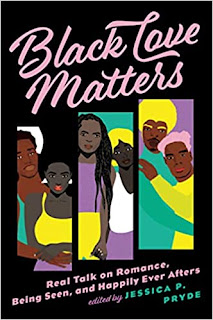
The essay collection Black Love Matters: Real Talk on Romance, Being Seen, and Happily Ever Afters, edited by Jessica P. Pryde is now available. The essays are written by authors, readers, academics (the categories are not exclusive, of course).

A discussion with "with special guests editor and librarian Jessica Pryde, best-selling author Beverly Jenkins, and host of Romance Ever After Allie Parker" is being held on 22 February.

More details here: https://us06web.zoom.us/webinar/register/WN_rCsTiAqURGaKw93KtgxDug


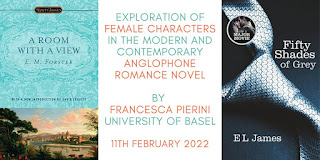
The image shows the covers of E M Forster's Room With a View and E L James's Fifty Shades of Grey, as well as the title of the talk

The Midlands Network of Popular Culture "are delighted that Dr Francesca Pierini will be joining us from the University of Basel on the 11th February to give a presentation on 'Female Characters in the Modern and Contemporary Anglophone Romance Novel'":

This presentation focuses on a reasoned discussion of the female protagonists of the popular romance narratives [...]. The main goal is familiarizing students with the definitions, development, and cultural significance of popular romance fiction through a parallel exploration of the novels’ heroines. The talk will touch upon themes such as: the evolution of the female character in romance novels, educating students on the waves of scholarship on romance fiction, and exploring and problematizing the complex relationship between popular literature and literary scholarship.  

More details here.

Monday, December 21, 2020

New at JPRS: Special Issue on The Sheik (and a bit about teaching romance in Sweden)


The final additions to issue 9 of the Journal of Popular Romance Studies have now gone online and are (as always) freely available to read, both on the website and in downloadable pdf.

[Edited to add: JPRS have just added another article to issue 9

 That was added on 22 December.]


In the Special Issue on The Sheik are:

Introduction to the special issue on The Sheik
Amy Burge

The Oriental Beast: The Sheik and Fairy Tales
Pauline Suwanban

Garçon manqué: A Queer Rereading (of) The Sheik
Jessica Taylor

Olive Skin Chocolate Eyes: Echoes of The Sheik on Descriptive Patterns of the Italian Romantic Hero in Harlequin Short Contemporaries
Francesca Pierini

Let’s Not Get Carried Away by The Sheik
Laura Vivanco

The Sheik and Modernism
Ellen Turner

The Depiction of Masculinity and Nationality in The Sheik
jay Dixon

In Defence of the Perverse: Reflections on The Sheik (George Melford, 1921)
Elisabetta Girelli

On Eligible Princes: The Medieval Modernity of Sheikh Romance
Amira Jarmakani

Review essay on The Sheik
Amy Burge and Rachel Robinson

On Teaching, Not Teaching, and Teaching The Sheik
Eric Murphy Selinger

Authors on The Sheik: A conversation with Liz Fielding
Elizabeth Cole

Tuesday, May 19, 2020

Some new publications: Romance and Italy, Nigeria, the Philippines, Russia, Turkey, the USA; happy endings; Christianity; the RWA; Sherry Thomas

It hasn't taken long for the RWA crisis to be turned into a case-study:

Lawrence, Kelsey, 2020. "No Happy Ending: Leadership Falls Apart at the Romance Writers of America." SAGE Business Cases. http://dx.doi.org/10.4135/9781529741117 and here's the abstract:
This short case asks students to examine the controversy stemming from allegations of racism within the Romance Writers of America (RWA), one of the largest U.S. writers’ and trade organizations. Students will assess the organization’s response to the allegations, its subsequent change of leadership, and what this indicates about the overall culture within the RWA.
The crisis is also mentioned, albeit briefly, in the article by McAlister et al (see details below): "the implosion of the Romance Writers of America in late 2019 over issues of institutionalised racism demonstrated that the romance industry is still suffering from 'publishing’s diversity deficit'."

I'll take the opportunity, since I've brought up the topic of the RWA, to mention that the new Board of Directors issued an apology to members (archived here) and also to Courtney Milan:


The Board Members wrote:
Dear Courtney,
For our first and most important order of business, we, the members of the Board of Directors of Romance Writers of America, are writing to apologize to you. We acknowledge the improper, unfair, and wrongful handling by RWA of the ethics complaints filed against you. We offer our sincerest apology to you for what transpired. We object vehemently to the way the proceedings were conducted, and we are very sorry for the resulting impact on you.
As a result, in a unanimous vote as a new Board, we have expunged both the complaints and the ensuing proceedings from the record. This should never have happened, and the fact that it happened to you--someone who has worked so hard to champion diversity, inclusion, and equity for our members from marginalized communities--is a travesty.
While we regrettably cannot undo how your case was managed, we will be conducting a thorough review of the current RWA Code of Ethics and surrounding procedures, as well as the RWA Policy manual, to ensure that they best reflect RWA's current priorities and principles, and so that RWA can help avoid situations like this in the future.
We thank you for your years of dedicated service to RWA, and we will work hard to be worthy of that dedication.
And in other publications:

Adamenko, Olga and Olga Klymenko, 2020. "Communicative Behavior via Gender Identity (Based on the English language 'love stories')." Psycholinguistics 27.2. 44-70. https://doi.org/10.31470/2309-1797-2020-27-2-44-70 The abstract is in English but the paper itself is not.

Cassiday, Julie A., 2020. “A World Without Safe Words: Fifty Shades of Russian Grey.” Journal of Popular Romance Studies 9.

Haruna, Alkasim and Noor Hashima Abd Aziz, 2019. "Towards an Understanding of the Efferent Reading Stance of Hausa Popular Romance Novels." European Academic Research 6.12: 6829-6839.

Johnson, Emily D., 2020. “Exploring His/Her Library: Reading and Books in Russian Romance.” Journal of Popular Romance Studies 9.

Kamblé, Jayashree, 2020. "When Wuxia Met Romance: The Pleasures and Politics of Transculturalism in Sherry Thomas’s My Beautiful Enemy." Journal of Popular Romance Studies 9.

Kamitsuka, Margaret D., 2020. “Prolife Christian Romance Novels: A Sign that the Abortion-as-Murder Center Is Not Holding?” Christianity & Literature 69.1: 36-52. https://muse.jhu.edu/article/752347

McAlister, Jodi, Claire Parnell and Andrea Anne Trinidad, 2020. "#RomanceClass: Genre World, Intimate Public, Found Family." Publishing Research Quarterly. Online First. https://doi.org/10.1007/s12109-020-09733-1

Moss, Madi Markle, 2020. "Review: When Was the Last Time You Read a Romance Novel?" Dialogue: A Journal of Mormon Thought 53.1: 189-193. https://www.jstor.org/stable/10.5406/dialjmormthou.53.1.0189

Paradis, Kenneth, 2020. “Types and Tropes: History and Moral Agency in Evangelical Inspirational Fiction.” Christianity & Literature 69.1: 73-90. https://muse.jhu.edu/article/752349

Pierini, Francesca, 2020. " “He Looks like He’s Stepped out of a Painting:” The Idealization and Appropriation of Italian Timelessness through the Experience of Romantic Love." Journal of Popular Romance Studies 9.


Schell, Heather, 2020. "After “I Do”: Turkish Harlequin Readers Re-Imagine the Happy Ending." Journal of Popular Romance Studies 9.


Schell, Heather and Katherine Larsen. “How the Story Ends: Gender, Sexuality, and Nation in the Happy Ending”, Writing From Below 4.2 (2019). https://writingfrombelow.org/happiness/how-the-story-ends-schell-larsen/
 
Teo, Hsu-Ming, 2020. "Cultural Authenticity, the Family, and East Asian American Romance Novels." Journal of Popular Romance Studies 9.

Friday, September 13, 2019

Scheduling The Sheik

There was a screening of The Sheik (1921) at the University of Birmingham on Thursday and today's programme is:

Friday 13 September 2019
10-11:15 – Academic panel on The Sheik
  • Pauline Suwanban, Beastly Figures: The Sheik and Fairy Tales
  • Francesca Pierini, The Legacy of E.M. Hull’s The Sheik on the Depiction of the Italian Romantic Hero in Harlequin Short Contemporaries
  • Respondent: Amy Burge
  • Chair: Melissa Dickson
Tweet summary by Ali Williams here. To summarise the summary:

Pauline Suwanban is a PhD student at Birkbeck, doing research into orientalist romances. She argues that the hero of The Sheik takes on the 'devil husband figure' that has been popular over the years within popular romantic fiction. She draws parallels between the 'devil husband' and the 'beastly lover' or 'monster husband' character that can be thread through myths and fairytales. Examples include 'Beauty and the Beast'. There lies within the Arabian communities in the novel a 'sinister promise of sexual material pleasure, as well as financial security for women who can tolerate it'.

Francesca Pierini's research is focused on representations of Italian culture in Anglophone literature. Instead of the 'Latin lover', she recommends the term 'Mediterranean men', as she feels that it draws parallels with the way that South European and some Middle Eastern heroes are represented. There is a focus on the perceived 'traditional' nature of these heroes, and there are similar discursive patterns seen within the writing of these heroes within short contemporary romances. Pierini talks about the importance of the focus on 'darkness' in these 'Mediterranean men' that is qualifyingly 'foreign', especially in comparison to the white Anglo-Saxon male. Often these novels seem to play on an assumed upon link between the Mediterranean men and the natural world.
12:00-1.15pm – Author and editor panel on diversity in popular romance publishing
  • Featuring Ali Williams, Ria Cheyne, Eleanor Harkstead and Jeevani Charika/Rhoda Baxter
2pm-3pm – Learning and Teaching The Sheik
  • A conversation with Professor Deborah Longworth and Professor Eric Selinger
Again, a summary has been tweeted by Ali Williams. Here's small part of it:


Eric Selinger was sharing his approaches to romance. The first sets out four approaches (Historical, Philosophical, Psychological and Literary). The second tool was derived from teaching Rose Lerner's Sweet Disorder: Improving Tale; Erotic Fiction; Novel of Ideas; Novel as Aesthetic Object. Selinger translates this as
  • How does this book want me to behave?
  • What does this book tell me that I might desire?
  • What does this book want me to think about?
  • What does this book want me to appreciate about itself?
Deb Longworth commented that thinking about formalised approaches like this allows the genre of popular romance to be legitimised for students.

3:30-4:30pm – Final roundtable and discussion – where now for The Sheik

There should be a special issue of the Journal of Popular Romance Studies appearing soon, dedicated to The Sheik in its centenary year.