Showing posts with label happy endings. Show all posts

Saturday, February 07, 2026

New Publications: Autism, Book Selling, Dark Romance, Ethnicity, Happiness, History, Readers

Bogaert, Anthony F.,  Jessie E. Hernder and , Jessica R. Johnson (2026). "Who “Feels Sexy” in the Google Books Corpus? Text-Mining Evidence for Gender Differences in Object of Desire Self-Consciousness." Archives of Sexual Behavior. [Abstract here.]

Datta, Sreepurna (2026). "Around the world on Amazon: Locating diasporic Indian romance novels published by Harlequin Mills & Boon." Literature, Critique, and Empire Today.

Deane,  Katie (2026). "Dark romance: an introduction." Porn Studies.

Eimannsberger, Angelina (2026). "The Romance Shop Around the Corner: How Women Readers Created a New Kind of Independent Bookstore." The New Americanist 4.1-2.  [Abstract here.] 

Grant, Ania (2025). Evolution, Feminism, and Romantic Fiction: From Mr. Darcy to Mr. Big London: Routledge. [Abstract here.]

Handley-Cousins, Sarah (2026). "Love Is a Battlefield: Civil War Memory in Modern Romance Novels." They Are Dead and Yet They Live: Civil War Memories in a Polarized America. Ed. John M. Kinder and Jennifer M. Murray. Lincoln: University of Nebraska Press. 152-169. [Excerpt here.]

Majidi, Nikki (2026) "Fast Fiction": Booktok, Artificial Intelligence, and the Profit-driven Reinvention of the Romance Genre. Undergraduate Dissertation, California State University, Long Beach.
 

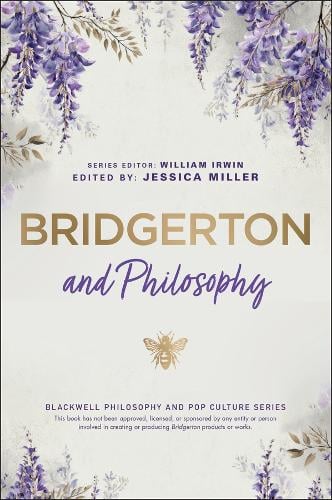
Miller, Jessica (2026). ""I Shall Be Very Happy, Indeed": The Meanings of Happiness in Bridgerton" Bridgerton and Philosophy: Dukes, Debutantes, and Deep Questions . Ed. Jessica Miller. Wiley. [This article is free online. The remained of the volume is not. I have more details about that volume here. It won't be available until March.]
 
Musiał-Pudełko, Aleksandra (2026) "'You and Me and History': Queer Romance and Liberal Fantasy in Casey McQuiston's Red, White & Royal Blue." Erotic Discourses in History, Culture and the Arts. Ed. Aleksandra Musiał-Pudełko, Nina Augustynowicz, Agnieszka Podruczna. New York: Routledge. [Abstract here.]
 
Niebergall, Chelsee M. (2026) "Constructing Hybrid Identities: Cultural Negotiation and Belonging in Uzma Jalaluddin's Ayesha at Last," CLAMANTIS: The MALS Journal: Vol. 17: No. 2, Article 16.
 
 
Segura Candado, Leyre (2025). Love Beyond Conventions: Contemporary Romance and the Representation of Non-Normative Bodies. Undergraduate Dissertation, Universidad de Zaragoza.
 

Thursday, September 28, 2023

Posts, Podcasts and Publications: Endings, Identity, Preservation and Negotiation

Charlotte of Close Reading Romance has written a series of posts thinking through how

any HEA is, fundamentally, an act of inferring the future from information about the past. In queer romance, though, doing so means imagining optimism from not-always-hospitable spaces. It has also sometimes meant thinking around certain concluding structures integral to the genre – cohabitation, marriage, procreation – that haven’t always been accessible to queer protagonists. So as I often do, I started wondering about the particular prose demands of writing re-imagined pasts and imagined futures. What kind of work is done by the last sentences of queer love stories, the words that place a completed narrative into the past while opening up towards imagined futures?

Here's the Introduction to the series and links to Part 1, Part 2, Part 3 and Part 4.

Jayashree 's been promoting Creating Identity: The Popular Romance Heroine’s Journey to Selfhood and Self-Presentation so there's now a video in which she discusses the book at the Asian American/Asian Research Institute: https://aaari.info/23-09-22kamble/ and there's an episode of the podcast  ShelfLove in which she discusses the book: https://shelflovepodcast.com/episodes/season-2/episode-145/heroines-creating-identity-in-romance

Over at JPRS, Jonathan A. Allan has been worrying about how to preserve romance texts for future scholars and I do think it's a big issue, especially for works which are ebook only. Eric Selinger says that if you have any answers to the questions/issues raised in Jonathan's note, please contact the journal to add a note of your own on this topic!

And here's a list of some new publications:

Ali, Kecia (2023). "The End of the World as We Know It: Climate Catastrophe in Nalini Singh's Paranormal Romance Fiction." The Journal of the Core Curriculum: An Annual Literary and Academic Anthology in the College of Arts and Sciences at Boston University 32:81-86. [The link is to a pdf of the whole volume, which means you'll have to scroll down/do a search to find the article. It's free, though!]

Bharathi, L. Divya and K. Muthuraman, K. (2023). "Nicholas Charles Sparks’s The Notebook: A Novel Of Love Or Romance?" Journal of Namibian Studies 35, special issue 1: 3749-3755. 

Horgheim, Celina (2023). From Rape to Romance: Sexual Consent Negotiation in Romantic Retellings of the Myth of Persephone. MA Degree Secondary Teacher Programme, University of Oslo.

Petrović, Janja (2023). Breaking the stereotype – romance novel today. Masters thesis, University of Zagreb.

Friday, January 31, 2020

Roundup of Mostly 2019 Bibliography Entries

I'd been saving these items up in case the Romance Wiki came back online soon, but it hasn't, so I'm just going to post this list of new-ish items now.
Bazenga, Aline, 2019. 
'Turismo e Romance na Literatura Popular Cor-de-rosa Tendo por Cenário a Ilha da Madeira', Memoria e Identidade Insular: Religiosidade, Festividades e Turismo nos Arquipélagos da Madeira e Açores, Coordenação Duarte Nuno Chaves. Velas, S. Jorge: CHAM (Centro de Humanidades Santa Casa da Misericórdia das Velas), 323-335.
Cella, Laurie J. C., 2019. 
The Personal and the Political in American Working-Class Literature, 1850-1939: Defining the Radical Romance. (Lanham, Maryland: Lexington). Excerpt [Cella "make[s] the case that working-class women, in history and in literature, constructed romance narratives in which they were the heroines, reveled in the adventures created by Laura Jean Libbey, and celebrated their new entry in the working world" (5)]
 
Fernández Rodríguez, Carolina, 2019. 
"Chamorro WWII Romances: Combating Erasure with Tales of Survival and Vitality", Journal of Popular Romance Studies 8.
 
Gerlitz, Laura Michelle, 2019. 
"Judging a Book By Its Cover: Bringing the Digital Humanities into Reader’s Advisory", MA thesis, Digital Humanities and Library and Information Studies, University of Alberta. ["This study sets out to examine recurring themes found on book wrappers published by Harlequin in their first seventeen years [1949-1968] [...]. The resulting patterns will be connected to reader’s advisory as appeal factors in successful book selection by readers."]

Jarvis, Christine, 2006. 
"Using Fiction for Transformation." New Directions for Adult and Continuing Education 109: 69-77. Abstract
Legallois, Dominique, Thierry Charnois, and Thierry Poibeau, 2016. 
Repérer les clichés dans les romans sentimentaux grâce à la méthode des ‘motifs’.” Lidil. Revue de linguistique et de didactique des langues 53: 95–117.
 
Toscano, Angela, 2019. 
"The Idolatry of the Real: Form, Formula, and Happy Endings in Romance Literature", Chapter 8, Iconoclasm: The Breaking and Making of Images, edited by Rachel F. Stapleton and Antonio Viselli. Montreal & Kingston: McGill-Queen's University Press, pp. 173-192.
Valovirta, Elina, 2019. 
"No Ordinary Love: The Romantic Formula of Stepsibling Erotica". Thinking with the Familiar in Contemporary Literature and Culture 'Out of the Ordinary', Ed. Joel Kuortti, Kaisa Ilmonen, Elina Valovirta, Janne Korkka (Leiden: Brill Rodopi), pp. 161-??. Abstract
 
Veros, Vassiliki, 2019. 
"Metatextual Conversations: The Exclusion/Inclusion of Genre Fiction in Public Libraries and Social Media Book Groups", Journal of the Australian Library and Information Association. 254-267. Abstract
And Phraseology and Style in Subgenres of the Novel: A Synthesis of Corpus and Literary Perspectives, edited by Iva Novakova and Dirk Siepmann (Palgrave Macmillan, 2020) doesn't have a huge amount about romance, but there are some insights into the types of verbs used in fantasy, romance and crime fiction in French and English, as well as the discovery that people in romance novels "take a sip" a lot more than they do in other genres (full quote here).


Wednesday, April 24, 2019

Happily Ever After: A Folklorist's Perspective

The recent PCA/ACA conference led to discussions about the happy ending in romance and Elizabeth Lane, in particular, wondered about the "codification of the HEA" and whether it had been studied from "a folklorist's perspective".

Luckily, the community of romance scholars includes Linda J. Lee, a folklorist at the University of Pennsylvania. In response to Elizabeth's question, she generously wrote a micro-paper about it via Twitter, which I'll collate below. The first tweet in the thread's here.

-----
For context, I'm a folklorist who studies fairy tales and romance - and I'm always happy to wade into definitional discussions about genres. I want to make sure that I'm hitting the central part of the question, though. It sounds like it's - at least in part - about the happily ever after and it's place in fairy tales.

Yes, most European fairy tales do end happily ever after - and most European languages have closing formulae that make this point. In English, it's "happily ever after," but other languages change this up a bit. For instance, in various Italian dialects, the formulaic ending is something more like "they lived happily and here we sit without a cent." Closing formulae of Sicilian fairy tales often draw a contrast between the circumstances of the characters in the taleworld and the storyteller/audience in the real world. The Snake Who Bore Witness for the Maiden ends with (English translation): They lived happily and content, but we have nothing to pay the rent. Here's a selection from Jack Zipes' translation of Laura Gonzenbach's Sicilian Folktales. Zipes translated from German into English (Gonzenbach had translated from Sicilian into German when the collection was published in 1870):


[LV - I was curious so I went off to look for Spanish fairy tale endings and there are lots of different ones, but apparently one of the most common is “fueron felices y comieron perdices” (they were happy and ate partridges)]

But more notably, not all fairy tales end happily. My favorite example of this is a fairy tale included in the first edition of the Grimms' Kinder- und Hausmarchen but omitted by the 7th edition in 1857 called "The Children Who Played at Slaughtering." Yeah, it ends pretty much the way you expect based on the title.

And many don't end in marriage. Take, for instance, Little Red Riding Hood (ATU 333). In Charles Perreault's 1697 tale, the wolf eats the grandmother and the little girl, and the audience gets a warning about the dangers of sweet-talking wolves who follow you into your bedroom. And the Grimms' version of Little Red Riding Hood from 1812 has a male rescuer figure that releases the grandmother and the girl from the belly of the wolf. (My students often read this restoration as a metaphor for marriage, but there's definitely not one on the page.) An oral version like "The Story of Grandmother" comes closest to a happily ever after because the tricky heroine rescues herself. Plenty of eroticism, but still no marriage. Here's the text: http://boj.pntic.mec.es/~jmarto1/01tradicion-oral/delarue.html

Even when traditional oral European fairy tales end in marriage, it's usually not terribly romantic. The prince tries to buy comatose Snow White, for instance. Many female protagonists are really just making the best of a terrible situation. Some end up in marriages while running away from incestuous fathers (like Donkeyskin, a story that bears lots of similarities to Cinderella). Some certainly do have some romantic moments, though. But in so many others the female protagonists marry their rapists. Yeah, early versions of Sleeping Beauty didn't awaken with a kiss. In Basile's "The Sun, the Moon, and Talia," she wakes up when one of the twins she gives birth to sucks the piece of flax from her finger while trying to nurse. Yep. No kiss. But she eventually marries her adulterous rapist. So it's all good, right? There's a Sicilian fairy tale called "The Snake Who Bore Witness for a Maiden" in which a prince rapes the heroine and then plans to marry someone else, except for a marvelous snake who wrecks that plan.

There is a relatively recent concept of "anti-tale" that denotes fairy tales with a parodic or inverted structure. But Don Haase rightly criticizes this concept, because fairy tales have always had a variety of structures and endings.

The HEA of fairy tales is, in some ways, a modern invention. Arguably an inevitably of film adaptations that have longer stories with more developed characters. And again - if the choice of marrying your rapist or never marrying at a point in history when women had few choices.... Happily ever after means something quite different.

However, if we look at the literary fairy tales from the French salon writers (mostly women, writing for other women), there are stories with narratives and happily ever afters that much more resembles romances. Probably the best known of these is "Beauty and the Beast," originally published in French in a novella length by Gabrielle-Suzanne Barbot du Villeneuve, then retold by Jeanne-Marie Leprince de Beaumont as a shorter story in 1756. (I'm currently revising an essay on consent in monster bridegroom stories, including Beauty and the Beast, so this tale type is top of mind at the moment.) If you've seen or read, oh, just about any version of Beauty and the Beast - be it Cocteau's film or Disney's or whatever - it almost certainly draws on Beaumont's tale (and, by extension, Villeneuve's).

But as will come as no surprise to the romance novelists and scholars out there, the female French salon writers have largely been overlooked by folklorists in favor of the male collectors and editors. Go figure. Elizabeth Wanning Harris has an excellent book about this - Twice Upon a Time: Women Writers and the History of the Fairy Tale.

So the French women fairy tale writers were writing longer, more complex stories, rather than the shorter stories that are today's canonical fairy tales. (Harries calls these "complex" and "compact" tales.) And we find stories that start to resemble romances among these stories. Again, Beauty and the Beast is probably the best example of this.

-----
Dr. Sandra Schwab expanded a little on some of these points:

To a large extent, the opening and closing formulae of fairy tales became codified with what in German is called "Buchmärchen" (book fairy tales), like the Grimms' KHM. (Just as a quick aside for non-folklorists: The term "Buchmärchen" was introduced to denote the difference between oral fairy tale tradition & published one. And then there's yet another category, namely, the literary fairy tale. All these different types influence on another)

Because most of the editors of collections of "Buchmärchen" were male, as Linda mentions, they also became infused with a greater emphasis on patriarchal / middle-class values, as becomes nicely evident when you compare different versions of a tale in diff eds of Grimms' KHM. I'd use the term "literary fairy tale" for the tales of those French women writers. I haven't studied them in detail, but from the little I read up on them, I seem to remember that many of them nicely subvert patriarchal values of their time. You can see the same thing happening in the re-tellings of fairy tales written by 19th-century British women writers, e.g., "The Brown Bull of Norrowa" by Maria Louisa Molesworth.
------

Y colorín, colorado, este cuento se ha acabado.
[Colourin, colour red, this tale's finishèd.]
Friday, January 04, 2019

HEAs and "A Righted Universe"

Jennifer Porter's written a long thread on Twitter which examines a particular element of the Happy Ever After in more detail. The whole thread can be found here (via threadreaderapp) or here (at Twitter, but you'll have to scroll to the top). That element is what Porter (drawing on a post by Super Wendy) calls "a righted universe", and Porter states that "If the universe isn’t right, many of use reject the HEA/FN even if it exists".


I don't want to repeat the implications which Jennifer Porter draws out. They're in her thread, so there's no need to repeat them all here. But I do think that this insight into how readers feel about "a righted universe" enhances Pamela Regis's analysis of the essential elements of romance. Regis does, in fact, allude to the "righted universe". First of all, she offers "society defined" (31) as one of the essential elements of romance:

As she says, "This society is in some way flawed". Later, Regis returns to the issue of the flawed society:

The "accidental element" is the scene which demonstrates that "Society has reconstituted itself" (38) but, Regis says, "this scene is promised in every romance, even if it is not dramatized" (38). One could, then, argue that "Society reconstituted" (i.e. "a righted universe") is, for many readers, a ninth essential element.

---
Regis, Pamela. A Natural History of the Romance Novel. Philadelphia: University of Pennsylvania Press, 2003.

Wednesday, March 22, 2017

Call for Papers: Happiness


This is a call for papers from Writing from Below:

Emergent research into happiness is still largely situated in fields such as sociology, psychology, and neuroscience. Traditionally the uncontested domain of the Humanities, the question of “How should we live?” is too rarely approached in contemporary literary and cultural studies. Indeed, even in a thriving field such as affect studies, research still largely focuses on negative emotions, ugly feelings (Ngai), shame (Probyn), paranoia (Sedgwick), failure (Halberstam), and the cruelty of optimism (Berlant). But perhaps the critical tide is turning. Scholars are beginning to theorise the end of our well-rehearsed “hermeneutics of suspicion,” and conjecturing what comes after (Felski). They are mapping the potential path for a “eudaimonic criticism” (Pawelski & Moore) and an “ethics of hope” (Braidotti), looking towards a more positive future (Muñoz). Critical and historical studies on empathy (Meghan; Keen), joy (Potkay) and happiness itself (Ahmed) are also emerging.
Inspired by the growing body of scholarship on optimistic representations or gender, sexuality, and queerness, Writing from Below enters the fray with this invitation to explore and interrogate positive, successful, fulfilling, life-affirming expressions of gender and sexuality in contemporary or historical literature, culture, and society.
Papers could engage with (but are not limited to):
  • Pleasure, joy, jouissance, delight, splendour, enchantment, empathy, and kindness
  • Love, passion, and amour fou
  • Middlebrow pleasure
  • Living the queer life, and queer(ing) happiness
  • Eudaimonia, mindfulness, and wellbeing
  • Eudaimonic reading, and the eudaimonic turn in cultural and literary studies
  • The hermeneutics of suspicion, paranoid and reparative reading, and their aftermath
  • Ethical criticism, the ethics of hope, and hopelessness
  • The body as site of happiness, joy, pleasure, etc.
  • Affect, the theories and/or histories of positive emotions
  • Celebration, and celebration as protest
  • Burlesque, clowning, circus, carnivals, and the carnivalesque
  • Kitsch, camp, and drag
  • Sex and play, sex lives, fun
  • Vitality, verve, vigour, and liveliness
  • Biological life, bios, zoe, survival, sur-vivre [living-on], affirmation
  • The utopian tendencies of gender studies and queer theory
  • The (queer) future, queer futurity, and happy endings
Gender studies and queer theory are located across and between disciplines, and so we welcome submissions from across (and outside of, against and up against) the full cross-/inter/-trans-disciplinary spectrum, and from inside and outside of conventional academia.
Do not be limited. Be brave. Play with form, style, and genre. Invent, demolish, reimagine.

Submissions

The deadline for submissions is 29 May 2017.
To submit, visit our website: www.writingfrombelow.org.au
Written submissions, whether critical or creative, should be between 3,000 and 6,000 words in length, and should adhere strictly to the 16th edition of the Chicago Manual of Style.
All submissions—critical, creative, and those falling in between; no matter the format or medium—will be subject to a process of double-blind peer review.
For editorial enquiries, or queries about unusual submissions (we adore the unusual, the unexpected and unfamiliar!), please contact our guest editor, Dr Juliane Roemhild: J.Roemhild@latrobe.edu.au

The call for papers can also be found here.

Saturday, September 03, 2016

Incarcerated Women, Mary Balogh, a Symposium Synopsis and Mills & Boon on the Happy Ending


I've got four items to mention today: a PhD in progress which suggests that historical romance fiction can empower incarcerated women, a review of a Mary Balogh novel which turns into a much broader analysis of romance fiction, a summary of a symposium and news of some "tongue-in-cheek" Mills & Boon (non-romance) publications.

------------------

Margaret Jamieson is working on
a non-traditional PhD study that involves writing a historical romance novel and accompanying exegesis, where the main aim is to show how oppressed women (some incarcerated) can become empowered through both reading historical romance novels and engaging with the heroines in these novels. In this context, oppression refers to women who perceive themselves to be isolated from opportunities, and disadvantaged by feelings of inadequacy and domination by patriarchal structures. (155-156)
What makes this particularly interesting is that Margaret seems to be basing this at least partially on personal experience:
As a mature student, Margaret knew she could draw on her life's experience as part of the methodology used in preparing the novel and exegesis. Her vision in starting this journey was underpinned by wanting to show fellow incarcerated women that study was possible, and particularly that reading historical romance novels was enjoyable and empowering. The power in the historical romance resides in its representation of the empowered heroines who subvert traditional expectations of women's roles in marriage and in society. (158)
Having lived with other incarcerated women, the student observed the helplessness that they felt. Many of these women said they would appreciate female role models whom they could both relate to and be inspired by. Many of these women also had a poor understanding of literature or indeed reading. The student believed that by introducing the historical romance novel to these women, it would provide an easy read with a positive outcome on their self-esteem. The historical romance novel can take a lonely isolated woman to a place where she can find companionship and beauty. So this premise was the basis for her research aims. (162)
the student reached a deeper understanding of the difficulties experienced by women in colonial Australia. As her novel developed around the obstacles that her characters experienced, she came to realize that some aspects regarding gender inequality have not changed over time. (166)

The PhD is not yet available to read because it "is still in progress" (156) but Margaret herself is now "free from incarceration" (159).


Danaher, Mike and Margaret Jamieson. “On Manoeuvre: Navigating Practice-Led Methodology in a Creative Writing PhD for the First Time.” Constructing Methodology for Qualitative Research: Researching Education and Social Practices. Ed. Bobby Harreveld, Mike Danaher, Celeste Lawson, Bruce Allan Knight and Gillian Busch. London: Palgrave, 2016. 155-169. [Excerpt via Google Books.]

------------------
Rohan Maitzen's review of Mary Balogh's Only Beloved includes plenty of observations about the romance genre as a whole. For example:
The happy ending is fundamental to the genre: it’s what readers expect and what they know the books will deliver. But such positivity, especially when presented in an unapologetically feminized form of popular fiction, does not get taken seriously. At least since the heyday of Modernism in the early 20th century, with its credo “make it new,” more literary value has attached to writing that upsets, rather than satisfies, expectations; more prestige has belonged to unfamiliarity and its discontents than to the pleasures of getting, even vicariously, exactly what you want.

------------------
Lucy Sheerman's written a report on the PGCWWN symposium on "Representations of Romantic Relationships and the Romance Genre in Contemporary Women’s Writing" which was held in Sheffield in 11 June. I wrote a summary of the various papers here but Sheerman's report goes into more depth about the relationship between shame, romance-reading and fire, suggesting that "It seems that the idea of shame is rooted in the earliest origins of and attitudes to romantic fiction".

------------------
Mills & Boon, in another departure from romance novels
is to launch a series of "Modern Girl's Guides" containing "vital advice every woman needs to survive the modern world".
Tongue-in-cheek guides to working and drinking will be published in November, with more titles to follow. (BBC)
Apparently they're using "fabulous archive photos" so presumably they won't be drawing on their archive of vintage covers again, as they did with their colouring book for adults. I'm most interested in the fourth book in the series: The Mills & Boon Modern Girl's Guide to Happy Endings. Are they planning to mock an essential part of their own novels? I'll have to wait until January to find out.

Friday, April 08, 2016

New Pages (and Videos) on Love (and Romance Scholarship)


Documentary-maker Laurie Kahn invited Eric
to curate some “Resource Pages” of links relevant to topics raised in Love Between the Covers, the romance documentary, and they’re now live!  They’re designed to be of use both to teachers and curious readers.
The pages include links to video-clips, documents and other web-pages on the topics of

Over on the website of Kahn's production company, you can see videos taken at the Library of Congress during
What Is Love? Romance Fiction in the Digital Age [...] a two-day Popular Romance Project conference that brought romance authors, readers, publishers, and scholars in many disciplines together for four fascinating panel discussions.
The links below take you straight to the videos on Vimeo:

Panel 1 discussed "What Belongs in the Romance Canon?"

Panel 2 asked "What Do The Science and History of Romance Reveal?"

Panel 3 looked at "Community and the Romance Genre"

Panel 4 focused on what's "Trending Now: Where is Romance Fiction Heading in the Digital Age?"

Details about all of the panelists, panels and the introduction to the conference as well as all the videos can be found here.

Also out recently is a podcast featuring Lisa Fletcher,
one of the scholars working on a project called Genre worlds: Australian popular fiction in the 21st century (2016–2019). This project won an RWA (US) grant, followed by a very prestigious grant from the Australia Research Council. Lisa talks about the project’s goals and  methodology, as well as other themes and topics in popular fiction that pique her interest. She also talks about the challenges of teaching romance at university, and some of the books and techniques she uses in her classes.
The podcast can be found here.

Thursday, April 02, 2015

Romance VII: Queer Love, Multiplicity, and the (Cruel) Optimism of the HEA

Romance VII: Queer Love, Multiplicity, and the (Cruel) Optimism of the HEA


Serial Monogamy? Archetype, Formula, and Variation in Paranormal Romance.

(Maria Ramos-Garcia,  South Dakota State University)

This paper will analyze the effect of serialization in the way romantic relationships are depicted in paranormal romance. The serial form tends to stretch a conflict, while the romance demands the HEA of a new couple on each installment. These seemingly opposed forces at play account for the creation of more varied relationships, a smorgasbord of options within the restrictions of a specific fictional world. Furthermore, the supernatural character of those relationships allows for levels of physical (but also ideological) experimentation that would be harder to accept by many readers in a single-title or realistic setting. It is my contention that the careful analysis of this “variation within the paradigm” will allow for new avenues of research on the nature of mainstream romance in the 21st Century. This paper specifically will analyze the variation on the physical descriptions of heroes and heroines, their previous sexual history (or lack thereof), the progression of their sexual and emotional connection, and the further evolution of established relationships on later books, especially regarding work and reproduction. It will also explore the implications of emerging story lines that challenge the heteronormative, monogamous expectations of mainstream romance, such as J.R. Ward’s inclusion of a homosexual couple as protagonists of one her “Black Dagger Brotherhood” novels, and Lynn Viehl’s happily ever after of a female protagonist with two individual males that through supernatural means are condemned to share the same body. I believe this line of study will contribute to delineate the ever-changing boundaries of romance and to expose both its potential and its limitations.


Love and Plurality: Ensemble Casting and Modularity in Contemporary Rom-Coms

(Katherine Morrissey,  University of Wisconsin-Milwaukee)

The traditional boy-meets-girl story has typically been one of courtship. Two young people meet, stumble towards love, and then commit to spending their lives together. While the bulk of romantic films still focus on the stories of white, heterosexual, and upper-middle class characters, today's romantic films often depict not one courtship narrative but many. These films utilize ensemble casting and overlapping storylines in order to depict multiple romantic journeys within the space of a single film. In this paper I focus on two recent romantic films: What to Expect When You're Expecting (2012) and He’s Just Not That Into You (2009) and examine how the films’ narrative structures stretch to accommodate their multiple protagonists. I argue that these films adopt a modular approach to narrative and storytelling, using ensemble casting as a strategy for expanding the versions of relationships and family that can be addressed within a single film. Modularity has previously been identified as an essential element of digital media (Manovich), as a type of narrative play with time and memory (Cameron), and as an enactment of contemporary labor conditions (King). Contemporary romantic films reveal another side of modularity: its utility for managing ideological tensions and providing narrative space for conflicting cultural norms.  These films test a variety of configurations for romance and partnership, testing the limits of romance narratives and the scope of possibility for happy endings.


Blurred Lines: Queering Gender, Masculinity, and the Regency Romance

(Dawn Gott, University at Buffalo-SUNY)--Dawn was unable to present [EMS]

Regency romances are well-loved by the romance readership and have well established tropes that are easily identifiable—witty repartee, the aristocracy, Prinny, the ton, etc… When something is as comfortable and recognizable as the plot devices, tropes and general framework of a Regency, authors have room to stretch the boundaries of the sub-genre to engage the readerships’ attention and subtly tweak established mores. I will interrogate  the sub-genre, using  a queer theoretical framework, focusing on five romances—Dara Joy’s Ritual of Proof, Wen Spencer’s A Brother’s Price, and J.L. Langley’s My Fair Captain, The Englor Affair, and My Regelence Rake. These romances provide cultural insight into American society; especially as love, sex, and romance no longer seem to be constrained by heteronormative boundaries. In addition to looking at how these romances trouble the Regency sub-genre, I will also examine how they question patriarchy, gender, and masculinity. Indeed, Joy and Spencer’s romances address these themes utilizing the traditional hero/heroine (male/female) duo while Langley’s trio are all non-traditional hero/hero (male/male) romances. Regencies have been around for many decades, a stable and seemingly unexciting romance field. Yet, because the Regency provides an established milieu, it is available as a springboard for experimentation in themes and tropes that reveals much about modern American culture. These five romances use the Regency structure to create new ideas for classic love stories and blur the lines between gender and masculinity, queering the Regency in a manner that both old and new fans of the sub-genre can appreciate.


Happily Ever After's Cruel Optimism

(Jonathan Allan, Brandon University)

This paper focuses its attention on the “happily ever after,” often considered central to theories of the popular romance novel, particularly in the American Tradition. However, a close reading of the RWA definition notes that it is less about “happily ever after” and an “optimistic” ending. This paper, thus, focuses on optimism as a theoretical rubric through which to think about the popular romance novel. In particular, this paper brings together the insights of Lauren Berlant and Lee Edelman.

Monday, March 30, 2015

RWA Academic Grant Recipients 2015


[From the RWA] Romance Writers of America is proud to announce the recipients of its annual Academic Research Grant competition. The grant program seeks to develop and support academic research devoted to genre romance novels, writers, and readers.
  • Jonathan Andrew Allan, Ph.D., Brandon University: The Optimism of Happily Ever After. RWA awarded funding to Jonathan Andrew Allan's project "The Optimism of Happily Ever After." His proposed research seeks to explore one of the most critically maligned aspects of romance, the happy ending, or, the emotionally satisfying ending, via Affect Theory.
  • Drs. Beth Driscoll, University of Melbourne, Lisa Fletcher, University of Tasmania, and Kim Wilkins, University of Queensland: The Genre World of Romance in 21st Century Australia. RWA awarded funding to Drs. Driscoll, Fletcher, and Wilkins' project "The Genre World of Romance in 21st Century Australia." The researchers plan to create detailed case studies of three authors at different stages in their careers. The case studies will include analysis of the creative processes for one particular book by each author using textual analysis of the books and in-depth interviews with each author. They will also include interviews with the other significant players involved in the creation of and publication of each book. This research will present romance writers and their books in a wider artistic and commercial context.
  • Jessica Taylor, Ph.D., University of Toronto: Professional Business Women: Romance Writers, Feminism and "Women's Work." RWA awarded funding to Jessica Taylor for her project "Professional Business Women." Taylor researches how writers, who can choose to define their work any number of ways, sometimes pitting the creative and artistic against the professional and commercial, can negotiate interesting blends of the two. She studies how writers think and talk about what they do as work and its value and significance.
Congratulations to all the recipients!

Sunday, October 19, 2014

Is "The Fault in Our Stars" a Romance Novel?

Pamela Regis writes with a thought about HEA endings and The Fault in Our Stars by John Green. 

SPOILERS AHEAD
Here's another thought regarding definitions.  Green's novel has all of the eight elements that I have identified.  The hero dies.  The heroine has a form of cancer that is very likely to kill her long before she reaches middle age.  
 Yet the story ends with the words of the marriage vow:  "I do" written by the heroine, our first-person narrator, in response to a posthumous question (delivered via a letter) by the hero.  He has said earlier, "I fear oblivion."  But in our hands is the book, in which his beloved immortalizes him.  No oblivion for him.  
 I think this qualifies as an HEA, given the constraints of illness that the hero and heroine operate within.  The usual meaning of happily ever after implies an expanse of time that is unbounded.  Over and over again, The Fault in Our Stars insists on the limited time that we all have, not just those of us with life-threatening illness.  So the "ever after" in this HEA has been achieved, I think. 
 RNA would count it within their definition, I suspect.  RWA's definition would also count it.  The more restrictive "courtship and betrothal of one or more protagonists?"  Yep, I think so.  
 Quite aside from any marketing, branding, or other marketplace issues, it seems to me that, fomally, this is a romance novel. 
 Pam 
What do you think, folks?  At the very least, this would be a wonderful topic for a PCA proposal!  (Tick-tock:  only a dozen days left to submit!)

Friday, October 17, 2014

Noted with Interest: "Optimistic Ending"?

--Eric Selinger

A recent post by novelist Edmond Manning at the Queer Romance Month site, "Make Room for Happily Never After," sparked a lot of comments about the genre designation appropriate for love stories without an HEA / HFN ending.  (Addendum: this follow-up post by Alexis Hall at All About Romance is well worth reading, and I'll post about that one later.)

I'm not going to try and summarize the debate that played out in the comments section and on Twitter.  My interest is in the ways that the RWA definition of the romance genre was deployed in the post and what followed.  Specifically, I'm beginning to wonder whether the way that the RWA describes the romance novel's ending isn't, itself, somewhat problematic, although I'm not sure whether that's because it's disingenuous or just plain fuzzy.

As readers of this blog probably know, the RWA definition of the romance genre reads like this:
Two basic elements comprise every romance novel: a central love story and an emotionally satisfying and optimistic ending.  
A Central Love Story: The main plot centers around individuals falling in love and struggling to make the relationship work. A writer can include as many subplots as he/she wants as long as the love story is the main focus of the novel. 
An Emotionally Satisfying and Optimistic Ending: In a romance, the lovers who risk and struggle for each other and their relationship are rewarded with emotional justice and unconditional love. 
The first sentence of this definition does not explicitly state that the ending of the novel will feature the protagonists together and in love with each other.  However, the second, ancillary sentence, which spells out what an "emotionally satisfying and optimistic ending" means, does say that "the lovers" will end the novel in possession of "unconditional love," and we might well assume that this means "love for each other" rather than, say, "love for and being loved by somebody else down the line, with lots of romantic memories of the transformative experience that made it all possible."

I've often thought that the interestingly fuzzy thing about this definition was the notion that a love that comes to you as a "reward" can really be described as "unconditional." In the Queer Romance post, however, it was the bit about an "emotionally satisfying and optimistic ending" that came into play.  One comment agreeing with and defending the post observed that "Not even the modern definition specifies a HEA. An (and I’m quoting the RWA) 'emotionally satisfying and optimistic ending' leaves the door wide open." Another concurred, saying that "you could argue that an ending could be happy even if it involves a couple separating but valuing their time together. This doesn’t actually contravene the standard RWA definition which requires only that a genre romance centralise a love story and that its ending be optimistic."

Needless to say, not all of those who left comments felt this way.  "If *I* read a book that self-identified as genre romance with an ending that had the central 'couple separating but valuing their time together,'" one observed, "I would throw that book at the wall, rant on Twitter, Amazon, Goodreads and any other outlet I could find that this book was NOT a romance novel. I’d never trust that author again."  It's worth noting that this comment went on to insist on the "context" of that phrase about an "optimistic ending" in the RWA's definition.  "I don’t believe that “optimistic” is intended to mean optimistic about the fate of one or more of the characters," the reply continues.  "I’ve always read it to mean that the reader is meant to leave the book feeling optimistic about the fate of the central love story. If that’s not part of the definition, than I give up."

As it happens, there's one more bit of context we can bring to the table here.  In her short essay "I Know What It Is When I Read It: Defining the Romance Genre," Jennifer Crusie, who was on the definition-writing committee, gives us a sketch of the discussions that went into the final wording. Obviously this is just her account, and it's not coming down from Sinai.  But I do find it helpful.

What the RWA was after, Crusie writes, was "something short and punchy that described the genre in all its glory, something that would be easy to remember, something the press couldn’t make fun of."  Much of the discussion seems to have revolved around how to describe the ending of a romance novel.  Here are the key quotes:
  • There were those who insisted that the definition must stipulate a happy ending, and those who pointed out that a lot of great romances didn’t have happy endings, and that it would be a bad idea to frame a romance definition that excluded the book most people cite as the greatest romance of the twentieth century, Gone With the Wind . Oh, we had a high old time debating this one. 
  • ...we go back to the happy ending definition, right? Well, no, because some of the best romances don’t have happy endings, they’re bittersweet.Those who write romances about protagonists who have experienced tragedy during their struggles shouldn’t have to tack on Disney endings to qualify as serious romance novelists. It was at this point in the discussion that people began saying, “Well, when I say ‘happy ending,’ I mean . . .” and it became clear we were going to have to define “happy ending” in the definition. 
  • The discussions on this one pretty much boiled down to “endings that make the reader feel good at the end of the book.” No endings where the protagonists sacrifice for one another and end up noble and alone, no downers with the hero and the heroine wordlessly staring at a cockroach scuttling across the cracked linoleum of their tenement, and definitely no finales with dead protagonists unless they’re ghosts having a terrific time in the afterlife. 
  • I knew we had it when Gone with the Wind and Pride and Prejudice made the cut, and Madame Bovary and Message in a Bottle didn’t.
The stuff in here about Gone with the Wind is particularly fascinating, since it's clearly not a romance if the protagonists have to be together and committed to each other, even informally, at the end.

I also wonder whether the need to write a definition that "the press couldn't make fun of" also played into avoiding "happy ending" terminology; after all, the truly happy ending is often poignant and tremendously complex, tonally speaking.  I think here of what J. R. R. Tolkien says of the happy turn in Fairy Stories:  "It does not deny the existence of dyscatastrophe, of sorrow and failure: the possibility of these is necessary to the joy of deliverance; it denies (in the face of much evidence, if you will) universal final defeat and in so far is evangelium, giving a fleeting glimpse of Joy, Joy beyond the walls of the world, poignant as grief."

For my money, it makes a lot of sense to have a separate term to distinguish a love-story-that-ends-happily-for-the-relationship from some other kind of love story, whether that other kind is one that ends optimistically for one or more protagonists, but they're not together (as in the Crusie / Mayer collaboration Wild Ride) or one which ends tragically, or just glumly, or whatever.  I generally go with "romance novel" for the first, the successful courtship narrative, with "romance" or "love story" or "romantic fiction" as the broader, more general term.

If you use other terms, or have suggestions, let me know.  And if you want to know why it's important to have separate terms, take a look at the comments on that post above. Some women there said it better than I ever could.


Tuesday, May 08, 2012

Thoughts on The Cambridge Companion to Popular Fiction


Although romance fiction (and Janice Radway's Reading the Romance) make repeated appearances in the recently published Cambridge Companion to Popular Fiction, romances receive little sustained attention. The same could be said of many other genres, however, for the Companion is attempting to cover a great many different forms of popular fiction (in a variety of media), over a period of more than 200 years and across a range of cultures (though the focus is on fictions from the UK and US) and also discusses readers and the act of reading.

The editors, David Glover and Scott McCracken, state that "In editing this Companion, one of our main aims has been to place the growth and development of contemporary popular fiction in historical perspective" (4-5). Erin A. Smith, for example, mentions that there was an "absence of international copyright before 1891" (143) and Nicola Humble notes that
The idea of reading as ideally something communal survives for a very long time: the image of the family huddled around the hearth listening to the next episode of an exciting story was a key component in the Victorian bourgeois fantasy of the ideal home. Even the reading group proper - the organised regular meeting of non-family members to share their reading or recount their reading experiences - has a much longer history than we might assume. Historians have uncovered evidence of groups of rural women in sixteenth-century France gathering in the evenings to read Le Roman de la Rose. (87-88)
In reading the volume, some of the changes already undergone by popular fiction recall current challenges faced by the publishing industry. For example, David Glover, in his chapter on "Publishing, history, genre," briefly outlines "the dominant role played by the private subscription libraries like Mudie's or W. H. Smith's in supplying what would otherwise be relatively high-priced new novels to the largest pool of regular readers of fiction" (16). Their business model was dependent on the " 'triple-decker' or three-volume format that had become the norm among publishers at the beginning of the nineteenth century" (16). Given the current allegations that
Mr. Shanks, the CEO of Penguin, twice chastised Random House for continuing to sell ebooks under the wholesale model and criticized RH for “not helping the group.” “Mr Shanks also encouraged a large print and e-book retailer to punish the other publisher for not joining Defendants’ conspiracy.  In March 2010, Mr. Shanks sent an email message to an executive of the retailer complaining that the publisher “has chosen to stay on their current model and allow retailers to sell at whatever price they wish.”  Mr. Shanks argued that “[s]ince Penguin is looking out for [your] welfare at what appears to be great costs to us, I would hope that [you] would be equally brutal to Publishers who have thrown in with your competition with obvious disdain for your welfare…I hope you make [the publisher] hurt like Amazon is doing to [the Publisher Defendants].  Likely this is referring to Barnes and Noble. (Dear Author)
it is interesting to note that
the world of the circulating libraries was far less stable than is often supposed. When Mudie's ran into financial difficulties in 1863, a group of publishers put up the lion's share of the money that kept it afloat as a limited liability company. (23)
Glover himself draws attention to the parallels between past and present events when he writes that
The tension between the ever-cheaper formats devised for reprints and the high fixed price of the triple-decker was finally resolved by the death of the latter. [...] Faced with a drop in the number of potential subscribers, Mudie's and Smith's [...] attempted to slow the rapidly diminishing shelf-life of their books and to reduce competition from increasingly affordable reprints by pressing publishers not to bring out cheap editions of any of the titles they had sold to the libraries for at least a year - a clash that parallels the twenty-first-century conflict between cinema chains and film companies over the appropriate time-lag between the first showing of a movie and its availability on DVD. But in 1894 the triple-decker was already living on borrowed time and by 1897 it was virtually extinct, a victim of long-term changes in the structure of the fiction market. (24)
Happier parallels between past and present can be detected in the opening paragraph of Nicholas Daly's chapter on "Fiction, theatre and early cinema." We're used to seeing tie-ins between print and film versions of fiction:
It was widely averred in the nineteenth century that the novel was the century's dominant form; indeed, at the end of this period critics spoke of the 'tyranny' of the novel. But this was only a partial truth, insofar as for much of this period the novel maintained complicated symbiotic relationships with other cultural forms, particularly drama: in this respect, popular plots, characters and settings were amphibious, gliding from novel to stage, and, more rarely, from stage to novel. (33)
The "amphibious" nature of popular culture was earlier highlighted in the introduction:
Popular forms such as romance have been remarkably adaptable across cultures and across media. For example, Latin American telenovelas are melodramatic, serialised television dramas with romantic themes that relate to novelas rosas, the Spanish equivalent of anglophone formula romance. While telenovelas have a clear origin and cultural base, starting in Mexico in the 1950s, with Brazil now the biggest producer, their audience now extends beyond the Hispanic population of the Americas to Eastern Europe, Asia and parts of the Middle East and Africa. Some have even been remade for different national audiences. The Colombian, Yo soy Betty la fea, became Ugly Betty in the United States, but there are also versions in at least fifteen other languages. (9)
Glover and McCracken raise a note of caution, however, lest it be assumed that a global market be assumed to imply a homogenous global audience:
As McCracken shows with the example of crime writer Walter Mosley, popular fiction circulates between local and global markets, taking on different meanings in different places. Yet there is relatively little known about the nuances of the different receptions of popular fictions in different places and contexts. If, as Humble makes clear, research into audiences and reading communities has become an indispensable element in the study of popular fiction, there is no shortage of questions in search of answers. (9)
One of those questions is raised, but left unanswered, in Kaye Mitchell's discussion of lesbian pulp fictions. She begins by quoting Diane Hamer, who stated that
What distinguishes [Ann] Bannon stories from conventional romance (apart from the gender of her characters is the fact that here, the nature of desire, restless and insatiable, works against this compulsory closure. Instead of the perhaps more comforting endings conventional romance offers its readers, Bannon has captured accurately the contradictory experience of sexuality and desire in her recognition that sexual desire (heterosexual or lesbian) often works against the stability of monogamous coupling. [...]
[...] I will leave open the question of whether popular fictions concerned with sexuality - whether straight or gay - are always marked, in their structural and ideological inconsistencies, by 'the nature of desire, restless and insatiable', or whether it is such fictions that are responsible for producing this particular understanding of desire as, necessarily, uncontainable, uncontrollable, liable to wander. This ultimate refusal of closure/satiation of desire (including readerly desire) always leaves open the possibility of another story and, therefore, of continuing consumption; this explains, in part, popular fiction's investment in seriality. (133)
-----
The Cambridge Companion to Popular Fiction. Ed. David Glover and Scott McCracken. Cambridge: Cambridge UP, 2012.

Contents:
  • Introduction - David Glover and Scott McCracken
  • Publishing, history, genre - David Glover
  • Fiction, theatre and early cinema - Nicholas Daly
  • Television and serial fictions - John Caughie
  • The public sphere, popular culture and the true meaning of the zombie apocalypse - Roger Luckhurst
  • The reader of popular fiction - Nicola Humble
  • Reading time: popular fiction and the everyday - Scott McCracken
  • Gender and sexuality in popular fiction - Kaye Mitchell
  • Pulp sensations - Erin A. Smith
  • Bestselling fiction: machinery, economy, excess - Fred Botting
  • Comic books and graphic novels - Hillary Chute and Marianne Dekoven
  • Popular fiction in the digital age - Brenda R. Silver