Saturday, September 12, 2026

New Publications: Barbara Cartland, Olivia Waite, Talia Hibbert, E. Marlitt, Romance Readers, and much, much more

An item I missed last year, and which is in a book that is freely available for download is:


Hall, Cailey (2025). “Redefining the Archive in Queer Historical Romance Novels.” Unsettling Sexuality: Queer Horizons in the Long Eighteenth Century. Ed. Jeremy Chow and Shelby Johnson. Newark: University of Delaware Press. 95-108.

It focuses on Olivia Waite's The Lady's Guide to Celestial Mechanics (2019).

---

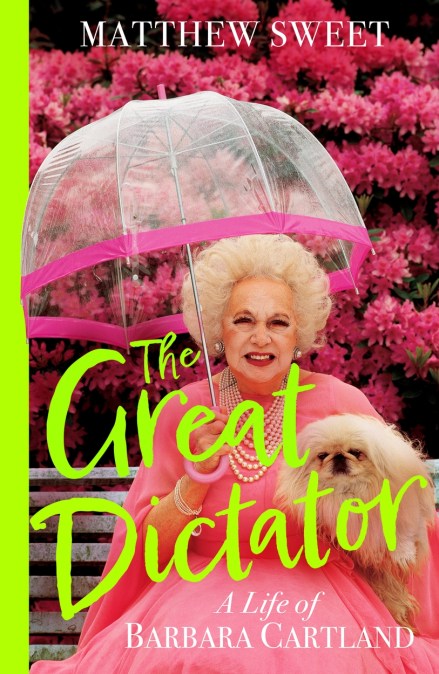
The Great Dictator 

Recently published is a biography of Barbara Cartland, by Matthew Sweet. The entry in the RSDB includes links, including to earlier biographies and autobiographies. Sweet's The Great Dictator: A Life of Barbara Cartland has been reviewed by the BBC (and the article includes a quote from our own Dr Amy Burge). 

--

And now on to the other new works: 

Brown, Cheyenne (2026). I Read It for the Plot: Romance and Identity on BookTok. Master of Arts thesis, The University of North Carolina at Charlotte. [Excerpt]

Creel, Stacy and Walker, Crystal (2026). "SLIS Notes: Psst...Do You Have this Dirty Book?," Mississippi Libraries: Vol. 88: No. 1, Article 3.

 
Florimond-Clerc, Adeline and Louis Gabrysiak (2026). "Lire la New Romance : pratiques, réceptions et illégitimation." Revue française des sciences de l’information et de la communication 31.
 
Florimond-Clerc, Adeline and Louis Gabrysiak, "New romance." Publictionnaire. Dictionnaire encyclopédique et critique des publics. Mis en ligne le 24 mars 2026.
 
Hunter, Kathryn M. (2026). “Desert Dreams: Valentino, Lawrence, and Sheik Fantasy in 1920s Australia.” Journal of the Royal Australian Historical Society 112: 56-76. [Link, abstract and some quotes.] 
 
Ingram, Toni (2026). "Romantasy, Virginity and Other Fictions." Sexuality & Culture. Online First. 
 
Jones, Bethan (2026). Sight Loss and the Tethered Self in 21st Century Novels. Cham: Palgrave Macmillan. [The chapter on romance is titled "Blind Love and the Will to Run in Romance Fiction by Eric Lindstrom and Lucy May Lennox". More details here.]
 
Kamblé, Jayashree (2026). "Race, religion, and the politics of desire in Talia Hibbert’s A Girl Like Her and Take a Hint, Dani Brown." Literature, Critique, and Empire Today. Online First. [Abstract] 

O’Connell, Mark Joseph (2026). “No More Martyrs: Heated Rivalry, Queer Romance and the End of Tragic Legitimacy.” Journal of Popular Television 14.2: 161–79. [This is mostly about the TV version of Heated Rivalry, but it does mention the novel and romance conventions. Abstract]. 

Ottaviani, Lauren (2026). "(Re)Defining Irish Womanhood: Serials and Short Stories in The Lady of the House (1890-1914)." The Edinburgh Companion to Irish Literature and Periodical Culture. Ed. Elke D'hoker and Phyllis Boumans. Edinburgh: Edinburgh University Press. 143-158. [Excerpt] 

Partzsch, Henriette, Päivi Lappalainen, Katja Mihurko, Viola Parente-Čapková, Marie Nedregotten Sørbø, and Suzan van Dijk (2026). "One Woman Writer Everywhere: The Ubiquitous E. Marlitt". Redrawing Europe’s Literary Map. Ed. Henriette Partzsch and Viola Parente-Čapková. Leiden, The Netherlands: Brill.


Pierini, Francesca (2026). Romancing Literature: When Literary Fiction Meets Genre. Abingdon: Routledge. [Link and excerpts here.]

Friday, September 04, 2026

Call for Papers: PCA/ACA 2027

Since the organisers want this to be shared, that's what I'm doing! 


Romance Area
Conference of the Popular Culture Association (PCA/ACA)
March 24-27, 2027 – Boston, Massachusetts
“Only in a Romance Novel”

Some things only work in a romance novel.

The worlds of romance are filled with places, situations, people, careers, and even names we would reject as unrealistic in any other situation. From the overabundance of women with flowing red locks, men named “Cash,” women with tiny delicate waists, hot single hockey players, nannies working for amazing single dads, or stalkers with a heart of gold, some things seem over represented in romance novels.

For the 2027 conference, let’s take some time to explore these topics, what we love and hate about them; how they interact with the genre, subgenres, and tropes; and what they say about the state of the genre and society.

In particular, we pose these questions:
1) what are these overrepresentations? What careers, places, characteristics seem to come up over and over again?
2) where do these overrepresentations come from?
3) in the moments they do, why and how do authors push against these representations?

We encourage you to respond to these questions broadly, and to think not just about specific texts but also about their creators, consumers and critics, to understand the broader discussions in which these texts are implicated.

If this theme does not spark ideas, something else is pressing on your mind, or you simply want to pursue another intellectual passion, you are very welcome to do so.

Who we are

The Romance Area of the PCA is deeply interested in popular romance both within and outside of mainstream popular culture, now or in the past, anywhere in the world. Scholars, romance writers, romance readers/viewers, romance industry professionals, librarians, and any combination of these are welcome. You do not need to be an academic or have an institutional affiliation to be part of the Romance area. Undergraduates sponsored by an academic mentor are also welcome. Please see the Romance area on the PCA website for our policy for undergraduates; if the website is difficult to navigate, contact us and we’ll send you a copy of the policy.

The Romance area invites any theoretical or (inter)disciplinary approach to any topic related to romance. Past presenters have drawn on methods from literary studies, history, library sciences, sociology, film studies, and creative writing, to name the most common approaches—we’ve even had a presentation with puppets (you know who you are). We’ve loved all of these.

Finally, we are not interested solely in novels! The Romance area is open to engagements with all forms of media and culture that are concerned with romance, including, but not limited to, the following: art; literature; philosophy; radio and audio media; film and television; comics and graphic novels; videos, webzines and other online storytelling; and apps, including dating apps.

Submit 250-word abstracts to pcaaca.org by October 31, 2026. One of us will review them within two weeks or so and notify you about our decision. You’ll hear more from us as the date approaches. 

Please feel free to forward, cross-post, or link to this call for papers.

If you have any questions at all, please contact the area chairs:
Justina Clayburn - jumarn@gmail.com
(Co-chair coming soon)