Showing posts with label theme. Show all posts

Tuesday, June 12, 2007

Phillipa Ashley - Decent Exposure


Phillipa Ashley recently won the Romantic Novelists' Association 2007 Joan Hessayon Award for Decent Exposure,
her debut novel [...] published by Little Black Dress. The judges said: "This book had really great characters right from the start, especially the fish-out-of-water heroine and the hero who is 'always happiest when he's got something to be angry about'. We believed in this couple and their bumpy path to love. There is a real sense of lives lived, the close-knit team, the local rivalries, the small village, as well as the practical and psychological obstacles in the way of pulling the calendar together. We liked the humour nicely balanced with humanity and a bright, contemporary voice. Oh, and it has a cracker of a first sentence!" (Romantic Novelists' Association)
I haven't been able to find many reviews, but there's an excerpt available here.

Given that the premise of the story involves the making of a nude calendar for a charity fundraising effort, I couldn't help but be reminded of the film Calendar Girls,* but as Rosy Thornton of Birmingham Words explains, Ashley's initial inspiration was the BBC's adaptation of Elizabeth Gaskell's North and South:
Phillipa had the original idea of placing a version of Gaskell's novel in the present day [...] A sharply witty romantic comedy, it tells how PR consultant Emma Tremayne seeks to raise money and publicity for a Cumbrian mountain rescue team by means of a nude calendar – falling as she does so for ‘Mr July’ Will Tennant. Like North and South it is the story of a bright southern girl being forced to travel north, and finding a culture shock and unexpected love in the process.
What I'd like to focus on is not the story but what Jenny Crusie's been describing as 'foreshadowing' using 'subconscious clues':
Subconscious clues are the deep structure clues, really more cues than clues, triggers for the reader that she or he many not even notice, often the motifs and metaphors that run underneath the story. [...] Is anybody but an English major ever going to notice this stuff? We certainly hope not; it destroys the enjoyment of the story. Is it crucial to the depth and resonance of the story, to the catharsis of the reader at the end? Absolutely.
In Decent Exposure the subconscious clues worked for me because I didn't notice them until I'd finished the book and started to think more closely about it. The foreshadowing begins in the first few pages (they're in the excerpt). I'm going to try to avoid giving spoilers, so this will be a relatively short post and I hope it doesn't 'destroy the enjoyment of the story' for anyone.

The most obvious theme is that of nakedness:
Excuse me, love,’ said the bearded man in the front row, ever so politely, ‘did you say naked?’
Emma Tremayne clutched her folder of proposals tighter and smiled a smile that went no further than her cherry-scented lipgloss. ‘That’s right, Bob. Naked.’
Bob, bald, ruddy-faced and fifty-something, nodded as if she’d just confirmed the price of a cheese scone in the local café.
‘You mean without any clothes on?’ murmured a whippet-like lad whom Emma recognised as a local builder.
‘That’s the general idea of a nude calendar, Jason, yes.’ (2006:1)
By the end of the chapter (and the excerpt) we have Will, the hero, agreeing to pose nude, 'But only if I absolutely have to' (2006: 18). What he doesn't yet know is that by the end of the novel he'll have been forced, despite his reluctance, to lay bare his emotional life as well as his body. Emma, the heroine, is his mirror image in that she's fairly open about her relationship history. She gives a synopsis of it on page 11 to a female member of the Mountain rescue team: 'My boss was shagging my boyfriend. I threw something at her and she sacked me' (2006: 11), but she's rather more cautious about literal, physical nakedness.

A second theme is that of risk, as embodied in the activities of the Bannerdale Mountain Rescue Team. All walkers and climbers take a degree of risk, and the purpose of the team is to rescue those who get into difficulties. What Emma doesn't expect is that in helping this team who have
saved over fifty lives in the past twelve months alone and were expert at abseiling and belaying and all kinds of skills which weren’t needed among the sushi bars and coffee houses and mirror-window tower blocks of the city life Emma was used to (2006: 2)
she's going to have to literally take a risk and learn a skill which wasn't required in her previous life: abseiling. She's also going to have to take a metaphorical risk, and in both cases she'll have to trust Will. Will too is going to have to take a 'leap of faith' (2006: 267) as he falls in love.

A third theme which is foreshadowed involves spin and PR. Emma may be a 'a seasoned PR person' (2006: 2) but 'she felt she’d tasted enough deception and spin over the past few months to last a lifetime' (2006: 11). Will may not trust PR, but, as we discover, he has deliberately shaped his own public persona and the reasons for this are hinted at in the first chapter when he opposes the calendar plan on the grounds that it would make the team a 'laughing stock' (2006: 4).

Ashley also slips in details which have a deeper symbolism. For example, Emma's duplicitous ex-boss at the appropriately named 'Rogue' PR agency is called Phaedra. In Greek mythology Phaedra first of all got her husband in somewhat ambiguous circumstances (some say Theseus preferred her to her sister, Ariadne, whom he abandoned after she'd helped him escape from the Minotaur). Phaedra later became an unfaithful wife and, in some versions of her story, a mistress of spin who made false rape allegations against Hippolytus. We also learn that at Rogue
If there wasn’t a pot of Blue Mountain bubbling somewhere in the office, there was always some assistant willing to fetch a Starbucks coffee or a smoothie. Emma shivered. That last beverage was now off the menu. In fact, she hoped she’d never see one as long as she lived. (2006: 12-13)
Emma has swapped 'Blue Mountain' for the hills around Bannerdale and 'smoothies' (both the drinks and men 'with a smooth, suave manner' (OED) ) for Will, 'a man who had all the charm of a grizzly bear' (2006: 4) and whose 'designer stubble made him look more like a grizzly than ever' (2006: 7).

Ashley, Phillipa, 2006. Decent Exposure (London: Little Black Dress).

* At the end of the novel mention is made of the fact that 'a production company [...] want to make a documentary' (2006: 274) about the making of the calendar, just as happened with the story of the 'Rylstone WI Calendar: 12 sepia-tinted photographs, showing various members naked - their modesty concealed only by the jam-panned, cider-pressing paraphernalia of traditional WI pursuits' (The Guardian). This became the basis for the film Calendar Girls, though it's hardly a documentary: ' "It's 75% of the true story," he [Director Chris Cole] estimates. That number might be a little generous' (Carrano 2003).

Monday, January 01, 2007

Reaching for the Moon

Debra Dixon's posted a short free romance story online which spoke to me on two levels. Her Wishing for the Moon is about someone who wants to be sure that she's truly loved and known for herself:
The truth was that she wanted someone to find her in a crowd. Someone who could see Erin instead of a twin. Someone who wouldn't hesitate for that split-second, wondering which sister she was. Yeah...well. She'd be better off wishing for the moon.
I think we all wish for someone who can find us in a crowd, whether or not we have a twin. None of us want to be second-best, or to be mistaken for someone else. It's why sibling rivalry can break out, as each child tries to be noticed by their parents, and why lovers can become jealous. We all want to be known and loved for who we really are. In its rather understated way, I think that's what's being promised in Luke 12: 6-7
6: Are not five sparrows sold for two farthings, and not one of them is forgotten before God?
7: But even the very hairs of your head are all numbered. Fear not therefore: ye are of more value than many sparrows.
Generally I suppose most people wouldn't think that it was a huge compliment to be told that they were more important than a sparrow, but I think the point here is that we're being told that if God can tell even the sparrows apart, then it's an easy matter for God to tell two humans apart, and value each individual. The way it's put, though, reminds me of Farmer Hoggett in Babe: The Sheep-Pig who, at Babe's moment of triumph at the sheepdog trials, when Babe (a pig) has proved that a pig can do a better job than any sheepdog, leans down and says just a few words:
Narrator: And though every single human in the stands or in the commentary boxes was at a complete loss for words, the man who in his life had uttered fewer words than any of them knew exactly what to say.
Farmer Hoggett: That'll do, pig. That'll do.
And I think that's the second message I can find in Debra Dixon's story: that when it comes to the things that are really important to us we should keep wishing for the moon, and not settle for second-best. Or, as Jenny Crusie puts it, we should be rats who keep swimming, knowing that we'll find our island:
What's the worst that can happen? [...] at the end of your life you look back and say, “I had a dream and I fought for it, I believed in myself and my work, and I never, ever gave up.” That's a life well lived, folks, a helluva lot better than, “I had a dream but it wasn't realistic so I quit and watched television.” Do not let reality push you around, do not be sensible and kill your own dreams.
At the beginning of a New Year seems like a good time to think about our dreams, have hope that they can become reality, and reach for the moon.

Thursday, December 14, 2006

Suspend Disbelief All Ye Who Enter Here

Continuing with the theme of belief/lack of belief I'd like to take a look at a couple of free online works by Holly Lisle. The second is a short re-working of a fairytale and the first is a longer novel, Sympathy for the Devil, which, as I observed regarding many paranormal romances, can be read as an inspirational (but non-Christian) romance. Although it draws heavily on Christian theology and is monotheistic, there is no endorsement for any particular world religion.

The reason I'm paraphrasing from Dante's Divine Comedy in the title of this post is that it seems entirely appropriate in the context of Lisle's Sympathy for the Devil. The original phrase, from the third Canto of the Inferno (the first part of the Comedy, which is followed by Purgatorio and then Paradiso) is written above the gate to Hell and is often rendered as 'Abandon hope, all ye who enter here'. Hope is one of the three theological virtues, along with Faith and Charity (Love) and the heroine of Sympathy for the Devil has all three in abundance. This being a romance (or, at least, I read it that way, because it has both 'a central love story' and 'an emotionally satisfying and optimistic ending') it seems appropriate that one is forcefully reminded of the words of St. Paul (1 Corinthians 13: 13) concerning love: 'And now abideth faith, hope, charity, these three; but the greatest of these is charity'.

Sympathy for the Devil is by turns humorous, emotionally powerful and psychologically insightful, much like C. S. Lewis' The Screwtape Letters. Lisle acknowledges her debt to both 'Mark Twain and C.S. Lewis, who introduced me to this territory when I was nine'. Lewis' theology is considerably more orthodox than Lisle's, however, and his work is composed of a series of letter from Screwtape to his nephew Wormwood, a junior tempter. Through the letters (a sample letter is available here) one learns about the faith journey of Wormwood's 'patient', the human whose soul he is trying to gain. The Screwtape Letters contains a significant romantic thread but unlike Lisle's Sympathy for the Devil it is not a romance.

There are a number of reviews available of Sympathy for the Devil, for example here and here. Holly Lisle has also written about the theologial and personal background to the novel here. I'd recommend, however, that you read them only after reading the novel itself. So, if you're ready to start, here's the first page. I'll be interested to know how people feel about this. Did you think of it as a romance? Did you enjoy the humour? How did you feel about the theology?

The second online work of Lisle's I want to look at is Armor-ella, a reworking of the Cinderella story. As in the previous novel, an important issue is belief in paranormal beings. This time, however, they're ones more often discussed in fairytales than by theologians.

I'm looking forward to reading your opinions on these two.

Monday, December 11, 2006

Jennifer Crusie - Hot Toy

As Eric and I are working on the novels of Jennifer Crusie we've inevitably mentioned her rather a lot on the blog, to the extent that one blogger described Teach Me Tonight like this: 'If you think of witty, insightful romance writer and academic Jennifer Crusie as the site's spiritual patron saint and foremother, you'll have an idea of its feel'. I'll take that as a compliment! And, as it's Christmas and our 'patron saint' has a newly released Christmas short story, it seemed like the right time to post about Hot Toy. There's a long excerpt available here, and reviews here and here. As usual, this isn't a review, and I will be including spoilers (though I try not to reveal too much).

First of all, Jenny is well known for giving advice and support to other writers. She's written essays on writing and publishing, set up a site where writers can support each other and compare their experiences of the writing life (though there are also some areas for readers) and in the New Year she and Bob Mayer will begin an online 'year-long workshop, updated twice weekly, on the craft of writing a novel'. So it maybe shouldn't come as a surprise that Hot Toy teaches us about one method of creating a plot, namely the use of the 'MacGuffin':
A MacGuffin (sometimes McGuffin or Maguffin) is a plot device that motivates the characters and advances the story, but has little other relevance to the story.

The director and producer Alfred Hitchcock popularized both the term "MacGuffin" and the technique. According to the Oxford English Dictionary, Hitchcock explained the term in a 1939 lecture at Columbia University: "[W]e have a name in the studio, and we call it the 'MacGuffin.' It is the mechanical element that usually crops up in any story. In crook stories it is always the necklace and in spy stories it is always the papers." [...]

The element that distinguishes a MacGuffin from other types of plot devices is that it is not important what object the MacGuffin specifically is. Anything that serves as a motivation will do. A true MacGuffin is essentially interchangeable. Its importance will generally be accepted completely by the story's characters, with minimal explanation. From the audience's perspective, the MacGuffin is not the point of the story. (Wikipedia)
The explict reference to a MacGuffin was a source of great amusement to many of those who commented on this review of the novella. However, although this MacGuffin may begin the story like any other MacGuffin, it ends up rather differently.

At the heart of the novella is the theme of belief, particularly a woman's almost lost belief in the possibility of a happy ending for romantic relationships and a child's belief in Santa. Trudy is determined that her nephew, Leroy, is still 'going to believe in Santa, since he can't believe in men or nannies' (2006: 62). For me the fact that the child's belief was so important invited comparisons with other texts about and for children. Because of what happens to it the MacGuffin, despite being a 'homicidal doll that spit toxic waste' (2006: 8), reminds me of Margery Williams' The Velveteen Rabbit, which begins 'On Christmas morning'. Here's the part where one toy talks to another:
"Real isn't how you are made," said the Skin Horse. "It's a thing that happens to you. When a child loves you for a long, long time, not just to play with, but REALLY loves you, then you become Real."

"Does it hurt?" asked the Rabbit.

"Sometimes," said the Skin Horse, for he was always truthful. "When you are Real you don't mind being hurt."

"Does it happen all at once, like being wound up," he asked, "or bit by bit?"

"It doesn't happen all at once," said the Skin Horse. "You become. It takes a long time. That's why it doesn't happen often to people who break easily, or have sharp edges, or who have to be carefully kept. Generally, by the time you are Real, most of your hair has been loved off, and your eyes drop out and you get loose in the joints and very shabby. But these things don't matter at all, because once you are Real you can't be ugly, except to people who don't understand."
As the Horse admits, love is about pain, as well as pleasure, but for those who love you unconditionally 'you can't be ugly'. Love and the process of becoming worn, faded and shapeless make the Velveteen Rabbit real*, and the object which begins the story as a MacGuffin (in fact it's a 'Major MacGuffin' both literally (it's a military toy) and in terms of the storyline) ends up becoming more real: 'He looked nicer now, she thought, all ripped up and eviscerated and dirty. More vulnerable' (2006: 108). Another character in The Velveteen Rabbit is a fairy, and the central theme of Hot Toy, namely faith/belief in something which all the evidence suggests is not true, reminds me of the scene 'When Peter Pan asks audiences to affirm their belief in fairies in order to revive Tinker Bell, this can be interpreted as an affirmation of the willing suspension of disbelief thought to be an essential condition of theatrical spectating' (Davis 2005). Incidentally, for those who'd like some proof of the existence of fairies, there's a website all about the urban fairies of Ann Arbor, Michigan who create tiny doors in the most unexpected locations, including Ann Arbor District Library.

Another children's story that came to mind when reading Hot Toy was that of Hansel and Gretel, and not just because of the gingerbread houses which Trudy's sister is constructing.** In a reversal of the fairytale it's Leroy's father (Trudy's brother-in-law) who has run off to Cancún with Leroy's nanny, leaving behind Leroy and Courtney, whereas in the fairytale it's usually a stepmother who convinces the father to abandon his family responsibilities by removing the children from the family home (in some versions she's simply called 'the mother', and the extent of the father's guilt and weakness also varies, depending on which version one reads). Of course, Courtney's not a child, but Trudy's planning to buy her 'the doll my little sister never got' (2006: 19) . A further story of fatherly betrayal is that of The Little Match Girl, to which Trudy alludes after she's emerged from the toyshop,
her feet aching as the cold from the concrete permeated the thin soles of her boots [...].
It started to snow.
If I had some matches, I could strike them all and bask in the glow, Trudy thought. (2006: 39)
Just before she dies of hypothermia the match girl 'struck the whole bundle of matches [...]. And the matches burned with such a glow that it became brighter than daylight'. The little match girl's father is far worse than Trudy's, who is only guilty of absent-minded neglect, and would not, as in the fairytale 'surely beat her' for failing to sell some matches, but clearly his shortcomings as a father have deeply hurt Trudy and negatively affected her relationships with men.

Another strand of the story is about consumerism and its relationship (or lack of one) to the real meaning of Christmas:
Above her, Madonna cooed “Santa Baby,” the ancient store speakers making the carol to sex and greed sound a little tinny. Whatever had happened to “The Little Drummer Boy”? That had been annoying, too, but in a traditional way, like fruitcake. She’d be happy to hear a “rumpa-pa-pum” again, anything that didn’t make Christmas sound like it was about getting stuff.
Especially since she was desperate to get some stuff. (2006: 8)
Later, while 'Gimme, gimme, gimme' (2006: 55) plays in the background we're very briefly, and in a very quirky way, reminded that Christmas is about Jesus' birthday (2006: 54). And then, with a drumroll as the action really begins to get underway, Trudy gets her wish and 'There was a radio somewhere blaring "The Little Drummer Boy." '"Rum-pa-pum-pum," Trudy said, not at all reassured' (2006: 57).

In the context of the rather worrying traces of the radioactive substance polonium-210 discovered at various locations in London, Hamburg and Moscow and the death of former KGB agent Alexander Litvinenko, plots based on international espionage leave me less than reassured too. Fortunately, none of the characters in Hot Toy end up either dead or radioactive.

So, should we adopt Trudy's New Year's resolution: 'My resolution for 2007 is to start believing in people again' (2006: 64)? Or are we wiser, and safer, if we remain on our guard? Do we have to have faith in something in order to be happy, or does that just set us up for disappointment? And do you believe in Santa, fairies or romantic relationships?
  • Crusie, Jennifer, 2006. 'Hot Toy', in Santa Baby (New York: St. Martin's Paperbacks), pp. 1-111.
  • Davis, Tracy, 2005. 'Do You Believe in Fairies?: The Hiss of Dramatic License', Theatre Journal, 57.1: 57-81. [My quotation was from the abstract.]
* 'the little Rabbit grew very old and shabby, but the Boy loved him just as much. He loved him so hard that he loved all his whiskers off, and the pink lining to his ears turned grey, and his brown spots faded. He even began to lose his shape, and he scarcely looked like a rabbit any more, except to the Boy. To him he was always beautiful'.
** Gingerbread houses/Lebkuchenhäuschen are not common in the UK, and I've never seen one, but I assume they're part of the Christmas traditions in many German and American families.

And one final note: we had a chicken in the Elizabeth Bevarly novel I've looked at, chooks in Marion Lennox's Christmas novella and here there's a toy cow lobbying for the rest of us to eat more poultry: ' "It says, 'Eat chicken,' when you pull its string."' (2006: 46). I'm sure this has absolutely no significance at all.

Wednesday, December 06, 2006

Of Pigs and Paupers

Yesterday I learned that Max, George Clooney's pet pig, had died. Then I came across Debra Salonen's The Laws of Love in Harlequin's free Online Reads Library. One of the main characters is a pig, and as I liked the story and the coincidence, and because I'm not sure how long this story will stay in the Library, I thought I'd post about it.

It's a story of contrasts and similarities, of appearances and social disapproval. Our heroine, Gwyneth Jacobi, is a lawyer known for being a 'barracuda'. Arley McNamara is a rich philanthropist with a short attention span. Cuddles, the pig, is large and at risk. The neighbours object to Cuddles' continued presence in their neigbourhood. Arley's parents object to Gwyneth (she's Jewish). Cuddles knows exactly who she is and what she wants: Arley and Gwyneth need to do a bit more work on deciding what really matters to them.

Monday, December 04, 2006

Marion Lennox - A Bride for Christmas

This is a novella, the third in the anthology Christmas Proposals. I've not been able to find a review of it anywhere, but the synopsis, from the back cover, is as follows: 'When wealthy Guy Carver arrives in Australia, to take over Jenny Westmere’s wedding salon, he finds he wants nothing more than to make Jenny and her little boy his family – by Christmas!' Before I go any further, I'd better issue my usual spoiler warning. This isn't a review, and because I want to look at some of the themes in the novella, I sometimes have to reveal spoilers.

This interview with Marion Lennox, from The Age gives a hint of what her books are like: they're romances which combine intense emotion and down-to-earth practicality. She's won the Rita twice - in 2004, for Her Royal Baby in the Best Traditional Romance category and again, in the same category, in 2006, for Princess of Convenience. As one might expect from her down-to-earth side, Lennox has a habit of giving the princess story a bit of a twist. Jenny, the heroine of this novella compares herself to Cinderella and the hero to Prince Charming and then observes:
'I have a feeling that marriage for Cinders had its downside.'
'I've never heard of any fairytale where they divorce,' he said, startled, but she refused to smile.
'No,' she said thoughtfully. 'But being all alone in his castle, with everyone knowing she'd come from rags to riches ... she'd have to be grateful for ever.' (2006: 346)
In her two Rita-winning romances featuring commoners who marry a prince the balance of power isn't always in the Prince's favour and the Princess-to-be is extremely talented and skilled at her job.

Marion Lennox's novels not infrequently feature widowed heroines, as does 'A Bride for Christmas', and characters who've suffered other bereavements (this is the case in Princess of Convenience, as discussed here), but as they're romances, there are happy endings. As touched on in 'A Bride for Christmas', though, Christmas can be a bitter-sweet (or even just a bitter) time for those whose bereavement is recent and even not so recent (Guy, for example, says that 'The first Christmas was the worst, but it's still bad' (2006: 293) after fifteen years), but in time the celebration can bring comfort to some:
The Christmas after Ben had been killed, when Henry's life had hung by a precarious thread, Lorna had decreed Christmas was off. 'It doesn't mean anything,' she'd declared. 'I'm tossing all my decorations.'
Twelve months later she'd rather shamefacedly hauled out her non-tossed decorations. Jack and Jenny had been desultorily watching television, with Henry on the sofa nearby. They'd been miserable, but they'd fallen on the decorations like long-lost friends. That night had been the first night when ghosts and fear and sadness hadn't hung over the house, and this year Henry had demanded his grandparents start sorting the decorations on the first day of November (2006: 277)
Both Guy and Henry (Jenny's six-year-old son) have been involved in car accidents which have left them emotionally and physically scarred: Guy 'worked hard. He kept to himself. He made money and he carefully didn't know people. His life decisions would never hurt anyone again' (2006: 259) and 'Normally when visitors came Henry was seen but not heard. Henry had been a happy, cheerful four-year-old [...] Now Henry's world was limited to hospital visits, physiotherapy clinics and his grandparents' farm' (2006: 279). Henry's physical scars are the more visible, and Guy comforts him by showing him his own, 'He'd learned not to hate his scars, but until now he'd never been grateful' (2006: 326), and telling Henry that
Most people start out as babies with no marks on them, but as interesting things happen they get marked. We all get marked from life. Somewhere I read that the native people in Australia deliberately make scars on their chests to show they're grown up. I think the more marks you have on you, the more interesting you become. ' He smiled at the little boy [...] 'So you and me, Henry ... we're really interesting [...]'. (2006: 327)
The theme of scars, life experience and how it making someone more interesting also turns up, though in a rather different way, in Jennifer Crusie's Christmas novella, 'Hot Toy', but I'll blog about that another day.

There's a second theme, also related to outward appearances, which is about style and different tastes in decoration, particularly kitsch (2006: 308). Kitsch is:
a German term that has been used to categorize art that is considered an inferior copy of an existing style. The term is also used more loosely in referring to any art that is pretentious or in bad taste [...] most closely associated with art that is sentimental; however, it can be used to refer to any type of art that is deficient for similar reasons—whether it tries to appear sentimental, glamorous, theatrical, or creative, kitsch is said to be a gesture imitative of the superficial appearances of art. It is often said that kitsch relies on merely repeating convention and formula, lacking the sense of creativity and originality displayed in genuine art. (Wikipedia)
I may be wrong, but I see parallels here between different styles of wedding (the kitsch 'pink tulle' wedding versus the elegant, minimalist celebration) and different types of fiction (romance versus some types of modern literary fiction). Jenny's extremely pink wedding salon was founded by Lorna, who reads 'romance novels' (2006: 358). Romance, like Jenny's salon, is often described as 'fluff' and, like kitsch, is often described as formulaic and overly sentimental. As Guy observes, however, kitsch can be 'fun when you're not forced into it' (2006: 309). Of course, there are only a few romances which are kitsch, but even those can have a certain charm, even if some romance readers think of them as 'guilty pleasures'.

Guy's 'Carver Salons are sleek and minimalist' (2006: 254), whereas Jenny's shop is called 'Bridal Fluff', and it certainly doesn't fit in with the image of the other Carver bridal salons:
what he saw made him blanch. Bridal Fluff was indeed ... fluff. The shopfront was pastel pink. The curtains in the windows looked like billowing white clouds, held back with pink and silver tassels. A Christmas tree stood in the window, festooned with pink and silver baubles, and a white fluffy angel smiling seraphically down on passers-by. The name of the shop was picked out in deeper pink, gold and silver. (2006: 238-9)
Kylie, the first bride Guy meets, is having her fitting in the shop and is being dressed to meet her mother's idea of 'what a bride should look like - which was a vision in every decorative piece of lacework she could think of. The veil even had tiny cupid motifs hand-sewn onto the netting. Seeing the veil turned into a train, Jenny estimated Guy was looking at approximately eight hundred cupids' (2006: 247-8). The second bride-to-be is a celebrity, Anna Price, who 'had been pilloried in the press for her bad taste. Of course she'd want pink tulle' (2006: 264). I suspect that Anna's tastes in wedding dresses matches those of Jordan, with whom she shares a surname. Jordan/Katie Price was married in 2005 in a dress which 'was pink with a tightfitting bodice made out of Swarovski crystals and a large wide Cinderella style skirt, adorned in 1000's of crystals. She had a large tiara with rose and clear coloured crystals in the shape of interlocking hearts' (from this website, where pictures are available if you scroll down a little).*

In some ways, romance novels are like 'Bridal Fluff': they're stereotyped as being pink and fluffy, but they appeal to a range of customers and, in fact, not all are 'fluffy', just as not all the wedding's Jenny's run are 'fluffy' 'pink tulle' weddings: when Guy flicks through the catalogue of past weddings she's organised he sees 'Fluff, fluff ... But every now and then something different' (2006: 259). In fact the 'pink tulle' style is more to Lorna's taste. She was the one who founded Bridal Fluff, and her taste in Christmas decorations is equally over-the-top but 'there was a reason why the [Christmas] decorations were just ever so slightly over the top' (2006: 277) at Lorna, Jack, Jenny and Henry's home. For them the over the top decorations are a way of showing they're going to make the very most of life. Similarly, even the fluffiest, pinkest wedding has a special meaning for the bride who chooses it. Of course, it isn't a style that suits everyone, as Lennox acknowledges. Despite appearances to the contrary, Kylie longs to have a special day which reflects her own tastes, not her mother's:
'that dress ... Mum had you make it for me when I was sixteen. She chose it. Not me. Every week since then Mum gets it out and pats it. Do you know how much I hate it? [...] when Mum rang and said I could have a Carver Wedding I thought suddenly, A Carver Wedding! I could maybe have it like I want. Elegant. Sleek. Sophisticated. Something so when our kids grow up they'll look at our wedding photos and think, Wow, just for a bit our parents weren't assistants in a butcher's shop. If you knew how much I hate pink tulle...' (2006: 306)
Deep down, Guy isn't really a minimalist and he comes up with an inventive solution which gives every bride the wedding that suits her, whether that be pink tulle or something a little different. In this way Guy rediscovers what had first made him take up wedding planning. The first wedding he organised was run on a tiny budget, and 'The bride had been ecstatic' (2006: 256), but Guy faced a lot of prejudice, including from his now-deceased fiancée who had declared:
'If you loved me you'd keep doing law. Your father's expecting you to take over the family firm. Your mother's scared you're gay. Guy, you play with paints. Paints! And me ... How do you think I feel being engaged to a wedding planner?'
She'd said the words with such scorn. (2006: 258)
I may be wrong, but I wonder if there are parallels here with the way in which male romance novelists face even more prejudice than female ones. The big problem with Guy's retreat from emotional weddings is that some of his staff don't just scorn 'pink tulle' weddings, they also scorn women whom they assume would want that sort of wedding, perhaps in the same way that some people mistakenly assume that romance readers have lower educational levels than those who read other genres. When Jenny visited the Carver salon in Paris:
I could have been there to talk about my wedding. I could have been there to make enquiries about anything at all. But I was wearing jeans and a T-shirt, and carrying a small backpack Lorna had given me. [...] The backpack was pink. Anyway, they obviously sorted me as a type they didn't want. They asked me to leave, and suddenly there was a security guard propelling me onto the pavement (2006: 255)
Jane Austen's novels are romances which get past the literary security guards, but other romances, particularly those with pink, sparkles, clinches, or the Mills & Boon rose logo on the cover probably won't. At their core, romances, like Bridal Fluff's business model, are about emotion. Some romances may not be as stylish as others but deep down, there's a sincerity, joy and hopefulness in romance which is likely to be lacking in sleek, minimalist works.
  • Lennox, Marion, 2006. 'A Bride for Christmas', in Christmas Proposals (Richmond, Surrey: Harlequin Mills & Boon), pp. 235-377.
* Incidentally, apparently Jordan's 'princess-style fantasy wedding has helped send sales of Barbie dolls soaring' (Louise Barnett, The Daily Record, 26 September 2005).

Coincidentally, the last book I analysed was by a 'Squawker' and included a pet chicken. Marion Lennox keeps chooks, and some appear in this novel. They're described as 'Feathery things that lay eggs' (2006: 294) and if you look at some of the photos of chooks on Ally Blake's blog (e.g. here and here), you'll see that that's really a very accurate description. Ally Blake, like Marion Lennox, is a romance writer who keeps chooks. Seems that where romance writers are concerned, feather boas are out, and feathered friends are in ;-)

Sunday, November 26, 2006

Elizabeth Bevarly - The Thing About Men

As promised, here's a post about Elizabeth Bevarly's The Thing About Men. There are plenty of reviews of it, including one at Romantic Times, one at AAR, and one by Mrs Giggles. There's an excerpt here.

Ellen Micheletti, the AAR reviewer, comments that:
The theme of the book is the importance of family. Claire's parents died when she was only three, and she was sent to an orphanage. She was never adopted, so she does not want little Anabel to go through what she did. Ramsey Sage left a bad family situation when he was eighteen and has lived a hard life [...]. He's come to realize how important family is, and he wants that for his niece.
It isn't the theme I picked up on the first time I read the book, though Bevarly does say in the dedication that 'this book [...] deals with second families', which just goes to show that different readers can have very different perceptions of the same book. Ellen Michelleti's right, though, and this is an important theme in the novel, though not, I think, the only one. So I'll begin by taking a look at the theme of family and then turn to gender/gender constructs and what the novel has to say about them.

There seem to be two possible interpretations of the word 'family' offered by the narrative, one the biological family, the other the 'second families' that people create for themselves. That said, Bevarly's second family are her aunt's husband and children (her aunt being her mother's 'twin sister, who shared the same DNA'). At times, The Thing About Men acknowledges the ways in which the biological family can fail: Claire herself is an orphan and 'neither of her parents had left behind any relatives suitable for raising her - all had either been too dilapidated, too debilitated, too disinterested, or too dysfunctional. Or worse, all of the above' (2005: 29-30); it is not known who Anabel's biological father was; Claire's friend Olive 'had never had much of a family beyond her invalid - and now deceased - mother' (2005: 7) and Ramsey's family home 'had been a war zone the entire time Ramsey had grown up. [...] He couldn't recall a single day when his parents hadn't fought bitterly about something, unless he counted the days when his parents were too drunk to even get out of bed (2005: 125-126). Another of the characters is a social worker, and his disillusionment and world-weariness is due, at least in part, to 'the things he'd seen people do to their own children' (2005: 166).

We are shown how people can create family networks of their own, mostly made up of people who are not biological relations. Eleanor Sage's attempt at making family (apart from her daughter), involved no personal contact at all, and was based on her being Claire's '#1 fan' (2005: 13). Although she never met Claire, she
had begun writing [to her] nearly three years earlier [...] At first, the young woman's letters had simply proclaimed her love for the program. But eventually, they had begun to contain snippets of Eleanor's personal life, too. Most recently, those snippets had included anecdotes about the birth and ensuing adventures of Eleanor's daughter, now thirteen months old, whom Eleanor had named Anabel Claire Sage, after her deceased grandmother and her favourite celebrity. [...] Claire [...] had been both deeply touched and slightly appalled. [...] the thought that a television personality would hold a higher place in the woman's life than her family or her friends was just a trifle unnerving (2005: 13)
Claire herself has no family, and it is her friend and business partner Olive who gives her support, love and a sense of community. Olive is Claire's 'best friend in the whole, wide world [...] Claire had known her since they had been thrown together as roommates [...] thirteen years before and couldn't imagine how she would get along without her' (2005: 7), 'They had bonded immediately. And they had taken care of each other. Little by little, each had become for the other the family neither had ever had' (2005: 30). Much later Claire says that 'Family is a relative term [...] it takes more to make a family than people swimming in the same gene pool' (2005: 152).

The message about family and the way second families can be created that are non-biological is somewhat mixed however, because at many points in the novel the importance of biological ties is stressed very strongly, for example when Ramsey thinks 'Claire Willoughby could give Anabel lots of things that Ramsey couldn't. But they were unimportant things [...] What Ramsey had to offer his niece went straight to the heart. Anabel belonged with him. They were family. And that was the only thing that really mattered' (2005: 59). Shortly after this Claire thinks that 'a family was the one thing she had always wanted and had never had, and probably never would have [...] she felt like such an outcast from society because she'd never in her life had the very thing that defined the culture in which she'd grown up' (2005: 64-65).

There are plenty of romances in which the heroine is left in charge of a secret baby which she must introduce to its biological father (who usually feels an instant bond with the child, because it shares some of his DNA), or in which the heroine is the mother of a secret baby and the hero, the biological father, coerces her into marriage on the grounds that a baby needs both its biological parents (regardless if, at the time they marry each other, they at best feel tolerance for each other and at worse are in constant conflict). The Thing About Men does not quite have that sort of plot, but it's nonetheless true that Claire, the orphaned heroine, meets the hero because of his biological ties to the baby niece he didn't know he had. When the hero and the baby meet 'Claire could almost hear a zap of connection resonate between uncle and niece' (2005: 124) and finally the hero and heroine marry and form a two-parent family.

On the issue of Anabel's father one can almost sense the tension between the recognition that some biological familes can be disfunctional, even dangerous and the traditional mantra that 'blood is thicker than water':
He wondered briefly about the little girl's father, but decided that if Eleanor hadn't thought the man important enough to include in Anabel's life, then Ramsey probably shouldn't think of him that way, either. [...] Still, the girl's father deserved to know he had a daughter out in the world. Once Ramsey was more accustomed to his new role as her guardian [...] he'd see if he could find Anabel's father. Surely the guy would want to know about his next generation' (2005: 130).
Of course, Ramsey has a vested interest in stressing the importance of biological family, because other than his status as Anabel's uncle, he has little in his favour were it to come to a custody battle. Perhaps Bevarly's final conclusions on the issue of parental love, and what makes a parent, come through when Claire ponders that
even biological parents didn't learn their trade overnight, did they? She'd read enough issues of Parents and Parenting magazines in recent weeks to understand that no matter when or how one became a parent, one had no idea what one was getting oneself into until it was too late. And she'd learned, too, that no matter how chaotic and challenging the child, parents grew to love them unconditionally.
It wasn't too late for Claire and Anabel. (2005: 306)
Bevarly's said very similar things only recently on the Squawk Radio blog. And, of course, husbands and wives usually aren't blood relatives, but they are each other's 'family too' (2005: 333).

But if family (both biological and chosen) is the theme I missed, the one I noticed was one which touches on biological determinism:

This explanation of gender is based on the belief that all differences between men and women result from biology - the 'anatomy is destiny' argument. Biological determinism is often used to support generalisations about men and women, such as 'men are naturally more able in maths and technology' or 'women are naturally suited to domestic duties'.

These views are based on investigations of genetic differences between men and women, often searching for differences in brain function. However, even by the early 1990s, it was clear that the constant finding of psychological research is that 'sex differences are small, their origins unclear, and the variation within each sex far outweighs any differences between the sexes' (Segal 1990:63 as reproduced in Gilbert & Gilbert, 1998:44). (Queensland Government page on 'understanding gender')

The novel deals with stereotypes, prejudices, and judgements made about people on the basis of their appearance and gender, and demonstrates how these may be proved wrong. The very title of the book, The Thing About Men, invites the reader to conclude the sentence with generalisations about men. The back cover copy gives us a few possible ways to do this:
Three Things About Men:
They think dinner comes in a box ...
They never ask for directions ...
They never admit they're wrong.
Comments like that are, of course, sexist. As Wikipedia notes, sexism can be directed against males as well as females (and intersex and transsexual individuals) and 'some of the arguments for biological determinism come from women themselves—especially from what is described as proponents of “essentialist” feminism' (Barnett and Rivers 2005).

As we discussed in my previous post, Bevarly is a feminist, and one whose husband
was the primary caregiver, a stay-at-home dad, until my son entered school. (Though, as said above, we are equal partners in the parenting these days, since we both work now.)

I don’t think there’s a gender divide in who can care for children better. My husband was much more patient and less anxious than I would have been, had our roles been reversed. (from the comments section attached to this post)
In the novel Beverly frequently sets up expectations (not just about gender) and then confounds them. Ellen Michelleti, for example, writes that ' I am not a fan of Martha Stewart, so when I saw that The Thing About Men was about a lifestyle diva, I hoped for a good plot since I knew I would not like the character. Silly me - the characters turned out to be the best thing about the book.'

In the opening scene Claire Willoughby, the heroine, is trying to work out what to do with a live chicken* (she needs it dead, so that she can cook it on her TV show) and
the irony was that the theme of Claire's nationally syndicated - and live - TV show, Simple Pleasures, like the theme of Claire's nationally distributed magazine, also called Simple Pleasures, was "Back to Basics." That was, in fact, pretty much the mission statement of her entire lifestyle business - to promote a return to the simpler ways of simpler times. Ways and times that had included, for example, raising livestock for the purpose of holiday cuisine. (2005: 2-3)
Claire's deception goes deeper than that (though unlike Martha Stewart's, it doesn't involve insider trading (a fact that's alluded to on page 331)). It is really Olive, her friend and business partner who has the ideas behind the show. Claire 'was actually little more than window dressing for the business' (2005: 8). Claire makes a snap judgement about Ramsey: 'it took only one, very quick, perusal of Ramsey Sage for Claire to know everything she needed to know about him. He was completely unfit to be anyone's mother. Or father. Or guardian' (2005: 41). Ramsey's aim is, despite his appearance, to 'convince you that I'm perfectly capable of raising Anabel being the man I am right now' (2005: 114).

Ramsey, unlike Claire, doesn't trust first appearances: 'Never in his life had he seen two more courteous, more refined, better-dressed people. Which naturally made him extremely suspicious' (2005: 51), 'As cultured and refined as she looked [...], he suspected she wasn't born to this lifestyle. Maybe it was because she tried so hard to appear to fit in' (2005: 53). Even so, he makes some mistaken assumptions too, such as 'neither one of them had the first thing in common' (2005: 53).

There are plenty of generalisations about men, for example when Ramsey 'seemed to understand the attorney's actions when she [Claire] didn't. Ah, well. One of those "guy things" she'd read so much about, she supposed. [...] That was the thing about men. They had a language all of their own. Unfortunately, it was about as intelligible to most women as baseball statistics were' (2005: 50-51). Ramsey has similar thoughts about a unique male-only language: 'Bar brawling was a primitive sort of communication, to be sure, but it had been around for a few millenia and was spoken universally by men' (2005: 56). There's more about male communication only a few pages later: 'Some guy thing that Claire couldn't hope to understand because, thankfully, her body produced too much estrogen' (2005: 68) and her further thought is 'testosterone clearly did something to the human brain she didn't want done to hers (2005: 69). Among the 'things about men' is: 'Diplomacy, after all, had kept the world a reasonably peaceful place, in spite of its being ruled by men. Because that was the thing about men. They could be well behaved if they put their minds to it' (2005: 112).

It becomes more and more obvious that Claire doesn't really know that much about men since, as she admits to herself, 'few [humans] had ever tried to get close to her, emotionally or physically. And none had shown any displays of affection' (2005: 236). Similarly, Ramsey doesn't know much about either men or women in normal situations: 'when was the last time Ramsey had actually had a relationship with anyone, of either gender? Not for a long, long time. In fact, he could think of only one real relationship that he'd had in his entire life' (2005: 240). This, and the fact that Claire's generalisations about men become progressively more and more absurd: 'That was the thing about men. They didn't understand chickens any better than they did cats' (2005: 139) or
that was the thing about men. They only heard the things you didn't want them to hear. The important stuff - stuff like, "Just forget you heard me say that" and "It's really no big deal" and "Lots of businesses are run that way" - went in one ear and out the other. But mumble a little negligible something about being a fraud, and boy, they were all over that (2005: 151-152).
raise the possibility that all these generalisations are simply part of the way the characters distance themselves from others, to avoid relating to others as individuals and falling into a real relationship. In addition, that one about what men tend to hear is extremely specific and relates to what Ramsey has just done, so one gets the distinct impression that although Claire's words imply she's talking about all men, in fact, she's just talking about one man: Ramsey. The second-last generalisation, 'that was the thing about men [...] they were so predictable' (2005: 344) is clearly humorous, particularly as only minutes before Ramsey had done something that Claire would never have predicted. The final generalisation is unlike the previous ones in that this time Claire states explictly that really, it's not a generalisation at all - she's only talking about Ramsey: 'Because that was the thing about men. Or, at least, that was the thing about this man. He knew a lot about pleasures.' (2005: 350). In addition to this rejection of the phrase 'the thing about men' for 'the thing about this man', the fact that many of the previous generalisations are made for humorous effect undercuts their sexism. Ultimately Bevarly's position on gender would appear to be encapsulated in Claire's serious response to a question that Ramsey asks her: 'I think people should do whatever they want to do, regardless of their gender or society's expectations of their gender' (2005: 340). Claire and Ramsey's happy ending is only possible because both are able to reject traditional gender roles.
  • Barnett, Rosalind C. and Caryl Rivers, 2005. 'Biology, Destiny, and Bad Science', Dissent Magazine, Summer 2005. [There is a copy of the same article, with a slightly different title, on the Brandeis University website.]
  • Bevarly, Elizabeth, 2005. The Thing About Men (London: HarperCollins). First Avon Books paperback printing, January 2004.

* As far as I can tell, Squawk Radio, the group blog to which Bevarly contributes and which includes pictures of all the Squawkers as hens, began in 2005 (originally at blogspot, though it's now moved to here). Clearly Bevarly had an interest in chickens even in those pre-Squawk days. And - SPOILER ALERT - the chicken survives and Claire takes it to live in her garden.

Thursday, October 05, 2006

'Green is the new red': the sci-fi romance subgenres

According to Deidre Knight, romance author and literary agent:
the fact that aliens are the new vampires hasn’t quite hit the telegraph wires just yet. Trust me: Green is the new red. Translation? Aliens (green) are the new vampires (red/blood.)
I'm certain that Deidre Knight knows far, far more about current and forthcoming trends in romance sales than I ever will, but even I've begun to notice that science fiction romance seems to be gaining popularity. AAR, for example, recently published an interview with Susan Grant, who's been writing 'alien romantic comedy'. It isn't just about aliens, though. According to Linnea Sinclair
there are three subdivisions: science fiction romance, romantic science fiction and futuristics. Some books cleanly and clearly fit in one category; others straddle the fence. To make matters worse, many readers don't even realize there are subdivisions. Futuristics is the term most commonly used by readers.

Technically — and pun intended — futuristics are the least technical of the three types. Futuristics — as I've seen them defined — are books in which the science fiction setting is the least stringent requirement. I've seen futuristics referred to as historicals in spacesuits, in the sense that the story could as easily be placed on a pirate ship sailing the Atlantic as on a starship cruising the space lanes. You could probably relocate the action to a different "era" or remove the science fiction elements and the story would still stand. [...]

Romantic Science Fiction is the opposite end of the spectrum. There, the romance plot is very much a sub plot and the HEA (Happily Ever After) requirement may not apply. You could also remove the romance element and the story would still stand.

Science Fiction Romance (which is where I think my books fall) is the middle ground: it's a novel in which the balance of the science fiction elements and the romance elements are nearly equal. If you were to remove either the romance element or the science fiction element, the story would fall apart.
Corinna Lawson's interview with Linnea Sinclair was a follow-up to Corinna's original article on 'Science Fiction and Romance: A Very Uneasy Marriage'.

I'm rather behind the times: I've only recently come across a couple of Dorchester's Love Spell Futuristic Romances from the early 1990s, but I see that they're currently acquiring futuristics:
FUTURISTIC - Futuristic Romances are set in lavish lands on distant worlds but must be believable to today's reader without an overabundance of explanation. Avoid science-fiction-type hardware, technology, etc.
'Believable' isn't the first adjective that would spring to my mind if I was trying to describe 'lavish lands on distant worlds', but suspension of disbelief isn't difficult for a reader to achieve, if the author's world-building is consistent.

The science fiction romance sub-genre would seem to me to offer the opportunity to explore some of the issues arising from current scientific knowledge in a way similar to that in which, in the early nineteenth century,
British drama reflects its linkage with the culture's preoccupations with science and medicine. Science did, in fact, take form in the theatre, where production strategies were shaped by the machinery of staging enhanced and encoded with scientific discoveries. [...] Techno-gothic is an ideologically charged and melodramatic structure in which disturbing issues and forbidden experiences characteristic of gothic are recontextualized by the period's pursuit of science. Techno-gothic drama is, in fact, a product of the Romantic revolution in science. A hybrid genre, techno-gothic drama constitutes an incipient "science fiction"—theatrical, and therefore fictive, representations of science. While we often think of the period's fiction writers as originators of science fiction, and some scholars point specifically to Mary Shelley's novel Frankenstein, I argue that roots of Romantic science fiction are also located in its techno-gothic drama written by women before 1818. (Marjean D. Purinton, 2001)
Of course, Purinton is writing about 'Romantic' in terms of the Romantics, not 'romance fiction', but it seems to me that there may be parallels here, because science fiction romance offers authors the opportunity to explore the boundaries of modern science, along with the threats it may pose, and the opportunities it may offer, in the future. In addition, as Purinton observes of these nineteenth-century dramas, authors were able to
appropriate staged science as techno-gothic drama, specifically charged with scientific ideology, to challenge the roles and afflictions assigned to women by medical and scientific discourses that sought to keep them subordinate to men.
In a futuristic or science fiction setting, the author is set free to create alternative societies, bound by different rules from our own, perhaps with different gender roles and different marriage structures.

So, how do you feel about futuristics and science fiction romance? Tired of vampires and ready for new frontiers? Wary of gadgets and characters which unusual names and habits? Appalled or thrilled at the thought of what an alien might be able to do with strange powers and unique appendages? And what does a romance between different species mean in terms of the traditional happy ending which features the happy couple surrounded by plenty of off-spring?

Tuesday, October 03, 2006

Betty Neels: "Discovering Daisy"

This is the first Betty Neels I’ve ever read, and I think I was fortunate to find this particular novel, since various reviews agree that it’s one of her best (see the review here by Mary Lynn and here (the 2003 review by ‘a reader')). It also seems to include some of Neels’ most common themes, which suggests that a fair amount of what I have to say here might also apply to other novels by Neels. According to the short biography available at the Harlequin site:
It is perhaps a reflection of her upbringing in an earlier time that the men and women who peopled her stories have a kindliness and good manners, coupled to honesty and integrity, that is not always present in our modern world.
The Wikipedia entry notes that in her stories ‘A character will often have an expertise in antiques’.

In Discovering Daisy the characters who appreciate antiques are also courteous and caring, which may reflect the author’s belief that such character traits were seen as old-fashioned, but, like the antiques, are nonetheless extremely valuable. The characters with little respect for antiques are also rude and prone to lying.

Daisy Gillard, the heroine, works in her father’s antique shop:
her nut-brown hair tumbled around her shoulders. She was an ordinary girl, of middle height, charmingly and unfashionably plump, her unassuming features redeemed from plainness by a pair of large hazel eyes, thickly fringed. (1999: 6)
Her clothes (I’ve mentioned the importance of clothing as an indicator of personality in a previous blog entry) are, when we first encounter her, ‘a quilted jacked and tweed skirt, very suitable for the time of year but lacking any pretentions to fashion’ (1999: 6) and she wears her hair tied back under a headscarf. Daisy is clearly a ‘sensible, matter-of fact girl’ (1999: 16) who adapts herself to her humble circumstances without drawing particular attention to herself or wishing to do so.

This alone is enough to give one a clue to the theme and imagery of the book, but I was far too caught up in the story to notice until the day after I’d put the book down and was wondering which books to write about for the blog. Daisy, of course, as the title of the novel makes clear, is going to be ‘discovered’, because she’s like one of the antiques that are sold in her father’s shop.

As the story begins Daisy is in love with Desmond, who has ‘superficial charm, bold good looks and flattering manners’ (1999: 8), but only temporarily, since not long into their relationship he accuses her of being ‘a spoilsport, prudish’ (1999: 7) when she refuses to go with him and his friends to a nightclub in Totnes. Totnes, it has to be said, is not a place I’d ever consider a hotbed of vice and depravity, so one has to assume that either Desmond’s friends are particularly offensive, or Daisy is very old-fashioned, or both. The final break with Desmond occurs after he proposes a trip to ‘a nightclub in Plymouth’ (1999: 14). Plymouth has a considerably more varied nightlife than Totness, as the local visitor information website reveals:
When the sun goes down, it's time for bright lights. International cuisine or traditional cooking, fine wine or real ale - it's up to you. Then, choose from a West End preview at the Theatre Royal, a concert or comedian at Plymouth Pavilions, or the latest blockbuster at one of our mulit-screened cinemas. Try your luck at the casinos, or simply enjoy the myriad of bars and clubs until the early hours.
It is not the sort of place to appeal to Daisy, and Desmond quickly replaces her with Tessa, ‘A pretty girl, slim and dressed in the height of fashion, teetering on four-inch heels, swinging a sequinned bag, tossing fashionably tousled hair’ (1999: 14). When Daisy first meets the hero, Jules der Huizma, he has a fiancée, Helene, and she too is thin and fashionable:
she was considered a handsome woman by her friends; very fair, with large blue eyes, regular features and a fashionably slender figure, kept so, as only her dearest friends knew, by constant visits to her gym instructor and the beauty parlor. She was always exquisitely dressed (1999: 52)
The contrast with the practical, old-fashioned clothing worn by the slightly plump Daisy could hardly be greater. For Neels and Jules the obvious prettyness of someone ‘in the height of fashion’ is no real match for the solid worth of a practical, old-fashioned girl. In fact, the slenderness and the fashionable clothes worn by Tessa and Helene are perhaps intended to be understood by the reader as an indication of their vanity.

Neels and Jules, then, are like the connoisseur of antiques, able to assess the value of the precious antique beneath its initially unprepossessing surface. Whereas the fashionable Desmond and his new girlfriend, ‘left [the antique shop] without buying anything’ (1999: 22), and the even more fashionable Helene says she dislikes all of Jules’ antique furniture (1999: 63), Jules is ‘interested in old silver’, like Daisy’s father (1999: 19) and purchases several items from the antiques shop. Daisy herself perhaps resembles a ‘Dutch painted and gilt leather screen, eighteenth-century and in an excellent condition – although the chinoiserie figures were almost obscured by years of ingrained dirt and dust’ (1999: 29). Daisy’s external appearance is not immediately attractive, but what lies beneath it is. The uncertainty facing the screen also reflects Daisy’s: ‘there was always the chance that it would stay in the shop, unsold and representing a loss to him. But on the other hand he might sell it advantageously’ (1999: 30). While Daisy’s father in no way wishes to sell her, her alternatives are to marry (and this is thought unlikely) or remain in the shop. The screen is purchased by two Dutchmen and taken to Amsterdam. Daisy too, once she marries Jules, will go to live in that city.

To return once more to clothing, the description of Desmond’s clothing seems intended to reinforce our impression of his lack of old-fashioned morals: ‘He dressed well, but his hair was too long’ (1999: 8) . Disapproval and suspicion of men with long hair unites indviduals from very different ends of the political and religious spectrum and presumably Neels is among their number. The conflict between Daisy and Desmond's value-systems reaches a head when Desmond obliges Daisy to change her image to suit his wishes. Instead of her sensible tweeds, he wants her to wear ‘a pretty dress – something striking so that people will turn round and look at us. Red – you can’t ignore red...’ (1999: 9). Indeed you can’t ignore red and, as Alison Lurie has observed:
bright scarlet and crimson garments have traditionally been associated both with aggression and with desire. The red coats of soldiers and fox-hunters, the red dresses worn by “scarlet women” in history and literature, are obvious examples. (1992: 195)
Daisy buys the dress, but when she takes it home and tries it on she ‘wished she hadn’t bought it; it was far too short, and hardly decent – not her kind of a dress at all’ (1999: 10). The moral implications of this item of clothing are stated quite explicitly here, and Daisy’s values must have been learned from her mother, who takes an identical view of the dress: ‘that lady thought the same. But Mrs Gillard loved her daughter [...]. She observed that the dress was just right for an evening out and prayed silently that Desmond, whom she didn’t like, would be sent by his firm [...] to the other end of the country’ (1999: 10, my emphasis). And whereas Desmond ‘made a great business of studying the dress. “Quite OK,” he told her’ (1999: 11) Jules, the hero, has a negative reaction to it which mirrors that of Daisy’s mother. He thinks that ‘that dress was all wrong’ (1999: 13) and his assessment of Daisy as ‘prim’ (1999: 13) makes her not an object of his scorn but of his consideration, and leads him to ask if she is similar to him: ‘ “Are you like me? a stranger here?”’ (1999: 13). Although Jules may mean this literally (he is a Dutchman in England), it is true that emotionally they are both strangers in the bustling ball-room. At one point Jules declares that ‘I am coming to the conclusion that I am not a socially minded man’ (1999: 51), in the sense that while he enjoys his work as a doctor, he prefers to spend his leisure time quietly rather than with large numbers of other people. Daisy and Jules’ courtship will take place in the open air and at quiet but picturesque locations of historic interest, far from the crowded places favoured by Desmond and by Helene.

Daisy shows love, respect and affection for her parents and other older people, including the hero’s mother and an elderly antique dealer in Amsterdam, and she is willing to learn from the older generation. Jules der Huizma similarly shows respect and care for his mother and Daisy’s parents. The Sister at the hospital at which Jules works thinks of him as ‘such a nice man, and always so courteous and thoughtful’ (1999: 49). In this Daisy and Jules are contrasted with Desmond, Tessa and Helene, who respect neither older people nor old-fashioned politeness. Instead they seek constant novelty, pleasure and excitement, Desmond with his friends in Totnes and Plymouth and Helene with her jet-setting friends and constant round of parties: ‘Helene is in no hurry to marry; she leads a busy social life – she will be going to Switzerland to ski, and then some friends of hers have invited her to go to California’ (1999: 75). Desmond is rude: on the evening of the dinner-dance he kept Daisy ‘waiting for ten minutes, for which he offered no apology’ and he criticises her hairstyle (1999: 11). Desmond’s fashionably-dressed friend new girlfriend Tessa is also rude, telling Daisy that she’s ‘too mousy to wear red’ (1999: 14). Helene too is lacking in courtesy: she ‘hadn’t wasted much charm on her future mother-in-law [...] and barely suppressed her boredom when she visited with Jules’ (1999: 92).

The fashionable, fast-living characters are also likely to lie. Unlike the truthful Daisy, ‘who if she made a promise kept it’ (1999: 10) and who only tells a small ‘fib’ (1999: 103) because she doesn’t want to outstay her welcome at Jules’ mother’s house, Desmond tells lies: ‘he had called her darling, and kissed her and told her that she was his dream girl, but he hadn’t meant a word of it’ (1999: 17). Helene also lies and is dishonest in other ways (but to go into that would be a huge spoiler, so I’ll not give any details).

Neels thus uses descriptions of clothing and attitudes towards antiques to indicate which characters have high moral standards and which do not. Those who value antiques, are the ones associated with old-fashioned virtues such as honesty and courtesy, whereas those who do not like antiques are portrayed as dishonest, rude and vain.

It is perhaps worth noting that although Neels’ ‘work is known for being particularly chaste’ (Wikipedia), there are some kisses and the way both hero and heroine approach food may be a subtle indication that they are not lacking in physical passion, much as Eric observed is the case in Mary Stewart’s Madam, Will You Talk?. When Daisy eats at the restaurant during her night out with Desmond she hardly pays any attention to her food, she ‘chose a morsel of whatever it was on her plate and popped it in her mouth’ (1999: 12). She also eats little in the house of two elderly Dutch gentlemen to whom she brings an antique and whose other furniture is ‘antique, but not of a period which Daisy cared for’ (1999: 35). Clearly they pose no threat to Daisy’s virtue: ‘the meal didn’t live up to its opulent surroundings’ (1999: 36) and a later, more substantial dinner, is ‘Good solid fare’ (1999: 37). Daisy’s enjoyment of another meal, in a hotel, indicates her friendliness and reflects how at ease she feels with the company:
She went downstairs presently, to the small dining room in the basement, and found a dozen other people there, all of them Dutch. They greeted her kindly and, being a friendly girl by nature, she enjoyed her meal. Soup, pork chops with ample potatoes and vegetables, and a custard for pudding. Simple, compared with the fare at Mijnheer van der Breek’s house, but much more sustaining... (1999: 38-39)
It is, of course, with Jules that she derives the most pleasure from food, and he masterfully chooses her meal for her:
He didn’t ask her what she would like to eat. ‘This is a typical Dutch meal,’ he told her. ‘I hope you’re hungry.’
She was, which was a good thing, for presently a waitress brought two large plates covered by vast pancakes dotted with tiny bits of crisp bacon. She also brought a big pot of dark syrup.
Mr der Huizma ladled the syrup onto the pancakes. [...]
Daisy ate all of it with an enjoyment which brought a gleam of pleasure into Mr der Huizma’s eyes. (1999: 99-100)
While not overtly sexual, the use of the words ‘enjoyment’ and ‘pleasure’, and the way in which the hero introduces the heroine to this Dutch speciality, and then takes delight in watching her response to it, is distinctly sensual.

----
  • Lurie, Alison, 1992. The Language of Clothes (London: Bloomsbury Publishing Ltd.).
  • Neels, Betty, 1999. Discovering Daisy (Richmond, Surrey: Harlequin Mills & Boon). This is a book published in the Enchanted line.

Tuesday, September 26, 2006

Julie Cohen - Being a Bad Girl (2)

Okay, so carrying on from yesterday's post, I'll take a closer look at the themes of fantasy and role-playing.

The novel explores why people choose to take on particular roles, either by putting on a costume or by emphasising a particular part of their personality, and the extent to which this can be liberating or restrictive. Again, as with Oz's comments about the subconscious, one can apply this to the novel itself, but this time to the act of reading, rather than the act of writing, since many readers of romance say that the novels allow them to explore their fantasies without trying to physically act them out.

Readers, like the audience for the bachelor auction at which Oz meets Marianne, know the difference between fantasy and reality. Jack, Oz’s friend, observes that they ‘know that you’re Dr. Oscar Strummer, clinical psychologist, university lecturer, and eligible bachelor. But you’re giving them an extra fantasy to buy' (2006: 13). The reader/viewer has the safety of knowing that what they’re reading/seeing is ‘safe’, but at the same time they can experience the thrill of the fantasy. And when Jack adds that Oz should ‘Forget the Ph.D. [...] Tonight, you’re a sex object to dozens of women. Maybe hundreds’ (2006: 14), we know that Oz’s audience includes the thousands of readers of the novel. Marianne, too, wants that fantasy: ‘Let me live the fantasy, for once. Let me let go’ (2006: 32). Dr Oz remembers that ‘He kept telling his patients that fantasies were a normal, healthy way of expressing their desires and if they didn’t hurt anybody, there wasn’t any harm in trying to act them out’ (2006: 33). Romance novels with strong sexual or erotic elements aren’t necessarily encouraging their readers to act out the fantasies, but they would seem to legitimise the reader’s fantasies, telling them that it’s acceptable to think about such things since they are ‘normal’ and ‘healthy’ and don’t ‘hurt anybody’.

Marianne, we discover, is trying to escape her 'good girl' image. She’s spent years trying to be, and succeeding at being, the town good-girl, the beautiful, successful pageant queen. She’s ‘practically the town princess. Webb High veledictorian. Webb County Cotton Queen just like your mama [...] MBA from Duke just like your daddy’ (2006: 9) and, though no-one else knows it, ‘she’d pressured herself into an eating disorder, trying to make herself even more perfect’ (2006: 9). The pressure to be a 'good girl' almost destroys her, but although she now wants to be a 'bad girl', she can’t escape her own personality, and she puts almost as much pressure on herself when it comes to building a 'bad girl' persona. Having run to her cousin Warren (who owns a bar), she decides to become a bartender. Though Warren laughingly exclaims that she’s going to ‘take one load of training before you’re good enough to be a bartender’ (2006: 7) she quickly improves. Oz asks
“How did you become such a good bartender?”
“I practiced. A lot.”
“You said you were Portland’s newest bad girl. Have you been practicing that, too?” (2006: 124).
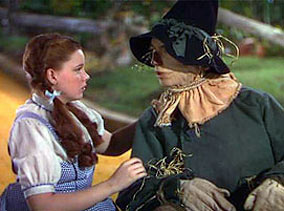
When it comes to deciding what to wear for the Hallowe’en costume party, Marianne realises that ‘She didn’t need to choose something to fit her new “bad girl” image. Oz had made it clear he didn’t believe in that image, anyway.’ (2006: 132). And yet, the costume she does choose has some ‘cool shoes’ (2006: 132), the bright red, shiny high heels worn by Dorothy, which may recall the ‘pretty red high heels’ (2006: 120) she wore in the previous scene when she was being a very provocative ‘bad girl’ in red high heels and matching lingerie. While Marianne may be mostly a good girl, and thus more suited to wearing a Dorothy costume than a 'bright red outfit she'd seen [...] The Bedazzled devil suit' (2006: 131), she retains something of the confident, red-heels-wearer about her. Like the 'bad girl' Marianne, she is a sexually aware and enjoys the speed and daring of riding a motorbike. Marianne's true nature is therefore somewhere between her 'bad girl' persona and that of the innocent Dorothy. So when she chooses to dress as Dorothy she adapts her costume so that it reflects her personality: ‘though her hair was plaited into innocent braids, her mouth was outlined in red lipstick. Okay, Dorothy was never going to be a bad girl. But she didn’t have to be a nun’ (2006: 132). What being with Oz has taught Marianne is that she can 'not try to be perfect. I can be myself' (2006: 206). Neither her 'good girl', nor her 'bad girl' persona were the true Marianne: neither allowed her to be herself, but both contained elements of the real Marianne.

Oz learns from his role-playing too. In the past Oz had put some effort into changing his image: he was the ‘geekiest kid at Portland High’ (2006: 15), ‘a ninety-eight pound weakling’ so he ‘joined the rowing team when I got to Harvard’ (2006: 123). While his 'bad boy' look, forced on him by Jack, is not one he chose, he recalls that as ‘juniors in high school’ he and his friends used to wear fake tattoos ‘to look older’, and Kitty, Jack’s wife observes that ‘Girls wear makeup to look older, boys wear fake tattoos’ (2006: 15). Experimenting with looking different is part of growing up, and it can also be used by adults who want their outward appearance to be ‘read’ by the viewer. Although Oz thinks ‘Borrowed bike. Borrowed clothes. She liked all the things about him that weren’t really him’ (2006: 29), as we’ve already noted, Oz ends up buying the bike and accepting his love of speed, and, on a less metaphorical and more earthy level, it’s not true that at first sight Marianne only likes the things that aren’t real about Oz – she most certainly appreciates the body within the clothes.

Dressing up is part of the Cinderella story – her fairy godmother gives her a makeover so that her outward appearance matches her inner beauty. Another common motif in romance is the heroine who dresses up as a boy, thus displaying to the reader (and the hero) her ‘masculine’ qualities such as courage and athletic skill. The disguises may not be real (the heroine is not really a boy) and yet they do reveal some truth about the character (she has ‘masculine’ qualities).

Disguises, then, can both conceal and expose, and are a mixture of truth and fiction:
“People think we put on costumes to disguise who we really are,” Oz said. “But I’m beginning to understand that it’s when we pretend to be other people that we reveal the most about ourselves.” [...] “For example, I felt silly in that motorcycle outfit when I first put it on. But as soon as I met you and saw how you saw me in it, I realized that I’d been denying my reckless side for far too long.” (2006: 139)
  • Cohen, Julie, 2006. Being a Bad Girl (Richmond, Surrey: Harlequin Mills & Boon Limited).

Monday, September 25, 2006

Julie Cohen – Being a Bad Girl (1)

No, this isn't a review. It's going to be like the analyses I've done of the metaromances, except that this time I'm going to look at imagery as well as at themes. It got rather long, which is why I'm splitting this up into two posts. I'll put up the second in a day or two.

Before I begin, I should mention that this book is a Mills & Boon’s Modern Romance Extra-Sensual (in the line formerly known as ‘Harlequin Temptation’). Julie Cohen has given seminars on writing sex scenes and you can read an excerpt which demonstrates her skill at this, but it's not something I'm going to discuss here. If you haven’t read the book and want to see a review, there’s one here.

I'm not going to discuss the sex, or the plot development, or the characterisation and I may give spoilers. So, now that I’ve bored or scared off almost all my potential readers, for those who’re still sitting comfortably, I’ll begin.

The hero of Being a Bad Girl, Dr Oz Strummer, is a psychologist and as the novel progresses he makes observations about his own and the heroine’s motivation. However, given that he’s a fictional character, who sprang from the brain of Julie Cohen, and she has an M.Phil. in English Literature (her thesis included ‘a whole chapter on the Cottingley fairy photographs’) and is an English teacher, it’s perhaps not surprising that his statements can also be understood to refer to the processes by which authors create themes and imagery in their writing.

So, what does Dr Oz Strummer have to tell us? Well, when Marianne turns up dressed as Dorothy, while Oz is dressed as the Scarecrow
they burst out laughing together.
“You’re a very sexy Dorothy,” he said, looking her up and down. She felt herself blush.
“It was just the first costume I came across. I didn’t -” Suddenly she realized why Oz had dressed up as the Scarecrow. His name. Her cheeks felt even hotter.
“I didn’t choose it because you’re called – I mean, I closed my eyes. It was a random choice.” She stopped, and looked up into his laughing, knowing hazel eyes.
“You’re going to say that nothing is random, aren’t you?”
“It’s a well-known theory that our subconscious expresses itself in our least deliberate actions,” he replied. (2006: 133)
Romance authors, whether subconsciously or deliberately, use imagery which complements the themes in the story they're writing. Julie Cohen is in the latter group, playfully using imagery and then making explicit its meaning; there are no accidental uses of clichés in this novel. For example, when Marianne, the heroine, muses that she wouldn’t ‘know what a bad boy was like unless one came up and bit her on the behind’ (2006: 11) she immediately pours herself a tequila and raises a toast ‘to an imaginary bad boy. “To bites on the behind”’ (2006: 12). When Oz is given a fake tattoo to wear of ‘a large sword with a snake twining around it’ (2006: 15) he knows that these are ‘Two blatant phallic symbols. Jack and Kitty weren’t being subtle in the least’ (2006: 15). And then Oz takes Marianne to the beach at night, where she can see the lighthouse: ‘ “A pillar of fire by night,” Oz said. “That’s what Longfellow called it.”’ (2006: 52). Julie quoted this passage of the novel and discussed it on her blog, so you can go there and see how the imagery adds to the emotional effect of the scene. What’s particularly interesting is that the same object, the lighthouse, can be interpreted/‘read’ differently by two different people. For Marianne the lighthouse makes her think ‘beautiful, perfect, and alone [...] she wasn’t like that perfect, lonely lighthouse anymore. She’d moved up here to change: to become happy and carefree’ (2006: 52). Oz, on the other hand, says that ‘I brought you to the biggest phallic symbol in the neighborhood [...] I think I mentioned Longfellow, too’ (2006: 55).

I won’t list all the imagery and innuendo in the novel, but I will give just one more example which is key to understanding Oz: his motorcycle, which is not, in fact, his. It’s part of the persona that’s being forced upon him by his friends who are dressing him up for a charity bacherlor auction and making him look like a 'bad boy' biker. Despite this, it does reflect an aspect of Oz’s personality. When he first sees the ‘flame-colored, chrome-girdled Harley Davidson’ (2006: 15) he imagines it ‘thrumming under his hands [...] the feeling of the road rushing under the wheels. Then real life and responsibility came back to him’ (2006: 15). But Oz’s ‘real life’ and his responsibilities are changing, which is perhaps why he buys the bike. Oz, it turns out, likes speed and sometimes wants to be free from ‘Responsibility. My job. My life. Who I am’ (2006: 78). The bike is ‘Freedom on two wheels’ (2006: 17). But speed, risk, and freedom are not enough to make Oz happy. When he goes on a night ride by himself ‘The fantasy wasn’t working. The Harley was a stunning machine. It responded to his every touch with perfect precision and awesome power. And it felt like a stupid, inanimate pile of metal and rubber when he was on it alone’ (2006: 70). He wants both excitement and stability, freedom and commitment, ‘I need something and somebody permanent’ (2006: 103). Stability on a motorbike with a passenger riding pillion can only be achieved through trust ‘I’ll trust you not to crash’ (2006: 39) and physical closeness, ‘hold on tight to me’ (2006: 39), with both driver and passenger having to ‘let our bodies work together with the bike’ (2006: 40). That applies not just to riding the bike, but also to sex, ‘Their bodies worked together, as they had on the motorcycle’ (2006: 171) and to the emotional side of the relationship between Oz and Marianne.

The lessons that Oz learns with Marianne and the motorbike also help explain why he changes his mind about his sister’s forthcoming wedding. He had thought that she was too young to get married (2006: 99-100), but, by the end of the novel he knows that, given the right riding partner, speed and excitement can be combined with safety. His sister, though she’s rushing to get married at an early age is not making a mistake, because she’s chosen her partner well.

I also thought the names of the hero and heroine were interesting. Julie Cohen says that ‘I named Oz after Joe Strummer in The Clash, because he died the same week I invented Oz’, but the surname sounds not dissimilar to the words ‘thrum’. Oz's surname, then, may echo the ‘thrumming [...] the satisfying roar’ (2006: 15) of the motorbike. His first name is Oscar, but he’s known as Oz, and Marianne thinks ‘Oz was a good name for a biker [...] A wizard on a motorcycle’ (2006: 20). Marianne’s surname is Webb, and her hometown is Webb, and that possibly reflects the fact that she’s been caught up in a web of rules, and is now trying to break free: ‘Make up the rules yourself, mused Marianne. After years of having the rules made up for her, that sounded exactly like what she was looking for’ (2006: 11). Marianne is the name of the ‘national emblem of France’, ‘a personification of Liberty and Reason’. These are qualities which are combined in the intelligent, freedom-seeking Marianne Webb. The French Marianne is often portrayed bearing her breast, and Marianne Webb’s bid for liberty involves exploring her sexuality. If we compare this heroine to other Mariannes in literature, we may note that she is much more fortunate than Marianne in Austen's Sense and Sensibility, who also falls in love with a bad boy, Willoughby, though of course Willoughby is a truly bad boy, not simply one who breaks a few rules. Oz combines the romantic and sexual appeal of the bad boy with the stability and wisdom of a Colonel Brandon. Or perhaps her name owes something to the song Marianne, about another Marianne who likes the seaside, sung by Terry Gilkyson & The Easy Riders (Oz's bike is a low rider (2006: 39)).

All of the above regarding Marianne’s name is pure speculation, and I suspect that I may be wrong. Nonetheless, since the reader doesn’t often know the author’s intentions, it can be interesting to analyse the possible associations that particular names have for the reader. Readers certainly have preferences regarding names for heroes, and, as mentioned previously, alpha heroes are not infrequently named after predatory birds and animals. Trying to work out the connotations and derivation of a name is something that Marianne does. Oz’s name makes her think both of the Wizard of Oz and ‘Ozzy Osbourne’ (2006: 47), but in fact he got the nickname for quite another, very innocent reason. So, if my analysis of Marianne’s name is wrong, I’m not in bad company.

  • Cohen, Julie, 2006. Being a Bad Girl (Richmond, Surrey: Harlequin Mills & Boon Limited).