Bogaert, Anthony F., Jessie E. Hernder and , Jessica R. Johnson (2026). "Who “Feels Sexy” in the
Google Books Corpus? Text-Mining Evidence for Gender Differences in
Object of Desire Self-Consciousness." Archives of Sexual Behavior. [Abstract here.]
Eimannsberger, Angelina
(2026). "The Romance Shop Around the Corner: How Women Readers Created a New Kind of Independent Bookstore." The New Americanist 4.1-2. [Abstract here.]
Grant, Ania (2025). Evolution, Feminism, and Romantic Fiction: From Mr. Darcy to Mr. Big
London:
Routledge. [Abstract here.]
Handley-Cousins, Sarah (2026). "Love Is a Battlefield: Civil War Memory in Modern Romance Novels." They Are Dead and Yet They Live: Civil War Memories in a Polarized America. Ed. John M. Kinder and Jennifer M. Murray. Lincoln: University of Nebraska Press. 152-169. [Excerpt here.]
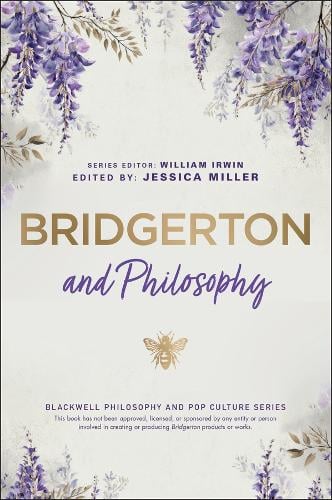
Miller, Jessica (2026). ""I Shall Be Very Happy, Indeed": The Meanings of Happiness in Bridgerton" Bridgerton and Philosophy: Dukes, Debutantes, and Deep Questions . Ed. Jessica Miller. Wiley. [This article is free online. The remained of the volume is not. I have more details about that volume here. It won't be available until March.]
Musiał-Pudełko, Aleksandra (2026)
"'You and Me and History': Queer Romance and Liberal Fantasy in Casey McQuiston's Red, White & Royal Blue."
Erotic Discourses in History, Culture and the Arts. Ed. Aleksandra Musiał-Pudełko, Nina Augustynowicz, Agnieszka Podruczna. New York: Routledge. [Abstract here.]
I probably should have posted this list before it got so long, but more and more notifications kept arriving in my inbox and I kept thinking I'd post once I'd added all the news items to the RSDB and that took me longer than anticipated. Anyway, I'll begin with a couple of not-strictly academic pieces which are, nonetheless, quite academic:
In the Arkansas Democrat Gazette (June 8) Guy Lancaster (mentioned recently on this blog and who has a publication below) gives his backstory as a non-romance reader before exploring the societal implications of the denigration of romance:
For so long, we have regarded the consumption of Harlequin paperbacks as
nigh pathological on the part of women, when in fact, it was the
rejection of romance that typified the pathological condition beginning
to emerge in American culture at large. After all, these stories center
the phenomenon we call love. And as no less a thinker than G.W.F. Hegel,
perhaps the greatest philosopher of the 19th century, wrote in
"Elements of the Philosophy of Right" (1820): "Love means in general the
consciousness of my unity with another, so that I am not isolated on my
own, but gain my self-consciousness only through the renunciation of my
independent existence and through knowing myself as the unity of myself
with another and of the other with me." (https://www.arkansasonline.com/news/2025/jun/08/the-thrill-of-love/, archived here and also here)
And that's not entirely unrelated to Jessica Taylor's ponderings about the value of her research into romance now that she's outside academia, and how success is measured (in publishing and academia): "What is writing a romance for? What is this essay for? Is work all there is?" Jessica's PhD thesis, Write the Book of Your Heart: Career, Passion and Publishing in the Romance Writing Community (2013) can be downloaded here.
And the latest additions to the Romance Scholarship Database:
Ahmed, Iman and Michael-Zane Brose, Lara Dengs, Lucie Elfering, Elena
John, Mira Kalcker, Alice Kronenberg, Charmaine Küllenberg, Laura Le
Donne, Alican Nazik, Lena Neisen, Öznur Zeynep Özdal, Hanna
Schneemann, Antonia Steven, Julie Bøglund Strand (2025). A “Messy Complexity”? On Coming-Out, Identity Formation, and Community in Queer YA Romance Novels. Heinrich
Heine University Duesseldorf.
Burkes, Jordan (2025). The Love Hypothesis: Exploring the Consumption of Romance Novels.PhD,
Louisiana State University and Agricultural and Mechanical College. [Embargoed until 2032 but the abstract can be found here.]
Hodson,
Jane (2024). "The Significance of Stance in Fictional
Representations of Non-Standard Language and Prescriptivism".
New
Horizons in Prescriptivism Research,
edited by Nuria Yáñez-Bouza, María E. Rodríguez-Gil and Javier
Pérez-Guerra. Bristol, Blue Ridge Summit: Multilingual Matters:
103-119. [https://doi.org/10.21832/9781800416154-007 I was late in finding this, probably because it doesn't mention romance in the title or the text of the essay. It does, though, focus on the use of "non-standard" language in Georgette Heyer's The Unknown Ajax. Currently, most/all of this is visible via Google Books.]
Kamblé, Jayashree (2025). "The
Women Who Changed the American Mass-Market Romance Genre: BIPOC
Editors, Authors, and Category Romance Novels from 1980 to 1988."Contemporary Women's Writing
19. [Abstract available here and excerpts here.]
Lancaster, Guy (2025).
" ‘It had turned them all into voyeurs’: Celebrity as the Antithesis of Community in Molly O’Keefe’s Wild Child."Arkansas Review: A Journal of Delta Studies
56.1:25–36. [Details here.]
Raffloer, Gavin and Melanie Green (2025).
"Of Love & Lasers: Perceptions of Narratives by AI Versus Human Authors."
Computers in Human Behavior: Artificial Humans. [This is Online First, so does not yet have pagination. Also note that the paper discusses romance generated by AI versus romance written by humans, and I've written some comments on the methodology from the perspective of a romance scholar.]
Sutton, Denise H. (2025).
“Romance Publishing for a New Generation: The Case of Harlequin and
Mills & Boon In India.” Publishing History 89:7-27. [More details in the RSDB]
Valovirta, Elina (2025). "Romancing the Caribbean Sea: Size, Mobility and Sustainability in Cruise Ship Romance Fiction". Anglia 143.2: 382-397. https://doi.org/10.1515/ang-2025-0026
Wilder, Mims (2025). (Wo)Men in Love: An Analysis of Sexual
Scripts, Escapism, and Queer Explorations Among Woman Readers and
Authors of Male/Male Romance Novels. Doctor of Philosophy in
Human Sexuality, California Institute of Integral Studies.
[More details here.]
Conflict and Colonialism in 21st Century Romantic Historical Fiction: Repairing the Past, Repurposing History, edited by Hsu-Ming Teo and Paloma Fresno-Calleja is out today (13 June) from Routledge. The introduction, "Conflict and Colonialism in 21st Century Romantic Historical Fiction: Repairing the Past, Repurposing History" is open access and can be downloaded from here.
The other essays about romance in the collection are:
The Australian Convict Prostitute Romance: Narrating Social and Sexual Justice for “Damned Whores” - Hsu-Ming Teo
Love in Victorian London: Immigrant Histories and Intersecting Diversities in K. J. Charles’s Sins of the Cities - Jayashree Kamblé
Language, Sexuality and “Necessary” Anachronism in Lorraine
Heath’s Neo-Victorian Popular Romance Series Scandalous Gentlemen of St.
James - Carmen Pérez Ríu
Suffragette Historical Romances: Re-Purposing Women’s Suffrage in a Postfeminist Context - Mariana Ripoll-Fonollar
The US Civil War and its Aftermath in Historical Quaker
Romances Hailing White Heroines as Builders and Healers of the Nation - Carolina Fernández Rodríguez
Historical Reparation, Emotional Justice: The Navajo Long Walk in Evangeline Parsons Yazzie’s Her Land, Her Love - Silvia Martínez-Falquina
When a Jew Loves a Nazi: Problems with Repurposing the Holocaust for Reparative Romance - Hsu-Ming Teo
Lukas, Iwan, Muarifuddin, and Rahmawati Azi (2024).
"Formula Romance dalam Roman Mes Amis Mes Amours Karya Marc Lévy."LE PARIS: Journal de Langue, Litterature, et Culture
5.1:15-3. [There's an abstract in English but the article itself is written in what I assume is Indonesian.]
Rimmer, Abi (2024).
"Can I have a side hustle as a doctor?"BMJ
385. [Short article which includes quotes from Fearne Hill. Abstract here.]
Sanders, Lise Shapiro (2024). "Girls Growing Up: Reading ‘Erotic
Bloods’ in Interwar Britain". The Edinburgh History of
Children's Periodicals, edited by Kristine Moruzi, Beth Rodgers
and Michelle Smith. Edinburgh: Edinburgh University Press:
93-111. https://doi.org/10.1515/9781399506663-009
The IASPR conference starts tomorrow and the schedule (with abstracts of the papers to be presented) is available for download here: https://www.iaspr.org/conferences/schedule-romance-revitalised/ . The topics for the various panels include: Booktok, Black Romance, Historical Romance, Love Studies, Paranormal Romance, Queer Romance and much more!
The conference will also see the launch of Jayashree Kamblé's new book, Creating Identity The Popular Romance Heroine's Journey to Selfhood and Self-Presentation (which you can read more about here).
In addition, this week only, the ebook version of Publishing Romance Fiction in the Philippines by Jodi McAlister, Claire Parnell and Andrea Anne Trinidad, which was published earlier this year by Cambridge University Press, is available for free download here.
Here's a list of some other recent publications:
Ali, Kecia (2023). "The End of the World as We Know It: Climate Catastrophe in Nalini Singh's Paranormal Romance Fiction." The Journal of the Core Curriculum: An Annual Literary and Academic Anthology in the College of Arts and Sciences at Boston University 32:81-86. [At the time of adding this to the list, the 2023 volume of this journal wasn't yet available online.]
Burge, Amy
(2023).
"Romantic Love across Borders: Marriage Migration in Popular Romance Fiction."
Contemporary Love Studies in the Arts and Humanities: What's Love Got To Do With It?
Ed. Madalena Grobbelaar, Elizabeth Reid Boyd and Debra Dudek. Cham, Switzerland: Springer. 39-49. [Abstract]
Phipps, Catherine (2023). "‘The Machine for Showing Desire’: Desert Romance Fiction and Knowing Sexual Desire." Historical Research, Creative Writing, and the Past: Methods of Knowing. Ed. Kevin A. Morrison and Pälvi Rantala. New York: Routledge. [Abstract and Excerpt]
I ended up writing a post which was far too long for here, on history, "social mentalities" and some comments by Julia Quinn about what (she thought) was and wasn't possible to write given the historical record and reader preferences. It's over at my personal blog: https://www.vivanco.me.uk/blog/history-social-mentalities-and-julia-quinn
It hasn't taken long for the RWA crisis to be turned into a case-study:
Lawrence, Kelsey, 2020. "No Happy Ending: Leadership Falls Apart at the Romance Writers of America." SAGE Business Cases. http://dx.doi.org/10.4135/9781529741117 and here's the abstract:
This short case asks students to examine the controversy stemming from
allegations of racism within the Romance Writers of America (RWA), one
of the largest U.S. writers’ and trade organizations. Students will
assess the organization’s response to the allegations, its subsequent
change of leadership, and what this indicates about the overall culture
within the RWA.
The crisis is also mentioned, albeit briefly, in the article by McAlister et al (see details below): "the implosion of the Romance Writers of America in late 2019 over issues of institutionalised racism demonstrated that the romance industry is still suffering from 'publishing’s diversity deficit'."
I'll take the opportunity, since I've brought up the topic of the RWA, to mention that the new Board of Directors issued an apology to members (archived here) and also to Courtney Milan:
The Board Members wrote:
Dear Courtney,
For our first and most important order of business, we,
the members of the Board of Directors of Romance Writers of America,
are writing to apologize to you. We acknowledge the improper, unfair,
and wrongful handling by RWA of the ethics complaints filed against you.
We offer our sincerest apology to you for what transpired. We object
vehemently to the way the proceedings were conducted, and we are very
sorry for the resulting impact on you.
As a result, in a unanimous vote as a new Board, we
have expunged both the complaints and the ensuing proceedings from the
record. This should never have happened, and the fact that it happened
to you--someone who has worked so hard to champion diversity, inclusion,
and equity for our members from marginalized communities--is a
travesty.
While we regrettably cannot undo how your case was
managed, we will be conducting a thorough review of the current RWA Code
of Ethics and surrounding procedures, as well as the RWA Policy manual,
to ensure that they best reflect RWA's current priorities and
principles, and so that RWA can help avoid situations like this in the
future.
We thank you for your years of dedicated service to RWA, and we will work hard to be worthy of that dedication.
And in other publications:
Adamenko, Olga and Olga Klymenko, 2020. "Communicative Behavior via Gender Identity (Based on the English language 'love stories')." Psycholinguistics 27.2. 44-70.
https://doi.org/10.31470/2309-1797-2020-27-2-44-70 The abstract is in English but the paper itself is not.
Kamitsuka, Margaret D., 2020. “Prolife Christian Romance Novels: A Sign that the Abortion-as-Murder Center Is Not Holding?” Christianity & Literature 69.1: 36-52. https://muse.jhu.edu/article/752347
McAlister, Jodi, Claire Parnell and Andrea Anne Trinidad, 2020. "#RomanceClass: Genre World, Intimate Public, Found Family." Publishing Research Quarterly. Online First. https://doi.org/10.1007/s12109-020-09733-1
Paradis, Kenneth, 2020. “Types and Tropes: History and Moral Agency in Evangelical Inspirational Fiction.” Christianity & Literature 69.1: 73-90. https://muse.jhu.edu/article/752349
To help spread awareness of what colleagues are researching, at a time when people can only do this online, I'll post the titles of papers, including a link to the abstracts.
The IASPR 2018 conference now has its programme online but prior to that appearing there was a lot of very thorough tweeting by a number of attendees, using #iaspr18. Since Kat (@BookThingo) has really comprehensive threads, I've used the threadreaderapp to bundle her tweets together and I'm linking to them below.
Session 1 - Romancing Australia, with papers by Amy T. Matthews and Amy Mead (Flinders University), Kate Cuthbert and Jodi McAlister (Deakin University) SEE THREAD
There's more about changes affecting cover art, as discussed by Kate Cuthbert, here, from Claire Parnell via the @PopFicDoctors: Coverart and here's a podcast interview with Jodi McAlister in which she discusses her paper: Podcast. In addition, Renée Dahlia has written a blog post about the session.
Session 2 - Gender and Sexuality, with papers by Ellen Carter (University of Strasbourg), Christina Vogels (AUT New Zealand) and Andrea Anne Trinidad (Ateneo de Manila University, Philippines) SEE THREAD
Renée Dahlia's written a blog post about this session.
Here's a podcast from New Zealand Radio with Christina Vogels about her PhD thesis, titled It's a masculinity sort of thing: Young men talk about the rules of (hetero)romantic relationships.
Session 3 - Places and Spaces of Love, with papers by Kecia Ali (Boston University), Jacqueline Jones (LaGuardia CC, City University of New York) and Vassiliki Veros (University of Technology, Sydney) SEE THREAD
A similar presentation by Vassiliki Veros on "Exploring library metadata and how it can marginalise romance fiction" is up on YouTube.
Session 4 - Keynote Panel on “Romancing Popular Fiction Studies: A Theory of Genre Worlds” by Beth Driscoll (University of Melbourne), Lisa Fletcher (University of Tasmania) and Kim Wilkins (University of Queensland) SEE THREAD and, from Jodi McAlister, with more graphics: See thread
There's also a podcast recorded with the presenters in advance of this panel: Podcast
Session 5 - History and Romance, with papers by Stephanie Russo (Macquarie University), Jennifer Wallace and Francesca Pierini (Academia Sinica, Taiwan).
Kat had to miss most of this session, so the thread is by Jodi McAlister: SEE THREAD
Philippa B's summary of Stephanie Russo's paper on "Georgette Heyer’s Unruly Eighteenth Century" can be found here.
Phillipa B's summary of Pierini's presentation about "Italian timelessness" can be found here.
Jennifer Wallace writes romance as Jennifer Hallock and she's put her paper up on her website in two parts. Part one looks at how the bestsellers in historical romance are
disproportionately: (1) set in Great Britain; (2) overpopulated with
nobles; and (3) selective in their historical accuracy. Part two looks at how the aggregate impact of these chronotopes can be
harmful to our understanding of history, to the romance market as a
whole, and particularly to authors of diverse books. For links to more graphics and a way to help Jennifer crowdsource historical romances which differ from the chronotope she identified, go here and scroll to the end of the post.
Phillipa B's summary of Jennifer Wallace's "History Ever After: Fabricated historical chronotopes in romance genre fictions" can be found here.
Session 6 - Power and Patriarchy, with papers by Heather Schell (George Washington University), Nattie Golubov (Centro de Investigaciones sobre América del Norte, Universidad Nacional Autónoma de México), Therese Dryden (University of Newcastle) and Jayashree Kamblé (LaGuardia CC, City University of New York) SEE THREAD
Philippa B's post about Heather Schell's "The Soft Power of Popular Romance" can be found here.
Philippa B's post about Nattie Golubov's "Dangerous loves endangered: nationalism, violence and territoralization in US paramilitary romance fiction" is here.
Philippa B's summary of Therese Dryden/Michelle Douglas's "The Single Mother and the Law: Romance novels making room for female voices in patriarchal spaces" is here.
And details of Jayashree Kamblé's “One of the Guys? Eve Dallas as a Masculine Worker Heroine in J.D. Robb’s In Death series", also by Philippa B.
Session 7 - 19th Century Legacies, with papers by Sarah Ficke (Marymount University), Steven Gil and Lucy Sheerman SEE THREAD
See Renée Dahlia's blog post about the session.
Details here about Sarah Ficke's “House, Home, and Husband in Historical Romance Fiction", from Philippa B.
Steven Gil's "Beloved Monstrosity: Romance and Romanticism in Frankenstein" has been summarised by Philippa B.
Philippa B has summarised Lucy Sheerman's “Reader, I mirrored him: the recasting of romance tropes in Jane Eyre fanfiction" here.
Session 8 - Muslim and Middle Eastern Romance, with papers by Kathrina Daud (University of Brunei), Claire Parnell (University of Melbourne), Javaria Farooqui (University of Tasmania) and Amy Burge (University of Birmingham) SEE THREAD
See Renée Dahlia's blog post about the session.
Philippa B's posted about Kathrina Daud's "Muslims reading romance: Bruneian considerations of “Halal” and romance novels" here.
The abstract of Claire Parnell's “Reading and Writing Muslim Romance Online” and notes on the session by Philippa B can be found here.
Philippa B's post on Javaria Farooqui's “The Kitchen and Beyond: Romantic Chronotope of Pakistani Popular Fiction" is here.
Amy Burge's “Girls of Riyadh and Desperate in Dubai: Reading and writing romance in the Middle East" is summarised here by Philippa B.
Session 9 - Romancing Chinese Worlds, with papers by Fang-Mei Lin (National Taiwan Normal University), Huike Wen (Willamette University), Jin Feng (Grinnell College) and Erin S. Young (SUNY Empire State College) SEE THREAD (by Jodi McAlister)
See Renée Dahlia's blog post about the session.
The abstract of Huike Wen's “On the Way to a Better Life: Countryside themed romance in recent Chinese Television" and some additional comments from the paper are provided by Philippa B here.
Philippa B also provides these for Jin Feng's “Life Is Elsewhere: The Economy of Food and Sex in Chinese Web Romance”
and for “Romance in Chinatown: The Love Stories of Edith Maude Eaton” by Erin S. Young.
Session 10 - South/South-East Asian Romance Communities with a paper by Meghna Bohidar (University of Delhi)
Bohidar: young romantic couples are less concerned with caste and religious differences, however they still shape subjectivity e.g. through taste. #IASPR18pic.twitter.com/QrvvM5tZFt
For those who can't read the text in that photo, it contains a definition of an important term used in Bohidar's paper: "Habitus is a set of microbehaviors consisting of a matrix of perceptions, appreciations, and actions that are unconsciously ingrained based on one's class position"
SEE THREAD and Philippa B's summary of Meghna Bohidar's “Negotiating Romantic Love in India: Family, Public Space, and Popular Cinema"
The session then moved on to Kat Mayo's interview of/conversation with Mina V. Esguerra
Session 11 - Subversions of Race, Culture and History with papers by Eric Murphy Selinger (DePaul University), Mallory Jagodzinski (Indiana University South Bend) and Johanna Hoorenman (Utrecht University) SEE THREAD and, from Jodi McAlister, A SUPPLEMENTARY THREAD
The abstract of, supplemented by notes by Philippa B on, Eric Murphy Selinger's “The Wild Heart of the Continent: Love and Place in Sherry Thomas’s Silk Road Romance Novels”
The same, but for Mallory Jagodzinski's “Love is (Color) Blind: Race, Belonging, and Nation in 21st Century Historical Romance Fiction" is here.
Again, an abstract followed by comments by Philippa B, this time on “‘You stayed’: Love, law and the reservation in Jenna Kernan’s Apache Protectors series" by Johanna Hoorenman.
Session 12 - Love in Other Worlds with papers by Donna Hanson (University of Canberra), María T. Ramos-García (South Dakota State University), Athena Bellas (University of Melbourne) and Kristin Noone (Irvine Valley College) SEE THREAD and coverage of the FINAL PAPERS in this thread by Jodi McAlister.
Philippa B's post about Donna Hanson's “Love in Outer Space: Science fiction romance
—
the ideal place to explore gender and
love” can be found here.
María T. Ramos-García's “Representations of Otherness in Paranormal Romance: Nalini Singh and J.R. Ward” is summarised by Philippa B here.
I've now come across a couple of reports on the recent Georgette Heyer conference. Sophie Weston mentions that
A terrific paper from Vanda Wilcox made
the point that, however precise Heyer’s grasp of strategic issues at
Waterloo might have been, her officers “embody World War I values and
leadership style”. At the same time Heyer’s other ranks (gorgeous Gideon
Ware’s straight-talking soldier servant, for instance) are basically
WWI Tommies in red coats, rather than Wellington’s rapists and
pillagers. Convinced me completely.
Her full report can be found here. The evening discussion session is described here by Nicola Cornick.
On 29 June, at the Gendered Emotions in History conference held at the University of Sheffield there was a paper on romance, presented by:
Agnes Arnold-Forster (QMUL) - Gender, Emotions, and Professional Identity in Twentieth Century Medical Mills and Boon Novels
The EUPOP2018 conference will be held from July 24th – 26th, 2018. One of the keynote speeches is by
Professor Petr A. Bilek (Charles University, Prague)
Distant Encounters of the Third Kind: Why Is Popular Culture Not Popular within Central European University Curricula?
The Nonesuch? Georgette Heyer and Her Historical Fiction Contemporaries
The Nonesuch? Georgette Heyer and Her Historical Fiction Contemporaries
Tuesday 19 June 2018, 9.15am - 5.30pm
The programme can be found here but in case that doesn't work and/or to preserve the details for posterity, here's a list of the papers and their authors:
Kim Sherwood (UWE Bristol) - "Pride and Prejudice: Metafiction and the
Value of Historical Romance in Georgette
Heyer"
Lisa Hopkins (Sheffield Hallam University) - "Shakespearean Echoes in Heyer’s Regency
Novels"
Laura George (Eastern Michigan University) - "‘A
little out of the way’: the dandy heroine in
Regency Buck"
Kathleen Jennings (University of Queensland) -
"Heyer... in Space! The Influence of Georgette
Heyer
on Science Fiction"
Vanda Wilcox (John Cabot University) -
"Georgette Heyer, Wellington’s army and the
First World War"
Geraldine Perriam (University
of Glasgow) -
"The Not-so-silly-ass:
Freddy Standen, his
Fictional contemporaries and Alternative Masculinity"
Tom Zille (Humboldt University)
- "Georgette Heyer and the Language of the
Historical Novel"
Deborah Longworth (University
of
Birmingham) -
"From Almack’s to Astley’s:
Regency
World-building in the work of Georgette Heyer"
Sally Moore (University of Hertfordshire)
- "Divorced, Beheaded, Died . . .
The Problem
with the Tudors in Romance Fiction"
Holly Hirst (Manchester Metropolitan
University)
- "Georgette Heyer
and Redefining the Gothic Romance"
Stacy Gillis (Newcastle University)
- "‘Ordinary People’: Austen and the Literary
Genealogy of the Regency Romance"
jay Dixon (Independent Scholar) -
"The Regency Novel under Heyer’s Influence"
Louise Allen (Independent Scholar) -
"Writing in Heyer’s Shadow"
Roundtable discussion on Teaching Popular Historical Romance in
the Literature Curriculum - Deborah Longworth, University of
Birmingham
Lucie Dutton (Birkbeck, University of
London) -
"A Reluctant Movie"
Amy Street (Independent Scholar)
- "Guilty Pleasures: Georgette Heyer"
Helen Davidge (Independent Scholar)
- "Data Science, Georgette Heyer's Historical
Novels and her Readers"
Roundtable discussion on Branding for the digital generation:
Georgette Heyer’s book jackets as
expressions of publishing contexts and fields
- Mary Ann Kernan,
City,
University of
London;
Kim Wilkins, University of
Queensland; Samantha Rayner, UCL
Plenary: Professor Kathryn Sutherland, Senior Research Fellow, St Anne's College Oxford, " 'Where history says little, fiction may say much': women writers and the historical novel"
More details about the conference, which is being held on April 13-14, can be found here and you can follow events as they happen on Twitter, via #bgsuromcon18 and some can also be found on #BGSURomCom18 .
The guest of honor for the conference will be 2017 RWA Nora Roberts Lifetime Achievement Award Recipient Beverly Jenkins,
who has published more than 30 novels and is well-known for the level
of detailed research she puts into each of her books – making her the
perfect guest for this conference. She will be speaking and signing
books Saturday afternoon at the Wood County District Public Library.
On the Friday there are presentations on a range of academic topics, including pedagogy, librarianship, masculinity, horror, feminism, research, race/ethnicity/nationality and history:
Romancelandia on Twitter: Designing a Digital Humanities Research Assignment for First-Year Writing Students
Heather M. Schell, George Washington University Ann K. G. Brown, George Washington University
In Heather’s first-year writing class, Love and American Culture, in the
primary goal is to introduce students to academic writing and research.
Part of this entails helping students experience the excitement of
writing a research paper when the topic is new and the questions are
motivated by genuine interest. Heather has been collaborating with Ann, a
research librarian, to develop an assignment sequence around original
research on romance authors’ public social networks. The project uses
Social Feed Manager and textual analysis tools to give students the
opportunity to shape their own research questions and study the Twitter
feed of the romance author of their choice.
The Category Romance Project: First-year Students Researching Romance Jen Wofford, Ithaca College
“Vintage” category romances – commercial romance novels published
twenty years old and older – can provide a fascinating data set for
“community inquiry” (CoI), and a novel way to introduce students of
writing to textual analysis.
In its third iteration, my Ithaca College course Reading Popular Romance, is a writing-intensive first-year seminar taught using a Community of Inquiry (CoI) approach to instruction.
Where are all the Fun Books: Popular Romance and Science Fiction Novels in Academic Libraries Sarah Sheehan, Manhattan College
Academic libraries have an uneven record of collecting popular
contemporary literature (genre fiction). Due to this unevenness,
colleges and universities that offer courses about particular genres or
collect works devoted to the study of genre fiction may not actually own
the primary texts. This study examines the extent to which
award-winning novels in two popular genres—romance and science
fiction—are included in the libraries of 114 major research universities
(the Association of Research Libraries) and 80 prominent liberal arts
colleges (the Oberlin Group).
Fantasies of Black Manhood: Black Masculinities in Brenda Jackson’s Westmoreland Series
Kelly L. Choyke, Ohio University - Main Campus Kay-Anne P. Darlington PhD, University of Rio Grande
Popular romance is truly one of the few communities and forms of media
where the male point of view is not catered to. While the romance genre
is the most profitable and least respected literary genre, romance
novels have nevertheless become a safe space to explore marginalized
identities. Our study focuses on the representation of black
masculinities in Brenda Jackson’s Westmoreland Series, published as
category romances via Harlequin.
Happily Ever After …. And After: time travel, history and romance in the novels of Susanna Kearsley Sarah H. Ficke, Marymount University
[...] place often plays a central role in romance
fiction. A perfectly-decorated seaside cottage, like a gorgeous silk
gown, can be materialistic wish fulfillment for a reader who has neither
gown nor cottage. However, place can also be deeply emotional, creating
and shaping the conditions for relationships. In this presentation, I
will be exploring the intersection between romance, place, and history
in three novels by Susanna Kearsley: The Winter Sea, The Rose Garden, and Mariana.
[...] Although they range across time, each of these novels is
anchored by its setting, which plays a crucial role in the emotional
development of the characters and their relationships. [...] I will argue that these
novels provide a framework that can help us understand the simultaneous
specificity of romance – a series of intimate moments between people –
and our urge to view it as a timeless emotion.
True Love and Real Terror: Romance and Horror in Megan Hart’s The Darkest Embrace and Reawakened Passions David Aldrich, Bowling Green State University
The Darkest Embrace and Reawakened Passions are
romances that take place alongside a horror plot. Using Pamela Regis’s
outline of essential elements of the romance, I will chart how both
novellas fit the formula of a romance novel in a relatively short amount
of pages. I will also make comparisons between Hart’s work and other
short works of contemporary horror fiction produced online. This paper
will show that the romance genre can be combined with the horror genre
in a way that satisfies the expectations and conventions of both romance
and horror, all in a short fiction format for a online audience.
Finding the Fairy Tale in Popular Romance Linda J. Lee, University of Pennsylvania
Some novels retell specific well-known fairy tales, like “Cinderella” and “Beauty and the Beast” [...],
while others incorporate a variety of fairy tale motifs without
retelling a specific tale type [...]. Fairy tale intertextual references appear in just about every romance
novel sub-genre [...]. Despite the almost
ubiquity of fairy tale intertexts in romance, there are few scholarly
considerations of the relationship between these narrative forms. Part
of the difficulty is the misalignment between fairy tale theories and
methods and the form of the romance novel. Jennifer Crusie’s “This Is
Not Your Mother’s Cinderella: The Romance Novel as Feminist Fairy Tale”
demonstrates some of the difficulties encountered when applying fairy
tale theory to romance novels. Disciplinary boundaries and lack of
familiarity with discipline-specific research methodologies and tools is
another research challenge. In this paper proposes using Michael Dylan
Foster and Jeffrey Tolbert’s concept of “the folkloresque” as a way to
interrogate the use of fairy tales within popular romance novels.
Laboring for Love: Authorial Emotional Labor as Feminist Project in the Romance Novel Outlander Emma Elizabeth Niehaus, Bowling Green State University
I argue that the common reception of the romance novel is yet another
example of women’s emotional labor being regarded as frivolously
sentimental when in actuality it is impactful social excavation. My
project uses an analysis of emotional work to argue for the romance
genre as a feminist project. Though the romance novel has been widely
disputed as a viable feminist project, an in depth examination of the
emotional labor of characters and writer has been widely overlooked in
this argument. As example, I examine the romance novel Outlander, and the emotional labor performed by author Diana Gabaldon for the story’s heroine, Claire Randall.
Researching the Romance Writers' Research
Caryn Radick, Rutgers University - New Brunswick/Piscataway
In this presentation, an archivist discusses her outreach to romance
writers to learn more about their research behaviors, particularly their
interest in and use of archives for writing their works. The results of
this outreach led to the presenter’s article “Romance Writers’ Use of
Archives,” published in Archivaria in 2016. It also led the
presenter to invite two romance authors, Piper Huguley and Jennifer
McQuiston, to the Society of American Archivists 2016 annual meeting to
participate in a panel discussion on the role of research in their work.
The presenter will share data gathered as part of a survey of romance
writers about their research and discuss how the conversation at the
panel session provided insight on how archivists might better serve the
romance community and why it would be beneficial to do so.
Use Heart in Your (Re)Search: The Invitations of Popular Romance Eric Murphy Selinger, DePaul University
Romance writers do research—but what about romance readers? If they do,
what does their “research” look like? In this talk, I will explore the
kinds of learning that previous scholars have said (and, sometimes,
worried) might be inspired by romance fiction, with an eye to how these
relate to the teaching and learning at work in other popular genres.
(Thomas Roberts’s argument that all popular fiction invites us
to “Think With Tired Brains” about serious and interesting topics will
be central to this discussion; his Aesthetics of Junk Fiction has
been central to my romance pedagogy for the past four or five years.) I
will then compare these critical accounts with the actual learning and
research that my students and I engage in as we grapple with romance
novels in English courses at DePaul: both multi-author / subgenre
surveys and 10-week courses focused on individual texts. One of those
narrowly-focused seminars, on Sherry Thomas’s My Beautiful Enemy,
will be underway during the conference, and I will describe what we are
doing in it and why. (A clue from the heroine’s quest for ancient
treasure in that novel, “use heart in your search,” gives my talk its title.) Rather than ask what romance novels do or don’t teach readers in general,
I want to detail about what a few individual novels invite us to go and
learn, about how they extend those invitations, and about what we find
when we take up their offers, whether in or out of school.
History's Been Hijacked: How To Combat White Supremacy Through Popular Literature Elizabeth Kingston
At the 2017 rally in Charlottesville, white supremacists carried
banners covered in medieval heraldry alongside their Confederate flags,
laying claim to the Middle Ages as a white, Christian utopia. This
whitewashing of history and construction of a “white race” began during
the Age of Enlightenment, and continued through the 19th century – which just happens to be the most popular setting for Historical Romance.
Often seen as providing harmless escapism, the persistent fabrication
of an all-white, all-Christian universe has resulted in an ignorance so
extreme that many readers of Historical Romance reject the historical
validity of non-white characters, or question the possibility that any
non-white character could have a “happily ever after” in a
white-dominated world. While this attitude has a dismaying effect on the
genre, the wider implications of creating a popular fantasy world based
on white supremacist ideology – and presenting is as actual history –
are chilling.
For better or worse, our understanding of history largely comes from
portrayals in pop culture, from Game of Thrones to Downton Abbey.
Writers in the wildly popular genre of Romance have an opportunity to
shape the perceptions of readers to more closely match the historical
reality, and to prevent racially motivated hate groups from co-opting
centuries of European history for their own purposes.
Romance Novels for Feminists: What Does That Mean? Elizabeth Brownlow, Bowling Green State University
How do online spaces allow feminist romance readers to define and
negotiate feminism for themselves? How do these readers define which
romance novels are feminist, and which are not? In this case study, I
will look at the popular romance review blog, Romance Novels for
Feminists (RNFF). In 2009, Jackie C. Horne, a romance novelist, former
children’s book editor, and literary scholar, established RNFF to review
and comment on romance novels in all subgenres. RNFF does not
explicitly state criteria for book selection, only stating that it
“strives to review only books that in its opinion espouse and/or
encourage feminist value.” RNFF’s reviews of feminist romance novels are
based on a no-grading system intended to open up conversations about
feminism and fiction. The reviews on RNFF allow for dialogue amongst
readers, responding to both the books themselves and to Horne’s reading
of them. This paper will explore the traits that Horne homes in on for
her selection of “feminist romance” criteria as well as the traits that
blog responders find most important. I will focus particularly on claims
of sexist and feminist contradictions in these reviews. Moments of
agreement and disagreement between reviewer and responders suggest
romance readers are using online spaces such as RNFF to determine what
feminism means to them as well as to form and articulate opinions on
what does and does not count as feminist in the genre.
Romance Vs. Realism: How Critical Battles over Postwar Teen Romance
Novels Led to the Emergence of Canonical Young Adult Literature Amanda Allen, Eastern Michigan University
In 1942, Maureen Daly published Seventeenth Summer, the
wellspring text for a new genre of American romance novels aimed at a
freshly-minted teenage reading audience. Called the “junior novels,”
this genre was comprised of romance novels—often series texts— that
focused on a girl’s first love experience. Although they quickly became
the main stock of emerging teen library sections, the scholarship
surrounding them became a site of contention, polarized into two
opposing—and gendered—camps: (female) librarians, and (male) academics
housed in English and English Education departments.
This paper uses the lens of Pierre Bourdieu’s theories of cultural
production to examine not the junior novels themselves, but their
reception by critics—a reception based on early Cold War values
regarding what constituted “good” literature for girl readers (and, as a
corollary, what constituted “good girls”). Thus, although librarian
critics valued these romance novels for their use in girls’
socialization, most post-secondary academic critics opposed them,
placing value on their view of literary quality. This use versus quality
dichotomy, moreover, masked an underlying—and gendered—struggle over
defining “realism” as specifically antithetical to “romance.”
An examination of the junior novel critics’ scholarship thus
demonstrates a hidden, historical battle regarding who had the right—and
ability—to define what constituted “value” in literature for girls, and
illustrates how American postwar teen romance novels led to the
creation and sanctioning of canonical young adult literature.
Stigmatizing the Romance Genre: Reading Romance in the Digital Age Angela Hart, American University, Washington D.C.
The romance genre emerged as a counterpublic; a way for women to write
books about women for women. Originally, the romance genre was not
viewed as gender specific; but after World War II, and the return of men
from the battlefields, women went back to their traditional roles, i.e.
at home with their families. Romance novels have become a way to place
female protagonists at the center of a story. Heroines across the genre
are justified in their wants and desires, placing emphasis on the female
experience and viewpoint. Today, romance readers face stigmatization
due to their literary interests. Rather than celebrate a genre by women
for women, readers and writers face marginalization. Avid readers of the
romance genre find their voices in the online sphere; for instance,
posting reviews or blog articles anonymously. On one hand, the online
sphere should be commended for its ability to foster freedom of
expression. Yet, on the other hand, it should be noted that the stigma
surrounding the romance genre creates the need for ongoing anonymity.
While readers are able to vocalize their thoughts, they may only feel
comfortable doing so in an anonymous setting, unintentionally fostering
the ongoing stigma of romance. The growth, accessibility, and
affordability of e-books has also created a method for combating the
genre’s stigma. Readers can make their literary purchases in the privacy
of their own homes and privately read books on their electronic devices
without preying eyes on recognizable romance book covers. The digital
landscape is redefining romance and how readers discus the genre.
An Articulation of Modern Indian Values in the Romance of Sandhya Sridhar Kristen Rudisill, Bowling Green State University
In 2009, avid romance reader Sandhya Sridhar quit her job at a newspaper
in Chennai, India, and started her own company, Pageturn Publisher,
which included the Red Romance Series, to publish English-language
novels that she billed as “full blooded desi romance.” She
sensed a need for romance novels more relatable to Indian readers than
the imported Mills and Boons she grew up with. I argue elsewhere that
desi romance can be considered a subgenre of romance, with the novels
marked as Indian in a variety of ways that include language, content,
and cultural values. Sridhar has written three books in the series, two
in its first year (2010) and one in 2012. In this paper, I argue that
Sridhar’s books have functioned as yardsticks for other authors and
model the goals of this new subgenre. Through close readings of Heartbeats, Endless Time, and 31 Somnath Street, I
address questions about family involvement in romance, acceptable
erotic language, issues of consent, and an articulation of modern Indian
values regarding sex and marriage.These values include
respect for elders’ input, the inherent desirability of marriage and
children, the prioritizing of the family over the individual, the
importance of consent when it comes to intimate relationships, respect
for all women, and women’s control over their own bodies and sexuality.
These values reflect to readers Red’s ideas about of identity,
self-realization, and romance in a post-colonial world.
Bringing Sexy Back: Asian/Asian-American Men as Romantic Leads Trinidad Linares, Bowling Green State University
Although the image of an Asian/Asian-American woman has been a
hypersexualized one, the Asian/Asian-American man has been a
desexualized figure in American history. In contrast to Black or Latinx
men, Asian/Asian American men have been represented as asexual or gay.
They are the Other who does not pose a sexual threat to the white man
because they lack sexual power or prowess. These stereotypes have
created an imbalance in what minimal representations exist for
Asian/Asian Americans in American culture, including romance novels. As a
result, there are often more representations of Asian/Asian American
women in interracial relationships with white men than there are of
strictly Asian/Asian American couples. My presentation focuses on the
history behind the sexless Asian/Asian American man stereotype and how
trends in American popular culture towards Asian/Asian American men may
be changing perspectives of them, which may be impacting the romance
industry and could also be impacted by the romance industry. I will
provide examples of how author ethnicities and audience reaction to
Asian/Asian American men may be catapulting Asian/Asian American men to
lead roles in romance novels for the American market. These Asian/Asian
American leading men present a new option for masculinity, where sexual
attractiveness and ability are not reliant on the abuse of the power
dynamic between men and women because there are comparable oppressions
(interracial coupling between a white woman and an Asian/Asian American
man) or whiteness is decentralized (Asian/Asian American couple or an
Asian/Asian American man with a woman of color).
Outlandish romance: Fan and author navigation of romance genre boundaries
Spring Duvall, Salem College
When the first novel in the international bestselling Outlander
series debuted in 1991, it was marketed as a quintessential historical
romance - complete with a highly stylized cover - and shelved in the
romance genre sections of bookstores and libraries. Cementing its status
as a romance novel, Outlander won the Romance Writers of
America's RITA Award for Best Romance of 1991. Yet, even though author
Diana Gabaldon courted romance fans and accepted the community’s awards,
she also insisted that her novels were not just romance novels and struggled for years to have her books moved into general fiction sections and to be recognized as more than just a romance writer.
This in-depth critical analysis of Gabaldon’s body of work examines
her uneasy position within the romance genre and the tensions among her
critics and fans who seek to define her as a romance writer or establish
her as a general fiction writer. This presentation will discuss a
textual analysis of the Outlander books and the television
adaptation of the series, as well as a critical analysis of online fan
communities and media critics who review the books and television
series. In this research, I position myself as both a feminist media
scholar who studies and teaches scholarship on romance novels and as a
long-term fan of Gabaldon’s work who is deeply familiar with the Outlander fan community.
Paranormal Romance: A History Maria T. Ramos-Garcia, South Dakota State University
Paranormal Romance was a term coined in the 1990’s, but during that
decade, this subgenre was very marginal. The genre, which was all but
disappearing by the year 2000 started to take off at the beginning of
the 21st Century. September 11th triggered a new
interest in romances with paranormal elements that allowed both writers
and readers to delve on issues too painful or controversial to confront
directly at the time. In the early years after the attack there was a
preponderance of novels portraying the shock of discovering magical (and
menacing) elements irrupting in our everyday reality. Later on series
tended to develop fictional worlds in which the paranormal elements were
a given, abandoning the discovery narratives. They either reflect a
dystopian reality, or the realistic world becomes a backdrop for the
action, but not an essential element of it. Over time, the superficially
apolitical nature of the paranormal romance has been eroded with more
openly ideological discourses emerging often. This evolution parallels
the trajectory of other non-romance genres, especially urban fantasy.
This paper will offer an overview of the history of the genre,
emphasizing the connections between romance, culture, and history. While
romance as a reflection of the changing gender roles of women over time
has been frequently observed by critics, there is a scarcity of a more
systematic evaluation of romance as a dynamic genre intimately connected
with its historical moment. This paper will challenge this perspective
offering a new reading of this subgenre.
Christian Romance Novels through the Eyes of West African Women Philomena Archibong Offiong, Bowling Green State University
The romance novel has been a source of ridicule and criticism ever since
its inception and most especially due to its consumption by women.
Scholars such as Tania Modleski and Janice Radway arguing that it
actually empowers women of which African women are included. However,
there exists little or no scholarship on African Romance novels or even
Romance novels based on Africa. My paper, therefore, seeks to address
the scarcity of African romance novels which special attention to West
African women. It is interesting to find out that mostly Christian
authors have been able to combine these two powerful themes into a novel
that entertain while evangelizing to people. The West African woman
like every other in the Western world enjoy romance novels, however,
there exist very literature on African Romance novels. My paper seeks to
determine if the few African romance novels are written and published
by African press follow the romance formula and most importantly, do
these books be used by feminists to empower more women or are these
novels in tune with the African cultures and religious beliefs that
endorses patriarchal rule. My paper will use the use the novel of Unoma
Nwankwor’s “An Unexpected Blessing” and Lynn Neal’s “Romancing God”
since the novel falls under Christian romance and African women are
noted to be religious; thus shedding more light on the relevance of this
little-recognized issue.
Fantasies of Masculinity in Male/Male Popular Romance Jonathan Allan, Brandon University
In her book, Hard-Core Romance: Fifty Shades of Grey, Best-Sellers, and Society,
Eva Illouz asks: “why is traditional masculinity pleasurable in
fantasy?” (58) To answer this question, I focus on the rise of the
male/male popular romance novel, and think through why these novels are
pleasurable. To these ends, I draw on Lucy Neville’s work on gay
pornography, which she argues “subverts the patriarchal order by
challenging masculinist values, providing a protected space for
non-conformist, non-reproductive, non-familiar sexuality, and encourages
many sex-positive values” (204). While this may be true of gay
pornography, can we say the same is true of the male/male popular
romance? Does the male/male popular romance novel really subvert the
“patriarchal order”? Does it provide a space that “encourages many
sex-positive values”? As such, this paper attends to a close reading of
texts alongside theoretical work coming out of queer theory and the
critical study of men and masculinities. Ultimately, I argue that the
male/male popular romance novel remains an important site of analysis
for studies of masculinity, but that, at bottom, we are still left with
“traditional masculinity” as noted by Illouz, and, in many ways, the
“profoundly bourgeois" (207) values central to the romance narrative
that Pamela Regis noted in A Natural History of the Romance Novel. As such, I argue that these novels are not as subversive as we might hope for.
Queer Evolution: A Biocultural Investigation of Gay Romance Fiction Nicholas B. Clark, Bowling Green State University
Literary Darwinism and biocultural theories of literature have seemingly
ignored queer identities in their studies of literature, film, and
popular culture. This study attempts to begin the integration of
biocultural theories and queer theories by analyzing a collection of
stories from Japanese BL (boys love), bara manga, and Western
romance novels. These three unique genres are selected to give attention
to narratives written by both straight and gay writers. The
implications of generic format and the identities of the writers will be
discussed as well. By comparing and contrasting these genres, this
study seeks to establish the biocultural implications homosexual
identities function within these texts. Specific attention will be paid
to homosexual courtship and evolutionary theories of homosexuality, and
how these texts conform to or deny specific theories. In addition to the
traditional biocultural theories, attention will be given to the
specific Japanese understandings of homosexuality and same-sex
relationships and the country’s history of homosexuality and homosexual
identities. In doing so, this study hopes to begin understanding queer
identities within a Literary Darwinist framework, for just as fiction
has be used to explore philosophy, so to can fiction be used to explore
evolutionary psychology.
Revenge of the Romance: How romance novels transform the nerd stereotype Robin Hershkowitz, Bowling Green State University
The character of the ‘nerd’ has been prevalent in popular culture,
usually represented as a man whose intelligence and lack of social
skills keep him from achieving his ultimate desire: obtaining an
attractive girlfriend. Since the early 21st century, the
concept of the nerd has expanded to discussions of toxic masculinity and
entitlement, often seen in such arenas as the culture of the tech
industry and the Gamer Gate phenomenon. My paper addresses the central
question of how the modern romance genre includes these character
archetypes and incorporates them into the romance genre. Specifically,
in my paper, I will use the scholarship of Carol Thurston, Jennifer
Crusie-Smith, Lynn Coddington, and representations of masculinity to
analyze the nerd character in the contemporary romance novels Romancing the Nerd by Leah Rae Miller (2016) and Nerd in Shining Armor
by Vicki Lewis Thompson (2003). I will use these case studies to
illustrate how a feminist reading of romance novels interprets and
redefines the highly gendered concept of the nerd, how the genre
provides a space for character transformation, how these texts redefine
the concept of the ‘nerd’ in terms of the self, and to examine how the
nerd character is a product of gender performance.