Showing posts with label Shakespeare. Show all posts

Monday, June 18, 2018

Georgette Heyer Conference Tomorrow

The Nonesuch? Georgette Heyer and Her Historical Fiction Contemporaries

The Nonesuch? Georgette Heyer and Her Historical Fiction Contemporaries Tuesday 19 June 2018, 9.15am - 5.30pm 


The programme can be found here but in case that doesn't work and/or to preserve the details for posterity, here's a list of the papers and their authors:

Kim Sherwood (UWE Bristol) - "Pride and Prejudice: Metafiction and the Value of Historical Romance in Georgette Heyer"

Lisa Hopkins (Sheffield Hallam University) - "Shakespearean Echoes in Heyer’s Regency Novels"

Laura George (Eastern Michigan University) - "‘A little out of the way’: the dandy heroine in Regency Buck"

Kathleen Jennings (University of Queensland) - "Heyer... in Space! The Influence of Georgette Heyer on Science Fiction"

Vanda Wilcox (John Cabot University) - "Georgette Heyer, Wellington’s army and the First World War"

Geraldine Perriam (University of Glasgow) - "The Not-so-silly-ass: Freddy Standen, his Fictional contemporaries and Alternative Masculinity"

Tom Zille (Humboldt University) - "Georgette Heyer and the Language of the Historical Novel"

Deborah Longworth (University of Birmingham) - "From Almack’s to Astley’s: Regency World-building in the work of Georgette Heyer"

Sally Moore (University of Hertfordshire) - "Divorced, Beheaded, Died . . . The Problem with the Tudors in Romance Fiction"

Holly Hirst (Manchester Metropolitan University) - "Georgette Heyer and Redefining the Gothic Romance"

Stacy Gillis (Newcastle University) - "‘Ordinary People’: Austen and the Literary Genealogy of the Regency Romance"

jay Dixon (Independent Scholar) - "The Regency Novel under Heyer’s Influence"

Louise Allen (Independent Scholar) - "Writing in Heyer’s Shadow"

Roundtable discussion on Teaching Popular Historical Romance in the Literature Curriculum - Deborah Longworth, University of Birmingham

Lucie Dutton (Birkbeck, University of London) - "A Reluctant Movie"

Amy Street (Independent Scholar) - "Guilty Pleasures: Georgette Heyer"

Helen Davidge (Independent Scholar) - "Data Science, Georgette Heyer's Historical Novels and her Readers"

Roundtable discussion on Branding for the digital generation: Georgette Heyer’s book jackets as expressions of publishing contexts and fields - Mary Ann Kernan, City, University of London; Kim Wilkins, University of Queensland; Samantha Rayner, UCL

Plenary: Professor Kathryn Sutherland, Senior Research Fellow, St Anne's College Oxford, " 'Where history says little, fiction may say much': women writers and the historical novel"

Wednesday, April 01, 2015

Romance I: Romance Across the Canon


The PCA/ACA annual conference is very special for romance scholars but not everyone can get there (I haven't even been once). We can, though, read the abstracts of papers which will be presented in the many sessions on romance. I'll be putting them up here at Teach Me Tonight, session by session.

Romance I: Romance Across the Canon (Fairy Tale, Shakespeare, Lit Fic)


Navigating the Fantasy of Romantic Love Through Popular Romantic Adaptations of "Cinderella"

(Margot Blankier, doctoral candidate at Trinity College Dublin's School of English)

This paper, part of a larger thesis project on “Cinderella” as fairy tale and American myth, will examine contemporary popular romance fiction that announce themselves as adaptations and use “Cinderella” as their structural framework. The narrative concerns of the popular romance and the fairy tale often overlap: in her article “Guilty Pleasures: Reading Romance Novels as Reworked Fairy Tales,” Linda J. Lee observes that classical fairy tales and romance fiction are both formulaic, invoke fantasy realms, and are often dismissed as trivial entertainments. However, where fairy tales are noted for their abstract and “depthless” characters, writers of contemporary popular adaptations of “Cinderella” justify the length of their novels by according their protagonists an interiority that, according to Max Lüthi’s The European Folktale, opposes the generic expectations of the fairy tale. In this way, the writers of these texts “betray” the expectations of the classical fairy-tale heroine by emphasizing her agency and wit over her “archetypal” qualities. She meets the prince character early in the novel and experiences an intense physical desire for him, but their relationship ebbs and flows over the course of the novel. Generally, the culmination of their relationship—the “happily ever after” ending—occurs after they have been “tested,” and the prince character has proved that he “deserves” the love of the Cinderella character. Thus, while the romantic implications of Cinderella’s marriage in Charles Perrault’s original fairy tale are largely reader-generated rather than textually present—there is no mention of love between the pair—writers of popular romance develop the physical and emotional relationship between Cinderella and the prince as the most important element of the story. This paper will consider the transformative power of love as a substitute for the fantasy aspect of fairy tale, the readerly movement between in and out of the textual world as a source of pleasure, and the stepmother figure as a source of repressive social milieu and patriarchy.

Texts to be considered include, but are not limited to, Eloisa James’ A Kiss at Midnight (2010), Claire Delacroix’s The Damsel (1999), Teresa Medeiros’ Charming the Prince (1999), Katherine Kingsley’s Once Upon a Dream (1997), Mercedes Lackey’s The Fairy Godmother (2004), and a selection of titles from Harlequin’s Silhouette Romance imprint.

(EMS:  Margot Blankier was unable to attend, but we hope to hear more about her research in the future!)

Taming Shakespeare: Historical Romance Novel Adaptations of Taming of the Shrew

(Tamara Whyte, Piedmont Virginia Community College)

Despite its less romantic elements, many romance novelists allude to and adapt William Shakespeare’s Taming of the Shrew. In my research, I have found 40 romance novels since 2000 that allude to the play. Most of these novels have little to do with Shakespeare’s text, but six recent historical romance novels attempt to rewrite elements of the taming plot for a modern audience: Sabrina Darby’s Woo’d in Haste and Wed at Leisure, Johanna Lindsey’s The Devil Who Tamed Her, Christy English’s How to Tame a Willful Wife, and Eloisa James’s Kiss Me, Annabel and The Taming of the Duke. Darby breaks her adaptation into two separate narratives. The first, Woo’d in Haste, focuses on Bianca’s perspective, vilifying Kate. But then the second, Wed at Leisure, focuses on Kate, redeeming her. Lindsey’s novel adapts the taming plot to make it more acceptable to romance readers without changing the gender dynamic in which an aggressive man attempts to change the behavior of a woman who fails to conform to societal expectations for her sex. English includes a commentary on Shakespeare’s work within her adaptation. James depicts a failed taming attempt in Kiss Me, Annabel and inverts the gender roles in The Taming of the Duke. In my paper, I will analyze these various adaptations and appropriations of The Taming of Shrew with particular emphasis on how romance authors make the taming plot more palatable for modern romance authors. 


Love and the Machine: Romance in the Victorian Industrial Novel

(Sarah Ficke, Marymount University)

My most recent paper on popular romance (presented at this year’s IASPR conference) examined the Iron Seas steampunk series by Meljean Brook to discover how these texts configure the relationship between technology and humanity. I found that the language and actions of romantic relationships were instrumental in demonstrating a positive connection between people and technology in the stories. However, this made me wonder about the 19th-century novels that provide much of the foundation for steampunk. How did they represent romance within an industrialized, mechanized context? The paper I am proposing will answer this question by analyzing the role of romance and its relationship to technology in several important industrial novels from the Victorian period, including works like Hard Times by Dickens, North and South and Mary Barton by Gaskell, and Shirley by Charlotte Brontë. I will be using digital humanities tools to uncover language patterns and points of connection across the texts, as well as examining their individual representations of romance. I hope to discover how these industrial novelists imagined technology describing, enabling, or disrupting romantic relationships. This is part of my larger project on how steampunk romances adopt and reconfigure Victorian ideas about technology for a 21st-century world.


 “Stay away from my sister”: Romance and the Asian American Male Canon

(Erin Young, SUNY Empire State College)

No abstract provided.

Sunday, November 09, 2014

Romance Research: Shakespeare, Breast Cancer


I don't mention all the new additions to the Romance Wiki bibliography but since I haven't posted for a while, I thought I'd share a couple of the most recent (which were added by Christina Martinez):

Whyte, Tamara Lynn. 2013. "Shakespeare in Love: Appropriation of Shakespeare in Popular Romance Novels." U of Alabama. (Dissertation Abstracts International) 75, no. 6 (December 2014).
Popular romance authors frequently allude to William Shakespeare's works within their novels. In my dissertation, I survey and analyze the various ways current authors of historical romance novels appropriate Shakespeare and how those appropriations reinterpret his works. I argue in part that the inclusion of Shakespearean allusions has become part of the codes of romance novels, with various types of allusions serving different purposes. Performances of Shakespeare's plays tend to serve as a backdrop for courtship or as a foil to the plot of the novel. When romance authors rewrite Shakespeare's plays to suit the romance novel audience, they often refocus on the heroine and give her more agency. Romance authors also rewrite Shakespeare's tragedies as romance in ways that draw on reader familiarity with the plays. These revisions tend to reduce the plays to key moments or themes and focus on female characters in Shakespeare's works. When romance novel heroes or heroines quote Shakespeare, his words serve as a signal to the reader of elements of their character, such as their intelligence or emotional availability. When authors allude to Shakespeare's works in titles, names, or opening quotations, they openly signal their appropriation of the Bard in ways that distinguish their novels from others. In these more minor appropriations, Shakespearean allusions can function as marketing tools.
The whole dissertation is available for download from the University of Alabama.

Zeiger, Melissa F. " 'Less Than Perfect': Negotiating Breast Cancer in Popular Romance Novels." Tulsa Studies In Women's Literature. Fall 2013/Spring 2014, Vol. 32, No. 2/Vol. 33, No. 1: 107-128.
Over the last twenty years, breast cancer novels have quietly become a large subgenre within popular romance, reflecting both the increase in public breast cancer awareness and the commercialization of that awareness. The emergence of this subgenre both reflects and participates in a shift of what is acceptable to say about breast cancer and expands the range of romance novel topics, including, among other innovations, cancer narratives for lesbian and African American characters. While still liable to many of the criticisms leveled by feminists in the 1980s and beyond, romances can tell new stories as well as the old ones, expanding an inadequate set of cultural and emotional vocabularies. The space for feeling that this genre opens has produced a new reading community and is at least one of the major ways that romance has been and continues to be rewritten. Contradictory movements have accompanied greater freedoms in discussing breast cancer, and this essay argues that feminists can find in romance novels a powerful site, supplementary to feminist theory and activism, for elaborating a productive and critical public breast cancer discourse.
This one isn't available for free online but here's a link to the abstract.

Tuesday, March 01, 2011

Paper Topics, part 2

Eric again!

A few days ago I posted the first round of paper topics for ENG 386, my current course on popular romance fiction. Those topics focused on our first two novels, Jennifer Crusie's Welcome to Temptation and Victoria Dahl's Talk Me Down. The second round of paper topics focused on the next three novels in the mix, each of which dealt in some way with the relationships between romance and religion. (No, we didn't read Frye's The Secular Scripture. One of these days.)

My other concern with these topics, as you'll see, was to make sure that my students did some close textual analysis. A number of the first set of papers found it hard to work closely with the works they chose, as though it were difficult for students to bring their usual novel-reading skills to bear on a popular text. Easier--all too easy--to paint characters or scenes in broad strokes, but in so doing, students often wrote papers without the nuance or insight that they clearly are capable of in other contexts.

Anyway, here are the topics.
1. In class, we spent some time discussing the epigraphs in Francine Rivers’ Redeeming Love: those brief quotations from Shakespeare, the Bible, various poets, and other sources that open the book and then each chapter in it. Why are these there? What uses do they serve? Choose three of these epigraphs and write an essay about the relevance or importance of that epigraph to the chapter that it opens, or to how we read the book as a whole. Please note that to do this, you may need to look up the original context of the quoted passage, or think about its author and source.

2. One of the most striking passages in Redeeming Love comes at the end of chapter 30, when Sarah has a dream / vision and finally finds faith. Write an essay that gives a “close reading” of this passage, attending both to the details of her dream and to their sequence: what happens first, second, third, and last. What meanings and implications—about her character, about theology, about her relationship with Michael, or about the romance novel itself—can you tease out of those details? How successful is this passage emotionally and / or aesthetically, and why?

3) As we discussed in class, the world of False Colors is filled with violence and dehumanization: bodies and souls that are wounded, tortured, killed, or stunted by lack of love. There are many ways that we can understand all this violence, for example politically, as an expression of what patriarchy does to bodies, both female and male, philosophically, as a denial of victims’ humanity, psychologically, as an expression of repressed sexual desires, or even theologically, as an expression of fallen human cruelty, as opposed to divine grace or love. Write an essay on the novel that explores violence and its opposite—love and tenderness—from at least one of these perspectives. Be sure to focus, at least in part, on the final chapters of the novel, in which we see forgiveness, love, and sexual pleasure in action. Be sure to discuss passages in detail, attending to language and imagery, rather than simply discussing plot twists.

4) In a recent set of comments at the Teach Me Tonight blog (following the post "Are You a Ruthless Woman?"), a commenter named Angel observed that “there's discussion in fandom about how slash fiction written by women often focuses more on penis-in-anus penetrative sex, forgetting that gay men have a variety of sexual practices, and that some men simply don't like anal. I think maybe that's a byproduct of the cultural messages surrounding penis-in-vagina sex.” For this paper, go and read the comment thread (following useful links as necessary), and then bring the ideas from it about the symbolic meanings attached to various sexual practices to bear on ONE of the following topics:
  • the sequencing of sex scenes in False Colors, with particular attention to the final chapter; OR
  • the variety of sex scenes, sexual practices, and sexual orientations on display in Phyllida and the Brotherhood of Philander; OR
  • a comparison and contrast of the two novels.
Remember, if you choose this topic, that you’re not simply trying to find and list the scenes themselves. Rather, you’re trying to use ideas from the comment thread to interpret the scenes and their importance in the novels, teasing out the symbolic (or other) implications of them. Feel free to disagree with the ideas you find in your on-line reading, and to bring up alternative sources or interpretations as needed.

5) As we saw in class, Phyllida and the Brotherhood of Philander quotes, cites, and echoes a variety of precursors, including material from Shakespeare, the Bible, and Jane Austen (among others). Choose a small number of these earlier texts—a single allusion, the various sonnets, the closing Biblical passage from Proverbs—and write an essay on its importance to the scene in which it appears and / or to the novel as a whole. You may need to think about both the cited / quoted material itself, and about the cultural reputation of the source.

6) One of the structural features we have noticed about popular romance novels—it may show up in other genres as well—is the deployment of repetition and variation. Scenes and motifs, phrases or images recur, and the differences between the first and second (or even third) iterations of the material can be used to mark the evolution of a character, a relationship, or an idea in the text. Choose ONE of our three most recent novels where you notice a repeated / variety scene or motif, and write an essay on how the author uses repetition and variation in this artful way. What does she dramatize or enact for us, as readers, through her use of this device?

Sunday, June 06, 2010

Links: Obituaries, Shakespeare, Ethics, and Psychology


Both Harlequin Mills & Boon author Elizabeth Oldfield and romance cover artist Pino have recently died.

-----

Laurie E. Osborne has written a number of academic articles on Shakespeare and popular romance (they're listed at the Romance Wiki). There is some overlap between the information contained in them and the information which appears on her Romancing the Bard website, but they're not identical. The site explores the uses of Shakespeare and Shakespearean references in popular romance novels:
In my attention to the ways that romance novelists incorporate Shakespearean texts into their generic requirements, I am implicitly agreeing with recent arguments about the significance of romance novel. Critics like Janice Radway and Carol Thurston cite romance's predominantly female authorship and readership, as well as its economic clout in the book industry as some reasons that cultural critics should attend more closely to its generic features and constructed fantasies. Examining the incorporation of the "patriarchal bard" into these popular novels potentially contributes to the ongoing arguments about whether the romance constitutes a reincorporation of dangerous patriarchal ideologies (as most academic critics seems to argue) or feminine empowerment.
-----

Jessica, of Read, React, Review, has put up part 2 of her series of posts on ethical criticism of genre fiction: "This is a sketch of a project I am working on, and of a paper I gave at the Popular Culture Association conference in April."

-----

Marie-Joelle Estrada's recent PhD thesis seeks to evaluate "romantic actions." It's available online via Duke University Library. In it she mentions that
According to the Romantic Construal Model, people’s judgments of whether a particular act is romantic is determined by three factors: the degree to which the action is (a) personalized (personalization), (b) special (specialness), and (c) conveys that the actor values the relationship (conveyed value). Personalization refers to the extent to which an action is tailored specifically to the receiver’s idiosyncratic personality, interests, preferences, and dislikes. Specialness refers to how “out-of-the-ordinary” the act is, the degree to which the act positively deviates from everyday partner actions. Conveyed value is the degree to which receiver perceives that the act originated from or conveys the actor’s high esteem for the receiver and the relationship. According to the model, higher levels of personalization, specialness, and conveyed value increase the likelihood that a particular expression or behavior will be regarded as romantic. (10-11)
It seems to me that romance novels frequently contain romantic actions which are depicted as personalised and special and which convey "the actor’s high esteem for the receiver and the relationship." In a forthcoming essay, "One Ring to Bind Them: Ring Symbolism in the Modern Romance Genre," in New Approaches to Popular Romance Fiction. Ed. Sarah S. G. Frantz and Eric M. Selinger, I've analysed some depictions of rings given to heroines by heroes, and one of the things I noticed about them was the frequent personalisation of these gifts. Furthermore, there were also a few contrasting instances of rings which lacked personalisation, and which were given to heroines by men who were not heroes. The correlation between hero status and personalisation of the ring, and between non-hero status and a lack of personalisation of the ring, accords with Estrada's suggestion that
Personalization [...] symbolizes that the actor cares enough to pay attention to details about a partner’s likes and dislikes (thereby suggesting that he or she is important enough to warrant cataloguing the smallest preferences) and knows the partner well enough to make appropriate behavioral choices. Remembering specific preferences also ensures that the behavior is one that the receiver will like, suggesting that the actor ultimately aims to make the receiver happy. (11)
In Cathy Williams's The Italian's One-Night Love-Child the hero's gift-giving to the heroine is very special (it differs from his usual method of gift-giving) and personalised, both of which facts reveal to the reader (if not, at this point, to the hero) that he considers his relationship with her to be of high value:
Cristiano had never, personally, involved himself in the tedious pastime of buying presents for women. Firstly, he didn't have time to waste dithering in shops, peering at items of jewellery and asking sales assistants for help. Secondly, he could think of nothing more soul-destroying than trying to rack his brains and come up with a suitable present for any woman. No, this was where his faithful PA had always come into her own. A woman buying for another woman. Made sense.
For the past six weeks, however, he had ditched the PA in favour of the personal touch and had found the exercise a lot less arduous than he had expected. In fact ... he had discovered that there was a great deal of enjoyment to be had browsing in the shops for things that would put a smile on Bethany's face. [...] Having made the initial mistake of buying her jewellery, which all women presumably loved, incredibly expensive jewellery with super-watt diamonds, only to find his present politely accepted and then equally politely returned, he had revised his ideas. [...]
'I just bet this is the sort of stuff you're accustomed to giving your girlfriends,' she had shrewdly remarked [...].
Cristiano, who had never failed to rise to a challenge, had become imaginative. (136-37)
This passage also reveals another element often present in romantic gestures:
A potential moderator included in the Romantic Construal Model involves the degree to which the personalization or specialness of the action is seen as requiring effort on the actor’s part [...] even though effort is not essential to romantic construal, greater effort on the actor’s behalf serves to increase the intensity of the action’s impact on the receiver because it implies that the actor cared enough to sacrifice time, effort, or other resources for the receiver. (Estrada 14)
Estrada also mentions that
Social supportive behaviors convey affection indirectly through helpful and caring acts. They include behaviors such as giving compliments, offering financial assistance, doing favors, and accomplishing tasks to help the other person. Although supportive behaviors are indirect, if perceived by the receiver as communicating affection, they can “speak louder than words” and convey positive regard more powerfully than verbal or nonverbal expressions. Although socially supportive behaviors are an important way of communicating affection, recipients may construe supportive behaviors as practical rather than affectionate, or they might not even be noticed by the intended recipient. (3)
As regards such gestures in fictional relationships, Jennifer Crusie has offered the following piece of writing advice:
Cut those romantic declarations you’ve been slaving over, the ones that sound long-winded and dorky no matter how hard you try. Go for the action; the telling gesture is infinitely more effective than telling dialogue.
However, presumably this is only likely to be effective for readers if they recognise the actions as romantic. What happens if the readers "construe supportive behaviors as practical rather than affectionate"? And while it might be effective if the actions are not initially "noticed by the intended recipient" within the novel, it's not likely to be so effective if the readers also skim over the actions without really paying much attention to them. Getting back to real life,
Experts from the University of North Carolina in the US studied how couples behave when responding to nice gestures.

They found that simply doing something for somebody else does not automatically generate feelings of gratitude. Instead, people can feel indebted or not notice the exchange at all, especially if things have become routine.

Yet those who respond in a positive way and show gratitude can expect greater feelings of satisfaction about the relationship. Their partners also feel better, too. (Press Association)
An abstract of the article by Sara B. Algoe, Shelly L. Gable and Natalya C. Maisel can be found here and there's a longer description of its findings here.

Now I'm wondering what an analysis of the "supportive behaviors" in romance novels would show, and whether romances would provide support for the Romantic Construal Model.
-----
-----

The image is of some rosemary, drawn by Francisco Manuel Blanco. It came from Wikimedia Commons. Shakespeare's Ophelia observed, "There's rosemary, that's for remembrance; pray, love, remember." My thanks to Tumperkin, who gave me a copy of The Italian's One-Night Love-Child.

Saturday, February 13, 2010

Romance Novels: Literary Texts or Formulaic Stories?


Earlier this week Katherine Orazem from the Yale Herald asked me a few questions about the romance genre. Her article, "In Defense of Romance: Proving the Stereotypes Wrong," went online on Friday and it's well worth a read.1 Orazem's obviously done plenty of background research and she notes that
[Pamela] Regis’ work on the literary history of romance has traced the precursors of the genre back to Samuel Richardson’s 1740 epistolary novel Pamela, as well as works by heavyweights like Jane Austen, Charlotte Bronte, and E. M. Forster. Such proto-romances stretch back for centuries into the annals of great literature. “The love story with a happy ending is a very, very old type,” said Dr. Laura Vivanco, writer for romance-scholarship blog Teach Me Tonight.
In case anyone's wondering which works I had in mind, the answer is that in my reply to her I'd mentioned many of those included in Regis's A Natural History of the Romance Novel and listed above, as well as a number of works which are much older:
Many myths and legends are love stories, and many fairy tales end with marriages and happy ever afters. There were ancient Greek romances, including Longus's Daphnis and Chloe, although they, like their modern counterparts, have tended to have "had a bad press" (Williamson 23). Lovers in the literature of courtly love often meet with rather tragic fates, but some examples of medieval literature have more cheerful outcomes, for example the stories of Floire and Blanchefleur, and of Aucassin and Nicolette. Boccaccio included some love stories with happy endings in his Decameron. Shakespeare and others wrote comedies in which lovers overcome the barriers which separate them.
Orazem continues:
Despite this history—and the fact that several books possibly classified as romance are already included in the traditional literary canon—from their earliest days romance novels have drawn criticism. Willig, whose own novels earned her a nomination for the Quill Award in 2006, noted the widespread tendency “to dismiss romance novels as very thin productions.” But much of this criticism lumps romances together without considering the nuances and varieties of the category. As Vivanco said, “It’s a huge genre and if someone picks up a romance at random, it’s not likely that they’ll find one of the very best.”
Having read Orazem's article, I thought a bit more about the implications of some of the questions she asked me:
How do you consider the relationship between art and pleasure? Is the goal of art to bring pleasure and beauty, or to challenge and trouble us? Does art have to be difficult to be rewarding?
It seems to me that if someone picks up a romance at random, to assess whether or not it's art, the book they choose faces two obstacles in its attempt to convince a sceptical reader. The first, as I mentioned, is that the book may not be one of the best in the genre, but the second is that the sceptical reader comes to the book with preconceptions, both about the genre and about what "art" is. In “The Paradox of Junk Fiction” (recently discussed by Jessica at Read React Review - scroll down the page until you reach item 3) Noël Carroll, who includes romances in the group of texts he's labelled "junk fiction" (225) outlines the defining features of "junk fiction":
The junk fictions that I have in mind are all narratives. Indeed, their story dimension is the most important thing about them. [...] Junk fictions aspire to be page-turners [...] and what motivates turning the page so quickly is our interest in what happens next. We do not dawdle over [...] diction as we might over Updike's nor do we savor the complexity of [...] sentence structure, as we do with Virginia Woolf's. Rather we read for story. (225-226)
The trouble with this defining feature is that it depends in part on readers' behaviours. Can a literary text suddenly become junk fiction if I read it "for story"? A long time ago I read Tolstoy's War and Peace this way, and I read it fast. I read it so fast, I can't remember much about it now, I'm sorry to say. Does that mean it was just an engrossing page-turner that's largely forgettable? No, it doesn't. What it does suggest, though, is that the speed at which any particular reader, or group of readers, read a novel, and the extent to which they focus on the novel's "story" or plot, should not be taken as an indication of the novel's literary quality.

Another reader-based criteria on which it might be unwise to base judgements of literary quality is sales: "many novels which we would call high art have over a longer period of years, sold as well as many ephemeral bestsellers" (Cawelti, "Notes" 258) and conversely
The fact that a work is designed to please the audience, clearly does not mean that it will become popular. Otherwise, most Hollywood films and pulp novels would achieve the popularity of Hitchcock at his best, and works created primarily with a view to an artistic expression of the creator's vision would inevitably fail. (Cawelti, "Notes" 258-59)
Returning to Carroll and his definition, we find the following:
junk fictions are the sort of narratives that commentators are wont to call formulaic. That is, junk fictions generally belong to well-entrenched genres, which themselves are typified by their possession of an extremely limited repertoire of story-types. [...] Junk fictions tell these generic stories again and again with minor variations. (225)
I think it's significant that Carroll has been contrasting "junk fiction" with twentieth-century literary fiction. If he'd taken a look at medieval, Renaissance, or early modern literature, I think he'd have found it much, much more difficult to draw distinctions along these lines.2 As Cawelti once stated:
all cultural products contain a mixture of two kinds of elements: conventions and inventions. Conventions are elements which are known to both the creator and his audience beforehand - they consist of things like favorite plots, stereotyped characters, accepted ideas, commonly known metaphors and other linguistic devices, etc. Inventions, on the other hand, are elements which are uniquely imagined by the creator such as new kinds of characters, ideas, or linguistic forms. Of course it is difficult to distinguish in every case between conventions and inventions because many elements lie somewhere along a continuum between the two poles. Nonetheless, familiarity with a group of literary works will usually soon reveal what the major conventions are and therefore, what in the case of an individual work is unique to that creator. ("The Concept" 384-385)
Cawelti goes on to observe that "Most works of art contain a mixture of convention and invention. Both Homer and Shakespeare show a large proportion of conventional elements mixed with inventions of great genius" ("The Concept" 385) and Cawelti later wrote of Shakespeare that he
worked in a popular, commercial medium and accepted the limitations of that medium. He [...] made extensive use of conventional material; as we know from the many studies of his sources, most of Shakespeare's plays were adaptations of existing stories. His work is full of the stage conventions of his time and emphasizes [...] sensational crimes and international intrigues, madness and violence, mystery and romance. ("Notes" 264)
If only works with a high level of innovation and a low level of convention were to be accepted as "art" and "great literature," then a lot of works written prior to the twentieth century would have to be removed from the literary canon.

This leads me on to another set of questions that Orazem sent me:
When you approach literary analysis of a romance novel, do you treat it any differently than a work from other genres? Do romance novels have a different goal than other works, or are their artistic aspirations fundamentally the same?
I replied that "I think it's unwise to generalise: different romance authors will undoubtedly have different artistic aspirations." I've already mentioned that I don't think it's necessarily helpful to assess the literary merit of works on the basis of how fast they can be read or how popular they appear to be, and I think we also need to be careful about using authors' "artistic aspirations" as an indication of the quality of the work in question.3 One author could have lofty aspirations but fail miserably, whereas another author whose primary intention was to entertain by providing an exciting plot might also include complex characterisations, thought-provoking moral dilemmas and exquisite imagery. On the question of how we should study art/literature versus works of popular culture, Cawelti has written that
When we are studying the fine arts, we are essentially interested in the unique achievement of the individual artist, while in the case of popular culture, we are dealing with a product that is in some sense collective. Of course it is possible to study the fine arts as collective products just as it is possible to examine individual works of popular culture as unique artistic creations. ("The Concept" 382)
He suggests that if one wishes to "examine individual works of popular culture as unique artistic creations" then "the traditional methods of humanistic scholarship are the most appropriate, with some allowance for the special aesthetic problems of the popular arts" ("The Concept" 382). With my background, I don't see these as "special [...] problems." As a medievalist, the works of fiction I approached tended to contain high levels of what Cawelti calls "convention," as does the modern romance genre. And so, as Katherine Orazem reported,
Vivanvo [sic], who is planning a close literary analysis of Harlequin Mills & Boon romances, said she “approach[es] romances in the same way that I’d approach any other work of fiction.”
----
  • Carroll, Noël. "The Paradox of Junk Fiction. Philosophy and Literature 18.2 (1994): 225-241.
  • Cawelti, John G. "Notes toward an Aesthetic of Popular Culture." Journal of Popular Culture 5.2 (1971): 255-
  • Cawelti, John G. "The Concept of Formula in the Study of Popular Literature." Journal of Popular Culture 3.3 (1969): 381-390.
  • Orazem, Katherine. "In Defense of Romance: Proving the Stereotypes Wrong. Yale Herald Friday, February 12, 2010.
  • Williamson, Margaret. "The Greek Romance." The Progress of Romance: The Politics of Popular Fiction. Ed. Jean Radford. London: Routledge & Kegan
  • Paul, 1986. 23-45.
----

1 My opinion of the piece has not, I hope, been influenced by the fact that its author quoted me.

2 Carroll tangentially includes a recognition that this may be the case when he writes that
Detractors of junk fiction or, as it is sometimes called, kitsch, maintain that the audience for junk fiction is passive when compared to the audience for high art. Moreover, they explain this by claiming that junk fiction is "easy" while high art, or at least high art of the twentieth century, is "difficult." (238)
3 In many cases the author's intentions remain unknown to the literary critic. In others, the stated intentions are known, but may not be a reliable indication of the author's true intentions. I am thinking in particular of cases in which the "modesty topos" has been employed:
The "modesty topos" was a well-worn strategy in Renaissance writing for displaying "sprezzatura" -- an apparently unstudied, natural elegance of demeanor. (The contradiction built into this is fascinating.) In a warped way, the modesty topos manifests itself in the American consciousness. The folksy, downhome, southern style is politically popular because it aims to represent a trustworthy "regular guy" character -- as if anyone more articulate than oneself is as dangerous as Milton's silver-tongued Satan. (Nancy Weitz)
Janet Claire has commented that some Renaissance women writers employed
the modesty topos. The apologetic or self-deprecating idiom of several of the texts which will be considered needs to be read at other than face value. Paradoxically, to draw attention to a lack of learning or seemingly to acquiesce in patriarchal notions of female inferiority could disarm the male reader and prove an enabling device for the publication of women's writing.


Since we're discussing how to weigh up the value of different texts, I thought the photo of War and Peace on a set of scales was appropriate. The photo was taken by Jill Clardy, who titled it "War and Peace is 'Heavy Reading'." It's used under the terms of its Creative Commons licence.

Thursday, December 03, 2009

Michelle Martin - Pembroke Park


After the discussion of homosexual panic in Heyer's Lady of Quality, I thought it might be interesting to look at a more recent Regency romance where there's very definitely some panic caused by homosexuality. Michelle Martin's Pembroke Park (1986) is subtitled "A bit of a departure: the first lesbian Regency novel," and its dedication mentions "Jane Austen and Georgette Heyer." Martin thus openly acknowledges both her novel's differences from, and its debt to, its literary ancestors.

Joke Hermes's article on "Sexuality in Lesbian Romance Fiction" contains a synopsis of the whole of Pembroke Park and Paulina Palmer has described the novel as "a lesbian version of Pride and Prejudice" (198). She continues by stating that Martin:
signals her debt to Austen by entitling her work Pembroke Park, which recalls the name of Darcy’s country seat Pemberley, and by choosing as the setting for her storyline the village of Heddington, a community as conservative and close-knit as Austen’s Meryton. The opening episode of her novel also displays affinities with Pride and Prejudice in that it centres on the arrival of an affluent visitor with aristocratic connections, and describes the gossip and conjecture the event generates. However, whereas in Austen’s novel the appearance of the rich and handsome Mr Bingley inspires pleasurable excitement among mothers with marriageable daughters, in Martin’s the arrival of the rich and beautiful Lady Diana March [...] generates feelings of despondency and alarm. They are scared that her money and good looks will attract the local gentry and result in her stealing their daughters’ suitors. (198)
The fact that a secondary character, Richard,
need[s] a son to carry on the Sinclair line. However unfair it may be, the estate is entailed solely to male heirs. If I have no son, Laurelwood will pass to my dreadful cousin Collins. (244)
may well recall the Mr Collins in Pride and Prejudice who will inherit Longbourn since Mr Bennet lacks a son. Pembroke Park may also contain some slight verbal echoes of Pride and Prejudice: when Joanna's brother, Mr Garfield, declares that Lady Diana is "plain and unattractive" (15), his friend replies that "if she had smiled you would think her more tolerable" (15). This perhaps recalls the crucial importance of the word "tolerable" in Mr Darcy's first assessment of Elizabeth Bennet's physical charms: "She is tolerable; but not handsome enough to tempt me" (Chapter 3). Joanna herself "dearly loved to be amused" (18) by the folly of her neighbours, much as Elizabeth does, for as the latter declared: ""Mr. Darcy is not to be laughed at! [...] That is an uncommon advantage, and uncommon I hope it will continue, for it would be a great loss to me to have many such acquaintance. I dearly love a laugh" (Chapter 11).

The plot of Pembroke Park does not, however, much resemble that of Pride and Prejudice. It is perhaps more appropriate to think of it as a metafictional novel which includes playful references to other works of fiction.

As the novel opens, Joanna is "walking down a dusty lane" (1), "her mind spinning away to Mr. Scott's newest novel, her thoughts fastening upon knights riding noble steeds as they galloped to the rescue of damsels in distress." Upon hearing hoofbeats, "she shaded her eyes, half expecting to find Ivanhoe galloping towards her" (2). Lady Diana March is no "knight in shining armor" but she is the new owner of Waverly Manor. The allusion to Sir Walter Scott's Waverley is unmistakable.

The convention-defying Lady Hildegarde Dennison perhaps recalls Lady Bracknell in Oscar Wilde's The Importance of Being Earnest. A "silver-haired grande dame of perhaps fifty-five years" (72) she reprimands Joanna:
"Lady Sinclair I am most disappointed in you," Lady Hildegarde said, turning to Joanna. "To have a child is bad enough. To have a child who actually goes out amongst company is worse still. But to have one that screeches is inexcusable." (86)
The sentence structure here may recall Lady Bracknell's most famous pronouncement: "To lose one parent, Mr. Worthing, may be regarded as a misfortune; to lose both looks like carelessness" (24). The suspicion that an allusion to Wilde's play is intended is perhaps strengthened by an earlier scene:
"Cruelty and propriety are often synonymous," Lady Dennison declared. Joanna stared at her in amazement.
"I must write that down in my diary tonight," Miss Hunt-Stevens exclaimed. "It sounds so very profound."
"I am always profound, Jennifer," Lady Dennison intoned. "I am surprised you have not remarked it before this."
"But I have!" Miss Hunt-Stevens hastened to assure her. "My diary is simply littered with your profundity." (79)
Wilde was known for his witty statements, which Lady Dennison's resemble, and Miss Hunt-Stevens joins Wilde's Gwendolen and Cecily in keeping a diary. Gwendolen never travels without hers because "One should always have something sensational to read in the train" (65) and Cecily "keep[s] a diary in order to enter the wonderful secrets of my life. If I didn't write them down, I should probably forget all about them" (36).

In Chapter 10 we find an allusion to Shakespeare's The Merry Wives of Windsor when Diana and Miss Hunt-Stevens
sat in the main Waverly Drawing Room laughing heartily over letters each had just received from one Mr. Peter Elliot, who seemed to fancy himself a Falstaff. He had written two passionate, and identical, love letters addressed to a Daisy and a Penny who were, apparently, serving girls in a Lancashire tavern. Mr. Elliot, however, had erred in that he had placed these billet doux in envelopes addressed to Diana and Jennifer. (96)
Mr Garfield shows his unsuitability for inclusion in Diana's witty, irreverent circle of friends when he "brought her his own copy of Milton's Paradise Lost" (101). The contrast between their tastes and the respectable, theological work he chooses is emphasised by the fact that on the same page of Pembroke Park two of Diana's female friends are "arguing over Lysistrata" (101), a comic and extremely bawdy play, though Diana's spirituality is demonstrated via her reading of the poetry of Anne Bradstreet (124). Joanna, although Mr Garfield's sister, is able to fit in with Diana's friends because she has always had a penchant for literature of which her aunt disapproves, particularly "that scandalous Mr. Fielding and his Tom Jones of which Joanna was inordinately fond" (2). Joanna is to be found reading a copy of this work later in the novel (182).

The double entendres in Lady Dennison's comment that "Diana has a passion for art and she is [...] a very passionate young woman" (107) and in Diana's own statement to Joanna that having seen the latter's drawings "You have whetted my appetite and I must be satisfied" (109) hint at the connection between Diana's appreciation of art and her sexuality. Her lesbianism is paralleled by her championship of female artists:
Anne Vallayer-Caster [...] a Frenchwoman of consummate skill. She was highly regarded in her own lifetime I'm happy to say. [...] I think her superior to Chardin but most would quarrel with me there. They're all quite wrong, of course. She is a constant source of delight to me. I've another still-life of hers in my bedroom. (25)
and "Rosalba Carriera [...] is one of my favorites. She was particularly praised in her lifetime for her pastels and her allegories, though she is virtually ignored today" (31).

Joanna is an artist whose painting "gives me great pleasure" (32) but "my brother and my aunt cannot tolerate my working on a canvas. They do not approve of my passion for painting and think that I am idling my time away" (84). Diana's outrage at this proof of their "wretched [...] disregard for your needs and desires" (84) and Joanna's response that she is "used to such disregard" draw parallels between Joanna's creative and personal life. Diana's arrival causes Joanna to fully explore both her sexuality and her creativity. It is Diana who first recognises Joanna's talent (106) and
All that Joanna had hoped to capture in paint was seen somehow by Diana and admired in a rush of words and exclamations that left Diana constantly breathless and Joanna reeling with an [sic] hitherto unknown pleasure. (215-16)
The artistic talent isn't all on one side of the relationship, however. Diana composes music and is a talented pianist:
The room swelled with the music that poured from Diana. The surprise Joanna felt was quickly supplanted by the beauty of the music which invaded Joanna's senses and left her feeling curiously exhilarated. Diana [....] was playing her soul. [...] The music revealed its creatress, and awakened its listener. (141-42)
Given the importance of the creative arts in the novel, and the roles they play in stimulating desire and revealing the "soul" of the artist, it is interesting to note that in a "biographical sketch" Martin reveals that
I discovered my first love and only profession - writing - when I was twelve years old but did not start my first novel until after leaving Mills [College]. Three novels later I fell in love again. Pembroke Park was written in celebration.
One can't help but wonder how much Pembroke Park reveals of "its creatress" and her relationships with both literature and "Lightning," one of the people to whom the novel is dedicated and and someone whom Martin describes as both "my love and muse."

-----
  • Hermes, Joke. "Sexuality in Lesbian Romance Fiction." Feminist Review 42 (1992): 49-66.
  • Martin, Michelle. Pembroke Park. Tallahassee, FL: Naiad, 1986.
  • Palmer, Paulina. “Girl Meets Girl: Changing Approaches to the Lesbian Romance.” Fatal Attractions: Rescripting Romance in Contemporary Literature and Film. Ed. Lynne Pearce and Gina Wisker. London: Pluto Press, 1998. 189-204.
  • Wilde, Oscar. The Importance of Being Earnest. 1895. Forgotten Books, 2008.

Sunday, October 07, 2007

Loretta Chase - Miss Wonderful


Loretta Chase's Miss Wonderful has been reviewed here, here, and here and there's an excerpt here. As usual what I'm going to say is not a review and will include plentiful spoilers.

Alistair, the hero of Miss Wonderful, is someone who had
always been particular about his clothes. Perhaps, of late, he devoted more time and thought to his appearance than previously. Perhaps it kept his mind off other things. The fifteenth of June, for instance, the day and night he couldn't remember. Waterloo remained a blur in his mind. He pretended he did remember. (6)
and "He was sure Gordy [his best friend] knew or at least suspected that something had gone awry with Alistair's brain box" (9). As is the case for Lydia Joyce's heroine, Victoria, clothing is a defense and a mechanism by which the character can exert control over his or her life. In Alistair's case the protection he seeks is not against a perception that he might have loose morals, but a defence against the possibility that others might realise that he has a screw loose. Precise and controlled though he may be in his dress, the excessiveness of his interest in it is apparent in his expenditure on such items. As his father observes, "For what he spends on his tailor, bootmaker, hatter, glovemaker, and assorted haberdashers [...] I might furnish a naval fleet" (2).

This excess invites comparison with Mr Oldridge, Mirabel's father. Mr Oldridge's extreme devotion to the study of plants is diagnosed by Alastair as "monomania [...] Alistair was familiar with the malady. He had an evangelical sister-in-law and a cousin obsessed with deciphering the Rosetta stone" (29). Monomania was a condition identified by the French psychiatrist Jean-Étienne Dominique Esquirol "in the first decade of the nineteenth century. [...] Monomaniacs were sick persons whose mental behaviour appeared perfectly healthy in all outward respects but one, a single flaw neatly localised" (Boime 80).1 Alistair's own monomania ensures that he is almost as easily distracted by Mirabel's bad fashion sense as Mr Oldridge is by botanical thoughts. In his turn, Mr Oldridge quickly becomes aware of Alistair's mental health problem, though of course he frames his description in terms related to his own monomania: "he put me in mind of a cactus" (37) and
"I knew something was wrong. It is like the cactus spines. [...] I strongly suspect Mr Carsington also suffered a head injury without realizing. I have heard of such cases. That would explain, you see."
"Explain what?"
"The cactus spines." (40)
Later, Mr Oldridge clarifies that "My botanist's instinct told me your attire was armor of some kind. [...] Cactus spines" (317) and he reveals that it was as a result of trying to understand Alistair that he recognised his own ailment:
"I have not attended much to business," the old man said sadly. "It was remiss of me. The great Dr. Johnson suffered from melancholia, you know. A strange ailment, indeed. How ironic that one should read about it in order to understand a young man, only to discover it in oneself." (301)
and
Perhaps I recognized your difficulty because it was something like my own [...] I did not retreat from the world on purpose after my wife's death. The thing came upon me, like a sickness or a pernicious habit, and I could not break its hold upon me. I found myself wondering if your grievous experience at Waterloo had a similar effect upon you. I retreated into botany, and you [...] into the arcane science of dress. (317-18)
However, although both have mental health problems, Mr Oldridge's is depression, whereas Alistair is suffering from what we would nowadays term post-traumatic stress disorder. At first the "cactus spines" are the main indication that something is amiss. One of the criteria for diagnosing PTSD is "Persistent efforts at avoidance of the memories and numbing of general responsiveness by adjustments in behavioural and cognitive patterns with emotional blunting" (Gabriel and Neal). The progress of his disorder resembles that of Case number 4 described by Gabriel and Neal, who was able to appear relatively unaffected until an incident occurred which triggered the memories and "forced him to re-experience the initiating trauma. His nightmares, insomnia, poor memory, fatigue, and irascibility became worse, and he developed headaches, musculoskeletal aches". It is during a walk with Mirabel that Alistair falls into Briar Brook and "got your brain knocked about your skull" (108) and this forces him to relive the horror of battle. Dr. Woodfrey diagnoses "symptoms of a fatigue of the nerves" (111).

In the cases of both Alistair and Mr Oldridge the mental health problem and its symptoms are related to love, a fact which may recall the ways in which other romance novelists afflict their characters which diseases caused by, or metaphors for, love.2 Mr Oldridge's monomania came on after the death of his beloved wife; Alistair's romantic tendencies have been stifled by the onset of PTSD: "He'd avoided women until his leg was healed and working, more or less. Since then ... Well, he wasn't sure what had held him back. He'd been numb or not fully awake in some way" (132-23). One of the symptoms of PTSD is that "You may not have positive or loving feelings toward other people and may stay away from relationships" (National Center for Posttraumatic Stress Disorder) and Alistair's return to mental health is caused, at least in part, by his deepening love for Mirabel.3

Rosario, in her review of the novel, writes that
Miss Wonderful was a keeper until the last part, where a suspense subplot kicked in, out of the blue, and took over much of the story. Not only wasn't this needed to provide conflict, because there was more than enough tension between Alistair and Mirabel due to the canal, it didn't fit in well with the tone of the rest of the story.
It seems to me that the suspense subplot enables both Alistair and Mirabel's father to overcome their mental health problems. The climax of this subplot takes place down an air shaft which formed part of an old mine. The airshaft, a dark "hole, a ragged shape, only a shade darker than the surrounding darkness" (307) down which Mr Oldridge falls, can, I think can be read as symbolising the mental health problems of both Alistair and Mr Oldridge, much like the Slough of Despond in John Bunyan's The Pilgrim's Progress). In Bunyan's book the Pilgrim is not alone in his fall into the Despond, and his companion escapes first. The Slough in Bunyan's work represents the despair created by the sense of shame and guilt the Pilgrim feels about his sins but in other, less religious contexts, it has been used to allude to depression.

Mr Oldridge falls in first, which is fitting as he's been depressed for many more years than Alistair: "after her [Mirabel's] mother's death fifteen years ago, he had grown increasingly preoccupied with plant rather than human life" (26). The result is that Mirabel manages the large "estate and all her father's business interests" (42) and she says that "I have considered engraving [...] as his epitaph: 'Sylvester Oldridge, Beloved Father, Detained Elsewhere.'" (17). The literal "detention" caused by his abduction parallels the emotional "detention" he has been in for fifteen years, and it jars him out of his depression, as he explains to Mirabel:
"A great deal passed through my mind between that time [immediately after Caleb Finch's death, when Mr Oldridge found himself alone in the hole] and your arrival. Nothing on earth is so dear to me as you. I am heartily sorry that I've been like a stranger to you, and that it wanted the recent series of shocks to bring me to my senses." (314)
Not only this, the abduction gives Mr Oldridge the opportunity to put right one of the key problems he failed to resolve for Mirabel: "At the time of Finch's dismissal, Mr Oldridge had been sunk in the lowest depths of the melancholia from which he'd only recently begun to emerge" (255). Due to Mr Oldridge's deteriorating mental health, Finch, his "incompetent - and possibly dishonest - estate manager had made chaos of estate affairs and in a few years nearly destroyed what it had taken generations to build" (82). Finch now believes that "Eleven years ago, Miss Oldridge had committed the hateful crime of making him stop righting matters for himself with her father's wealth. She had dismissed him without a reference, saying he was incompetent" (126-27) and the suspense sub-plot involves Caleb Finch's attempt to get revenge on Mirabel, who had sacked him. Caleb abducts Mr Oldridge and attempts to murder him: "Caleb Finch was holding a knife when we fell," he said. "On impact, it might easily have entered my body instead of his" (314). Having thus disposed of Caleb, whom he should have dealt with himself many years before, Mr Oldridge can literally and metaphorically emerge from the dark hole of depression into which he had sunk.

In the course of the novel Mr Oldridge also makes reparation to Mirabel for the other major problem he caused her: for his sake "She'd given up [...] her one chance at love, because the man she loved was not ready to relinquish his hopes and dreams to make a life with her here" (82). Alistair "had a growing suspicion that some sort of communication had passed between Oldridge Hall and Hargate House prior to his arrival in Derbyshire last month" (331), "'I was lured there,' Alistair said. 'On purpose. They set a trap, the two of them. My father saw the opportunity, and he took advantage. [...]' " (332). Mr Oldridge, by playing a crucial role in bringing Alistair and Mirabel together, provides Mirabel with a new fiancé to replace the one she lost when she had to devote herself to caring for Oldridge Hall.

Alistair's experience in the hole is different. Alistair's mental health problem began after Waterloo. Although he cannot remember how he behaved during the battle, others consider him to be a hero. Alistair, however, cannot accept this description of himself:
"you are the famous hero."
His mouth twisted. "I merely contrived not to disgrace myself during the short time in which I fought."
"You are far too modest. You risked your own life several times, to save others."
He gave a short laugh. "That's what men who don't think do. We plunge in without considering the consequences. It hardly seems right to call sheer recklessness 'heroic.' [...]" (83)
His fall into Briar Brook while out walking reactivated his memories. Now he does not fall, but instead makes a deliberate choice to descend into the hole. This choice, and his actions there, give him the opportunity to prove to himself and Mirabel that he truly is a hero not simply a survivor. This time, he does consider the consequences and still chooses to "plunge in", risking his life to save another's.

The experience of being down the hole also makes Alistair confront the horror of battle:
"We'll fetch a rope and have you out in a trice."
"I fear it is more complicated than that. [...] Caleb Finch fell on top of me. He is ... dead."
Nausea welled up. Alistair took a deep breath, let it out. He remembered. The mud. The cold, stiffening body keeping him down. The stench. He thrust the memory away.
"In that case, I'll come down to you, sir," he said. (307)4
and "As he went lower, he became aware of the smell that wasn't wet earth. It was all too familiar. Blood. And excrement. The smell of sudden, violent death. [...] He wanted to retch , but he wouldn't let himself" (309).

Having ensured Mr Oldridge's safety, it is then Alistair himself who is in mortal danger: "The hole was caving in, and he was going to be buried alive" (311). Mr Oldridge, as in the matter of Alistair and Mirabel's love life, offers indirect help, "We've run the rope through the stirrup leather. The horse will pull him out. I'll guide the animal" (311), while Mirabel, "At the top of the hole [where] the blackness lightened to dark gray" (310) and with her hand outstretched, is to "assist Mr. Carsington" (311) .

Reliving the trauma of seeing the aftermath of violent death, and once more being in mortal danger himself, enables Alistair to emerge from the hole emotionally healed, able to live without his protective clothing. He's been helped by Mirabel who, literally and metaphorically, brings him out of his darkness into the daylight (or, when they make love, takes him into a darkness of pleasure rather than pain: "they fell together into a sweet, cool darkness" (340).

This is prefigured in their first meeting when Alistair sees Mirabel
racing up the terrace stairs, skirts bunched up to her knees, bonnet askew, and a wild mass of hair the color of sunrise dancing about her face.
Even while he was taking in the hair--a whirling fireball when a gust of wind caught it--she darted across the terrace. [...] He opened the door, and she irrupted into the drawing room in a whirl of rain and mud, taking no more heed of her bedraggled state than a dog would.
She smiled.
Her mouth was wide, and so the smile seemed to go on forever, and round and round, encircling him. Her eyes were blue, twilight blue, and for a moment she seemed to be the beginning and end of everything, from the sunrise halo of hair to the dusky blue of her eyes.
For that moment, Alistair didn’t know anything else, even his name, until she spoke it.
“Mr. Carsington,” she said, and her voice was clear and cool with a trace of a whisper in it.
Hair: sunrise. Eyes: dusk. Voice: night.
“I am Mirabel Oldridge,” the night-voice went on.
Mirabel. It meant wonderful. And she was truly--
Alistair caught himself in the nick of time, before his brain disintegrated. No poetry, he told himself. (17, emphasis added)
If Alistair's being poetic, his poetry is not totally dissimilar to Byron's She walks in beauty, like the night -
She walks in beauty, like the night
Of cloudless climes and starry skies,
And all that's best of dark and bright
Meets in her aspect and her eyes;
Thus mellow'd to that tender light
Which Heaven to gaudy day denies.
It is Mirabel who brings Alistair forth from darkness into an emotional daytime, a glorious sunshine from the north who turns his mind from horrible recollections of war to thoughts of love. In Shakespeare's Richard III
Now is the winter of our discontent
Made glorious summer by this sun of York;
And all the clouds that lour'd upon our house
In the deep bosom of the ocean buried.
Now are our brows bound with victorious wreaths;
Our bruised arms hung up for monuments;
Our stern alarums chang'd to merry meetings,
Our dreadful marches to delightful measures.
Grim-visag'd war hath smooth'd his wrinkled front;
And now,--instead of mounting barbed steeds
To fright the souls of fearful adversaries,--
He capers nimbly in a lady's chamber (Act 1 Sc 1)
At their very first meeting, Mirabel turns Alistair's thoughts away from the winter of his discontent:
Derbyshire was not where Alistair wanted to be at present. [...] In mid-February [...] The landscape was bleak shades of brown and grey, the weather bitterly cold and wet.
But Gordmor's - and thus Alistair's - problem lay here, and could not wait until summer to be solved. (15)
to her own beauty: "He could not allow his thoughts to linger, even for an instant, upon any woman...no matter how lovely her skin or how warm her smile, like the first warmth of spring after a long, dark winter..." (17, emphasis added), "She smiled then, and his heart warmed as though it basked in summer sunshine" (90, emphasis added). She may be from Darbyshire, rather than York, and her beauty speaks to him of spring rather than winter, but she too turns Alistair's thoughts from war to love and capering "nimbly in a lady's chamber".
  • Boime, Albert. "Portraying Monomaniacs to Service the Alienist's Monomania: Géricault and Georget." Oxford Art Journal 14.1 (1991): 79-91.
  • Chase, Loretta. Miss Wonderful. 2004. London: Piatkus, 2006.
  • Gabriel, Roger and Leigh A. Neal. "Post-traumatic stress disorder following military combat or peace keeping." British Medical Journal 324 (2002): 340-341.
  • Meyer, Stephen. "Marschner’s Villains, Monomania, and the Fantasy of Deviance." Cambridge Opera Journal 12.2 (2000): 109–134.
----

1 According to the Stanford School of Medicine website,
Time changes all concepts. "Obsessive-compulsive disorder" is no exception. [...] In his 1838 psychiatric textbook, Esquirol (1772-1840) described OCD as a form of monomania, or partial insanity. He fluctuated between attributing OCD to disordered intellect and disordered will. After French psychiatrists abandoned the concept of monomania in the 1850s, they attempted to understand obsessions and compulsions within various broad nosological categories.
Stephen Meyer similarly notes the ways in which terminology has changed while the symptoms described remain broadly the same:
The symptoms that Esquirol describes in his case histories of monomaniacs: increasing delusion centred around a fixed idea, lack of fever or other physical signs of disease; the ability to reason on topics unrelated to the delusion, etc. are hardly new. Earlier writers, however, saw these symptoms as indications of another disease, the disease of melancholia. [...] the idea that too great a concentration on a single idea could lead to insanity stretches back at least to Roman times, and was particularly associated in the works of many authors with melancholia. In his Anatomy of Melancholy (first edition, 1621), for instance, Robert Burton develops the idea of ‘love-melancholy’, a kind of mental disease growing out of an erotic fascination. The association between obsession and melancholia was widespread and consistent: in his Dictionary (1755) Samuel Johnson defined ‘Melancholy’ as ‘a kind of madness, in which the mind is always fixed on one object’. Esquirol’s ideas were thus not completely original; nevertheless, by singling out the idea of ‘fixed delusion’ as the primary cause of a separate disorder he refocused the discourse surrounding insanity. (114-115)
It is perhaps worth noting that Miss Wonderful is set in 1817 and so in making his diagnosis Alistair is at the cutting edge of psychiatry. According to Boime "the term 'monomania' soon filtered down to the non-medical French intelligentsia and entered the literary mainstream by the late 1820s" (80). Meyer notes that "In her book Console and Classify: The French Psychiatric Profession in the Nineteenth Century Jan Goldstein cites numerous examples to show the broader dissemination of the idea of ‘monomania’ in early nineteenth-century public life. By the late 1820s, she writes, ‘the term had already percolated down to the nonmedical . . . intelligentsia and been incorporated into their language’. " (113).

Alistair's malaise is also described as "melancholy": "He'd hardly noticed his state of mind, it was so familiar, this melancholy. Then she'd burst into the room and he'd thought his heart, in pure joy, would burst from his chest" (156). Lord Gordmor's sister diagnoses Alistair's condition as "a pernicious melancholia at the very least" (209).

2 Mirabel also describes love as a form of mental illness: "You make me deranged" (242).

3 Alistair thinks that it was "typical that after nearly three years of apathy toward the fair sex, he should choose now" (133), but the reader knows that this is not a matter of choice, or the mere result of the passing of a suitable length of time, but a direct consequence of Mirabel's effect on Alistair. From the very first moment they met "the sight of her had lightened his heart" (221). Up until that moment, however, his "emotional blunting", the result of his PTSD meant that although in the past he was someone who "fell in love quickly, deeply, and disastrously" (3) more than two years had passed since both the last love affair and his return from Waterloo. His father observes that he has "stayed out of [love] trouble only because you were incapacitated for most of that time [...] Meanwhile, the tradesmen's bills arrive by the cartload. I cannot decide which is worse. For what you spend on waistcoats you might keep a harem of French whores" (6). What his father does not know is that Alistair's "incapacitation" is mental as well as physical.

4 Once again, one can see clearly that Alistair's experiences parallel those of Mr Oldridge. During the Battle of Waterloo, Alistair was trapped under dead bodies (147) and had to be rescued: now it is Mr Oldridge who is in that position. The two may also be alike in the intensity of their romantic love:
"Your father loved her very much," he said.
She nodded. [...]
"If she was at all like you, I can understand your father's shutting himself off from the world for all these years," he said. "It is only a few days since last I saw you, yet to me it has seemed a dark and wearisome eternity." (224)
"Researchers have long noted that women tend to be drawn to men who are a lot like their fathers, for better or worse. [...] Now a new study from Europe suggests that the attraction doesn't stop at personality" (Allday, San Francisco Chronicle June 2007). It is not mentioned whether Alistair and Mr Oldridge also resemble each other physically, but recent research has found that women "who had close relationships with their fathers as children tend to be attracted to men who look like them when they grow up" (Henderson, Times Online June 2007).

Monday, November 20, 2006

Vicki Lewis Thompson - Nerd in Shining Armor

The title of Nerd in Shining Armor is clearly a play on the phrase 'a knight in shining armour' and given that I'd recently written about chivalry, I couldn't resist picking this up. I'm going to have to give a few spoilers, so if you're just looking for a review, you might want to look at AAR's review of the novel, or the one at The Romance Reader, or Mrs Giggles'. There are excerpts here and here and a sort of epilogue to the epilogue here.

Susan Scribner, at TRR describes it as 'a quick, breezy (albeit silly) read', while Blythe Barnhill at AAR comments that 'When Gen talks about her childhood, she manages to touch on every possible stereotype, and I found it all a little hard to believe'. I'm of the opinion that this book is full of deliberate parodies of romance and movie conventions and clichés, as well as of stereotypes about hillbillies and nerds, an opinion which is reinforced by the titles of some of the other novels in Thompson's Nerd series: Nerds Like It Hot (Some Like It Hot); Gone With the Nerd (Gone With the Wind); The Nerd Who Loved Me (The Spy Who Loved Me).

Parody can be hard to pin down, and people do sometimes say or write things which are meant to be parody but which are not recognised as such, and the reverse can also happen. I happen to think that the parody here is deliberate, but without confirmation from the author I can't be certain I'm right. What I'll do is try to demonstrate how a variety of romance conventions are included, only for the reader's expectations to be confounded by parodic reversals, or for the situation to be described in a comic manner.

Our heroine, for example, is in love and thinks that she will be the one to tame the rake (she's a secretary, he's the boss, a common pairing in romance):
Nick might not realize it yet, but he needed her in his life. [...] He was gorgeous, rich, and single. And wounded. Not anywhere you could see, but deep in his soul. [...] Nick was an orphan who'd had a rough childhood, so he didn't trust people (2003: 2)
We also learn that he, like so many romance heroes, has a smell which the heroine finds irresistible: 'that purely sinful, strip-naked-for-me aftershave' (2003: 2). The hero's unique scent is one of the details that romance authors are often advised to include, and Karen Weisner, for example, gives the example of one of her heroine's who 'loves the way the hero smells, so much so that she tries to buy his cologne to wear herself' and Gail Gaymer Martin writes that 'The sense of smell is often captured in the awareness of perfume or after shave'.

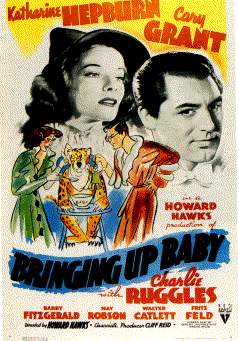
He's also described by reference to a movie hero: 'He was the spitting image of Cary Grant in Bringing Up Baby' (2003: 4), and that's a technique which is also used not infrequently in romance novels (though it can have its disadvantages). Unfortunately for Gen, though, this selfish, promiscuous man is not going to be changed by the love of a good woman, and he's not the hero of this romance. In fact, he's the villain.

AAR's November 13th At the Back Fence column dealt with obnoxious heroes, and one poster responded by saying that sometimes the main difference between a hero and a villain isn't so much the way they treat the heroine (because some heroes treat the heroine atrociously) but simply that the author has decided that this man is going to be the hero, so the heroine falls in love with him and he has a sudden change of heart and (usually) behaviour towards the end of the novel. Romance readers are also used to the convention that the first eligible man described in a romance is usually the hero. Liz Fielding, for example, says of the hero and heroine that
These are the most important characters in a short romance. The sooner you can introduce them the better. On the first page is good. In the first paragraph is better. In the first line if at all possible. [...] The reader is like a newly hatched chick, programmed to bond with the first likely character she meets. Ensure that it is the hero or heroine.
Because of this convention, readers are primed to recognise the hero, even if he behaves like a villain (this is not the case in Gothic romances, where for much of the book the heroine and the reader remain unsure of the identity of the hero, and may for a long time think that the hero is a villain). Thompson turns the convention on its head, and thus for a time confuses a reader who expects Nick to be the hero.

And here is the nerd-hero:
His eyes were red, his glasses smudged, and his dark hair stood out in sixty-eleven directions. To make matters worse, he'd decked himself out in a sweet-potato-orange plaid shirt and pants the color of a rotten eggplant. Because he was tall, there was a lot of orange plaid and a lot of rotten purple, and all of it was wrinkled (2003: 5).
He has a habit of thinking up computing-related metaphors, for example Jack's thoughts about Gen's eyes sound just a little like a geek version of Shakespeare's Sonnet 130, in which Shakespeare rejects the clichéd descriptions of female beauty. Where Shakespeare says that 'My mistress' eyes are nothing like the sun; / Coral is far more red than her lips' red', Jack describes Gen's eyes as 'that blue-green color that reminded him of a tropical lagoon picture he'd used once as a screen saver. He'd loved the color of the water in that screen saver.' (2003: 68). Clearly Jack doesn't mean this to be satirical, but I wonder if a description such as this is gently poking fun at the descriptions of other romance heroine's eyes.

Jack never stops being a nerd, but during their adventure his outer appearance is transformed:
"You do have manly sex appeal, Jackson." She seemed quite amazed by the discovery. [...] I would never have thought so, but with your beard, and-"
"It was rough on your face. I'm sorry about that."
"The beard made all the difference. When you kissed me I felt like a maiden captured by a pirate, a maiden who had been flung down on the sand and ... well, you know what I mean."
"Ravished?" (2003: 72)
Pirates are, of course, the swashbuckling heroes of many classic movies and romances. And Thompson even manages to fit in a pretend forced seduction. Jack
lifted her over his shoulder [...] She struggled and kicked, but she was careful not to kick him anywhere that she'd do damage. The more she struggled and wiggled against him, the more she liked his idea. But she didn't want him to know that yet. [...]
"You're going to force me to have sex with you?" [...]
"It won't be forced and you know it."
He had a point. "Then could we ... pretend it's forced?"
His laugh was breathless. "Sure. One ravishing coming up."(2003: 206)
As Candy at The Smart Bitches says, rape and forced seduction has long been a staple of the romance genre, and the original romance genre rapes and forced seductions were not humorous:
Rapist heroes are not nearly as common as they used to be. Between 1972 and about 1988, you couldn’t swing a dead cat without hitting a rapist hero in the face. Starting in about the mid-80s, though, the tides started turning, and by the mid-90s, rapist heroes were mostly a thing of the past, although forced seductions still popped their heads up here and there. (There are readers who maintain there’s no difference between forced seduction and rape, of course.)
Thompson's example, with Jack cast as the pirate seducer but with an entirely willing 'victim' playfully subverts these romance conventions.

The actions of the villain involve at least 2 movie-villain clichés, though Thompson makes them more plausible than usual by making the villain worried about leaving bullets in the bodies and/or not having anywhere to dispose of them:
  • The bad guy, having finally gotten the good guy into his clutches, will usually spend a few meglomaniac minutes gloating over his victory and his opponent's downfall. This increment of time will prove just enough to allow the good guy to figure a way out of his predicament, or just long enough to allow a rescue attempt.
  • The bad guy, instead of simply offing the captured good guy on the spot, will devise some sort of drawn-out, fiendishly clever method of execution that will take enough time to allow the good guy to figure out his escape.
  • I wonder also if the situation the two find themselves in is intended to recall faintly that of Robinson Crusoe. Crusoe manages to rescue some supplies, and so does Jack, though in this case the supplies include condoms and a curling iron rather than the more practical tools salvaged by Crusoe. One might also wonder, in this context, whether Gen, with her knowledge of how to survive in the outdoors, is the female equivalent of Crusoe's Man Friday, and the references to filmstars from the 1940s (see below) perhaps reinforce the possibility that Gen is being cast as Jack's Girl Friday.

    For all that this is a light-hearted romance, there is a serious theme in here, about not judging people on appearances alone. Gen eventually says of Jack 'You're ... you're real, Jack. [...] So many people in this world look like they came right off the assembly line some people factory. They wear what everybody else wears and they talk like everybody else talks." Like she'd been trying to do herself.' (2003: 215). He certainly isn't the usual type of romance hero. Jack also comments on appearances, though, being a nerd, he uses a metaphor from computing: 'relationships were so damned complicated. With computers it was strictly WYSIWYG, What You See Is What You Get, and he loved that. With women you could never tell. Like Genevieve - a perfect example [...] Genevieve had always reminded him of a movie star from the forties - Katharine Hepburn, maybe, or Lauren Bacall' (2003: 15). Jack's exactly right, but this appearance did not come naturally to Gen, whose mother had 'learned everything she knew about manners and fashion from watching Katharine Hepburn, Lauren Bacall, and Ingrid Bergman. She'd done her best to teach those things to Genevieve' (2003: 14). I'm assuming that the repetition of these names is deliberate, as they occur on adjacent pages and emphasise the extent to which Gen's 'look' has been carefully created. It also takes an effort to maintain, and 'the deeper they got into this mess [the adventure they end up on], the more she was reverting to the little hillbilly she once was' (2003: 65). Jack is a nerd, but his problems with colour-coordination are due to him being colour blind, and underneath them he's got an impressive body and a loving heart. And as for the glasses? Well, Gen has a pair too, she just doesn't wear them, because glasses 'made her look like too much of a nerd' (2003: 30).

    If you've read this book, did you think it was spoofing romance genre conventions? If you haven't, do you think that there are some romance clichés which are ripe for parody?
    • Thompson, Vicki Lewis, 2003. Nerd in Shining Armor (New York: Bantam Dell).