Showing posts with label men. Show all posts

Tuesday, November 12, 2019

Updates: Romance Wiki Down; a TED talk on romance; Book on Masculinities and Romance out soon.


As some of you may have noticed, the Romance Wiki, which includes the Romance Scholarship bibliography, has been offline for over a month. If you go to https://romancewiki.com/ there is currently a message saying "The RomanceWiki is currently offline while we look for a new home. If you’re interested in adopting the wiki, please get in touch."

Jessica Lyn Van Slooten recently gave a TED talk about romance:
Many people think romance novels are trashy, formulaic, and anti-feminist smut. In this passionate talk, Jessica Lyn Van Slooten challenges negative stereotypes about romance novels. She argues that many of today’s authors are modeling a more inclusive, equitable, and feminist world through romance novels.


Jonathan A. Allan's latest book will be published shortly (it's due on 15th November). Men, Masculinities and Popular Romance
seeks to open a lively and accessible discussion between critical studies of men and masculinities and popular romance studies, especially its continued interest in what Janice Radway has called "the purity of his maleness."


Wednesday, July 26, 2017

CFP: Popular Romance and Men’s / Masculinity Studies

From Eric Selinger:
Brandon University professor Jonathan A. Allan (Canada Research Chair in Queer Theory) is looking for proposals on men / masculinities in popular romance fiction for the 2018 American Men’s Studies Association conference, which will be held March 22-25 in Minneapolis, MN. The deadline in the CFP is October 15, 2017.
Jonathan was one of the guest editors of the Journal of Popular Romance Studies special issue on Queer/ing Popular Romance, and he is currently at work on a book called Men, Masculinities, and Popular Romance (Routledge).
There’s a lot of work to be done on this topic, not least because the romance archive includes masculinities that range from the hyper-hegemonic to the quietly or radically disruptive, and the Call for Papers makes it clear that the conference is open to an equally wide range of topics. Their bullet point list includes:
  • Queering masculinities, sexualities, bodies
  • Transgender studies and men’s studies
  • Men and/or masculinities in BDSM and leather cultures
  • Masculinities and sexualities (i.e. heterosexual, gay, bisexual, pansexual, etc.)
  • Effeminophobia in/and theories of masculinity
  • Fantasies and desires in/through bodies and masculinities
  • The material, phenomenological, and real body
  • Pharmaceutical and medical interventions on the body
  • Masculinities without men, men without masculinities
  • Men, bodies, and digital technologies
  • Aging, youth, and sexualities across the life-span

If you’re interested in pursuing this, please get in touch with Jonathan, or with me (Eric Selinger, IASPR president) before the October 15 deadline.
The intersection of popular romance studies and men’s / masculinity studies is a very promising development in our field. There is work, wild work, to be done!

Saturday, October 10, 2015

New to the Wiki: The Canary Islands, Fatherhood, First World War Romance, Interracial Romance, Orphans, SEALS

Items whose titles are hyperlinked are currently available free online in their entirety.
 
Chelton, Mary K., 2015. 
"Readers' Advisory: There Seem to be More SEALs in Romance Fiction than in the US Navy, and if so, Why Does it Matter?" Reference & User Services Quarterly 55.1: 21-24. Abstract
Edlins, Mariglynn. 
"Superhero, Sleeping Beauty, or Devil? The Making of Orphan Myths and Public Administration". [What stories exist that might influence how street-level bureaucrats think about children who are separated from their parents? [...] In this paper, I explore the narratives of superhero stories, romance novels, and horror films in order to identify the orphan archetypes they portray.]
González-Cruz, Maria-Isabel. 2015. 
"Love in Paradise: Visions of the Canaries in a Corpus of Popular Romance Fiction Novels". Oceánide, Journal of the Spanish Society for the Study of Popular Culture SELICUP, vol. 7.
 
Jagodzinski, Mallory, 2015. 
Love is (Color) Blind: Historical Romance Fiction and Interracial Relationships in the Twenty-First Century. PhD dissertation, Graduate College of Bowling Green State University. [This dissertation analyzes three historical romance novels — Secrets of a Scandalous Heiress by Theresa Romain (2015), The Duke of Shadows by Meredith Duran (2008) and The Heiress Effect by Courtney Milan (2013)]

King, Laura, 2015
The Perfect Man: Fatherhood, Masculinity and Romance in Popular Culture in Mid-Twentieth-Century Britain’, in Love and Romance in Britain, 1918-1970, ed. Alana Harris and Timothy Willem Jones (Houndmills, Basingstoke: Palgrave Macmillan), pp. 41–60.
Potter, Jane, 2015. 
"‘Khaki and Kisses’: Reading the Romance Novel in the Great War." Reading and the First World War: Readers, Texts, Archives. Ed. Shafquat Towheed and Edmund G. C. King. Houndmills, Basingstoke: Palgrave Macmillan. 29-44. Excerpt


Saturday, December 31, 2011

Sisters and Husbands


Laura Struve's "Sisters of Sorts: Reading Romantic Fiction and the Bonds among Female Readers" appeared in the most recent issue of the Journal of Popular Culture but its conclusion is not likely to come as any surprise to readers of this blog: "Romance readers not only fail to be oppressed by their reading, they also make it an occasion to participate in a female community" (1303). Struve points to the existence of active communities of romance readers, such as those who visit All About Romance, as evidence that "Contrary to the perception that readers are passive, isolated women hopelessly waiting for their prince to come, readers of romantic fiction are active and seek to form bonds among women" (1293) and argues that
When romance readers seek out other readers, they are seeking out other women, and when readers become writers, they identify themselves as writing within a female tradition. These connections are discussed using the rhetoric of familial relationships—kinship, sisterhood, and motherhood. Instead of being obsessed with unattainable heterosexual romantic relationships, romance readers seek out and desire sisterhood. [...] These readers are not trying to find “Mr. Right” or “Prince Charming” [...]. They are trying to find a fellow reader; they are trying to find a sister of sorts. (1297)
Since it's quite possible to have both a husband and a sister and, according to the Romance Writers of America, "Romance readers are more likely than the general population to be currently married or living with a partner," I wonder precisely what is meant by "unattainable heterosexual romantic relationships." Clearly many readers are in romantic relationships, so is Struve is suggesting that there is a particular type of "heterosexual romantic relationship" which is unattainable (i.e. one with a "prince")? Or does she think that many readers have no need to be "obsessed" about attaining a heterosexual romantic relationship because they already have one? Could it be that she has failed to consider the possibility that romance readers may have (or be obsessed with having) heterosexual romantic relationships and develop homosocial relationships based around romance-reading?

Early in the essay Struve states that
If romance novels are perceived to be poorly written, formulaic, and pornographic, then it is easy to characterize their readers as unintelligent, unsophisticated, and neurotic. The idea that “you are what you read” dominates many studies of romantic fiction, and the portrait of the reader that emerges is heavily influenced by the content of the novels.
If, however, one shifts the focus from content to the activities that surround the reading experience—the way romance readers talk about their reading, the way they talk to each other, their connections to writers and publishers, the way they use technology—a portrait of a different reader emerges, a reader who is an active participant in the genre’s production and reception as well as its consumption. Despite the genre’s conservative ideology, which focuses on heterosexual courtship and marriage, romance readers make connections with other women, and they use the Internet to help foster this community. (1289-90)
It is not entirely clear whether Struve herself perceives romance novels to be "poorly written, formulaic, and pornographic" [and I, as the author of a book subtitled "The Literary Art of the Harlequin Mills & Boon Romance" would, obviously, take issue with that view if she does hold it] but she certainly seems to accept that the genre has a "conservative ideology, which focuses on heterosexual courtship and marriage." While it is true that a great many romance novels do focus on heterosexual courtship and marriage, such a statement immediately makes me wonder if the author is aware of the existence of substantial numbers of lesbian and m/m romances or has considered the possibility that there might be significant variations in the depictions of "heterosexual courtship and marriage."1 Furthermore, when female communities are contrasted with a "conservative ideology," I can't help but note that a group of women do not, by the mere fact of coming together to participate in leisure or other pursuits, automatically pose a challenge to conservative ideologies.

Whatever her view of the merits (or otherwise) of modern romance novels, Struve is very much aware that there are
similarities between the study of romantic fiction and the history of the novel and novel studies. The attacks on the romance reader today are similar to those leveled at novel readers in the eighteenth and nineteenth centuries. [...] During the first half of the twentieth century [...] [s]cholars who wanted to expand the canon to include works by female authors faced accusations that literature written by women was frivolous because it focused primarily on domestic concerns such as courtship and marriage and that these works were poorly written. (1302)
She therefore concludes that
Scholars who are critical of this genre seem unaware of the history of their complaints and cultivate a certain blindness about the relationship between literature and popular culture and the act of reading. Literary scholars have already decided that a lifetime can be spent and a career made in talking about books and reading them, yet romance readers are criticized for being “addicted” to reading. (1303)
------
Struve, Laura. “Sisters of Sorts: Reading Romantic Fiction and the Bonds Among Female Readers.” Journal of Popular Culture 44.6 (2011): 1289-1306.

Another woman-only social activity
1 Despite the inclusion of some bibliographical items dated 2011 there is a curiously retro feel about parts of this essay. For example, Struve writes that "All About Romance, features an interactive column, 'At the Back Fence' ” (1294) but I knew it had been discontinued some time ago. When I checked at AAR, I discovered that "The last ATBF column was published October 27, 2008" (AAR). Struve writes that:
In addition, romance novels have an extremely shortshelf span; Harlequin publishes c. thirty different titles every month. Readers must rely on word of mouth and recommendations in order to make their purchases before the books disappear from the shelvesand are replaced by new titles. (1294)
There is no acknowledgment here that many romance readers now buy ebooks, which do not have "an extremely short shelf span." Incidentally, this also seems a rather low estimate of Harlequin's monthly output: in December in the Harlequin Presents line alone I counted 10 new novels. I strongly suspect that the essay was first written prior to 27 October 2008 but was not published until this month due to the fact that at one point the Journal of Popular Culture had a massive backlog of articles accepted for publication.

---------
The image is of "Lancaster County, Pennsylvania. These two Church Amish women are engaged in quilting. Quilting bees are popular in this area." The photo was taken by Irving Rusinow and came from Wikimedia Commons which in turn acquired it from "the National Archives and Records Administration as part of a cooperation project. The National Archives and Records Administration provides images depicting American and global history which are public domain or licensed under a free license."

Wednesday, September 08, 2010

Deviant Monsters


Maria Lindgren Leavenworth has observed that vampires are
creatures traditionally associated with breaking the norms of society and often linked to forbidden or deviant sexual desires. Although the vampire may be superficially gendered, its position outside humanity makes categorisations less applicable and it is often seen as occupying a position which slides between the poles of masculinity and femininity. (443)
Jessica at Read React Review recently wrote a post in which she summarises some of the sexual deviancy in Bram Stoker's Dracula, including the
suggestion of a threesome in this book. There was this exchange [...], when Van Helsing was transfusing Lucy. He mentioned Holmwood’s notion that exchanging blood makes Lucy his bride:
Said he not that the transfusion of his blood to her veins had made her truly his bride… If so… Then this so sweet maid is a polyandrist, and me, with my poor wife dead to me, but alive by Church’s law, though no wits, all gone – even I, who am faithful husband to this now-no-wife, am bigamist.
Everyone says Dracula is a book about transgressing boundaries — geographic, gendered, sexual, bodily, material and spiritual.
According to Leavenworth, J. R. Ward's vampires, however,
represent supernatural power, sexual prowess and, paradoxically, protection of humans, but their vampirism is not used to illustrate a potentially subversive position, on the contrary, the novels represent a worldview characterised by at times ambiguous but in the end staunchly heterosexual relationships. (443)
She therefore turns to slash fiction based on Ward's novels because "in the slash analysed, homoerotic desire is at focus and the sexual ambiguity often connected to the vampire as a literary trope is to an extent reclaimed" (443). Here she finds that
Assertions and definitions playing on the notion of (at least homosexual) virginity in slash label situations as out of the ordinary, signalling that the space outside the norm is created specifically for the purposes of these encounters. (454)
While Leavenworth mentions male virginity only briefly, it is the focus of Jonathan Allan's "Theorising the Monstrous and the Virginal in Popular Romance Novels." He suggests that it is Edward's virginity which permits the heterosexual vampire hero of Stephenie Meyer’s Twilight novels to be considered a sexually deviant vampire: "It is not Edward’s vampirism that makes him monstrous or deviant, rather it is his virginity that makes him monstrous, deviant, anomalous" (6). Allan states that
male virginity would seem to fit within the realm of “defiant deviance” precisely because it extends beyond (or perhaps before?) an acceptable limit that has been established by the socio-cultural environment. Accordingly, I would argue that the virgin male is defiantly deviant when he chooses to maintain a virginal identity. The problem, it would seem, for which we must account is why female virginity is not deemed, at least in most scenarios, monstrous while male virginity is indeed quite monstrous, deviant or anomalous. (2)
Since the Twilight novels do not explicitly state that male virginity is monstrous, Allan quotes from Eloisa James's When the Duke Returns in order to demonstrate that this is indeed an attitude prevalent in contemporary society: “the heroine, after realising that her husband - they were married when she was twelve and he has been away for a decade or so - is a virgin, remark[s]: 'I’ve married a monster!' ” (2).

Female virginity, however, is generally perceived as unremarkable in the romance genre. A male virgin, then, may perhaps seem "monstrous" or deviant because virginity is so closely associated with femininity, and he is therefore "occupying a position which slides between the poles of masculinity and femininity" (Leavenworth 443). Although the sliding in itself might be seen as the cause of the deviancy, a further complication to this discussion of the monstrous and the deviant is provided by Kathleen A. Miller's “A Little Extra Bite: Dis/Ability and Romance in Tanya Huff and Charlaine Harris’s Vampire Fiction”. Miller observes that, as
Rosemarie Garland-Thomson notes [...] Aristotle sets up a masculine “generic type” against which all physical variation appears as different, derivative, inferior, and insufficient. This establishes the Western tradition of viewing woman as a “diminished man,” one who is monstrous, and is the first step on a “path to deviance.”
The view that woman are monstrous has manifested itself in many ways down the centuries, but I wish to mention just two instances which may recall aspects of the vampire. The first example, which perhaps calls to mind parallels with the deadly contagion of vampirism, is the medieval belief that "the female organism was capable of producing poison, in other words death or illness" (Jacquart and Thomasset 75). This found expression in
the story of the Venomous Virgin, dear to writers of the thirteenth century. A king who was mistrustful of the growing powers of Alexander brought up a girl whom he fed on poison. When the girl was completely venomous, the king sent her as a present to the young Alexander. [...] The poison that this slut was capable of getting used to was the secretion of her own organism; the death that she delivered to everything that approached her was the purest, most brutal, but also sincerest expression of an interiorized fear of woman. (Jacquart and Thomasset 191-192)
The second involves the medieval medical theory of the humours. It was believed that "in order for a woman to remain fertile she had to be kept moist, and the one way that nature had provided for women to be kept moist was through sexual intercourse" (Bullough 493). Women's need to absorb moisture from men could, however, have deleterious effects on the latter:
Three of the most frequently cited dangers of inordinate sexual intercourse were loss of strength, accelerated aging, and premature death. Medical theorists, preachers, theologians and even lawyers taught that coitus weakened the body. Aquinas explained that in wartime wise commanders cast women forth from their camps so that soldiers might not spend their strength in carnal indulgence [...]. Bonaventure, the son of a physician, argued that all sexual intercourse was dangerous to health and that the sex act helped to shorten one's life. [...] In general excessive coitus was thought to deplete the body of its natural moisture while increasing the heat in the body, a condition that quickly left the body dry. (Solomon 56)
In that cultural context, "staunchly heterosexual relationships" could perhaps be considered not unlike unions with a monstrous being who would drain one of life-giving fluid, and a man's decision to remain a male virgin might therefore be celebrated rather than taken as an indication of monstrous deviance.

It seems that who, or what, is considered deviant and/or monstrous may shift and change, but fear of the dangerous Other, mixed with varying degrees of sexual fascination, persists.

Academic fascination with vampires is also persisting; here are two recent calls for papers:
Fanpires: Audience Consumption of the Modern Vampire
[...] This edited collection will examine the cultural resurgence of the vampire. It aims to provide inter-disciplinary accounts of the reception and cultural impact of contemporary representations of the vampire evident across a broad range of mediums, including literature (e.g. Evernight, The Vampire Academy), film (e.g. Twilight saga), television (e.g. The Vampire Diaries, True Blood), graphic novels (e.g. Chibi Vampire) and games (e.g. Vampire Rain). The appeal of vampire mythology and its associated folklore for modern audiences will be examined in an age characterized by the transformative possibilities of the internet with both its low barriers to artistic expression and the erosion of the boundaries between author and audience.
The deadline (undead-line?) for submissions is October 29th, 2010. More details can be found here. And
Open Graves, Open Minds: Vampires and the Undead in Modern Culture (Edited Volume and Special Journal Issue)
[...] The irony of creatures with no reflection becoming such a pervasive reflection of modern culture pleases in a dark way. Since their animation out of folk materials in the nineteenth century, by Polidori, as Varney and in Le Fanu and Stoker, vampires have been continually reborn in modern culture. They have stalked texts from Marx’s image of the leeching capitalist, through Pater’s Lady Lisa of tainted knowledge, to the multifarious incarnations in contemporary fictions in print and on screen. They have enacted a host of anxieties and desires, shifting shape as the culture they are brought to life in itself changes form. More recently, their less charismatic undead cousins, zombies, have been dug up in droves to represent various fears and crises in contemporary culture.

Essays are sought for a book-length collection on the theme of the undead—vampires and zombies—in modern culture and for a parallel special journal issue. The aim of the book is to relate the undead in literature, art, and other media to questions concerning gender, technology, consumption, and social change.
More details here.
------
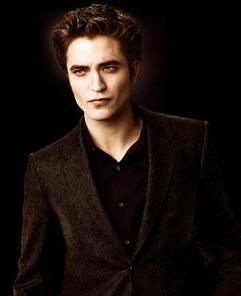
The photo is of "Edward Cullen as portrayed by Robert Pattinson in the New Moon film" and is from Wikipedia.

Sunday, January 31, 2010

Interview: Sarah on Women Constructing Men


Sarah has co-edited a volume of essays on "women constructing men", and it includes an essay she's written herself, on the topic of Suzanne Brockmann’s Sam Starrett. I thought it would be interesting to interview her to find out more. But first, here are some details about the volume:

Women Constructing Men: Female Novelists and their Male Characters, 1750-2000. Ed. Sarah S. G. Frantz and Katharina Rennhak. Lanham, MD: Lexington, 2009.
Female novelists have always invested as much narrative energy in constructing their male characters as in envisioning their female. The collected articles in Women Constructing Men demonstrate that the topic of female-authored masculinities not only allows scholars to re-discover almost every novel written by a woman, but also triggers reflections on a host of theoretical questions of gender and genre.
Here's a list of the contents of the volume:
LV: Could you explain very briefly how "the topic of female-authored masculinities [...] allows scholars to re-discover almost every novel written by a woman"?

SSGF: I don't know about the "briefly" part. :) When I first sent out the call for proposals for this book, someone expressed interest in writing about Rochester in Jane Eyre. I did a little bit of research and found one article on MLAB that was focused on Rochester. One. To my mind, very reductively, feminist literary criticism started when it realized that male critics were analyzing female characters in books by men (Pamela, for example) with very little understanding of what it meant to live the female experience. Feminist literary criticism quickly and logically moved from examining female characters written by men to female characters written by women. With the rise in masculinity studies, people began to study male characters written by men from a gendered perspective, as constitutive of gender expectations as much as female characters. But there's a gaping hole there. Very rarely do critics of gender studies and gender creation examine the ways in which female-constructed masculinity is equally as constitutive of gender dynamics as the other three possible permutations. Surely women are revealing a lot about the world as constructed by gender when they create male villains or fathers or brothers or lovers or ideal heroes? There has, up until now, been very little work done on female-authored masculinity. Even authors like Austen have only very recently received extensive evaluation of their construction of ideal masculinity. So Women Constructing Men allowed us to bring together some cutting edge research by some very smart people about the ways in which female novelists--both in the canon and on the fringes--construct masculinity in their books.

LV: The volume spans three continents and 250 years. As you've noted elsewhere, those years include the period during which what came to be known as "the Great Masculine Renunciation" took place:
Gone were the scarlets and purples, satins and velvets, lace and embroidery of conspicuous consumption that men wore in the middle of the eighteenth century. Romantic-era men wore instead dark blue or black wool coats, stiffly starched, blindingly white shirts, and skin-tight, skin-colored pantaloons [...] But this Great Masculine Renunciation entailed more than Romantic era men suddenly realizing that dark blue wool and starched shirts were more masculine than red velvet and pantaloons. Indeed, the ideological work that went into making that realization a reality demonstrates the radical transformation that representations of and assumptions about masculinity experienced in the Romantic era. I argue, in fact, that the total transformation in men's fashions in the Regency era was an outward manifestation of a similar renunciation in men's ability to express their emotions. This emotional change was of particular concern to female authors of novels in which a man and a woman had to fall in love with and express their love to each other--female authors of which Jane Austen was one of the earliest.
For her part, Katharina Rennhak has previously written that
A study of gendered authorial identities around 1800 seems especially promising: As has been shown by recent scholarship, the later phase of the long eighteenth century not only saw the triumphal (discursive) procession of the ideology of separate spheres and (as a consequence?) the beginning of the marginalisation and exclusion of women writers from literary histories; but it was also the time when female novelists were rapidly gaining a significant market share.
But the volume also takes us right up to the end of the twentieth century, and very significant social changes had occurred during the 250-year period. Were there any aspects of women's constructions of men and manhood that remained constant?

SSGF: A fascination with men! The vast majority of women, after all, are attracted to men and enjoy their attentions and want from them companionship and relationships and sex and love. Female novelists, then, get the opportunity to create their own romantic ideal. It's amazing how much time and effort over the centuries that women have put into doing precisely that and its equally amazing to me that this aspect of their writing hasn't yet received sustained study.

I guess something else that's consistent is that women consistently attempt to write ideal men, the perfect mate, the one man who can solve all problems. Sometimes their construct succeeds and everyone lives happily ever after, but often it fails and that spirals everything in the book down into destruction. But the impulse to write Mr. Right is a strong one and seems to be universal.


LV: We were discussing slash fiction and m/m romance recently, and you've mentioned that "the book I will be writing for the next few years is about the power, appeal, and history of the modern American romance hero." Could you tell us a bit more about why you and others find romance heroes so fascinating?

SSGF: Personally, I find romance heroes fascinating AS female constructs. I'm not much interested in male characters written by men. I'm interested in what female authors include when they write a hero. I'm fascinated with why angsty, dark, tortured heroes are so popular. I'm fascinated with what we, as woman, consider ideal, with what we consider attractive in a romance hero vs. what we'd like in real life mate. And I'd have to say I'm not alone, considering the success of all the many hero-focused romance series out there. As to why we find them fascinating? Well, we're surrounded by men, we like men, we have to work with men every day, and I think the ideation of good and bad men is a way to work through issues in our lives and relationships.

LV: Sarah, you summarised Brockmann's oeuvre in an article published in Teaching American Literature in 2008 and you've written elsewhere that
A game I like to play in all of Brockmann’s books is finding the tears. Because Brockmann’s heroes like to cry. The entire of personality of her most famous character, Sam Starrett, and his love affair with Alyssa is built around his relationship to his own tears, and they’re pretty powerful stuff.
Is it Sam's tears that make him your "Ideal Romance Hero"?

SSGF: Heh. Well, the famous scene in Over the Edge when Alyssa finds him crying after he's torn up his room is quite wonderful, to be sure. I guess I like vulnerability in my heroes, the proof that they can be moved. And I really enjoy seeing how Brockmann plays with her heroes' tears now. But my article on Sam is about how Brockmann uses him to explore the romance hero tropes (rapist hero, rake, the unforgettable former lover, and the superhero), only to discard them all as inappropriate to a truly heroic masculinity. I show how "a true, lasting masculinity, deserving of a happy ending, cannot be built without love as its foundation," which is a really sweeping thing to say, I know, but it's the conclusion of my paper and I think it does a pretty good job of showing how I get to that point. Overall, I'm very proud of the book as a whole. I think it does a wonderful job of showing what can be done if we open our eyes to female-authored masculinity and I'm very interested in what might happen to the field in the future. And thanks for this lovely interview!

LV: Thank you for telling us more about Women Constructing Men!
-----

Thursday, August 06, 2009

Real Men Talking

When Charlotte Brontë's Jane Eyre was first published, under the pseudonym of "Currer Bell," the reviewers
were tricked into self-revelation. In the course of their fervent speculations about the identity of the author of Jane Eyre, they disclosed their firm convictions - or, to be more accurate, their prejudices - about the capabilities and limitations of women writers. Take, for example, Elizabeth Rigsby's famously scathing review, which offers clear evidence that the novel could not have been written by a woman [...]. Most engaging of all was the conclusion reached by Edwin Percy Whipple. He decided that Jane Eyre was the collaborative work of three siblings, two brothers and a sister [...] Whipple presumes that a woman must have had a hand in the writing, given details of dress, the sick chamber, and certain feminine "refinements of feeling," but then clarity, decisiveness, profanity, brutality, heat, passion, animal appetite, and slang - these are clear hallmarks of masculine writing. In fact, these markers of the male intellect are so conspicuous that the novel must have been written, at least in part, by that indisputably masculine mind, the author of Wuthering Heights. (Levine 70-72)
The author of Wuthering Heights was Emily Brontë, a woman.

I was reminded of these reviewers convictions about male and female authors when I read the comments an editor had made about Bev Vincent's writing:
The story was written from the point of view of a male protagonist. These comments are all from the same editor:
  • “It’s quite a challenge for a writer of one sex to explore writing from the perspective of the opposite sex. Bev Vincent has not done a convincing job.”
  • “The story seems far too personal, introspective and emotional for a man”
  • “And I can’t think of many guys from [setting] who call home every Sunday afternoon to talk to their family” [Emphasis his or hers].
  • “Most men don’t think deeply about the dewy greenness of nature.”
  • “She needs to write more convincing [sic] from a man’s perspective.” (via Ampersand, at Alas, a blog)
Bev Vincent wrote a post about the experience. He is in fact a man and
this was the most autobiographical story I’ve ever written, and all the things that the editor complained about were my real observations and my real thoughts cast into the mind of a fictional character participating in fictional events. I did, in fact, call home every Sunday afternoon to talk to my parents, while they were still alive.

To compound his or her arrogance, the editor claims that my prose is “overly elegant,” which is presumably his or her way of saying that a man would never write or think in elegant terms. Guess that means I write like a girl.
Bev doesn't write romance, but I've seen comments on romance websites about authors, writing under female names, whom readers suspect are really men and I've also seen plenty of advice to authors wanting to ensure that their male characters sound like real men. Leigh Michaels, for example, gives advice on
the main ways in which real men and women differ when it comes to talking - and how your characters should differ if they're going to be convincing. [...] Men use shorter and fewer sentences; women use longer, more complex sentences and string more of them together. Men say something is blue; women say it's robin's-egg blue, or navy, or teal.
Men talk about actions or things; women talk about feelings. (166)
Michaels seems to have expectations of men and their use of language which match those of Bev Vincent's editor. Men, it would seem, are expected to be less emotional, less verbal, and less good at observing details. Deborah Cameron, however, points out that the scientific research that has been done in this area does not support such conclusions:
The idea that men and women metaphorically "speak different languages" - that they use language in different ways and for different reasons - is one of the great myths of our time. Research debunks the various smaller myths that contribute to it: for instance, that women talk more than men (research suggests the opposite); that women's talk is cooperative and men's competitive (research shows that both sexes engage in both kinds of talk); that men and women systematically misunderstand one another (research has produced no good evidence that they do).

There is a great deal of similarity between men and women, and the differences within each gender group are typically as great as or greater than the difference between the two. Many differences are context-dependent: patterns that are clear in one context may be muted, nonexistent or reversed in another, suggesting that they are not direct reflections of invariant sex-specific traits.
It should also be noted that how "real men" and "real women" speak may differ very significantly from one culture to another. For example
In the village of Gapun in Papua New Guinea, when a woman is annoyed with her husband, she swears at him for 45 minutes, at the top of her voice so the neighbours catch every nuance. During this “kros” — the word means “angry” — the target is not allowed to answer back, nor may anyone interrupt until she’s given her feelings full expression.

And what expression it is. The anthropologist Don Kulick recorded a typical kros: “You’re a ****ing rubbish man. You hear? Your ****ing ***** is full of maggots. You’re a big ****ing semen *****. Stone balls! ...****ing black *****! You *****ing mother’s ****!”

When the flowers of English womanhood carry on like this — at closing time on Friday night in Ipswich, say — they’re thought to be behaving laddishly. When the housewives of Gapun turn the air blue, however, they are only doing what comes naturally to a woman. The village men, apparently, pride themselves on their ability to conceal their opinions and express themselves indirectly: if they need to get a grievance off their chests, they get their wives to do it for them. (Herbert)
Clearly if a romance were to be set in Gapun, the author would only be able to write "real men" by utterly disregarding much of the existing advice about how to write "real men." Thinking about places which are distant chronologically rather than geographically, it seems to me that the mainly male Romantic poets, or an author like Thomas Hardy who produced long and very detailed descriptions of landscape, probably didn't write in a way that would convince Bev Vincent's editor they were real men and, even bearing in mind that people's written language can differ considerably from their spoken language, they probably didn't speak the way Michaels says real men do.

Female authors writing contemporary romances set in their own part of the world could take PBW's advice and "Hang out with some real live men. Note their body language, speech, and mannerisms. Observe how their behavior changes, and what triggers those shifts" but this wouldn't be so much help with depicting real men from different cultures, including those from different historical periods.

And how much reality do readers and authors want and need anyway? Anne Marble, in her advice on writing romantic dialogue, states that
Dialogue Should Not Reflect Real Life Too Closely

This sounds counterintuitive at first. How can dialogue sound authentic and yet not reflect real life closely? I'll give you the answer in a metaphor. The best dialogue is like vanilla extract. Instead of bottling every line of speech characters would use when speaking with each other, dialogue should give us the essence of their conversations.
Could it be that when many authors write "real men," they're actually writing men that their readers will believe are real, even though many actual real men, including Bev Vincent, in fact express themselves in language which might be deemed false or overly feminine by readers?

[Since I mentioned the Brontë sisters and I'm discussing "real men", I thought I'd add a link I was sent by Angel, about Emily, Charlotte and Anne. It's a cartoon which encapsulates their differing preferences in men (as heroes).]

The image at the top of the post was created by "Francis Barraud (1856-1924) [who] painted his brother's dog Nipper listening to the horn of an early phonograph during the winter of 1898" and it came from Wikimedia Commons. As adopted by the Victor Talking Machine Company in their advertising, the dog was described as listening to "His Master's Voice."

Wednesday, October 15, 2008

Hometown Cinderella and the Beauty Myth

October 15th 2008 is Love Your Body Day:
Do you love what you see when you look in the mirror?

Hollywood and the fashion, cosmetics and diet industries work hard to make each of us believe that our bodies are unacceptable and need constant improvement. Print ads and television commercials reduce us to body parts — lips, legs, breasts — airbrushed and touched up to meet impossible standards. TV shows tell women and teenage girls that cosmetic surgery is good for self-esteem. Is it any wonder that 80% of U.S. women are dissatisfied with their appearance?

Women and girls spend billions of dollars every year on cosmetics, fashion, magazines and diet aids. These industries can't use negative images to sell their products without our assistance.

Together, we can fight back.
It may help us "fight back" if we remember that
'Beauty' is not universal or changeless, though the West pretends that all ideals of female beauty stem from one Platonic Ideal Woman [...]. Nor is "beauty" a function of evolution: Its ideals change at a pace far more rapid than that of the evolution of species. (Wolf 12)
Susan Scott, having written a novel about "Barbara Villiers Palmer, Countess of Castlemaine, Duchess of Cleveland (1641-1709), and the most famous/infamous mistress of English King Charles II" observed that
As delighted as Barbara would be today to see her story in so many bookstores, I’m sure she would be horrified by her cropped, faceless portrait on the cover. I’ve mentioned here before that while my publisher wanted to use a real portrait of her, they felt that her much-vaunted beauty wouldn’t hold much appeal to modern readers. Tastes change. What was hot in 1660 ain’t necessarily so now, and today Barbara’s much-praised “languid eyes” look more drugged than seductive.
The beauty of Agnès Sorel, mistress of King Charles VII of France, may also go unrecognised by a modern viewer. Jean Fouquet is thought to have used her as the model for the painting of the Madonna and Child I've included here.

Given the force of the current ideals of beauty, modern women considered lacking in beauty may not stop to consider, or may not even know, that they might have been considered beautiful in other cultures/other historical periods. In addition, as Naomi Wolf has observed, it is difficult for a woman to reject negative judgements about her beauty
because "beauty" lives so deep in the psyche, where sexuality mingles with self-esteem, and since it has been usefully defined as something that is continually bestowed from the outside and can always be taken away, to tell a woman she is ugly can make her feel ugly, act ugly, and, as far as her experience is concerned, be ugly, in the place where feeling beautiful keeps her whole. (36)
In Victoria Pade's Hometown Cinderella the heroine had last met the hero when she was, in his words, "Sixteen years old and as ugly as a mud fence" (29) and "He'd figured that it served her right, that it was a warning of what was below the surface - foul on the outside, foul on the inside. It had seemed fitting" (26-27). Now that Eden is neither sixteen nor ugly, he wonders "if she also wasn't the rude, mouthy, insulting, aggravating nightmare she'd been before either" (29). In this novel, Eden's ugliness made her, as Wolf would put it, "act ugly," and her external, physical transformation and her internal, emotional transformation seem to have gone hand-in-hand. Now that there is "no reason she would be called names or taunted or teased or tormented [...] she didn't have to go into any situation armed for those kinds of battles" (14).

The romance genre has a mixed history with regards to how it depicts female beauty. Sometimes, as Wolf says, it forms part of a tradition of
Women's writing [...which] turns the [beauty] myth on its head. Female culture's greatest writers share the search for radiance, a beauty that has meaning. The battle between the over-valued beauty and the undervalued, unglamorous but animated heroine forms the spine of the women's novel. It extends from Jane Eyre to today's paperback romances, in which the gorgeous nasty rival has a mane of curls and a prodigious cleavage, but the heroine only her spirited eyes. (60)
I'd like to take a look at examples of romance novels which explicitly counter the beauty myth but I thought I'd leave them until next week because today I'm going to examine a couple of novels which embrace the beauty myth. The myth "tells a story: The quality called "beauty" objectively and universally exists. Women must want to embody it and men must want to possess women who embody it" (Wolf 12).

At times the genre can be harsh in its portrayal of women who do not conform to beauty ideals. Barbara Cartland's novels, as far as I can tell, generally feature hyper-slender young beauties as heroines. Her The Unknown Heart is slightly different. Close to the beginning of the novel there is a hyperbolic description of an obese body which depicts it as monstrous and grotesque to the point where it seems to me to be more a manifestation of the terror and fear that some people have of fat, than a realistic description. It may be interesting to note at this point that one of the symptoms of anorexia is that "there is a distortion in how the individual perceives their shape and size, with an excessive investment of their self-esteem in this, and an intense fear of being 'fat'." The heroine's mother exclaims
'Look at yourself! Take a good look!' Mrs. Clay said cruelly. 'And then find me the man who would marry you for anything but your fortune. Look! Look at yourself for what you are!'
Almost as if she were mesmerised into doing what her mother commanded, Virginia stared into the mirror. She saw her mother, thin almost to the point of boniness, with a small, elegant waist [...] a handsome woman [...] Then she looked at herself: small - hardly up to her mother's shoulder - and bulging with fat until she appeared utterly grotesque. Her eyes were lost in rolls of pink fat which puffed out her cheeks and gave her a number of double chins which almost hid her neck. Her balloon-like arms showed through the thin net of her sleeves; her hands, which went almost instinctively towards her face, were red and podgy.
She barely had a waist and in circumference she was three times the size of her mother. (12)
Soon after this, all the food Virginia had been forced to consume has "converted what was naturally a strong young body into a monstrous mountain of unhealthy flesh. Not only could your heart not stand the strain, but the poisons rose into your brain" (29) and gave her a "brain-fever" (29). When Virginia finally awakens from a coma which lasts "one year and two months" (35) she has been transformed into "a girl with very large eyes in a thin, pointed face. The cheek-bones were accentuated, the jaw-line sharp against the long neck" (32). Quite how, in a novel set around 1902, Virginia could have been kept alive while in a coma for this length of time is never fully explained, and again this creates the impression that Cartland's description owes less to reality than to attitudes towards fat and beauty. The near-death experience is presented as a positive one because it is only with a thin body that Virginia gains the love of the hero, and he comments on it admiringly: "'You are as light as the proverbial feather [...] It is not fashionable to be so thin, but you make every other woman seem fat and clumsy" (108). One can only hope that Cartland's exaltation of thinness didn't contribute to making any readers feeling "fat and clumsy" but it certainly reinforces the prevailing cultural attitudes about fat and women's bodies.

A real-life example of a woman who experienced her near-death experience as at least partly positive because it made her thinner and thus more beautiful is provided by Jennifer Crusie who has described how
In 1983, as a single parent with an eight-year-old daughter, I was diagnosed with late stage colon cancer and given roughly six months to live. Through the surgeries and stress, I dropped down to pre-college levels, ten pounds below my recommended weight, and I was thrilled. I was dying, I was leaving a child behind, I was terrified and angry and exhausted and in pain, but by God I was THIN. I wore a bikini in September. Just my luck that my last six months were going to be fabulously thin and they were all in WINTER. [...] My world was being ripped out from underneath me, but I was dying svelte.(emphasis added)
The transformation of the heroine in Pade's Hometown Cinderella is nowhere near as dramatic as that in Cartland's novel, but Hometown Cinderella also seems to suggest to the reader that a woman must either be, or become, beautiful if she is to catch a man. Although I'm singling this novel out for detailed analysis as a recent romance which perpetuates the beauty myth, it should not be seen as an isolated example.1 I have chosen it primarily because I read it recently and because its message about beauty jarred in a way that RfP has described:
Very stylized and didactic novels can jar me with how far they are from how I see the world. It's one thing to read about a fictional character's world and values, but something else to absorb the message that every woman should want to be her, be attracted to the same type of man, or want the same type of relationship. Some of that response originates with the reader, but surely some is about tone and specific messages.
There is something rather didactic about the way in which Pade describes Eden Perry's appearance, and the tone is one which takes for granted the reader's acceptance of particular beauty ideals. The benefits of being beautiful are made clear: everyone that Eden meets when she returns to her hometown seems to have an opinion to offer about the way she looks and "certainly it was a boost to her self-esteem to have everyone exclaiming over the improvements in her appearance" (113).

At high school Eden was considered ugly, the "geeky, braces-on-her-teeth, glasses-wearing, frizzy-haired, flat-chested brainiac in a grade she might have belonged in academically, but certainly hadn't belonged in socially" (11) or, as Cam Pratt, the hero recalls, as a teenager she'd had
hair that had been such a bright orange and so stick-out everywhere curly that it had looked as if it belonged on a clown wig, glasses as thick as the bottoms of mayonnaise jars, braces imprisoning crooked teeth, bad skin and a body that had been as flat as a pancake with only knobby knees and pointy elbows to give her any shape at all. (26)
Now that she's an adult:
lo and behold, the geek was gone.
No more braces - her teeth were completely straight now.
No more glasses - contacts had replaced them a decade ago and eye surgery had removed even the need for those more recently, so her ice-blue eyes were only adorned with mascara.
Her skin had cleared; in fact, there wasn't a single blemish or red mark marring it. Instead it was smooth and creamy and even-toned with just a little blush to brighten it. [...]
Her bustline had developed - there was no question that she was female now, she could fill out a bra with the best of them. Well, with the best of the B-cups, anyway.
Her hair had darkened to a burnt-sienna red - no one had called her pumpkinhead in fourteen years. And the relaxer she used eased the kinky curls into mere waves that she could keep manageable at shoulder length.
So, all in all, no, she wasn't odd-looking anymore. There was no reason she would be called names or taunted or teased or tormented. (13-14)
What really jarred me was the extent to which female beauty was depicted as being quite literally a construction. It's possible that Eden's eye surgery and tooth straightening were necessary for reasons beyond the merely aesthetic, but the fact that the alterations are judged to have improved her appearance sets a very clear standard for beauty and seems to legitimise the altering of the body should it not conform to that standard. To be beautiful, it seems, we need to have "completely straight" teeth, eyes which are not obscured by glasses, and a prominent bust which will permit us to "fill out a bra with the best of them." It's worth noting here that after they first meet as adults, even as Cam notes that her "body was better than it had been," he observes that it wasn't "centerfold better, but definitely better enough" (28).

Altering the body to make it "better," particularly through surgery of the kind which would be required by a woman whose small breasts didn't allow her to "fill out a bra with the best of them" or by a woman who wants to look "centerfold better," can be risky. For those who want to lose rather than gain flesh, and who can't stay in a medically implausible coma like Virginia's, cosmetic surgery offers the option of liposuction, of which the FDA notes that
In order to understand the size of the risk, one paper compares the deaths from liposuction to that for deaths from car accidents (16 per 100,000). It is important to remember that liposuction is a surgical procedure and that there may be serious complications, including death.2
Cosmetics aren't without their risks either:
the Campaign for Safe Cosmetics—a coalition of environmental, health, and women’s advocacy groups—had 33 name-brand lipsticks tested at an independent laboratory. The results were unsettling enough to wipe the glossy grin off anyone’s face: Fully one-third contained lead at levels exceeding the FDA’s 0.1 ppm (parts per million) limit for candy. [...]

The European Union has banned 1,132 known or suspected carcinogens, mutagens, and reproductive toxins from use in cosmetics, but only 10 such chemicals are banned in the United States, leaving us with mercury in mascara, petrochemicals in perfumes, and parabens in antiperspirants. And just as none of the offending lipsticks’ labels indicated the presence of lead, the FDA allows potentially hazardous chemicals like phthalates—industrial solvents linked to birth defects in boys’ reproductive systems and premature puberty in girls—to slip into ingredient lists under the umbrella term “fragrance.” 
(Houton)
In Hometown Cinderella, however, non-use of cosmetics is linked to patriarchal oppression since Eden's grandfather, a dour retired minister of the church who believes that "men are the rulers of the earth, women should know their place" (86) imposed a "no-makeup restriction" (82) on his wife.

The reader is given lots of detail about Eden's use of cosmetics. For example, late at night, before asking Cam for
help with her electrical outage, Eden decided that if she was going to have to be seen, she had to make sure she wasn't too unsightly [...] If she'd been about to meet up with anyone other than Cam Pratt she probably would have gone as she was - face scrubbed clean, hair stuck in an untidy ponytail. Only she wasn't meeting up with anyone else and she just couldn't go without reapplying blush and mascara. (38)
When attending a wedding she "added a taupe-colored eye shadow to her blush and mascara regimen [...] she'd been pleased with how she'd looked and had left home feeling comfortable and confident" (60). When Cam, who has spent all day with her, pops out to buy a pizza, Eden seizes the opportunity to "head for the bathroom to take her hair down [...] so she could run a brush through it. She also refreshed her blush and added lip gloss" (80-81). On another occasion she yet again makes "a speedy bathroom stop to fluff her hair and apply a little lip gloss" (114) and when she makes a decision to seduce Cam she applies "a hint of eyeliner, mascara, blush and her best lip gloss" (234).

However, even if a woman temporarily achieves the pinnacle of seductive beauty, she knows that she will age. Eden is perhaps more aware of this than most women because of her job: she's a forensic artist who's been "hired to do an age-progression" (8) of the face of a woman wanted for questioning by the police in relation to a very old case. Since the woman in question is Eden's grandmother, Celeste, when Eden discovers that Celeste has put on
"At least fifty - and maybe seventy-five - more pounds? Celeste really did gain," Eden marveled. "That takes her out of the fluffy-grandma-body and puts her into a whole other weight category."
"It would make her pretty big," Cam agreed.
"And because we share the same genes, I guess I won't have another cookie," Eden said [...].
Cam laughed [...] "I don't think you have anything to worry about," he said with enough appreciation to please her.
But still the thought of a grandmother who could be very large made her decide against any more cookies and instead she stood, brought a dish of sugar-free mints from the kitchen and popped one of those instead. (150)
And is there a racial aspect to the beauty myth? Is it just a coincidence that Eden's eyes are "ice-blue," her skin is "smooth and creamy" and her hair is now free of "kinky curls"? If "kinky curls" make a woman look "odd" and if "stick-out-everywhere curly" hair is associated with "clown wig[s]" the conclusion one might reach is that many black women naturally have "odd" hair, which looks like a clown wig.3 As The Angry Black Woman observes, there are many issues other than aesthetics hiding beneath the beauty myth:
If you don’t think that black people’s hair isn’t a battleground for issues of race and culture and assimilation and bigotry, you haven’t been paying attention to the news. When a U.S. Congresswoman can be called names because of her hairstyle (or lack thereof) and people can be denied/fired from jobs for not wearing a hairstyle that makes white people feel comfortable, there is a serious, serious problem.
More subtle, though, is a pervasive feeling of never being good enough. As Latoya Peterson writes:
In discussions of beauty - particularly those on women centered blogs - white women can understand being held up to an unrealistic standard of beauty. To be impossibly thin, impossibly blonde, impossibly clear skinned, with a body that defies the law of physics is presented as something that is attainable if you try hard enough and buy the right products, though many women find these efforts to be futile. What most of these conversations do not understand is that when black women pick up these kinds of magazines, or watch advertisements on TV, or popular television shows with popular white actresses, we do not get the message “try harder.”

The message we receive is never.

You will never look like this. Not if you straighten your hair, or lose weight, or work out every single day, or have the perfect body and the perfect wardrobe to match. Even if you fit all those requirements, you’re still “pretty for a black girl.”
The financial incentive to perpetuate the beauty myth and keep women of all races unhappy about their appearance is obvious when one considers the interests of the cosmetics, dieting, fashion and plastic surgery industries. The result, according to a YWCA report, is that
Every woman in the United States participates in a daily beauty pageant, whether she likes it or not. Engulfed by a popular culture saturated with images of idealized, air-brushed and unattainable female physical beauty, women and girls cannot escape feeling judged on the basis of their appearance. As a result, many women feel chronically insecure, overweight and inadequate [...]. Moreover, the diet, cosmetic and fashion industries are often too willing to exploit these narrow beauty standards so women and girls will become cradle-to-grave consumers of beauty products, cosmetic surgery and diet programs.4
Ironically Dove's recent "real beauty" campaign, which partially challenges the beauty myth, nonetheless illustrates this point:
Unlike most mass media images of beauty that we see, the Dove campaign includes women of colour, women over 40 and women who weigh more than 100 pounds. The campaign has won accolades for its social conscience, including in the feminist pop culture magazine Bitch.

However, there is a contradiction in this “Campaign for Real Beauty”. While the website and the ads are of “real women” who are proud of their “real curves,” the actual goal of the campaign is to convince women to buy “Dove Firming”: a product designed to reduce the appearance of cellulite in two weeks. [...]

Although the campaign presents more realistic role models for women than is the norm, the central message remains the same. Beauty is not something that comes naturally to women: it requires endless effort, as well as the purchase of various products designed to change or hide women’s problem areas. (Esmonde)
The financial aspect of the beauty industry helps to explain why it has been expanding to target men, too. Wolf's book was first published in 1990 and in it she warned that "Advertisers have recently figured out that undermining sexual self-confidence works whatever the targeted gender [...] advertising has begun to portray the male body in a beauty myth of its own" (288-89).

Hometown Cinderella perpetuates a muscular beauty standard for men. This may, to a certain extent, eradicate the inequality between the sexes with regards to the relentless pressure to become and remain beautiful, but it does so by putting more pressure on men. In addition, male beauty remains firmly associated with muscular power, whereas feminine beauty is associated with a slim, youthful appearance. Jane at Dear Author recently observed that
Romance alpha males are physically overpowering. In one Brenda Joyce book, the hero is described as having a “huge club-like manhood,” and a “slab” of pecs. In the last JR Ward book I read, John is described as needing “a fleece the size of a sleeping bag, an XXXL T-shirt, and a pair of size-fourteen Nike Air Shox.” In the recent Diedre Knight book, Red Fire, the hero was an ordinary 5′ 7″ until his immortal transmogrification when he became “between six-foot-four and six-foot-five. Depend[ing] on the day . . . A variety of factors.”
The disparity between heroic heights and that of the average size for men in various countries was noted by RfP. Cameron Pratt isn't a vampire or other paranormal creature, but the connection between size, muscle power and super-heroic power is mentioned explicitly in Hometown Cinderella. Eden fears that because he has "powerful pectorals [...] bulging biceps [...and] jaw-droppingly impressive shoulders" he may be "A magnificently muscled man of steel who might not technically think of himself as a super man" (93) but who nonetheless considers himself to be nearly "invincible. Indestructible" (93). Luckily Cam is aware that despite the physique that so impresses Eden, he's not endowed with paranormal or super-human abilities.

Cam's size and physical power are emphasised throughout the novel. Even as a teenager he'd had a "body that had been buff" (93) and he was considered "hot stuff [...] The guy every senior girl - except Eden - had wanted to end up with" (10) but he "had somehow matured into a more colossally handsome specimen than he'd been the last time she'd seen him" (15, emphasis added). Later, looking out of her window and into his gym, she catches
a glimpse of him from behind, reaching long, well-muscled arms upward and grasping the bar [...] in his huge hands. [...] he was in very, very good shape [...] Her eyes lingered on that back. On those biceps flexing, bulging within glistening skin that seemed barely able to contain them [...] The man had stamina [...] and strength and a fabulous physique that she had some kind of irrational urge to get closer to. To touch. To test for herself if those muscles were as solid and unyielding as they looked.(32-33)
This isn't a one-off description. When Cam "rolled his massive shoulders," for example, it makes Eden's "eyes nearly pop out of their sockets to see it" (86), and she follows him from the room with "her gaze glued to the rear view of shoulders that were a mile wide and looked as if they had the power to easily carry sacks of cement" (87). When his "bulky arms and thick thighs had been all pumped up [...] he'd looked so sexy she'd hardly been able to breathe" (134). In fact, his body with its "supreme derriere" (167), "rock-solid chest" (193), "iron-hard rod" (197), "Glorious, glistening broad shoulders; pectorals taut and cut; narrow waist and tight abs" (198), "big hands" (216) and "massive thighs" (240) is a frequent focus of Eden's attention. There's no question that Cam's muscled body is one that Eden finds almost irresistibly attractive.

Men are catching up with women in their levels of dissatisfaction with their bodies:
One of Britain's leading eating disorder experts says as many as one in five young men are deeply unhappy with their body image.

Dr John Morgan said that for every man with an eating disorder there were 10 more who desperately wanted to change the way they looked. [...] Dr John Morgan said he believes images of male beauty in the media are part of the problem, and that there's now just as much pressure on young men to look slim as there is on women.

"The ideal male body image has changed into quite an unhealthy shape," he admitted.

In the past blokes have been comfortable with beer bellies. Now, men and boys are under huge pressures to look good."

He explains that while the slim but muscular look, a six-pack, big arms, and a slim waist, has become the cultural 'norm', it's not a naturally obtainable figure.

Dr Morgan added: "It's completely unhealthy, and to achieve that sort of shape you've got to be either working out for hours in a gym, making yourself sick, or taking certain kinds of illegal drugs." (BBC)
It seems a good time to stop and think about how some aspects of the romance genre perpetuate virtually unattainable beauty ideals for both men and women, why they do this, what the effects of the beauty myth are, and who really benefits.

1 For example, Tumperkin wrote a review of Julia James's The Italian's Rags-to-Riches Wife in which she observed sarcastically that despite the heroine being transformed into a beauty
there's a Big Mis that sends Laura hurtling back to England to defiantly regrow her eyebrows. Alessandro is presented with an horrific tableau when he rings her doorbell:

...She'd reverted. It was the only word for it. Her hair was hanging in lank soggy rags around her face, she wore no make up, her eyebrows were overgrown, her skin blotchy...

But no-one can accuse Alessandro of being shallow. Although he's disgusted when he sees her again, he's able to overcome his nausea. So long as he keeps his eyes shut
2 Serious complications and even death can also occur as a result of other forms of plastic surgery:
Surgery can never be easy or risk free - even when the patient can afford the very best care. [...] Kanye West lost his mother, Donda, who apparently developed complications following a tummy tuck and breast reduction. Donda was 58, a former professor of English who had given up a 31-year tenured post to manage her son's business affairs. Stella Obasanjo, the first lady of Nigeria, died in 2005, aged 59, after a tummy tuck in a Spanish clinic. James Brown's third wife, Adrienne, died in 1996, aged 47, following an undisclosed cosmetic procedure. In 2004, Olivia Goldsmith, author of the First Wives Club, suffered a fatal heart attack at 54 as she was being prepared for a chin tuck. (Kleeman)
Women also seem to be seeking surgical alteration to an increasing number of body parts and undergoing operations on which little research has been conducted:
A leading urogynaecologist has spoken out against the growing popularity of cosmetic vaginal surgery.

Professor Linda Cardozo, of King's College Hospital, London, says little evidence exists to advise women on the safety or effectiveness of procedures.

These include operations to make the external appearance more "attractive" and reshaping the vagina to counter laxity after childbirth, for example. (BBC)
3 Some of the clown wigs available for sale here and here are explicitly described as Afros.

4
Betty Friedan once asked concerning the feminine ideal of the fifties and early sixties
Why is it never said that the really crucial function, the really important role that women serve as housewives is to buy more things for the house? In all the talk of femininity and woman’s role, one forgets that the real business of America is business. But the perpetuation of housewifery, the growth of the feminine mystique, makes sense (and dollars) when one realizes that women are the chief customers of American business. (181)
As Wolf observes
Feminists, inspired by Friedan, broke the stranglehold on the women's popular press of advertisers for household products, who were promoting the feminine mystique; at once, the diet and skin care industries became the new cultural censors of women's intellectual space, and because of their pressure, the gaunt, youthful model supplanted the happy housewife as the arbiter of successful womanhood. (11)

I found the photo of the Madonna in Fouquet's Melun Diptych at Wikipedia. I feel compelled to add one final comment on Hometown Cinderella, which is that the sex scenes include some interesting phrases. One of Eden's breasts is described as a "smallish globe of yearning" (162) which Cam then starts "working [...] like a fragile mound of clay, kneading, lifting, pressing into it. Then he located that tightly knotted crest with his fingertips, tugging, tweaking, pinching, rolling it" (162). I suppose it's not completely unrelated to the topic of the post, since the globe is "smallish" and the metaphor of it as a "mound of clay" might, at a stretch, be taken to indicate the malleability of the female body.

Wednesday, April 04, 2007

Elizabeth Thornton - Fallen Angel

In my last post I mentioned the discussion going on at Dear Author about the difference between rape and forced seduction, and so I thought I'd turn to a novel which raises these issues. The hero of Elizabeth Thornton's Fallen Angel, Jason Verney, Viscount Deveryn sexually assaults the heroine, Maddie Sinclair.

The novel was first published in 1989, but was reissued by Zebra in 2004. There's a review by Marilyn at Regency Romance Writers, in which Marilyn tells us that
Oftentimes, it is hard to be objective, particularly when the hero in a novel is such a possessive, arrogant ‘brat’! [...] If it were not for the fact that Jason truly was in love with Maddy you would really despise his arrogant possessiveness that bordered on cruelty. Maddy on the other hand, waffled from sensual passion to guilt over the betrayal she thought she was doing to her father’s memory so that Jason never quite knew where he stood. Suffice it to say, the relationship was complex and the reader will be thoroughly immersed in this stormy battle of the sexes as love will overcome all obstacles [...] it is also quite a sensual read though not for the timid who may be shocked by scenes that could be construed as rape.
It's worth noting that the responses at Amazon were mixed. One reviewer felt that
The plot was good and technically it was well written, but I could not stand the characters. The book was first published in 1989 and I guess "acceptable behavior" for a romance novel character has changed greatly over the last 15+ years.

For example, the hero Deveryn practically rapes Maddie, the heroine, early in the book and then blames the poor girl for his loss of control. She made him "angry." Ha.

I found Deveryn's character to be cruel and gratingly chauvinistic.
However, another reviewer
found this book to be terribly sexy. It had a lot of the elements that erotic romance novel authors are using so well in their novels. Emma Holly's historicals are similar with more explicit sex scenes. This book was a total fantasy and the alpha male hero was a womanizing, unapologetic jerk, but I still found this to be exciting. The fantasy of having a man want you so powerfully that he can't help himself is very thrilling to some women. Winning a man over stiff competition like the heroine's stepmama is also an exciting fantasy to some women.
As Robin commented over at Dear Author,
the key to enjoying forced seduction and rape in Romance as a fantasy lies completely in the idea that either the heroine OR the reader consents to the act. There is a point beyond which only the reader meaningfully or consciously consents, which is what makes it a fantasy for the reader to enjoy, even as the heroine might not.
and she clarifies still further that romance novels that include forced seductions/rape of the heroine by the hero do not justify real-life rape, but rather are about
a *fantasy* pure and simple, and detached from anything we would call rape or sexual force or assault in real life. In Romance, either the heroine or the reader consents, and in that consent creates the fantasy construct as acceptable to that particular reader.
Here are some extracts from the passage in which Maddie has her first experience of sexual intercourse. Jason is jealous, thinking that Maddie has made an assignation with another man:
With a vicious jerk, he swung her round and pinned her against the door. Though she tried to shrink from the crush of his body as it pressed relentlessly against hers, her spine flattening against the hard, unyielding surface of the door, he would not permit it. His hand caught her hip, dragging her close to the lower half of his body, forcing her to accept the heat of his muscled thighs pressed intimately against hers.
There was never any doubt in her mind that his motive was punitive. There was nothing of the tender lover who had seduced her to willingness in the darkened nave of the church. His lips burned, his hands bruised, and he used his body like a weapon to subdue her. (2004: 124-125)
After a while he begins to seduce her instead of using so much force and 'Instinctively, she reached for Deveryn, seeking a more intimate joining' (2004: 127) but then
"Love," he said softly, "forgive me. This will hurt. But only the first time. I'll never hurt you again. I swear it."
The reassuring words were at first unintelligible to Maddie. A moment later, she grasped the full import of their significance. There had never been any doubt in his mind of her innocence. He had used her friendship with Malcolm as a convenient excuse to wreak his will on her. (2004: 128)
Furious, Maddie lies and tells him that
"You're not the first, I thought you knew."
He closed his eyes. Instinctively, she shrank from the violence she could sense as the hard muscles of his body tensed. The explosion was not long in coming. His mouth curled in a cruel line, and with a feral snarl, he ripped through the delicate membrane, sheathing himself fully.
Maddie screamed as that rending pain sliced through her. Though she had achieved her object, though she had punished her willful body and cured it of its sensual addiction, the price was more than she had counted on. [...] She was too spent from everything that had gone before to offer more than a passive resistance. But it was effective. She was deaf to his pleas, immune to the voluptuous caress of his hands, and finally unmoved by his bitter frustration. As he moved upon her, trying to draw a response from her unwilling body, her eyes closed. She concentrated on the pain of the violation she had been forced to endure. It was an effective antidote to passion.
When it was over, he left her abruptly and stalked to the fire. (2004: 128-129)
His first words to her, immediately after this, are ones in which he blames her for what has occurred:
"How could you do this to me?" [...] He repeated his question, but this time, there was no mistaking the hard anger in his voice.
He had frightened her half to death, forced her against her will, and now had the temerity to put her in the wrong. "I think" she retorted, "you have taken the words out of my mouth. I'm not the one who has anything to apologize for."
"You wanted me to hurt you!"
It was true, of course. She had known when she had uttered those taunting words that he would not be gentle. (2004: 129)
It is undeniable that Jason begins by sexually assaulting Maddie: the words 'he used his body like a weapon to subdue her' are a very clear indication of that. But when this almost-30-year-old, sexually experienced man then begins to seduce a 19-year-old virgin and she taunts him, frightened by her own sexual feelings and furious at what he's done to her so far, the blame for what happens next is somehow placed on Maddie, both by Jason and, implicitly, by Thornton.* Both seem to conclude that Maddie's pain is caused by her decision to reject Jason's seductions and tell him a lie. I, however, read this passage as being about Maddie being assaulted and raped. Maddie's realisation that she can feel pleasure, her horrified response to this, and the way he's treated her, make her tell a lie. It is known that during rape
Some women may experience lubrication, arousal, and/or orgasm. This may be confusing and disturbing for the survivor, but in no way means the survivor consented to or enjoyed the assault. (Syracuse R.A.P.E. Center)
Under no real-life circumstances could a lie such as Maddie's be construed as a 'provocation' and sufficient justification for rape. Furthermore, given that Maddie knows that Jason will not let her go without taking her virginity, the only way she can keep some control is by denying him the triumph of making her feel pleasure. Her lie does not change the outcome (Jason would not have stopped) but it makes it more painful for her, and, as a result, Jason cannot deny that he has hurt her. Thinking back on the incident, however, Jason resolutely rejects the term 'rape'. A few days later, after he's set in motion plans to marry Maddie (without her knowledge, since she, at this point, is refusing to do so), he feels 'the first genuine easing of the remorse that had laid him by the heels since the night he had taken Maddie's innocence. The word rape flashed into his mind. He vigorously suppressed it, substituting the far more tolerable seduction' (2004: 165, emphasis in the original text).

Some time later, after they've been separated for a month, he enters her room and begins to remove his clothes but Maddie
wasn't about to forget all the man's iniquities in spite of the messages her traitorous body was trying to feed her.
"You've got the wrong room [...]."
Her angry tirade broke off abruptly as he reached her in one lithe stride. Strong fingers encircled her throat, squeezing gently.
"You're my wife."
His eyes held hers. She could hear the frightened rush of air from her lungs as her breathing became more difficult. His eyes dropped to her parted lips. She tried to close them, but breathing became intolerable. [...] A cry tore from her lips the second before his mouth covered hers.
His kiss was smothering, cutting off air till she thought her lungs would burst. (2004:250)
I find it difficult to read this as anything other than an example of domestic violence, though I suppose that readers who treat this as fantasy may reach a different conclusion.

Jason is convinced that Maddie should be grateful for his attentions, and he never wavers from this opinion: 'There were dozens of women he could name who would give their eye teeth to be in her position. [...] The word "love" he discarded as far too common-place to describe their condition. This was Fate [...] Maddie was too ignorant to recognize it for what it was' (2004: 241). Somehow, being assaulted, choked and sexually aroused will ensure that Maddie recognises her Fate. Even moments after his rather limited apology for his behaviour: 'I know I've been an abominable husband!' ( 2004: 377) he is still acting violently: 'He had taken her by the shoulders and administered a rough shake as if to bring her to her senses. Maddie was too happy to make the least objection to this lover-like sign of his devotion' (2004: 377-78). If male love is expressed through bullying and the use of physical force, it's not surprising that Maddie should muse, 'I don't think, deep down, I like men very much. But then, as I've said before, liking and love are two different entities' (2004: 362).

It is, however, a positive conclusion if compared to the infanticide and murder which marked the married life of Medea, whose 'famous speech from Euripides's Medea' (2004: 8), which 'begins "Of all things that live and have intelligence, we women are the most wretched species"' (2004: 8), Maddie has been translating on the morning of the day on which the novel opens. [The quotation begins at the bracketed line 230 in this version of the text, and analysis of the speech may be found here.] The foreshadowing is rather clear, as Maddie (whose name recalls that of Medea) will become the ill-treated wife of another Jason.**
Euripides was revolutionary in his retelling of Medea's myth because he was the first one to show that she hadn't killed her children because she was crazy or a barbarian, but because she was extremely distressed and furious at Jason for leaving her to marry a princess. Fueled by a need for revenge, she sends Glauce a poisoned dress and crown that burn her to death. Creon tries to save her by tearing the dress away, but fails, burning alongside his daughter in the process. Medea then kills her two sons, Mermeros and Pheres, knowing it is the best way to hurt Jason. (Wikipedia)
Maddie thinks that Medea's 'revenge on the man who wronged her, you must admit, was a trifle excessive' (2004: 8), and although at one point she accuses Jason of being a 'Liar! Adulterer! Cheat! Murderer!' (2004: 338) and her resistance to Jason's treatment of her is expressed through her analysis of the play, it is Jason who is given the last word. When he comes upon Maddie directing the staging of the play, he addresses the girl playing Jason:
Don't ever think to cower before the spleen of any woman, no matter how formidable her cleverness, her courage, or her audacity. For you have that one quality above all others which the impassioned Medea lacks. You personify cool logic, an attribute which, in my experience, is rarely to be found in the female of the species, present company, one hopes, excepted. (2004: 366)
As an endorsement of women's mental capacities, it's lacking, and in the context of Jason's behaviour it doesn't seem to describe men very well either.

As mentioned above, Maddie distinguishes between love and liking, and it seems that Thornton considers Maddie and Jason be soul-mates. Such a construct does much to justify the ending, since their relationship is then to be considered one that's right, regardless of the violence, jealousy and emotional turmoil involved. Before Jason meets Maddie he 'disclaim[s] any experience of the phenomenon' of love and therefore 'I declare myself a skeptic and leave it to those who know better to convert me to their dogma' (2004: 34). His mother hands him a copy of Plato's Symposium, directing him in particular to 'what Aristophanes has to say' (2004: 35).*** Having met Maddie, Jason is a sudden convert to this theory:
"He believes that lovers are born joined but that the gods separate them at birth and they wander the earth, lost and lonely, till they find each other again. Only a few fortunate ones ever do. The unlucky ones learn to make do with second best - again and again and again."
"That's sheer myth," she retorted.
"So I believed. Until tonight. Now I'm not so sure." (2004: 53)
Maddie too feels something, though she's not precisely sure what:
Was she half in love with this Deveryn? She thought it very possible and she smiled to herself. He was like no other man she had ever known, but then, for a girl of nineteen years, she was singularly lacking in male acquaintances. Not that it mattered. If she had been acquainted with a thousand eligible young gentlemen, she would have instantly recognized that Deveryn was special to her. (2004: 61)
By the end of the novel she too accepts that her feelings are the love described by Aristophanes: ' "Aristophanes had the right of it," she said. "We are two halves of an entity. Apart, we're simply not whole. There's no other explanation" (2004: 381).

An important aspect of Jason's love is the possessive urge it brings with it: 'He wondered at the primitive drive throbbing at every pulse in his body, urging him relentlessly to make this woman his. His need to convince her that he was fated to be her mate surprised him as much as it delighted him. He had never thought to commit himself so totally to any woman' (2004: 55). Rape/sexual 'possession' is therefore portrayed as the result of the 'possessive urge' created by 'love'. Rape, then, rather than a violent act of aggression, is set in a context where it can be read as evidence that the hero and heroine are soul mates.

Another aspect of the novel which serves to justify Jason's behaviour is the way it is normalised. The rape is prefigured by a scene in which Jason feels jealous and
He had found her in the arms of another male, and the spectacle had unleashed some dark and sinister emotion, some primeval drive that was not to be denied. With lips, tongue, hands, and body easily breaching her defences, he ground himself into her, branding her as his woman, claiming her as his mate. More than anything, he wanted to tumble her there, in the orchard, and enter her body, possessing her fully, irrevocably binding her to him. That the instinct was purely primitive in nature, he did not doubt. (2004: 105)
These 'primitive', 'primeval' instincts, which can lead to 'dark and sinister' emotions, are portrayed as an intrinsic part of masculinity. In this novel, despite the fact that Jason's mother rejects the way in which 'Men [...] throughout history have divided the members of my sex into two distinct classes - good women and the other sort' (2004: 34), Thornton herself seems to agree that there are two sorts of women. She rejects the idea that 'good women' do not enjoy sex, but the dichotomy persists. Fallen Angel contrasts bad women (prostitutes or temptresses such as Maddie's adulterous step-mother, who had an affair with Jason), and 'good women'. The 'good women' may also be sexually active, but their role seems to be to help men, to tame them. Jason's mother describes the men of his family as 'Congenital savages' (2004: 368) and Maddie learns that when her own mother and father had a quarrel early in their marriage
" [...] It was no polite party yer faither put on that night but a drunken orgy. And thae were no ladies o' quality yer mother took her whip tae, but, if ye'll excuse my French, barques o' frailty. [...] Doxies, trollops, Cyprians, every last one o' them," said Janet [...].
Maddie's face was a picture of incredulity. "You're pulling my leg! Papa wasn't that sort of man. I don't believe he would have served Mama such a turn."
Janet answered at her bluntest. "Every man is o' that ilk, given the opportunity. Yer mither was wiser than ye are. She made damn sure that Donald Sinclair was never again presented wi' temptation. [...] She kent that it's the woman who maun make sure that her man keeps tae the straight and narrow" (2004: 359-360)
Thornton does not seem to blame men for this supposedly inherent part of their nature, but rather she gives a man's female soul mate the role of being sufficiently sexually alluring to tame a man and tie him into a sexually committed, monogamous relationship. Unfortunately this seems to support one of the many myths used to justify or explain rapes which occur in non-fictional settings. As noted on the website of Rape Crisis (England and Wales):
The myth is that men rape women because they do not have ‘legitimate’ access to women for sex. The idea is grounded on the belief that men have uncontrollable urges that must be satisfied. In fact, men’s sex drives are no more strong than women’s. If it was purely a biological urge, then masturbation would satisfy it. Men rape women to secure power and control.

* The age difference is one of which Jason is very aware at other times, but as he says: 'I don't always treat you as a child. There are some areas where you have a natural competence. With a little tutoring you should do very well' (2004: 158). The sexual innuendo is unmistakable and makes Maddie blush.
** Maddie herself makes the connection: 'Jason and his quest for the golden fleece. Medea's Jason ... Maddie's Jason' (2004: 132).
*** I've discussed the Symposium in some earlier posts, here and here. Jason's explanation differs in many particulars from the original, which can be read in translation here.

  • Thornton, Elizabeth, 2004. Fallen Angel (New York: Zebra). Picture of front cover from Amazon.