Showing posts with label race. Show all posts

Monday, July 13, 2026

Dissertations/Theses, a New Issue of JPRS and more!

Altamimi, Leena (2026). Desert Desires and the War on Terror: Pre- and Post-9/11 Sheikh RomancesPost-9/11 Sheikh Romances. Master of Arts/Science in Book Publishing, Portland State University.
 
Fahmy, Zulfa, Teguh Supriyanto, Agus Nuryatin, and Yusro Edy Nugroho, 
(2026). "Islamic romance novels in the Indonesian digital sphere: Between religious ornamentation and genre standardization." Diglosia: Jurnal Kajian Bahasa, Sastra, Dan Pengajarannya 9.2: 507-524. [The authors state that they used AI tools.]
 
Ficke, Sarah (2026). "Narrating Histories of Love and Violence: The Civil War and Alyssa Cole’s A Hope Divided." Journal of Popular Romance Studies 15.1.

Filbrun, Tricia (2026). "Judging a Book by Its Cover: Exploring Ethical Solutions for Marketing & Labeling Romance Novels with Illustrated Cover Art."  Honors Project. Bowling Green State University. 

Glenn, Wendy J. (2026). "Sport as Suitor: The Presence and Disruption of Romance Tropes in Young Adult Sports Fiction." Literature 6.2.

Guhr, Svenja (2026). "Between Whispers and Screams: Loudness Standard Deviation as a Proxy for Explicit Content Detection in US Romance Novels." Proceedings of the 6th International Conference on Natural Language Processing for the Digital Humanities: 368–380. 

Ingram, Toni (2026). "Romantasy and the quest for cliteracy." Sex Education. Online First.
 
Jalksjö Greksa, Olivia (2026). Relational Equality in M/M and Heterosexual Romance: A Reader Response Analysis. Bachelor's Thesis, Mälardalen University.

Kjølner, Mira Pedersen (2026). Choosing The Monster: Otherness, Desire, And Masculinity In Contemporary Monster Romance. Masters Thesis, Aalborg University.

Kryha, Veronika (2026). Translation project: Game Point by Meg Jones. BA thesis, Borys Grinchenko Kyiv Metropolitan University.
 
Kvistad, Erika (2026). "Happily Ever After?/Happily Ever After! Negotiating the Gothic in Contemporary Dark Romance." Journal of Popular Romance Studies 15.1.


Moore, Jeania Ree V. (2026). Literature of Hope: Reading Romance in the Religious Lives of Black Women. PhD thesis, Yale University. [Links to abstract, and selected quotations]
 
Myisha, Nabila and Linusia Marsih (2026). "Loving Under Power: Politics and Tradition Shaping Gay Love in Red, White & Royal Blue." Parafrase 26.1:18-24.
 
McCray, Nia (2026). The Outcome of Falling. Master’s Program in Creative Writing, University of Texas at El Paso. [Excerpt via ProQuest]
 
Pérez Belmont, Andrea (2026). Smut: Contemporary Erotic Romance as a Discourse of Female Sexuality. Bachelor's Thesis, Masaryk University. 
 
 
Tandon, Lasya (2026). "(Dis)Honourable Escapes: Reassessing Sexuality in Georgette Heyer’s Historical Romances." Journal of Popular Romance Studies 15.1. 

Wednesday, July 09, 2025

New Publications: The Meaning of Life and Work; Sexuality; Race; Language; the Environment and More

I probably should have posted this list before it got so long, but more and more notifications kept arriving in my inbox and I kept thinking I'd post once I'd added all the news items to the RSDB and that took me longer than anticipated. Anyway, I'll begin with a couple of not-strictly academic pieces which are, nonetheless, quite academic:

In the Arkansas Democrat Gazette (June 8) Guy Lancaster (mentioned recently on this blog and who has a publication below) gives his backstory as a non-romance reader before exploring the societal implications of the denigration of romance:

For so long, we have regarded the consumption of Harlequin paperbacks as nigh pathological on the part of women, when in fact, it was the rejection of romance that typified the pathological condition beginning to emerge in American culture at large. After all, these stories center the phenomenon we call love. And as no less a thinker than G.W.F. Hegel, perhaps the greatest philosopher of the 19th century, wrote in "Elements of the Philosophy of Right" (1820): "Love means in general the consciousness of my unity with another, so that I am not isolated on my own, but gain my self-consciousness only through the renunciation of my independent existence and through knowing myself as the unity of myself with another and of the other with me." (https://www.arkansasonline.com/news/2025/jun/08/the-thrill-of-love/, archived here and also here)

And that's not entirely unrelated to Jessica Taylor's ponderings about the value of her research into romance now that she's outside academia, and how success is measured (in publishing and academia): "What is writing a romance for? What is this essay for? Is work all there is?" Jessica's PhD thesis, Write the Book of Your Heart: Career, Passion and Publishing in the Romance Writing Community (2013) can be downloaded here.

AztecLady suggested that readers of Teach Me Tonight might be interested in reading this analysis by Gin Jenny of a sex scene in Cecilia Grant's A Gentleman Undone

And the latest additions to the Romance Scholarship Database:

Ahmed, Iman and Michael-Zane Brose, Lara Dengs, Lucie Elfering, Elena John, Mira Kalcker, Alice Kronenberg, Charmaine Küllenberg, Laura Le Donne, Alican Nazik, Lena Neisen, Öznur Zeynep Özdal, Hanna Schneemann, Antonia Steven, Julie Bøglund Strand (2025). A “Messy Complexity”? On Coming-Out, Identity Formation, and Community in Queer YA Romance NovelsHeinrich Heine University Duesseldorf.

Barta, Orsolya and Ann Steiner (2025). "Between Desire and Responsibility: Unplanned Pregnancies in Contemporary Romance Novels." Journal of Popular Romance Studies 14.

Bausela Buccianti, Lucía (2025). “Demisexuality in Ali Hazelwood’s STEMinist Series: The Love Hypothesis (2021) and Love, Theoretically (2023).” REDEN. Revista Española De Estudios Norteamericanos, 6(2), 52–69. [I've included a direct link to this open access article, instead of the DOI, because the DOI wasn't working yet when I started working on this post.]

 Burkes, Jordan (2025). The Love Hypothesis: Exploring the Consumption of Romance Novels. PhD, Louisiana State University and Agricultural and Mechanical College. [Embargoed until 2032 but the abstract can be found here.]

Chan, McKenzie (2025). Silly Little Romance Books: Analyzing the Value and Function of the Popular Romance Genre. Honours Dissertation, Seattle Pacific University.

 Cobb, Karie L. (2025). Controlling the Narrative: How the United Daughters of the Confederacy Shaped Collective Memory Through Romance Novels. Master of Arts thesis, University of Nebraska-Lincoln.

 Egidia, Clara & Ida Puspita. (2025). "Psycho-social Development of the Main Characters in the Novels Redeeming Love by Francine Rivers and Cantik itu Luka by Eka Kurniawan: A Comparative Study." INTERACTION: Jurnal Pendidikan Bahasa 12.1: 892–905. [But note that I was unable to locate some of the items in the list of works cited, as discussed here.]

Farooqui, Javaria (2025). "Broken Slippers and Glass Ceilings: Exploring the Romance of Reading Romance." Journal of Popular Romance Studies 14.
 
Hodson, Jane (2024). "The Significance of Stance in Fictional Representations of Non-Standard Language and Prescriptivism". New Horizons in Prescriptivism Research, edited by Nuria Yáñez-Bouza, María E. Rodríguez-Gil and Javier Pérez-Guerra. Bristol, Blue Ridge Summit: Multilingual Matters: 103-119. [https://doi.org/10.21832/9781800416154-007 I was late in finding this, probably because it doesn't mention romance in the title or the text of the essay. It does, though, focus on the use of "non-standard" language in Georgette Heyer's The Unknown Ajax. Currently, most/all of this is visible via Google Books.]
 
Kamblé, Jayashree (2025). "The Women Who Changed the American Mass-Market Romance Genre: BIPOC Editors, Authors, and Category Romance Novels from 1980 to 1988." Contemporary Women's Writing 19. [Abstract available here and excerpts here.]
 
Kilian, G. Charles (2025). Gender, Genre, and Pleasure: Eroticism and Its Limits in French and Francophone Literature (1950–2010). PhD, University of Wisconsin - Madison. [As noted in the RSDB, this may be of interest to romance scholars because of its attempts to define the differences between erotic literature, pornography and romance.]

Lancaster, Guy (2025). " ‘It had turned them all into voyeurs’: Celebrity as the Antithesis of Community in Molly O’Keefe’s Wild Child." Arkansas Review: A Journal of Delta Studies 56.1:25–36. [Details here.]


Raffloer, Gavin and Melanie Green (2025). "Of Love & Lasers: Perceptions of Narratives by AI Versus Human Authors." Computers in Human Behavior: Artificial Humans. [This is Online First, so does not yet have pagination. Also note that the paper discusses romance generated by AI versus romance written by humans, and I've written some comments on the methodology from the perspective of a romance scholar.]
 
 Sutton, Denise H. (2025). “Romance Publishing for a New Generation: The Case of Harlequin and Mills & Boon In India.” Publishing History 89:7-27. [More details in the RSDB]

 Suwanban, Rapeeporn Pauline (2025). Popular Romance & Orientalist Fantasy 1721-1930. PhD, Birkbeck, University of London.
 
Valovirta, Elina (2025). "Romancing the Caribbean Sea: Size, Mobility and Sustainability in Cruise Ship Romance Fiction". Anglia 143.2: 382-397. https://doi.org/10.1515/ang-2025-0026
 
Wilder, Mims (2025). (Wo)Men in Love: An Analysis of Sexual Scripts, Escapism, and Queer Explorations Among Woman Readers and Authors of Male/Male Romance Novels. Doctor of Philosophy in Human Sexuality, California Institute of Integral Studies.  [More details here.]

Thursday, June 13, 2024

New book on historical romance and other new articles


Conflict and Colonialism in 21st Century Romantic Historical Fiction: Repairing the Past, Repurposing History, edited by Hsu-Ming Teo and Paloma Fresno-Calleja is out today (13 June) from Routledge. The introduction, "Conflict and Colonialism in 21st Century Romantic Historical Fiction: Repairing the Past, Repurposing History" is open access and can be downloaded from here.

The other essays about romance in the collection are:

The Australian Convict Prostitute Romance: Narrating Social and Sexual Justice for “Damned Whores” - Hsu-Ming Teo

Love in Victorian London: Immigrant Histories and Intersecting Diversities in K. J. Charles’s Sins of the Cities - Jayashree Kamblé 

Language, Sexuality and “Necessary” Anachronism in Lorraine Heath’s Neo-Victorian Popular Romance Series Scandalous Gentlemen of St. James - Carmen Pérez Ríu

Suffragette Historical Romances: Re-Purposing Women’s Suffrage in a Postfeminist Context - Mariana Ripoll-Fonollar

The US Civil War and its Aftermath in Historical Quaker Romances Hailing White Heroines as Builders and Healers of the Nation - Carolina Fernández Rodríguez 

Historical Reparation, Emotional Justice: The Navajo Long Walk in Evangeline Parsons Yazzie’s Her Land, Her Love - Silvia Martínez-Falquina

When a Jew Loves a Nazi: Problems with Repurposing the Holocaust for Reparative Romance - Hsu-Ming Teo

Abstracts for all of those can be found here.

---

Other recent publications are:

Austin, Allan W. (2024) "Courting Tragedy: Romance and the Liberal Redemption of Japanese American Mass Incarceration". Journal of Popular Romance Studies 13. [Of the two novels discussed, only one is a romance, by Danielle Steel.]

Lukas, Iwan, Muarifuddin, and Rahmawati Azi (2024). "Formula Romance dalam Roman Mes Amis Mes Amours Karya Marc Lévy." LE PARIS: Journal de Langue, Litterature, et Culture 5.1:15-3. [There's an abstract in English but the article itself is written in what I assume is Indonesian.]
 
Rimmer, Abi (2024). "Can I have a side hustle as a doctor?" BMJ 385. [Short article which includes quotes from Fearne Hill. Abstract here.]

Sanders, Lise Shapiro (2024). "Girls Growing Up: Reading ‘Erotic Bloods’ in Interwar Britain". The Edinburgh History of Children's Periodicals, edited by Kristine Moruzi, Beth Rodgers and Michelle Smith. Edinburgh: Edinburgh University Press: 93-111. https://doi.org/10.1515/9781399506663-009

Thursday, December 21, 2023

New Publications: Race, Rape, and Romance in Maltese Libraries

Maybe I've simplified things a little in the title of the post due to the allure of alliteration. But there's definitely a lot in these recent publications about race/ethnicity and racism.

As always, if there's a hyperlink in the title, that means it's freely accessible online.

----

Abdullah-Poulos, Layla (2023) "Sisters, Skanks, and Jezebels: American Muslim Fiction and the Other Woman." The Bloomsbury Handbook of Muslims and Popular Culture. Ed. Hussein Rashid and Kristian Petersen. London: Bloomsbury. 205-214. [Excerpt here.]

Derbyshire, Valerie Grace (2023). “ ‘Do you think I haven’t paid for what I did?’: Rape in the Mills & Boon Romantic Novels of Penny Jordan.” Journal of Popular Romance Studies 12. 

Garcia, Christina (2023). The Race of Publishing: The Troubling Whiteness in Publishing and the Forces Pushing Back. Master of Arts in English, Texas Christian University.

Henderson, Aneeka Ayanna (2024). "Popular Romance and Literary Undergrounds." The Cambridge Companion to Contemporary African American Literature. Ed. Yogita Goyal. Cambridge. Cambridge University Press. 164-179. [Excerpt]

Hutter, Verena (2023). "Fire, Savannah, and Passion: The New Africa Novel and the Construction of White Femininity." Gender and German Colonialism: Intimacies, Accountabilities, Intersections. Ed. Chunjie Zhang and Elisabeth Krimmer. New York: Routledge. [See https://rsdb.vivanco.me.uk/bibliography/fire-savannah-and-passion-new-africa-novel-and-construction-white-femininity for more details.]

Kamblé, Jayashree (2023). “Romancing the University: BIPOC Scholars in Romance Novels in the 1980s and Now.” Esferas Literarias 6: 39-55.

Phumithammarat, Nanphatchaon (2023). The Cultural politics of Chinese -Thai Identities in Ethnic Romance Novels by Female Authors. PhD thesis, Silpakorn University.

Posti, Piia K. (2024). “‘I Get to Exist as a Black Person in the World’: Bridgerton as Speculative Romance and Alternate History on Screen.History and Speculative Fiction. Ed. John L. Hennessey. Palgrave Macmillan, Cham. [The whole book is available for free since it's open access.]

Limond, Verity. (2023) "‘The door is open to everyone’: The public libraries of Gozo." Omertaa, Journal for applied anthropology. 745-754.

Sunday, August 20, 2023

New Publications: Masculinity, Race, Sexuality and More

There are a couple of anecdotes from 

Joshua Thorburn (2023). "Exiting the Manosphere. A Gendered Analysis of Radicalization, Diversion and Deradicalization Narratives from r/IncelExit and r/ExRedPill." Studies in Conflict & Terrorism.

which I wanted to share. The whole article's open access, from https://doi.org/10.1080/1057610X.2023.2244192

Amusingly, one user on r/ExRedPill stated that his deradicalization journey was prompted by reading “soppy romance novels” targeted for women, while in concurrence, another replied that romantic poems and historical period dramas helped him question his red pill beliefs. Because this media focused on romance beyond sexual gratification alone, and the fact that it was either popular with women or targeted towards them, such materials again therefore challenged manosphere claims that women are exclusively driven by an innate desire for the physical attributes of so-called alpha-males. (17-18)

On the topic of men/masculinities, I missed Jonathan Allan's Men, Masculinities, and Infertilities when it first came out in 2022, but the good news is that it's also downloadable for free, from https://doi.org/10.4324/9781003010432 or https://library.oapen.org/handle/20.500.12657/57071 and includes a chapter each on LaVyrle Spencer's The Fulfillment and The Trouble with Joe by Emilie Richards.

Giovanni, Chiara (2023). "Hetero Ever After? Romance Novels, Race, and the Limits of Social Dreaming." Post45. ["Chiara Giovanni shows that popular romance novels by and about women of color often indulge a positive orientation toward heterosexual desire. Giovanni calls this orientation "heteroidealism" and sees it as an adaptive strategy to forge solidarity between men and women along racial lines."]

Heying, Sarah M. (2023). "Sealed With a Kiss on Your Artery": An Archive of Southern Lesbian Desire. PhD thesis, University of Mississippi. [This isn't specifically about romance but it does have a chapter on Ann Allen Shockley. More details here.]
 
Kamblé, Jayashree (2023). "The origins of U.S. mass-market category romance novels: Black editors and writers in the early 1980s." The Journal of American Culture. [This hasn't yet been added to a volume, so the pagination available now isn't as it will eventually appear, but it's available (albeit behind a paywall) from here. I've collected some key quotes here.]

Leenstra, Lisa (2023). Covers of Lovers: A Multimodal Comparison of the Front Covers of Romance Novels in 2011 and 2021. Masters thesis, Universiteit Utrecht.  

Nichols, Sue (2023). "Love matters: the case for an inclusive, contemporary approach to romance themes and texts in subject English." The Australian Journal of Language and Literacy. [This is about teaching YA romance/romantic fiction to future teachers of English.]

Stobaugh, Rebecca (2023). Halfway-Sexual: Exploring Demisexuality in American Literature. PhD, Louisiana State University. [This is embargoed until 2030 but apparently discusses Fifty Shades of Grey and Jack Byrne’s Ace. The abstract can be found here.]

Friday, October 07, 2022

Links: Events, Data, Publishing, Race, Social Reform and Accolades for Romance

First the events:

Saturday 15 October - Rare Books Specialist Rebecca Romney will be leading a class on romance book collecting. It's free and online and more details can be found here.

Saturday 5 November - Hosted by the Center for Black Diaspora at DePaul University, academics and romance authors Katrina Jackson and Elysabeth Grace will discuss writing Black historical romance. This event is also free and online and more details can be found here.

---

Romance scholars have been commenting for a while that there's not been all that much research into the publishing side of romance. One obvious reason is that it's a lot easier to get hold of the books, or the opinions of readers online, than it is to access insider data about publishing. A recent article by Melanie Walsh in Public Books shows that this is a problem affecting scholars wishing to study all genres. Walsh

went looking for book sales data, only to find that most of it is proprietary and purposefully locked away. What I learned was that the single most influential data in the publishing industry—which, every day, determines book contracts and authors’ lives—is basically inaccessible to anyone beyond the industry. And I learned that this is a big problem. [...]

All the major publishing houses now rely on BookScan data, as do many other publishing professionals and authors. But, as I found to my surprise, pretty much everybody else is explicitly banned from using BookScan data, including academics. The toxic combination of this data’s power in the industry and its secretive inaccessibility to those beyond the industry reveals a broader problem. If we want to understand the contemporary literary world, we need better book data. And we need this data to be free, open, and interoperable.

This data which academics can't access is suspected of being used in ways which reinforce patterns within publishing:

it is likely that books end up much more racially homogenous—that is, white—as a result of BookScan data, too. For example, in McGrath’s pioneering research on “comp” titles (the books that agents and editors claim are “comparable” to a pitched book), she found that 96 percent of the most frequently used comps were written by white authors. Because one of the most important features of a good comp title is a promising sales history, it is likely that comp titles and BookScan data work together to reinforce conservative white hegemony in the industry.

Definitely worth a read, and there are details there about how some academics are trying to find alternative sources of data about books and share "free cultural data with anybody who wants to reuse and recombine it to better understand contemporary literature, music, art, and more." Here's a link to the article.

Some of the people who have been working on romance publishing (as well as other areas of publishing) are Beth Driscoll, Kim Wilkins and Lisa Fletcher. Driscoll and Wilkins have an article in The Conversation and they relate that

In the world of romance fiction, Claire Parnell’s research has shown the multiple ways in which the algorithms, moderation processes and site designs of Amazon and Wattpad work against writers of colour. For example, they make use of image-recognition systems that flag romance covers with dark-skinned models as “adult content” and remove them from search results. They can also override the author’s chosen metadata to move books into niche categories where fewer readers will find them, such as “African American romance” rather than the general “romance fiction”. 

Claire Parnell's paper, "Independent Authors’ Dependence on Big Tech: Categorization and Governance of Authors Of Color on Amazon" (2021) can be found online (and freely available) from AoIR Selected Papers of Internet Research: https://doi.org/10.5210/spir.v2021i0.12005 

Driscoll and Wilkins begin, though, with some accolades for the romance genre:

romance fiction is ... the most innovative and uncontrollable of all genres. It is the genre least able to be contained by established models of how the publishing industry works, or how readers and writers behave.

Contemporary romance fiction is challenging the prevailing wisdom about how books come into being and find their readers.

albeit one might, as Azteclady did, feel surprise at some elements of this:

Similarly, I suspect there are people who would disagree with Jenny Hamilton's assessment, given in a piece on the Tor website, that

the romance genre is particularly well suited to tell stories of social reform. [...] YA novels and even epic fantasy series are limited in the number of characters the author can expect you to keep track of, which makes Chosen Ones an attractive option for toppling unjust systems of power. In aggregate, though, that leaves us with a body of literature that valorizes the individual at the expense of the collective—what Ada Palmer and Jo Walton termed “the Protagonist Problem.”

Romance works differently.

I'm happy to see positive opinions of romance appearing outside romance circles, and if they spark detailed debates, all the better!

I'll end with one more article about romance, this time in Bustle, where Natalia Perez-Gonzalez demonstrates that romance's engagement with "social reform" isn't limited to the pages of the novels:

It’s not uncommon for the romance community to organize. In the past, authors have raised funds to help victims of the Uvalde shooting, to support Stacey Abrams in turning Georgia blue, and to aid communities during the Australia wildfires.

And, as the article discusses in detail, most recently romance authors have been turning their attention to reproductive rights.

Sunday, July 03, 2022

A Changing Genre? New dissertations and links: readers, feminism, LGBTQIA+ , Black romance

Here are the new dissertations:

and thanks to Cruz-Bibb, I've found references to some older dissertations I hadn't come across before: 

The last two reach very different conclusions from each other about lesbian romance. Brown argues that lesbian romances differ significantly from f/m ones, whereas Secrease finds that they're really very similar. Both Brown and Secrease base their conclusions on small samples, and it could be argued that they're comparing the lesbian novels to at least some generalisations about heterosexual romances which have now been superseded (and may have even been a bit out of date by the time the dissertations were written) but it's interesting nonetheless that they disagree. I linked to the entries in the Romance Scholarship Database since I've included quotes there which are possibly not available in the excepts at ProQuest.

---

Another item I found in Cruz-Bibb's bibliography is:

In it Green mentions that

what I have experienced as "feminist changes" to the romance genre began appearing in the mid-1980s [...] In my experience, in all but the subgenre of historical romance, gender stereotypes were beginning to change. Male characters were no longer portrayed strictly as brooding, dark, and macho; heroines were given more independence and depth. There were also thematic changes: for example, writers were beginning to pay attention to contemporary social issues, such as single parenting, substance abuse, and child abuse. (14)

On the topic of changes which took place in the 1980s, Steve Ammidown tweets that:

Minger's novel was published in 1983. Steve's careful wording here reminds me that it's hard to keep track of "firsts" in the genre: since there are so many romances, and many of the earlier novels are somewhat difficult to access, their plots may not be known to current scholars. There has been some work done on earlier romances of course, and clearly some of them had plots we might find surprising. For example, jay Dixon's The Romance Fiction of Mills & Boon 1909-1990s, describes a romance by Elizabeth Carfrae, from 1929, in which the married heroine conceives a child with the hero, to whom she is not married and "Her husband thinks the baby is his and raises her accordingly until his death, when the hero and heroine meet up again and marry" (139). One early romance involving abortion is described by Joseph McAleer in his Passion's Fortune: The Story of Mills & Boon:

In November 1939 a Mills & Boon novel, How Strong is Your Love? by Barbara Hedworth, made the Irish Government's list of prohibited books, on the grounds that it 'advocate[d] the unnatural prevention of conception', a provision of the 1929 Censorship of Publications Act. [....] Mills & Boon published this novel [...] over a year earlier, in August 1938. Splashy advertising for this title billed it as 'an absorbing romance' and 'a love story that will delight everybody'. Apparently not: [...] the heroine's father, a village doctor, is an abortionist. He decides to help Rose, unmarried but pregnant, by performing 'an illegal operation'. The abortion (never called such by name) is a success, but a blood clot kills Rose. To spare his family the shame and scandal, Dr Vickers shoots himself. (168)

I suspect that Steve was thinking more of novels in which abortion is "called such by name" and despite the censors' concerns, clearly this novel does not present abortion very favourably given that Rose dies, but it's interesting that the topic was at least present here: later on Mills & Boon's policy was to avoid the topic completely so as not to have their publications censored.

Still on the topic of changes in the genre, in a recent article, Ana Quiring argues that "a new subgenre of queer Regency-era romance" 

align[s] the lovers with the most marginalized in society. In consequence, these novels imagine queer love and sex as always political. Rather than repeating the Cinderella dream of marrying up, they invent a new one, no less fantastic: romantic love as a conduit to solidarity.

And by "new subgenre" Quiring doesn't mean that it's only just appearing in 2022: one of the romances described in the article dates from 2014.

Still on the topic of queer/LGBTQ+ romance, I'm a bit less sure about the historical perspective of a recent article in the Guardian, which refers to "the rise of LGBTQ+ romance fiction" and notes that readers of one of the works discussed "praised the novel for being refreshingly joyful and funny – including a happy ending, which is not that common for a book with an LGBTQ+ plot." Obviously, given the dissertations by Brown and Secrease mentioned above, LGBTQ+ romance (which, by definition, includes a happy ending) isn't actually something new but perhaps what's happening is that it's relatively recently broken through into the awareness of mainstream media?

Also apparently breaking through is Black romance.  Naomi Elias states that Bolu Babalola's "romance books—by design, not default—have become outliers in the publishing industry, since they center Black women as romantic leads" and the sub-heading of the article adds that Babalola's work "normalizes seeing Black women being loved loudly." Given that mainstream romance publishing has tended to publish too few Black authors, the word "outlier" seems fair enough but I think whoever wrote the sub-heading (and it may well not have been Elias) is overlooking the work of many other Black romance authors who've been publishing for decades.

Summing up and discussing some of the changes that have been happening in romance is this pair of podcasts:

The Agony and the Ecstasy: Race and the Future of the Love Story Part 1

The Agony and the Ecstasy: Race and the Future of the Love Story Part 2

Two of the contributors are:

  • Jayashree Kamble, Professor of English Literature at La Guardia Community College
  • Shana McDavis-Conway, Co-Director for the Center for Story-Based Strategy and Staff Reviewer for Smart Bitches, Trashy Book

I'll end, though, with something that's been present in the genre for a very long time: historically inaccurate clothing on covers. Bernadette Banner has redrawn some historical romance covers (and the cover of one work of historical fiction) to make the costumes more accurately reflect clothing in the periods and places in which they're set. The novels are: Kelly Bowen's Duke of My Heart; Beverly Jenkins's Something Like Love; Olivia Waite's The Lady's Guide to Celestial Mechanics; Alyssa Cole's An Extraordinary Union; Gillian Bagwell's Venus in Winter; Gayle Callen's Love with a Scottish Outlaw.


She doesn't really explore the reasons why inaccurate outfits might be more appealing to readers, and I'm not sure how much that's been discussed by romance readers and scholars. Presumably the shirts that open in the wrong way are more appealing due to the amount of bare chest they reveal and I can see how some modern hairstyles might seem sexier than accurate ones but is some of this due to which stock art was available? I get the impression, though, that these were published by large publishing companies who commission photo shoots specially for their covers, so some of these choices don't make a lot of sense to me. Are publishers making assumptions which aren't warranted about what will appeal to readers? Or is the key thing just to give a general "historical" feel so that the reader can easily identify which romance subgenre the book's in?

Thursday, June 16, 2022

New: Courtney Milan, Historical Romance, Teaching Romance, Podcasts, Mills & Boon Vintage Covers, New Frontiers, and more

I'm going to start with the two new articles in the Journal of Popular Romance Studies for the entirely biased reason that one of them is by me.

There have been a couple of podcasts that I thought would be of interest to readers of this blog:

In the first, Lucy Hargrave gives an overview of her PhD research:

In other news, Angela Toscano has joined forces with Molly Keran (a PhD student) and Candy Tan (who I think is the same Candy who used to be half of Smart Bitches Trashy Books) and in this first episode they're discussing bodice rippers:

The University of Reading has been cataloguing their Mills & Boon romance collection and as part of that process they've been digitising many of covers. You can find them here, mostly sorted by decade: https://vrr.reading.ac.uk/browse/Special_Collections_Library/Mills_and_Boon

New Frontiers in Popular Romance: Essays on the Genre in the 21st Century, edited by Susan Fanetti, appears to be available now as an ebook but is still forthcoming in the print version. It includes:

  • "Healing Toxic Masculinity in Sweatpants Season by Danielle Allen" - Jonathan A. Allan
  • "From Darcy to Dickheads: Why Do Women Love the Bad Boy?" - Ashleigh Taylor Sullivan
  • "Tingles and Shivers: First Kisses and Intimate Civility in Eliza Redgold’s Historical Harlequin Romances Pre–and Post-#MeToo" - Debra Dudek, Elizabeth Reid Boyd, Madalena Grobbelaar, and Rose Williams
  • "I Thought You’d Never Ask: Consent in Contemporary Romance" - Courtney Watson
  • "“Say, could that lass be I?” Outlander, Transmedial ­Time-Travel, and Women’s Historical Fantasy" - Ashley Elizabeth Christensen
  • "“Place the glass before you, and draw in chalk your own picture”: The Recasting of Jane Eyre" - Lucy Sheerman
  • "“The Realness” in Jasmine Guillory’s Sista Lit Rom Com Novels" - Camille S. Alexander
  • "Eating Disorders and Romance" - Ellen Carter
  • "The “Grandly and Inhospitably Strange” World of Autistic Heroines in Romance Fiction" - Wendy Wagner
  • "Women Policing Whiteness: Deviance and Surveillance in Contemporary Police Procedural Romance" - Nattie Golubov
  • "“I’m a mehfil, I’m a gathering to which everyone is invited”: Reading “Outcast” Romances in Arundhati Roy’s Fiction" - Lucky Issar
  • "The System That Loves Me: The State of Human Existence in ­Web-Based Romantic Fiction from ­Post-Socialist China" - Jin Feng
  • "Original Slash, Romance, and C.S. Pacat’s Captive Prince" - Maria Albert

You can find an excerpt here and the publisher's page about the book is here.

Two other new items are:

  • Frederick, Rhonda D. (2022). Evidence of Things Not Seen: Fantastical Blackness in Genre Fictions. Rutgers University Press. [One of the chapters reads Colin Channer's Waiting in Vain as a romance.]

As always, I've added the details about all these new items to the Romance Scholarship Database. I thought I should just mention that I do also sometimes find and add items which are new to me but which are older, and I don't usually post about those here at Teach Me Tonight.

Thursday, May 19, 2022

New Issue of JPRS on Black Romance, and other new publications

Issue 11 of the Journal of Popular Romance Studies features a special issue on Black Romance, edited by Margo Hendricks and Julie Moody-Freeman. Among other items, it includes the following articles:

Other recent publications about romance are:

Abrahamsson, Elin (2022). "Rättvisemärkt romantik: Feelgood, flärd och feminism i samtida svensk romance." in  Speglingar av feelgood: Genre, etikett eller känsla? 185-230.

Bilodeau, Isabelle (2022). "How Romance Translators Write Themselves and Their Readers into Afterwords." Departmental Bulletin Paper 47:81-98.

Deng, Yiwei (2022). "The Aesthetic form of Childhood Sweetheart: I Love You, None of Your Business." Frontiers in Economics and Management 3.4: 625-629.

Larson, Christine and Elspeth Ready (2022). "Networking down: Networks, innovation, and relational labor in digital book publishing." New Media & Society. Online First. https://doi.org/10.1177/14614448221090195

Nankervis, Madison (2022). “Diversity in Romance Novels: Race, Sexuality, Neurodivergence, Disability, and Fat Representation.” Publishing Research Quarterly. Online First. https://doi.org/10.1007/s12109-022-09881-6

Wednesday, February 02, 2022

What's On: Talks (Black Love Matters and Female Characters)


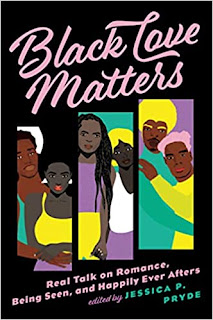
The essay collection Black Love Matters: Real Talk on Romance, Being Seen, and Happily Ever Afters, edited by Jessica P. Pryde is now available. The essays are written by authors, readers, academics (the categories are not exclusive, of course).

A discussion with "with special guests editor and librarian Jessica Pryde, best-selling author Beverly Jenkins, and host of Romance Ever After Allie Parker" is being held on 22 February.

More details here: https://us06web.zoom.us/webinar/register/WN_rCsTiAqURGaKw93KtgxDug


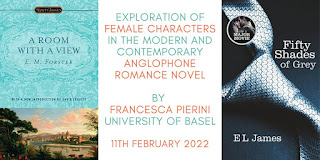
The image shows the covers of E M Forster's Room With a View and E L James's Fifty Shades of Grey, as well as the title of the talk

The Midlands Network of Popular Culture "are delighted that Dr Francesca Pierini will be joining us from the University of Basel on the 11th February to give a presentation on 'Female Characters in the Modern and Contemporary Anglophone Romance Novel'":

This presentation focuses on a reasoned discussion of the female protagonists of the popular romance narratives [...]. The main goal is familiarizing students with the definitions, development, and cultural significance of popular romance fiction through a parallel exploration of the novels’ heroines. The talk will touch upon themes such as: the evolution of the female character in romance novels, educating students on the waves of scholarship on romance fiction, and exploring and problematizing the complex relationship between popular literature and literary scholarship.  

More details here.

Tuesday, October 26, 2021

New Publications: Genre Definitions, Publishing Contexts and more

Please note that Jodi McAlister's book on New Adult Fiction is available for free (to read online and/or download as a pdf) only until 8 November 2021.

---

Awad, Amal (2021). “Desert dreamings and sheikh-lit.” Meanjin 80.3: 114-118.

Cuthbert, Kate (2021). "The Australian Digital Publishing Bubble, 2012-2016: An Insider Perspective." Post-Digital Book Cultures: Australian Perspectives. Ed. Alexandra Dane and Millicent Weber. Monash University Publishing. 115-138.

McAlister, Jodi (2021). New Adult Fiction. Cambridge: Cambridge University Press.

Novakova, Iva (2021). "Les motifs phraséologiques pour distinguer les genres littéraires. Sur l’exemple des motifs de la communication verbale et non verbale." Kalbotyra 74:160–181.

Ntelia, Renata Elizabetta (2021). "How Damsels Love: The Transgressive Pleasure of Romance." New Horizons in English Studies 6: 146-159.

Parnell, Claire (2021). “Independent Authors’ Dependence on Big Tech: Categorization and Governance of Authors Of Color on Amazon.” AoIR Selected Papers of Internet Research.

Pritchard, Jamee Nicole (2021). That 90's Kind of Love: the Rise of African American Romance Novels in Traditional Romance Publishing. Master of Arts Dissertation at the University of Wisconsin Milwaukee embargoed until 2023.

Seifrit, Rachel Joy (2021). Come Out, Come Out, Wherever You Are: Sexuality and Gender Exploration in Contemporary Slash Fanfiction. M.A. English, Kutztown University.

Valovirta, Elina (2021). "Repeated Pleasure: Reading the Threesome Ménage Romance as Digital Literature." Powerful Prose: How Textual Features Impact Readers.  Ed. R. L. Victoria Pöhls and Mariane Utudji. transcript Verlag. 45-61.


Wednesday, April 28, 2021

Congratulations to Jayashree Kamblé for Award to Work on BIPOC Authors and Editors

It's just been announced that Jayashree Kamblé has been awarded one of the Mellon/ACLS Community College Faculty Fellowships for 2021 for this exciting project:

BIPOC Writers, Editors, and Novels: The Missing Chapters in the Story of Mass-Market Romance

The contributions of BIPOC authors and editors of mass-market romance have often existed on the fringes of the genre’s scholarship. This project centers these sidelined histories through archival research on interviews, reviews, and industry newsletters, as well as close readings of romance novels starring BIPOC, and authored and edited by BIPOC. The project identifies BIPOC progenitors of romance novels in the United States in the twentieth and twenty-first centuries through two foci: African American editor Vivian Stephens, who sought out and nurtured Black romance, and publishers who either marginalized non-white romance writing or made it visible. Retrieving these biographies and novels fleshes out the history on BIPOC romance and disrupts this popular form’s seeming whiteness. As the genre now confronts its lack of diversity and role in normalizing bigotry, documenting BIPOC romance history shows how the industry contributed to our contemporary reactionary zeitgeist but also how it can combat it.

Jayashree is one of only "28 scholars [who] will each receive up to $40,000 to advance their respective projects, which significantly expand humanistic study and knowledge" (ACLS).

Congratulations, Jayashree!

Wednesday, March 17, 2021

Concerns about Methodology of Racial Diversity Report

I've posted in the past about (and cited) the Ripped Bodice's reports on racial diversity in romance publishing so I thought it was important to note that concerns have been raised about the methodologies used in their production.

Here's the abstract/summary of Nick and Ari's critique, which can be found in full here:

We offer a critique of The Ripped Bodice’s State of Racial Diversity in Romance Publishing Report. With its lack of transparency, unethical, and unclear methodology, the diversity report leaves us with more questions than with answers. Though well-meaning, a study like this does a disservice to both publishers and BIPOC authors, while also setting a dangerous precedent of allowing poor ethics and poor data practices to run rampant in the romance community. In the last couple of years, we have seen the damaging effects of allowing misinformation in the media, so why are we still uncritically accepting a report that could be spreading misinformation to be published year after year? We urge The Ripped Bodice to do better and to carefully consider a few of the alternatives presented in this article.

In further comments on Twitter, Nick adds that:

We outline the ethical, transparency, and statistical issues & offer suggestions for alternatives. We didn't *want* to do this but their resounding silence in response to our Tweets/email/requests to view the raw data led us to believe that this needs further attention. We aren't saying what they are doing is unimportant, but the study needs to be conducted appropriately.

[Edited on 23 March 2021 to add more below.]

The Ripped Bodice have responded to the criticisms in detail here. Responses to their tweet about this can be found here, there's a list of tweets which respond by quote-tweeting it here, and I'm sure there are many other responses. Here's a tiny sample of some of them: 


and because the following has three tweets in sequence, I'm putting it in as an image rather than an embedded link, but it came from here:

This is Nick saying (at 1:47 pm · 24 Mar 2021 "I want to reiterate that NOWHERE in the article did we dismiss the conclusions of the report. I don't understand why people are twisting our words or putting words into our mouths but I guess I'll be more explicit here. We stated that this work IS important.

Trad publishing IS a mess. And they absolutely have a long way to go to truly bring equality and diversity to the industry. Clearly this "report" has done nothing to change anything majorly in the past 5 years.

So, why not bring changes to the actual report so that the bleak numbers can be taken more seriously by the industry because my perception (or suspicion) is that they are not at all taken seriously because publishers are aware of the issues?" 


Friday, January 29, 2021

New Publications: Brazil, Nigeria, Scholarship, Resisting Objectification, Politics, Readers and Marketing

Andrade, Roberta Manuela Barros de, Erotilde Honório Silva, Ricardo Augusto de Sabóia Feitosa, and Thiago Mena Barreto Viana, (2020) Um século de romances de amor: A trajetória da literatura sentimental no Brasil (1920 - 2020). [Details here.]

Haruna, Alkasim Kiyawa, 2021. "Female Readers as Literary Critics: Reading Experiences of Kano Market Romance Fiction." International Journal of English and Comparative Literary Studies 2.1: 34-45. [More details here.]

García Fernández, Aurora and Paloma Fresno-Calleja, 2020. “Competence, Complicity and Complexity: Hsu-Ming Teo on the Pitfalls and Nuances of Reading and Researching Popular Romance.” Raudem, Revista de Estudios de las Mujeres 8: 261-280. [More details here.]

Kolmes, Sara and Matthew A Hoffman, 2021. "Harlequin Resistance? Romance Novels as a Model for Resisting Objectification." The Journal of Aesthetics and Art Criticism. [This was online first, so the year may change and I don't have volume or page numbers for it. It is available for free here.]

Michelson, Anna, 2021. "The politics of happily-ever-after: romance genre fiction as aesthetic public sphere." American Journal of Cultural Sociology. [This was online first, so the year may change and I don’t have volume or page numbers for it. More details here.]

Nibafasha, Spes, 2020. “The politics of the popular: Definitions and uses of African popular fiction.” Hybrid Journal of Literary and Cultural Studies 2.4. 59-75. [More details here.]

Reyes, Daisy Verduzco, Annika C. Speer and Amanda Denes, 2021. “White Women and Latina Readers’ Ambivalence Toward Fifty Shades of Grey.” Sexuality & Culture. [This was online first so the year may change and I don’t have volume or page numbers for it. More details here.]

Saxena, Vandana, 2021. “Afterlives of Colonialism: Nostalgia, Reader’s Response and the Case of Noel Barber’s Tanamera.” The Journal of Commonwealth Literature. [Also online first, so I’m not sure if the 2021 date for it will change. It seems to be open access, so should be freely available. The novel discussed seems to be both a romance and a "saga" due to its length.]

Sutton, Denise Hardesty, 2021. “Marketing Love: Romance Publishers Mills & Boon and Harlequin Enterprises, 1930–1990.” Enterprise & Society. Online First. [More details here.]