Showing posts with label publishing. Show all posts

Saturday, February 07, 2026

New Publications: Autism, Book Selling, Dark Romance, Ethnicity, Happiness, History, Readers

Bogaert, Anthony F.,  Jessie E. Hernder and , Jessica R. Johnson (2026). "Who “Feels Sexy” in the Google Books Corpus? Text-Mining Evidence for Gender Differences in Object of Desire Self-Consciousness." Archives of Sexual Behavior. [Abstract here.]

Datta, Sreepurna (2026). "Around the world on Amazon: Locating diasporic Indian romance novels published by Harlequin Mills & Boon." Literature, Critique, and Empire Today.

Deane,  Katie (2026). "Dark romance: an introduction." Porn Studies.

Eimannsberger, Angelina (2026). "The Romance Shop Around the Corner: How Women Readers Created a New Kind of Independent Bookstore." The New Americanist 4.1-2.  [Abstract here.] 

Grant, Ania (2025). Evolution, Feminism, and Romantic Fiction: From Mr. Darcy to Mr. Big London: Routledge. [Abstract here.]

Handley-Cousins, Sarah (2026). "Love Is a Battlefield: Civil War Memory in Modern Romance Novels." They Are Dead and Yet They Live: Civil War Memories in a Polarized America. Ed. John M. Kinder and Jennifer M. Murray. Lincoln: University of Nebraska Press. 152-169. [Excerpt here.]

Majidi, Nikki (2026) "Fast Fiction": Booktok, Artificial Intelligence, and the Profit-driven Reinvention of the Romance Genre. Undergraduate Dissertation, California State University, Long Beach.
 

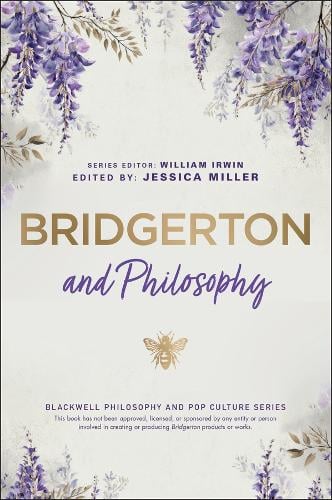
Miller, Jessica (2026). ""I Shall Be Very Happy, Indeed": The Meanings of Happiness in Bridgerton" Bridgerton and Philosophy: Dukes, Debutantes, and Deep Questions . Ed. Jessica Miller. Wiley. [This article is free online. The remained of the volume is not. I have more details about that volume here. It won't be available until March.]
 
Musiał-Pudełko, Aleksandra (2026) "'You and Me and History': Queer Romance and Liberal Fantasy in Casey McQuiston's Red, White & Royal Blue." Erotic Discourses in History, Culture and the Arts. Ed. Aleksandra Musiał-Pudełko, Nina Augustynowicz, Agnieszka Podruczna. New York: Routledge. [Abstract here.]
 
Niebergall, Chelsee M. (2026) "Constructing Hybrid Identities: Cultural Negotiation and Belonging in Uzma Jalaluddin's Ayesha at Last," CLAMANTIS: The MALS Journal: Vol. 17: No. 2, Article 16.
 
 
Segura Candado, Leyre (2025). Love Beyond Conventions: Contemporary Romance and the Representation of Non-Normative Bodies. Undergraduate Dissertation, Universidad de Zaragoza.
 

Thursday, September 26, 2024

New Publications: LGBTQ+ romance, dark romance, rape, publishing, folklore and coral

Items whose titles are hyperlinked are accessible freely.

Greening, Alo (2024). History, Huh: A Post-Modern Study of the Consumption of Queer Romance. Master of Arts in Women and Gender Studies, Saint Mary’s University, Halifax, Nova Scotia.

Hernandez, Janeth (2024). Exploring Consent: An Analysis of Consent in Dark Romance and Contemporary Romance Books. Master of Arts in Writing: Book Publishing, Portland State University. 


Miclea, Adelina-Cerasela (2024). The Scientification of Love: A Cognitive Literary Approach to Romance Novels. PhD, Universitatea de Vest din Timișoara. [Only an index and summary is currently available online.] 

Poirel, Carole (2024). "The long tail business model in publishing: The case of Hachette's romance division in France " Business Model Innovation in Creative and Cultural Industries, Ed. Pierre Roy, Estelle Pellegrin-Boucher. Routledge. 69-88. [Abstract available from https://doi.org/10.4324/9781032714462-5 ]

 
Valovirta, Elina (2024) "Love and Loss: Corals and Cultural Sustainability in Caribbean Popular Romance Novels." Arrivals and Departures: The Human Relationship with Changing Biodiversity. Ed. Otto Latva, Heta Lähdesmäki, Kirsi Sonck-Rautio and Harri Uusitalo. De Grutyer. 109-126. https://doi.org/10.1515/9783111215273-006


Tuesday, February 13, 2024

Past Conference Videos, Current Exhibition Feedback and New Publications


Videos are now freely available of some of the events from last year's Popular Romance Fiction: The Literature of Hope conference, held at Yale University.

https://romancefictionconference.yale.edu/gallery/popular-romance-fiction-literature-hope-conference-photos-and-video

---


Andrea Martucci's Shelf Love podcast episode about this exhibition of John Ennis's art for romance covers is available here: https://shelflovepodcast.com/episodes/season-2/episode-153/covering-romance-john-enniss-art-thoughts-on-fandom

Smart Bitch Sarah's feedback (including lots of photos) on the exhibition can be found here: https://smartbitchestrashybooks.com/2024/02/covering-romance-romance-novel-cover-art-by-john-ennis/

---

And here are the new publications:

Burge, Amy, Jodi McAlister and Charlotte Ireland (2024). '“Prince Charming with an Erection”: The Sensational Pleasures of the Bonkbuster.' Contemporary Women's Writing https://doi.org/10.1093/cww/vpae002 [This shows how bonkbusters are not romance.]

Johnson, Jacqueline E. (2024) "Lusting out loud: racialized aurality, podcast intimacy, and the uses of thirst". Communication, Culture and Critique. Online First. [Excerpt and details here. As I mentioned over on BlueSky, the focus on "the expansive middle" reminded me of Athena Bellas and Jodi McAlister 's (non-paywalled) recent article on audio erotica. So I wondered if such a focus might have something to do with an audio experience? And/or a difference between what readers/listeners seek from erotica vs. romance fiction? Jodi suggested it could be to do with the length of time available and that the episodes could be thought of as 'a little slice of life from what An Goris calls the "post-HEA"'.]
 
Markova, M. V. (2024). "Georgette Heyer, history, and historical fiction." Voprosy literatury 1:198-203. [This is written in Russian, and in any case I could not access the pdf from https://doi.org/10.31425/0042-8795-2024-1-198-203.]

Morden, Christina (2023). Innovations in Romance Novel Distribution at Harlequin, Sourcebooks, and Raincoast Books. Master of Publishing, Simon Fraser University. 
 
Pates, Giuliana (2023). "Reading Practices and Gender Politicization: How do Young Argentinean Women Read Romantic Novels." Revista Interdisciplinaria de Estudios de Género de El Colegio de México 9.1:1–26. [This is in Spanish.]

Spencer, L. (2024). '“Walk like a chameleon”: Reflecting on my teaching journey at a South African university'. Educare, (1), 192–215. https://doi.org/10.24834/educare.2024.1.1093 [Dr Lynda Gichanda Spencer, Associate Professor and Chair of the Department of Literary Studies in English at Rhodes University, discussed her teaching of African romance fiction as part of a panel at the IASPR 2020 conference. There are a couple of paragraphs about her 2019 third-year elective course titled Global Chick-Lit or Trans-Global Literature? Re-reading Contemporary Women’s Fiction in this online paper, discussing how she asked students to compare Harlequin Mills & Boon romances with romances by African publishers.]

Monday, January 22, 2024

Bad Romance Data, Monsters and New Publications

The data does NOT exist to support the statement that romance is a billion dollar industry. Quite frankly, the data does not exist to make any sweeping statements about the size of the popular romance genre market.

So says Andrea Martucci of the Shelf Love podcast, who's been taking a hard look at the "popular romance genre market data between 1972 and today" and presented her "research on 'Bad Romance Data' at the 2023 International Association for the Study of Popular Romance conference." You can read her analysis and conclusions here (and it's archived here).

---

Also via Andrea (but this time not by her), comes a call for participants:

Whether you're solely into humans or a monster romance enthusiast, I'd love for you to take part in my survey. I'm a graduate student doing my thesis on whether or not monster attraction could be explained through evolutionary anthropology.

The survey will be available from January 9, 2024, to March 12, 20204, and it will take about 20 to 30 minutes to complete (although some people have finished it in as little as 12 minutes). It's completely anonymous and only requires that you be at least 18 years old to participate.

Andrea spotted it on Reddit but there's also a more formal announcement giving details of the research on the Research Study Consent Form to be found at the website of California State University, Fullerton.

The research is being "carried out by Phoebe Santillan, under the guidance of Dr. Elizabeth Pillsworth" and

The purpose of this research study is to gather information on people who are attracted to fictional monsters. You are being asked to participate in this study because any and all data is valuable at this stage within the research process. Attraction to fictional monsters is not required to participate in this study.

---
And here's a short list of new publications:

Allen, Amanda K. (2024) "Ruling the Court: Reflections on Midcentury Junior Novel Romances." Journal of Popular Romance Studies 13.

Robinson, Rachel (2023). Reading and writing dogs in popular romance fiction, PhD, University of Tasmania. [Only the abstract is currently available.]
 
Warnaar, Karin (2023). "Dresses and Drapery: The Material Essie Summers." Scope: Contemporary Research Topics art & design 25:91-96. [Full pdf available for download at the link provided and, as a bonus, here's a link to a 2018 Otago Daily Times article about Essie Summers' life and work which Warnaar cites.]

Ya’u, Mohammed Sani, Sabariah Md Rashid, Afida Mohamad Ali and Hardev Kaur Jujar Singh (2023). "Semantic Extensions of Hausa Visual and Auditory Perception Verbs gani and ji in Romance Fiction." Pertanika Journal of Social Science and Humanities 31.4:1441-1464.

Thursday, January 04, 2024

New Publications and an Exhibition: Gender and Agression, Publishing and More

Lots of open access articles!

Golubov, Nattie (2023). "Female Warriors, Social Injustice and the Transformational Force of Anger in Jaye Wells' Sabina Kane Series." Esferas Literarias 6: 21-37.

Larson, Christine, and Ashley Carter (2023). "Love is love: Reverse isomorphism and the rise of LGBTQ+ romance publishing." New Media & Society.

Markasović, Valentina (2023). "Challenging Gender Stereotypes in Holly Black’s The Folk of the Air Trilogy." Breaking Stereotypes in American Popular Culture: Proceedings of the 10th Annual Conference of the Croatian Association for American Studies: 41-56. 

Miclea, Adelina (2023). "Colleen Hoover’s Formulas for Best-Sellers as Seen in Reminders of Him and It Ends with Us." Romanian Journal of English Studies 20.1:72-79.

Mulvey, Alexandra Hazel (2023). Gender and Sex Stereotypes in Sports Romance Fiction. Masters thesis, Macquarie University. [The link is to a pdf.]

Pierini, Francesca (2023). "Towards a Regime of Authenticity: Reading A Room with a View through the Lens of Contemporary Romance Scholarship." LEA - Lingue E Letterature D'Oriente E D'Occidente 12: 217-228.

And quite a bit less accessible, but no doubt still of interest to readers of this blog:

"Covering Romance", an exhibition and sale of romance novel cover art by John Ennis, will be taking place in Yardley, Pennsylvania, at the AOY Art Center Gallery from February 10th (Opening Reception), with viewing open to the public on 11, 16, 17, 18 February (12-5pm). More details about the party for the opening can be found here: https://www.aoyarts.org/event-5484048


Sunday, May 21, 2023

Free Book (for a Limited Time Only): Publishing Romance Fiction in the Philippines

This is just an image of the cover of the book. It's very plain: dark green with a giant ampersand on it, title and names of authors.


Jodi McAlister, Claire Parnell and Andrea Anne Trinidad's Publishing Romance Fiction in the Philippines has just been published by Cambridge University Press and "is free online from 19th May 2023 - 2nd June 2023." You can download it from https://doi.org/10.1017/9781009092289 by clicking on the "save pdf" button which appears directly below the summary.

Here's some more information about the book:

The romance publishing landscape in the Philippines is vast and complex, characterised by entangled industrial players, diverse kinds of texts, and siloed audiences. This Element maps the large, multilayered, and highly productive sector of the Filipino publishing industry. It explores the distinct genre histories of romance fiction in this territory and the social, political and technological contexts that have shaped its development. It also examines the close connections between romance publishing and other media sectors alongside unique reception practices. It takes as a central case study the Filipino romance self-publishing collective #RomanceClass, analysing how they navigate this complex local landscape as well as the broader international marketplace. The majority of scholarship on romance fiction exclusively focuses on the Anglo-American industry. By focusing here on the Philippines, the authors hope to disrupt this phenomenon, and to contribute to a more decentred, rhizomatic approach to understanding this genre world.

Monday, April 24, 2023

New Publications: Beefcake, Bridgerton, Gender, Ecocriticism, Publishing, Adaptation


The full schedule of the 2023 conference of the International Association for the Study of Popular Romance is now online. The conference itself is taking place from 28-30 June.

---

Here are the new publications, which I've added to the Romance Scholarship Database:

Allan, Jonathan A. (2023). "Softcore romance: on naked heroes and beefcakes in popular romance novels." **** Studies. [Some quotes and link here. I'm trying to avoid getting caught in a Blogger filter so I'm starring out words I think might trigger it.]

Davisson, Amber and Kyra Hunting (2023). " From private pleasure to erotic spectacle: Adapting Bridgerton to female audience desires."  Journal of Popular Television 11.1:7-25. [I've not been able to access this, but the abstract can be found here. It's part of a special issue about the television version of the Bridgerton novels.]

Hanson, Donna Maree (2022). Romance fiction as a bridge to understanding changing gender roles in society. PhD in Creative Writing, University of Canberra. 

[The dissertation is partly a discussion of two surveys carried out in 2016/2017, one with romance readers and the other with romance authors, with a view to understanding their attitudes towards feminism. The full dissertation is available via a link provided on the page to which I've linked above.] 

Pérez-Gil, María del Mar (2023). "Mass Tourism, Ecocriticism, and Mills & Boon Romances (1970s-1980s)." Green Letters: Studies in Ecocriticism.

Reed, Eleanor (2023). Woman's Weekly and Lower-Middle-Class Domestic Culture in Britain, 1918-1958: Making Homemakers Liverpool: Liverpool University Press. [More details here.]

Sharma, Vishal, Kirsten Bray, Neha Kumar, and Rebecca E. Grinter. 2023. “It Takes (at least) Two: The Work to Make Romance Work.” In Proceedings of the 2023 CHI Conference on Human Factors in Computing Systems (CHI ’23), April 23–28, 2023, Hamburg, Germany. ACM, New York, NY, USA.

This discusses the work involved in self-publishing romance. It notes that:

While white participants reported using pen-names to separate their writer identity from their personal one, our participants of color undertook much more significant identity management. In addition to adopting white-sounding pen names, they mentioned about how race influenced their story lines and characters. Digital platforms, and the need they create for writers to engage with readers, surface questions of how they become arenas in which some are excluded while others are privileged based on whether it is possible for everyone to engage equally (e.g. whether everyone can use video for conversations).  [...] Romance novelists continue to confront issues of racism within the community, and our research suggests another dimension to this reckoning, which shows how the tools writers use perpetuate or even exacerbate discrimination.

Wells, Juliette (2022). "Afterword: Sex, Romance, and Representation in Uzma Jalaluddin’s Ayesha at Last." Jane Austen, Sex, and Romance: Engaging with Desire in the Novels and Beyond. Ed. Nora Nachumi and Stephanie Oppenheim. University of Rochester Press. Rochester, NY. 243-252. [Some quotes and links here.]

Tuesday, March 21, 2023

News, Commentary, Registration for IASPR 2023 and New Publications

The closing date for early-bird registration for the IASPR conference is 31 March. There's a hybrid as well as an in-person option.

The BBC has published an article with the annoying premise that, as the most formulaic genre of popular fiction, romance is presumably the most at risk of being produced by artificial intelligence. However, the article does also mention that

Last year, sales of romantic fiction in the US shot up by 52.4%, compared with an increase of just 8.5% for adult fiction overall.

Meanwhile, sales of the genre in the UK have increased more than two fold over the past three years.

Erin at The Smut Report explores the preponderance of penetrative sex in m/m romance and concludes that 

Sexual fantasy and wish fulfillment is all over the place in romance. But while wish fulfillment and smoothing out rough edges (I mean, is douching sexy? Apparently not, because—while showers are prolific—these guys never do it.) is one indisputable component of genre romance, it also often contributes to certain groups of readers feeling invisible. Fantasy is great and all, but sometimes it would be nice also to stop the barrage of input that maybe something’s broken because one hasn’t met one’s perfect Romance Novel Partner yet, and that’s why one struggles to orgasm / doesn’t enjoy penetration / doesn’t enjoy sex at all / fill in the blank.

And on the topic of inaccuracies/fantasies, Scientific American offers a reminder that wolves generally do not behave the way that shifter/werewolf romances imply they do: "The idea that wolf packs are led by a merciless dictator, or alpha wolf, comes from old studies of captive wolves. In the wild, wolf packs are simply families."

This year's issue of the Journal of Popular Romance Studies has begun to appear online, and includes:

Other recently published works on romance are:

Burge, Amy (2022) "Beyond Outlander: Annie S. Swan and the Scottish popular romance novel." Scottish Literary Review 14.2:1-19 [I've linked to the entry at the Romance Scholarship Database as there's both an official version (behind a paywall) and a free, pre-print version.]

Cannon, Emanni N (2022). Contemporary Romance and the Question of Literary Value. Master of Arts in English Literature, San Francisco State University. 

Ghosh, Srijani (2023). "Diversity Sells: Uzma Jalaluddin’s Muslim Adaptation of Pride and Prejudice." English Studies. Online First. [Abstract]

Lindström Kruse, Miranda (2022). Pinsamma läsningar: En affektteoretisk studie av #SpicyBooks på TikTok. Masters thesis, Uppsala universitet. 

McDade, Monique (2023). California Dreams and American Contradictions: Women Writers and the Western Ideal. Lincoln: University of Nebraska Press. [There is a chapter on Eva Rutland, and though the focus is not on her romance novels, this is the first significant academic work about her. See the RSDB for more details.]

Pupipat, Apisak (2023). "Should a Book Be Judged by its Back Cover? Some Written/Formal Features as Observed in Happily- Ever-After Women’s Novel Blurbs." LEARN Journal: Language Education and Acquisition Research Network 16.1:604-630.

Rattanamathuwong, Bancha (2023). "Time Is on Our Side?: Homo Economicus in Time-Travel Romance." Critique: Studies in Contemporary Fiction. [Abstract]

Monday, February 06, 2023

A snippet of romance history

This is probably not very interesting, but since I came across it, I thought I might as well share, since it provides some insight into romance publishing in the 1970s and (possibly, since this is very outdated) some suggestions about how writing romance can help improve other types of writing. It's the opening paragraphs of

Reid, Joy. 1995. "Developing ESL Writing Materials for Publication or Writing as a Learning Experience." Material Writer's Guide. Ed. Patrica Byrd. New York: Heinle & Heinle Publishers. 64-78.
https://archive.org/details/materialwritersg0000unse/page/64/

My initial experience with book publishing came not with my first ESL [English as a Second Language] composition textbook but rather with two “pristine” romances. I was teaching a continuing education literature course when one of the nontraditional students approached me and suggested that we should write a book together. She was interested in the romance genre, which I had never read. So I read a dozen, and I thought, “Shucks. I could write one of these.” The eventual result was Orchids for Hilary, a manuscript we mailed (under our pseudonym, Shannon Sayer), uninvited, to the top publisher, Harlequin Romances. Three months later we received a letter indicating that Harlequin would accept the manuscript. Because we had visions of a long and lucrative career as romance writers, we began to write a second romance. Several months passed and we heard again from Harlequin; this time we were informed that there had been a change of editors and a change of mind — our heroine was too competent, the letter stated. Depressed, my coauthor dropped out. In some desperation, I investigated Literary Marketplace, the reference book that lists and describes publishers alphabetically. I mailed Orchids to Avalon Books (the first potential publisher I encountered), and then completed Summer of Pearls. Both manuscripts were published; I never saw either galleys or page proofs — the little, Nancy Drew-like hardbacks simply arrived. The wealth and fame I had anticipated evaporated, and I discovered that sitting alone in my living room, without the pleasures of collaboration, trying to think about what my characters were eating and wearing, was really boring work.


In retrospect, my coauthor and I should have sought out an agent to market and negotiate for us; unlike authors in the world of textbooks, most first-time fiction authors work through an agent. In addition, we should have fired off an immediate reply to the new editor’s letter, asking for specifics about how to revise our manuscript in order to fulfill her expectations. But we didn’t know enough about publishing to do that, and so the opportunity passed. Occasionally I receive a small check when one or the other book is translated into Swedish or used by a British soap opera; otherwise the books served only as a learning experience, particularly about my own writing and about the teaching of academic discourse. Writing “recipe” romances, for example, forced me to reexamine my own prose: to eliminate semicolons (successful romance writers do not use them), to embed short strings of descriptive adjectives (difficult for an academic writer), to be alert for “the less I know, the more I write” syndrome, and to recognize my tendency to use multisyllabic words when inspiration (and clear, short vocabulary) evade me. As a result of what I learned about my own prose, I found that in my native English speaker (NES) and ESL classes I was better able to analyze discourse, audience, and genres in ways that made my teaching of the processes and products of academic prose clearer. (64-65)

Orchids for Hilary was published in 1978 and can be found online here. I haven't read it to see what the second Harlequin editor considered to be "too competent."

Thursday, January 05, 2023

News and New Publications: Publishing Woe, a Forthcoming Book on the Romance Heroine's Journey, etc

I've now left Twitter but I can still be contacted via my website, via responses to posts here, and I'm also on Mastodon as @lauravivanco@romancelandia.club .

I would say "Happy New Year!" but SmartBitchesTrashy Books is reporting that

It’s a bleak time in the professional world of media and book publishing.

The Harper Collins Union remains on strike after more than a month, and HarperCollins is refusing to negotiate. Publishing shuts down at Christmas, so it’s likely they’ll be on strike into next year. [...]

There are layoffs happening at so many publications, too, including in books coverage. BuzzFeed has laid off a portion of their workforce, including their books editor, Farrah Penn.

And Gannett, parent to USA Today, laid off a portion of their workforce, including Mary Cadden, who compiled the USA Today bestseller list

To continue the bleak midwinter theme, Jezebel is reporting that 

In October 2020, a post on indie romance author Susan Meachen’s Facebook page, allegedly written by her daughter, announced that Meachen had tragically died by suicide a month earlier. This news was followed by more posts from Meachen’s “daughter” (on Meachen’s account) in the author’s private writers group, The Ward, suggesting her mother took her own life because her peers in the online indie book community bullied her.

In light of this horrible news, authors and online friends helped fund Meachen’s funeral, created an anti-bullying anthology in her memory, and offered to help her daughter edit her mother’s final book, free of charge. On Monday—over two years later—Meachen’s account posted something new in The Ward. This time, it was Susan saying she’s actually been alive this whole time.

On a happier note than redundancies and possible fraud, romance academic Dr. Amy Burge was quoted on the BBC website recommending romance-themed Christmas movies/books. She ended with a quick summary of what romance scholarship's about:  "While many read [...] romance for comfort and entertainment, readers can also think more critically about the genre, questioning the way these books represent the dreams, desires, and values of a particular society."
https://www.bbc.co.uk/bitesize/articles/zbrmp9q

This is evident in Jayashree Kamblé's Creating Identity: The Popular Romance Heroine's Journey to Selfhood and Self-Presentation forthcoming (due in the summer) new book, which is now available for pre-order. You can read an excerpt here. I've collected some of the key quotes from that excerpt, describing the contents, here.

And now on to a list of recent publications:

Long, Veronica Lee (2022). “Individuation and the Romance Novel.” PhD thesis, Pacifica Graduate Institute.

Pupipat, A., Rungkaew, T., & Meeparp, L. (2022). "Judging a Book by its Back Cover: Spoken/Informal Register as Found in Happily-Ever-After Women’s Novel Blurbs." Journal of Studies in the English Language, 17(2), 1–31.

Sheehan, Sarah E. (2022) "The “Popular Romance Canon”: An Academic Librarian’s Response." Journal of Popular Romance Studies 11. [I would like to note that there are some academic libraries with significant romance collections, as listed at the Romance Wiki (unfortunately I've been unable to log in to it and update it with details about the acquisition made by Indiana University's Lilly Library) and I've also added some to the sidebar here at Teach Me Tonight.]

Friday, December 02, 2022

New Publications and Blog Update: Definitions, Canons and more (but probably less in future)

Twitter's been an important source of information for me in finding links and keeping up with what's been happening in the romance world, but with all the upheaval there, I've decided it's time to leave. Unfortunately, that means I'll lose an important source of content for this blog and there will probably be far fewer, maybe even no, notifications of calls for papers. I'll still be posting updates about items added to the Romance Scholarship Database, though.

The last thing I've been present for in online "Romancelandia" is a heated debate about the definition of "romance." I'm not the arbiter of that: my work's about romance as it has been defined, not as it will be. But I am the arbiter of what I add to the database, and so I've added an "About page" to give a brief explanation. I'm using the definition of "romance" given by the editors of The Routledge Research Companion to Popular Romance Fiction. [Incidentally one of the new items listed below takes a very interesting, in-depth look at debates about the definition of romance - see Michelson.]

Another contentious topic (which has not, as far as I know, been provoking controversy recently online), is that of a "canon." There's a trio of short articles about the "romance canon" (would it be helpful? is the concept intrinsically flawed?) in the Journal of Popular Romance Studies:

Other new publications are:

Burge, Amy (2022). "Beyond Outlander: Annie S. Swan and the Scottish popular romance novel." Scottish Literary Review. [This is still forthcoming, but a pre-print is available for free via the University of Birmingham.]

Grinnell, Natalie (2022). "The Challenge to Dominance Theory in Patricia Brigg's and Carrie Vaughn's Paranormal Romance Novels." Femspec 22.2:40-65. [Abstract]

Hua, Shaoqi and Chengli Xiao (2023). "What shapes a parasocial relationship in RVGs? The effects of avatar images, avatar identification, and romantic jealousy among potential, casual, and core players." Computers in Human Behavior 139. [Abstract and excerpt]

Konle, Leonard and Fotis Jannidis (2022). "Modeling Plots of Narrative Texts as Temporal Graphs." CHR 2022: Computational Humanities Research Conference, December 12 – 14, 2022, Antwerp, Belgium :318-336.

Michelson, Anna (2022). Redefining the Romance: Classification and Community in a Popular Fiction Genre. PhD thesis, Northwestern University. https://doi.org/10.21985/n2-4tj1-6567

Sharma, Vishal, Kirsten E. Bray, Neha Kumar, Rebecca E. Grinter (2022). “Romancing the Algorithm: Navigating Constantly, Frequently, and Silently Changing Algorithms for Digital Work.” Proceedings of the Association for Computing Machinery on Human-Computer Interaction.Volume 6, Issue CSCW:1–29. https://doi.org/10.1145/3555651

One last item, which I'm not adding to the database because it only mentions romance in passing, is a thesis by Leon Kooijmans titled "Christianity after the Death of God: Christian Atheism and the Materiality of Absence." In it Kooijmans observes that, "Since the 1990s, an increasing amount of (post-)evangelical Christians in North America and Europe sought to form communities in creative and innovative ways [...]. One notable group associated with this Emerging Church Movement is called ‘Ikon’, a small collective of artists and disillusioned Christians, agnostics and atheists located in Belfast, Northern Ireland that was active from 2001 to 2013." The connection with romance is that at one of their first meetings (on the topic of the prodigal son), "Around the room dozens of Mills and Boon novels that we had purchased in a second-hand bookshop have been scattered around the various surfaces" (18) and "As the service draws to a close everyone is invited to take away a Mills and Boon book as a reminder of the evening’s theme" (21).

Tuesday, October 11, 2022

Price Reduction, A Lost Sociologist, Bestseller Lists Which Aren't Necessarily So and some New Publications

Some of you may be relieved to learn that The Routledge Research Companion to Popular Romance Fiction is now available in paperback, at a price much lower than that of the hardback edition. (Here's a link to the publisher's site, but obviously it's available from many other places too.]

-----Snippets-----

* I found a reference to an article from the 2 December 1972 issue of the Spanish magazine Blanco y Negro in which María Teresa March, described in the article as an essayist and sociologist, reveals to Julio Coll that she is planning to write a study titled "De la novela de boudoir a la foto novela" and that she had, in a sense, gone "undercover" as a romance author, getting contracts with two publishers with the pseudonyms Laura Denis and Síndola Martin. March then gives details of how she was studying the romance: apparently, among other things, she studied the locations in which copies of her 12 novels as "Laura Denis" ended up. She also states that 

Lo que es falso, no es moral. El genero rosa es portador de falsas realidades.  Por tanto, es inmoral en cuanto no es verdadero. Y conste que, a pesar de ser un subproducto, a veces esta muy bien escrito. [That which is false is immoral. The romance genre conveys false realities. As such, it's immoral inasmuch as it's untruthful. And note that, despite being subliterature, sometimes it's very well written.]

It does make you wonder how someone can justify writing (and being paid for writing) so many novels if they think they're immoral. And she wrote a lot of novels, apparently.

Although I haven't been able to find any trace of a work of sociology by March, I was able to find was a list of 9 novels under the name Laura Denis and an indication that she not only used "Laura Denis" and "Síndola Martín" but that she also wrote as "Amanda Román" as well as penning Westerns as "Mark Sten." [You can see pretty small versions of all of the pages (16-18) via https://www.abc.es/archivo/periodicos/blanco-negro-19721202.html]

* An article in Public Books by Jordan Pruett discusses the extent to which "bestseller" lists actually reflect what's selling the most, which is an issue to bear in mind when trying to build a corpora of texts. Specifically with respect to romance:

the status of mass-market romance today is perhaps comparable to that of thrillers in the 1940s and ’50s. If it weren’t for the fact that the Times now publishes a separate mass-market list, some of these authors wouldn’t appear on bestseller lists at all (and even this mass-market Times list has recently been demoted from a weekly to a monthly publication schedule). This says more about formatting practices in the publishing industry than it does about the popularity of these authors.


-----New Publications-----

Henderson, Aneeka Ayanna (2020). Veil and Vow: Marriage Matters in Contemporary African American Culture. University of North Carolina Press. [This includes a chapter which "offers a close reading of black/white interracial romance in Sandra Kitt's The Color of Love (1995)"]

Michelson, Anna (2022). "Pushing the boundaries: Erotic romance and the symbolic boundary nexus." Poetics. Online First. [Abstract]

Wijanarka, Hirmawan (2022). "Cinderella Formula: The Romance Begins." Journal of Language and Literature 22.2. 481-489.

Friday, October 07, 2022

Links: Events, Data, Publishing, Race, Social Reform and Accolades for Romance

First the events:

Saturday 15 October - Rare Books Specialist Rebecca Romney will be leading a class on romance book collecting. It's free and online and more details can be found here.

Saturday 5 November - Hosted by the Center for Black Diaspora at DePaul University, academics and romance authors Katrina Jackson and Elysabeth Grace will discuss writing Black historical romance. This event is also free and online and more details can be found here.

---

Romance scholars have been commenting for a while that there's not been all that much research into the publishing side of romance. One obvious reason is that it's a lot easier to get hold of the books, or the opinions of readers online, than it is to access insider data about publishing. A recent article by Melanie Walsh in Public Books shows that this is a problem affecting scholars wishing to study all genres. Walsh

went looking for book sales data, only to find that most of it is proprietary and purposefully locked away. What I learned was that the single most influential data in the publishing industry—which, every day, determines book contracts and authors’ lives—is basically inaccessible to anyone beyond the industry. And I learned that this is a big problem. [...]

All the major publishing houses now rely on BookScan data, as do many other publishing professionals and authors. But, as I found to my surprise, pretty much everybody else is explicitly banned from using BookScan data, including academics. The toxic combination of this data’s power in the industry and its secretive inaccessibility to those beyond the industry reveals a broader problem. If we want to understand the contemporary literary world, we need better book data. And we need this data to be free, open, and interoperable.

This data which academics can't access is suspected of being used in ways which reinforce patterns within publishing:

it is likely that books end up much more racially homogenous—that is, white—as a result of BookScan data, too. For example, in McGrath’s pioneering research on “comp” titles (the books that agents and editors claim are “comparable” to a pitched book), she found that 96 percent of the most frequently used comps were written by white authors. Because one of the most important features of a good comp title is a promising sales history, it is likely that comp titles and BookScan data work together to reinforce conservative white hegemony in the industry.

Definitely worth a read, and there are details there about how some academics are trying to find alternative sources of data about books and share "free cultural data with anybody who wants to reuse and recombine it to better understand contemporary literature, music, art, and more." Here's a link to the article.

Some of the people who have been working on romance publishing (as well as other areas of publishing) are Beth Driscoll, Kim Wilkins and Lisa Fletcher. Driscoll and Wilkins have an article in The Conversation and they relate that

In the world of romance fiction, Claire Parnell’s research has shown the multiple ways in which the algorithms, moderation processes and site designs of Amazon and Wattpad work against writers of colour. For example, they make use of image-recognition systems that flag romance covers with dark-skinned models as “adult content” and remove them from search results. They can also override the author’s chosen metadata to move books into niche categories where fewer readers will find them, such as “African American romance” rather than the general “romance fiction”. 

Claire Parnell's paper, "Independent Authors’ Dependence on Big Tech: Categorization and Governance of Authors Of Color on Amazon" (2021) can be found online (and freely available) from AoIR Selected Papers of Internet Research: https://doi.org/10.5210/spir.v2021i0.12005 

Driscoll and Wilkins begin, though, with some accolades for the romance genre:

romance fiction is ... the most innovative and uncontrollable of all genres. It is the genre least able to be contained by established models of how the publishing industry works, or how readers and writers behave.

Contemporary romance fiction is challenging the prevailing wisdom about how books come into being and find their readers.

albeit one might, as Azteclady did, feel surprise at some elements of this:

Similarly, I suspect there are people who would disagree with Jenny Hamilton's assessment, given in a piece on the Tor website, that

the romance genre is particularly well suited to tell stories of social reform. [...] YA novels and even epic fantasy series are limited in the number of characters the author can expect you to keep track of, which makes Chosen Ones an attractive option for toppling unjust systems of power. In aggregate, though, that leaves us with a body of literature that valorizes the individual at the expense of the collective—what Ada Palmer and Jo Walton termed “the Protagonist Problem.”

Romance works differently.

I'm happy to see positive opinions of romance appearing outside romance circles, and if they spark detailed debates, all the better!

I'll end with one more article about romance, this time in Bustle, where Natalia Perez-Gonzalez demonstrates that romance's engagement with "social reform" isn't limited to the pages of the novels:

It’s not uncommon for the romance community to organize. In the past, authors have raised funds to help victims of the Uvalde shooting, to support Stacey Abrams in turning Georgia blue, and to aid communities during the Australia wildfires.

And, as the article discusses in detail, most recently romance authors have been turning their attention to reproductive rights.
Tuesday, August 30, 2022

Censored and Scorned Books, Nora Roberts, Furry Protagonists and New Publications

I'm not keen on the use of the word "spat" here, as I think it trivialises what's going on, but the news itself is of interest to Romancelandia:

Romance novelist Nora Roberts donated $50,000 Sunday to help keep the doors open at a Michigan library that was defunded in early August in a spat over LGBTQ-themed books. (Bridge Michigan)

Note that, given how prolific and popular Nora Roberts is, "Patmos Library, serving a township of 10,000 people, has 144 Nora Roberts books in its collection, compared to about 90 total books with LGBTQ themes."

---

Turning from censored books to ones with low status, Vassiliki Veros has written a very personal reflection, drawing on her family history, about the importance of

the uncatalogued, the unwritten metadata of popular romance fiction [...] romance fiction collections that remain undocumented, unregistered, whose transtextual elements have been obfuscated or not fully realised—those works that remain separate, independent, successful without institutional engagement and recognition. (The Aleph Review)

---

In the latest episode of the Shelf Love Podcast

Dr. Nicola Welsh-Burke, a scholar of fairy tales and romance, is here to discuss hot wolf boys, brooding Byronic figures, pseudomarriage and pseudovirginity, hot villain discourse, and why young women need beastly men to unlock their sexuality.

---

And now on to the new publications:

Allan, Jonathan A. (2022). "One Sexy Daddy: Desirable Dad 'Bods' and the Popular Romance Novel." Fashionable Masculinities: Queers, Pimp Daddies, and Lumbersexuals, Ed. Vicki Karaminas, Adam Geczy and Pamela Church Gibson. New Brunswick, New Jersey: Rutgers, the State University of New Jersey. 83-??. [Excerpt]

Aravind, G. S. Dwivedi, Laxmi Dhar (2021). "The Representation of Female Characters in the Romances of Hawthorne: A Comparison with the Popular Romance Fiction of America in the Twentieth Century." International Journal of Mechanical Engineering 6.3:1703-1706. [I'm not sure how this was published in a journal on this topic!]

Hallett, Hilary A. (2022). Inventing the It Girl: How Elinor Glyn Created the Modern Romance and Conquered Early Hollywood. Liveright Publishing Corporation. [Excerpt here. The prologue of the book makes a somewhat less sweeping claim about Glyn's relationship with the romance genre than the title does. Which, given that her most famous novel does not have an HEA, is probably for the best.]

Larson, Christine (2022). "Streaming books: confluencers, Kindle Unlimited and the platform imaginary." Communication, Culture and Critique. [Abstract]

Priyatna, Aquarini and Sri Rijati Wardiani (2022). "Naturalization and Romanticization of Violence in Indonesian Teen Lit Jingga Series by Esti Kinasih," Journal of International Women's Studies 24.5.

Thursday, May 19, 2022

New Issue of JPRS on Black Romance, and other new publications

Issue 11 of the Journal of Popular Romance Studies features a special issue on Black Romance, edited by Margo Hendricks and Julie Moody-Freeman. Among other items, it includes the following articles:

Other recent publications about romance are:

Abrahamsson, Elin (2022). "Rättvisemärkt romantik: Feelgood, flärd och feminism i samtida svensk romance." in  Speglingar av feelgood: Genre, etikett eller känsla? 185-230.

Bilodeau, Isabelle (2022). "How Romance Translators Write Themselves and Their Readers into Afterwords." Departmental Bulletin Paper 47:81-98.

Deng, Yiwei (2022). "The Aesthetic form of Childhood Sweetheart: I Love You, None of Your Business." Frontiers in Economics and Management 3.4: 625-629.

Larson, Christine and Elspeth Ready (2022). "Networking down: Networks, innovation, and relational labor in digital book publishing." New Media & Society. Online First. https://doi.org/10.1177/14614448221090195

Nankervis, Madison (2022). “Diversity in Romance Novels: Race, Sexuality, Neurodivergence, Disability, and Fat Representation.” Publishing Research Quarterly. Online First. https://doi.org/10.1007/s12109-022-09881-6

Tuesday, October 26, 2021

New Publications: Genre Definitions, Publishing Contexts and more

Please note that Jodi McAlister's book on New Adult Fiction is available for free (to read online and/or download as a pdf) only until 8 November 2021.

---

Awad, Amal (2021). “Desert dreamings and sheikh-lit.” Meanjin 80.3: 114-118.

Cuthbert, Kate (2021). "The Australian Digital Publishing Bubble, 2012-2016: An Insider Perspective." Post-Digital Book Cultures: Australian Perspectives. Ed. Alexandra Dane and Millicent Weber. Monash University Publishing. 115-138.

McAlister, Jodi (2021). New Adult Fiction. Cambridge: Cambridge University Press.

Novakova, Iva (2021). "Les motifs phraséologiques pour distinguer les genres littéraires. Sur l’exemple des motifs de la communication verbale et non verbale." Kalbotyra 74:160–181.

Ntelia, Renata Elizabetta (2021). "How Damsels Love: The Transgressive Pleasure of Romance." New Horizons in English Studies 6: 146-159.

Parnell, Claire (2021). “Independent Authors’ Dependence on Big Tech: Categorization and Governance of Authors Of Color on Amazon.” AoIR Selected Papers of Internet Research.

Pritchard, Jamee Nicole (2021). That 90's Kind of Love: the Rise of African American Romance Novels in Traditional Romance Publishing. Master of Arts Dissertation at the University of Wisconsin Milwaukee embargoed until 2023.

Seifrit, Rachel Joy (2021). Come Out, Come Out, Wherever You Are: Sexuality and Gender Exploration in Contemporary Slash Fanfiction. M.A. English, Kutztown University.

Valovirta, Elina (2021). "Repeated Pleasure: Reading the Threesome Ménage Romance as Digital Literature." Powerful Prose: How Textual Features Impact Readers.  Ed. R. L. Victoria Pöhls and Mariane Utudji. transcript Verlag. 45-61.


Friday, October 15, 2021

Research Opportunity: PhD Funding for Research on Mills & Boon (in partnership with them and the University of Birmingham)

For those not on Twitter, who or are but missed it:

Here are more details, from the description of the research project (available here):

This project will explore how the UK’s biggest publisher of popular romance fiction, Mills & Boon, engages with its readers. Undertaking archival research and interviews, the project’s focus is specifically on readers in the Midlands and readers from diverse backgrounds who have historically not read Mills & Boon’s fiction.

Founded in 1908, Mills & Boon sells a novel in the UK every ten seconds. Mills & Boon has a long history of engagement with its readers and is particularly interested in researching the relationship between readers and the publisher. In 2016, the publisher’s Consumer Insights team conducted an in-depth piece of market research which looked at perceptions of the brand amongst readers and non-readers in the UK through qualitative, quantitative and ethnographic lenses. This report indicated that there were particular communities of active romance readers who did not routinely engage with Mills & Boon. This CDA project continues the research work of the 2016 report to explore why some romance readers (primarily younger readers, readers of LGBT+ romance, and BIPOC readers) do not engage with Mills & Boon, and how the publisher might reach these communities of readers.


Mills & Boon’s close relationship with readers is arguably unique in British publishing, yet the specific strategies, intricacies and histories of this engagement have yet to be explored in-depth. Despite huge sales, academia has been slow to recognise the cultural impact of genre fiction and its industrial practices. This project is also timely. In 2020, Black Lives Matter protests around the world led many organisations including publishers to reflect on their approach to representation and diversity. Reaching diverse audiences matters; this project’s focus on readers in the Midlands, a diverse region with high reader engagement with Mills & Boon, allows for new regionally-specific findings to emerge as well as comparison against the national picture.