Showing posts with label women. Show all posts

Wednesday, February 02, 2022

What's On: Talks (Black Love Matters and Female Characters)


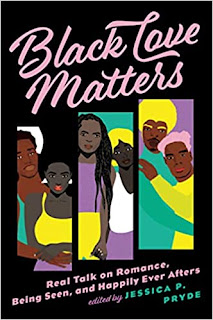
The essay collection Black Love Matters: Real Talk on Romance, Being Seen, and Happily Ever Afters, edited by Jessica P. Pryde is now available. The essays are written by authors, readers, academics (the categories are not exclusive, of course).

A discussion with "with special guests editor and librarian Jessica Pryde, best-selling author Beverly Jenkins, and host of Romance Ever After Allie Parker" is being held on 22 February.

More details here: https://us06web.zoom.us/webinar/register/WN_rCsTiAqURGaKw93KtgxDug


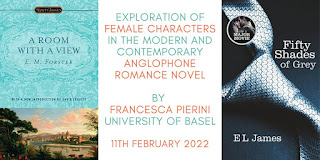
The image shows the covers of E M Forster's Room With a View and E L James's Fifty Shades of Grey, as well as the title of the talk

The Midlands Network of Popular Culture "are delighted that Dr Francesca Pierini will be joining us from the University of Basel on the 11th February to give a presentation on 'Female Characters in the Modern and Contemporary Anglophone Romance Novel'":

This presentation focuses on a reasoned discussion of the female protagonists of the popular romance narratives [...]. The main goal is familiarizing students with the definitions, development, and cultural significance of popular romance fiction through a parallel exploration of the novels’ heroines. The talk will touch upon themes such as: the evolution of the female character in romance novels, educating students on the waves of scholarship on romance fiction, and exploring and problematizing the complex relationship between popular literature and literary scholarship.  

More details here.

Monday, October 08, 2018

New to the Romance Wiki Bibliography: Gothic Romances, Heyer, Medical Women, Pakistan, Sexuality, Spain, The Sheik

Ali, Abu-Bakar, 2018. 
"Agency, Gender, Nationalism, and the Romantic Imaginary in Pakistan", Routledge Companion to Pakistani Anglophone Writing. Ed. Aroosa Kanwal and Saiyma Aslam. Abingdon, Oxon: Routledge. 225-235. Abstract
Arnold-Forster, Agnes and Alison Moulds. 
"Medical women in popular fiction", The BMJ Opinion, September 26, 2018. [Includes details about Mona Maclean, Medical Student (1892), a medical romance written by one of the earliest "registered female practitioners"]
Drakulić-Ilić, Slavenka. 1984. 
“Zašto žene vole bajke?” [“Why do women like fairy tales?”], Smrtni grijesi feminizma. Ogledi u mudologiji [Mortal Sins of Feminism. Essays on Testicology]. Zagreb: Znanje, 1984. 33-45. The article was first published on the pages of Start, no. 299. 3 July 1980. [Details from Lóránd Zsófia's dissertation, "“Learning a Feminist Language”: The Intellectual History of Feminism in Yugoslavia in the 1970s and 1980s", Central European University, Budapest, Hungary, 2014, in which it is stated that "In the essay “Why do women like fairy tales?” Drakulić argues that despite their simplicity, trivial romance novels mean an escape from the everyday reality of state socialism." (208-209) and "examines the popularity of trivial romances (in Serbo-Croatian: herz-roman) available at the newsstands and also published in women’s magazines as a series. She sees “erotic” men’s magazines as a counterpart to the cheap romantic stories, as both started to flourish on the market as a result of the “sexual revolution” [...] and both use traditional and stereotypical images of women, which do not exclude, but complement each other (36). It shows both the double-faced nature of the sexual revolution and the consistency in the logic of patriarchy. Drakulić describes the basic plot of the romance novels and how they present clichés of femininity and masculinity, romantic love and happy marriage (35). Despite their triviality, Drakulić emphasises their social relevance: only one title, Život [Life] was sold in 3.600.000 copies in 1978 (34). There is a demand for the genre, what cannot be left out of consideration, even if there was not domestic, Yugoslav production of these, those available were mostly imported from Western, English-speaking countries. Besides the presentation of traditional gender roles, a regular objection against the trivial romances is their low literary quality: the media should inform and educate, and one’s free time should be used creatively [...]. Drakulić analyses an unpublished survey by the publisher Vjesnik on the readers’ habits and remarks of reading trivial romances. All in all, the conclusion is that the majority of the readers are overburdened women who do not have either time or strength to read anything more complexly written, whereas they do notice the poor literary quality of the novels. These readers, adds Drakulić, lack real relationships and love – exactly the dream, the “fairy tale” offered by these booklets. Drakulić claims that simply “by abolishing and stigmatising this kind of a press, we do not abolish the demand/need” of women in Yugoslavia (44)." (232-33)]
 
Paige, Lori A., 2018. 
The Gothic Romance Wave: A Critical History of the Mass Market Novels, 1960-1993. Jefferson, North Carolina: McFarland, 2018. Excerpt
 
Pérez-Gil, María del Mar, 2018. 
"Representations of Nation and Spanish Masculinity in Popular Romance Novels: The Alpha Male as “Other”", The Journal of Men’s Studies. Online First September 23, 2018. Abstract
Suwanban, Pauline, 2018. 
"From Exhalation to Transformation: The Female Body in the Orientalist Romance". Dandelion: Postgraduate Arts Journal & Research Network 9.1 Abstract and link to pdf
 
Wei, Po-Yu, Rick, 2018. 
“She is a Jade”: A Georgian Gaming Woman Re-imagined in Georgette Heyer’s Faro’s Daughter’, Crossings 9: 122-131.

Monday, June 18, 2018

Georgette Heyer Conference Tomorrow

The Nonesuch? Georgette Heyer and Her Historical Fiction Contemporaries

The Nonesuch? Georgette Heyer and Her Historical Fiction Contemporaries Tuesday 19 June 2018, 9.15am - 5.30pm 


The programme can be found here but in case that doesn't work and/or to preserve the details for posterity, here's a list of the papers and their authors:

Kim Sherwood (UWE Bristol) - "Pride and Prejudice: Metafiction and the Value of Historical Romance in Georgette Heyer"

Lisa Hopkins (Sheffield Hallam University) - "Shakespearean Echoes in Heyer’s Regency Novels"

Laura George (Eastern Michigan University) - "‘A little out of the way’: the dandy heroine in Regency Buck"

Kathleen Jennings (University of Queensland) - "Heyer... in Space! The Influence of Georgette Heyer on Science Fiction"

Vanda Wilcox (John Cabot University) - "Georgette Heyer, Wellington’s army and the First World War"

Geraldine Perriam (University of Glasgow) - "The Not-so-silly-ass: Freddy Standen, his Fictional contemporaries and Alternative Masculinity"

Tom Zille (Humboldt University) - "Georgette Heyer and the Language of the Historical Novel"

Deborah Longworth (University of Birmingham) - "From Almack’s to Astley’s: Regency World-building in the work of Georgette Heyer"

Sally Moore (University of Hertfordshire) - "Divorced, Beheaded, Died . . . The Problem with the Tudors in Romance Fiction"

Holly Hirst (Manchester Metropolitan University) - "Georgette Heyer and Redefining the Gothic Romance"

Stacy Gillis (Newcastle University) - "‘Ordinary People’: Austen and the Literary Genealogy of the Regency Romance"

jay Dixon (Independent Scholar) - "The Regency Novel under Heyer’s Influence"

Louise Allen (Independent Scholar) - "Writing in Heyer’s Shadow"

Roundtable discussion on Teaching Popular Historical Romance in the Literature Curriculum - Deborah Longworth, University of Birmingham

Lucie Dutton (Birkbeck, University of London) - "A Reluctant Movie"

Amy Street (Independent Scholar) - "Guilty Pleasures: Georgette Heyer"

Helen Davidge (Independent Scholar) - "Data Science, Georgette Heyer's Historical Novels and her Readers"

Roundtable discussion on Branding for the digital generation: Georgette Heyer’s book jackets as expressions of publishing contexts and fields - Mary Ann Kernan, City, University of London; Kim Wilkins, University of Queensland; Samantha Rayner, UCL

Plenary: Professor Kathryn Sutherland, Senior Research Fellow, St Anne's College Oxford, " 'Where history says little, fiction may say much': women writers and the historical novel"

Thursday, August 24, 2017

New to the Wiki: Greece, Consent, War, Women, and Zombies


There's a new volume of essays out about Greece in British Women's Literary Imagination, 1913–2013 which includes two essays I've added to the Romance Scholarship Bibliography. I'm not just drawing attention to the volume because one of the items was written by me: I'd also like to note that there's a third article I've not included in the bibliography because it's about a work which is probably better classified as "romantic fiction" than "romance" but which might nonetheless be of interest. It's Keli Daskala's "Victoria Hislop’s The Island (2005): The Reception and Impact of a Publishing Phenomenon in Greece" which discusses the depiction of leprosy in that novel.
Dyhouse, Carol, 2017. 
Hearthrobs: A History of Women and Desire. Oxford: Oxford UP. Excerpt
Gifford, James, 2017. 
“Mary Stewart’s Greek Novels: Hellenism, Orientalism and the Cultural Politics of Pulp Presentation.” Greece in British Women’s Literary Imagination, 1913-2013. Ed. Eleni Papargyriou, Semele Assinder and David Holton. New York: Peter Lang, 2017. 99-118. Excerpt
 
Malloy, Audrey Miles, 2017. 
"Remnants of the Bodice Ripper: How Consent is Characterized in Heterosexual and Lesbian Erotic Romance Novels." Bard College, Senior Projects Spring 2017, Bard Undergraduate Senior Projects.
Regan, Lisa. 2017. 
"Women and the 'War Machine' in the Desert Romances of E. M. Hull and Rosita Forbes." Women's Writing 24.1 (2017): 109-122. Abstract
Vivanco, Laura, 2017. 
"'A Place We All Dream About': Greece in Mills & Boon Romances." Greece in British Women’s Literary Imagination, 1913-2013. Ed. Eleni Papargyriou, Semele Assinder and David Holton. New York: Peter Lang, 2017. 81-98. Abstract
 
Wilt, Judith, 2014. 
Women Writers and the Hero of Romance. Houndmills, Basingstoke: Palgrave Macmillan. [See in particular the chapter on "Exotic Romance: The Doubled Hero in The Scarlet Pimpernel and The Sheik."]
I've also added a new item to the Rom-Com bibliography (because it seems to mostly focus on romantic films/movies):
Romancing the Zombie. 
Romancing the Zombie: Essays on the Undead as Significant "Other". Ed. Ashley Szanter and Jessica K. Richards. Jefferson, North Carolina: McFarland, 2017. Excerpt

Thursday, April 27, 2017

CFP: Women’s Writing in the 21st Century - Sheffield, 8-9 September 2017

From the Postgraduate Contemporary Women's Writing Network (UK)

Fast Forward: Women’s Writing in the 21st Century

“The past is always tense, the future perfect.“ (Zadie Smith)

Zadie Smith’s debut novel White Teeth was published in the January of 2000 and marked the beginning of a new millennium of women’s writing. Considering that this and other texts released around the turn of the century are soon to be the same age as current undergraduates, it seems timely to move on from well-worn discussions of literature produced in the 1970s onwards and focus on women’s writing in the twenty first century.
The contemporary, as a liminal temporal space, marks the transition between past and future and as such is not only notoriously hard to frame but its fluid and ephemeral nature continues to present a challenge in literary studies and beyond. Contemporary literature, in many ways simultaneously ‘with the time’ and then quickly outdated, presents a curious and exciting paradox to think through questions of literary form, the literary market place, the role of authors as public intellectuals and contemporary readers. The need to focus on the present and contemporary state of women’s literature seems particularly poignant in a post-Brexit and Trump era in which laws and ideas surrounding the future state of gender, race, and class politics are ever more obscure and uncertain.
Join us on the 8th and 9th September 2017 as we seek to position the most recent work (post 2000) of established authors alongside the field’s newer voices in order to facilitate a conversation about the present state – and possible futures – of women’s writing.
Possible conference themes:
  • the resurgence of women’s confessional writing
  • the recent rise in popularity of erotic and romantic fiction
  • the emergence of genres such as autofiction and autotheory in women’s writing
  • writing at the intersection of creative and critical/writing across genres
  • writers as public intellectuals and agents of change
  • new directions in writing by canonised authors
Please send abstracts of 250 words and a short bionote to conference@pgcwwn.org until 30th June, 2017.


---
Details from here.

Saturday, September 03, 2016

Incarcerated Women, Mary Balogh, a Symposium Synopsis and Mills & Boon on the Happy Ending


I've got four items to mention today: a PhD in progress which suggests that historical romance fiction can empower incarcerated women, a review of a Mary Balogh novel which turns into a much broader analysis of romance fiction, a summary of a symposium and news of some "tongue-in-cheek" Mills & Boon (non-romance) publications.

------------------

Margaret Jamieson is working on
a non-traditional PhD study that involves writing a historical romance novel and accompanying exegesis, where the main aim is to show how oppressed women (some incarcerated) can become empowered through both reading historical romance novels and engaging with the heroines in these novels. In this context, oppression refers to women who perceive themselves to be isolated from opportunities, and disadvantaged by feelings of inadequacy and domination by patriarchal structures. (155-156)
What makes this particularly interesting is that Margaret seems to be basing this at least partially on personal experience:
As a mature student, Margaret knew she could draw on her life's experience as part of the methodology used in preparing the novel and exegesis. Her vision in starting this journey was underpinned by wanting to show fellow incarcerated women that study was possible, and particularly that reading historical romance novels was enjoyable and empowering. The power in the historical romance resides in its representation of the empowered heroines who subvert traditional expectations of women's roles in marriage and in society. (158)
Having lived with other incarcerated women, the student observed the helplessness that they felt. Many of these women said they would appreciate female role models whom they could both relate to and be inspired by. Many of these women also had a poor understanding of literature or indeed reading. The student believed that by introducing the historical romance novel to these women, it would provide an easy read with a positive outcome on their self-esteem. The historical romance novel can take a lonely isolated woman to a place where she can find companionship and beauty. So this premise was the basis for her research aims. (162)
the student reached a deeper understanding of the difficulties experienced by women in colonial Australia. As her novel developed around the obstacles that her characters experienced, she came to realize that some aspects regarding gender inequality have not changed over time. (166)

The PhD is not yet available to read because it "is still in progress" (156) but Margaret herself is now "free from incarceration" (159).


Danaher, Mike and Margaret Jamieson. “On Manoeuvre: Navigating Practice-Led Methodology in a Creative Writing PhD for the First Time.” Constructing Methodology for Qualitative Research: Researching Education and Social Practices. Ed. Bobby Harreveld, Mike Danaher, Celeste Lawson, Bruce Allan Knight and Gillian Busch. London: Palgrave, 2016. 155-169. [Excerpt via Google Books.]

------------------
Rohan Maitzen's review of Mary Balogh's Only Beloved includes plenty of observations about the romance genre as a whole. For example:
The happy ending is fundamental to the genre: it’s what readers expect and what they know the books will deliver. But such positivity, especially when presented in an unapologetically feminized form of popular fiction, does not get taken seriously. At least since the heyday of Modernism in the early 20th century, with its credo “make it new,” more literary value has attached to writing that upsets, rather than satisfies, expectations; more prestige has belonged to unfamiliarity and its discontents than to the pleasures of getting, even vicariously, exactly what you want.

------------------
Lucy Sheerman's written a report on the PGCWWN symposium on "Representations of Romantic Relationships and the Romance Genre in Contemporary Women’s Writing" which was held in Sheffield in 11 June. I wrote a summary of the various papers here but Sheerman's report goes into more depth about the relationship between shame, romance-reading and fire, suggesting that "It seems that the idea of shame is rooted in the earliest origins of and attitudes to romantic fiction".

------------------
Mills & Boon, in another departure from romance novels
is to launch a series of "Modern Girl's Guides" containing "vital advice every woman needs to survive the modern world".
Tongue-in-cheek guides to working and drinking will be published in November, with more titles to follow. (BBC)
Apparently they're using "fabulous archive photos" so presumably they won't be drawing on their archive of vintage covers again, as they did with their colouring book for adults. I'm most interested in the fourth book in the series: The Mills & Boon Modern Girl's Guide to Happy Endings. Are they planning to mock an essential part of their own novels? I'll have to wait until January to find out.

Thursday, March 24, 2016

CFP: Representations of Romantic Relationships and the Romance Genre in Contemporary Women’s Writing


Representations of Romantic Relationships and the Romance Genre in Contemporary Women’s Writing

Saturday 11th June 2016, Sheffield Hallam University

Co-hosted with the Postgraduate Contemporary Women’s Writing Network

‘…It would be at best grossly incurious and at worst sadly limited for literary critics to ignore a genre that millions and millions of women read voraciously’ (Pornography for Women is Different, Ann Snitow, 1979)
Almost forty years have passed since Snitow’s ardent defence of the importance of recognising and examining the romance genre, however critical consideration of the romance remains limited. Some have suggested that this could be a result of a snobbery associated with romantic fiction, or perhaps even more startlingly due to a general lack of interest in the literature women write and read (Light [1984], Philips [2006] and Radway [1984]). Critic Emily S. Davis states ‘Romance…does not get much love in critical circles…it is no coincidence that the areas most frequently dismissed as inconsequential…are precisely those identified with disempowered groups such as women and queers.’

Although there remains an overall absence of criticism the importance of women writers’ relationship with the romance and the effect it has on women readers has been acknowledged, particularly in relation to feminism. In ‘‘Returning to Manderley’ – Romance Fiction, Female Sexuality and Class’ Alison Light acknowledges that romances are ‘…often seen as coercive and stereotyping narratives which invite the reader to identify with a passive heroine who only finds true happiness in submitting to a masterful male.’ In contrast the most well-known and acclaimed critic on the genre, Janice A. Radway, stressed ‘Romance is being changed and struggled over by the women who write them.’ Indeed, contemporary women writers from the Booker Prize winning Margaret Atwood to the self-proclaimed ‘chick-lit’ writer Sophie Kinsella have written novels which use the romance genre and/or focus on romantic relationships and could be seen to be part of a re-writing of the genre.

Given the significant links between the romance, women writers and women readers, conversation around the presence of the genre in contemporary fiction is crucial. This symposium seeks to encourage this discussion.

Topics may include yet are not limited to the thematic list below:

• The presence of romantic relationships and the use of the romance genre in contemporary women’s writing

• The relationship between the romance genre and feminism

• The perception of romance as a low-brow genre, and the extent to which this perception offers critical and intellectual insights into debates about how we define women’s writing and cultural contribution

• The future of the romance genre within contemporary women’s literature

A 250-word abstract for 20-minute papers including a brief personal statement, should be submitted to symposium@pgcwwn.org by Friday 8th April 2016.

[Details as posted at cfp.english.upenn.edu]

Saturday, December 12, 2015

New to the Wiki: Women's Uses of Romance Novels (including m/m)


Foster, Guy Mark, 2015. 
'What To Do If Your Inner Tomboy Is a Homo: Straight Women, Bisexuality, and Pleasure in M/M Gay Romance Fictions', Journal of Bisexuality, Published online first. Abstract:
"Criticism [...] often argues that such narratives merely substitute two male bodies for a male/female pair without substantively altering the emotional and sexual dynamics of the relationship. Hence, the male lovers in such narratives are simply acting out a heterosexual fantasy of gay male intimacy. To challenge this view, this essay turns to revisions to Freudian understandings of bisexuality. In so doing, it attempts to relocate this pleasure in the repudiated male identities and homosexual object cathexes that all women are urged to give up in the pre-Oedipal phase as a condition of assuming (hetero)normative gender and sexual subjectivities."
Moody, Stephanie, 2016. 
“Building Social Worlds: Examining Women’s Uses of Romance Novels.” Literacy in Practice: Writing in Private, Public and Working Lives. Eds. Patrick Thomas and Pamela Takayoshi. New York: Routledge. 32-45.


Friday, October 23, 2015

New to the Wiki: The "Coming Soon" Edition


Amy Burge's Representing Difference in the Medieval and Modern Orientalist Romance is due for publication in March 2016 by Palgrave Macmillan. It
proffers innovative case studies on representations of cross-religious and cross-cultural romantic relationships in a selection of late medieval and twenty-first century Orientalist popular romances. Comparing the tropes, characterization and settings of these literary phenomena, and focusing on gender, religion, and ethnicity, the study exposes the historical roots of current romance representations of the east, advancing research in Orientalism, (neo)medievalism and medieval cultural studies. Fundamentally, Representing Difference invites a closer look at medieval and modern popular attitudes towards the east, as represented in romance, and the kinds of solutions proposed for its apparent problems.
Women & Erotic Fiction: Critical Essays on Genres, Markets & Readers was published earlier this year for Kindle but isn't due for publication as a paperback until November. Unfortunately I haven't seen a copy and the snippets of information available online aren't helping me identify which of the essays deal with romance fiction. Even the titles aren't necessarily that helpful because some people use "romance" in a broader sense than the RWA or Pamela Regis do (and those are the definitions guiding me in my selection of items for the bibliography). I've added the following to the Romance Wiki bibliography:

Morrissey, Katherine, 2015. 
“Steamy, Spicy, Sensual: Tracing the Cycles of Erotic Romance.” Women & Erotic Fiction: Critical Essays on Genres, Markets & Readers. Ed. Kristen Phillips. Jefferson: McFarland, 2015. 42-58.
Veldman-Genz, Carole, 2015. 
"Selling Gay Sex to Women: The Romance of M/M and M/M/F Romantica." Women & Erotic Fiction: Critical Essays on Genres, Markets & Readers. Ed. Kristen Phillips. Jefferson: McFarland, 2015. 133-149.

I'd be grateful if anyone could let me know which of the other essays in the volume should also be included:

  • Introduction: Shattering Releases (Kristen Phillips)
  • From Black Lace to Shades of Grey: The Interpellation of the "Female Subject" into Erotic Discourse (Simon Hardy)

  • Refiguring Penetration in Women’s Erotic Fiction (Amalia Ziv)

  • Erotic Pleasure and Postsocialist Female Sexuality: Contemporary Female "Body Writing" in China (Eva Chen)

  • Good Vibrations: Shaken Subjects and the Disintegrative Romance Heroine (Naomi Booth)

  • On Not Reading Fifty Shades: Feminism and the Fantasy of Romantic Immunity (Tanya Serisier)
  • Permissible Transgressions: Feminized ­Same-Sex Practice as ­Middle-Class Fantasy (Jude Elund)

  • The Politics of Slash on the High Seas: Colonial Romance and Revolutionary Solidarity in Pirates Fan Fiction (Anne Kustritz)

  • Male Homoerotic Fiction and Women’s Sexual Subjectivities: Yaoi and BL Fans in Indonesia and the Philippines (Tricia Abigail Santos Fermin)

  • Selling Authentic Sex: Working Through Identity in Belle de Jour’s The Intimate Adventures of a London Call Girl (Victoria Ong)

  • Sexing Education: Erotica in the Urban Classroom (Alyssa D. Niccolini) 


Wednesday, April 01, 2015

Romance II: Dangerous Texts, Censorious Readers


Romance II: Dangerous Texts, Censorious Readers


‘mushy eyes over a quarter chicken at Nandos’: Love, gender, class and history in romantic advice texts for young people.

(Amy Burge, University of Edinburgh)

We are in the midst of a global ‘moral panic’ about young people, love and sex. The ‘pornification’ (McRobbie, 2008) of contemporary popular culture has led, it is argued, to the ‘adultification’ (APA 2010) of young people, in particular young women. Forced to choose between ‘raunch or romance’ (Bale 2011), modern young women are confronted with a plethora of advice texts that stipulate a narrow set of rules and behaviours that govern successful romantic discourse.

Responding to a call to consider questions of young people, love and sex from a hitherto neglected historical-situated perspective (Egan and Hawkes 2012), this paper compares relationship advice for young adults from the late Middle Ages and twenty-first century.

The specific focus of the paper is on representations of class and their collocation with romantic discourse. The late medieval conduct poem How The Good Wife Taught her Daughter (c.1350) emphasises a particular type of bourgeois feminine identity which is central to its romantic and social discourse: for late medieval women, class clearly matters. Yet, in her 2012 study Why love hurts, Eva Illouz argues that gender and class boundaries have disappeared from modern guides on love following a shift towards a focus on the self.

Is it really the case that class and gender boundaries have disappeared from modern romance advice? Or is it possible, through a comparison of historical and contemporary advice materials, to observe a continued intertwining of gender and class in romantic discourse? Employing close reading and critical discourse analysis, this paper considers the relationship between gender, class and romance, and proposes a deeper consideration of the historical structures underpinning romantic love today.


Romancing the Taboo: The Marriage Law Challenge in Snape/Hermione Fanfiction

(Amanda Allen, Eastern Michigan University)

In No Future, Lee Edelman suggests that our politics fetishize a “cult of the Child,” our symbolic future that must be protected at all costs. The Child thus represents our reproductive futurism, our drive to live into the future. This drive propels the canonical texts of J.K. Rowling’s Harry Potter series, but it also emerges in the bodice-ripper-styled subset of Harry Potter fanon: Snape/Hermione fanfiction.

At the heart of SS/HG fanfiction is the recognition of the potential symbolic violence inherent in the taboo of the student/teacher relationship—a taboo that directly negates our drive to protect the child. While Rowling’s texts incorporate student Hermione (aged eleven to eighteen) and adult Snape (aged thirty-one to thirty-eight), many SS/HG writers appear uncomfortable with “shipping” characters of such differing ages and statuses. To protect the Child (Hermione), the majority of these writers attempt to normalize the power imbalance by changing the characters’ ages or time settings, incorporating authority figures (such as Dumbledore) to sanction the relationship, and legalizing sexual relations between Hermione and Snape under Ministry of Magic-approved laws.

This paper focuses on fics produced under the WIKTT (When I Kissed The Teacher mailing list) SS/HG “Marriage Law Challenge.” In these fics, the traditional “barrier” of popular romance—the reasons why the hero and heroine cannot marry (in this case, the student/teacher taboo)—is inverted, and becomes the reason why Snape and Hermione must marry; namely, to protect the Child. Yet this protection is doubled; while the marriage law fics use the institution of the Ministry of Magic to legitimize a taboo relationship, the overall purpose of the marriage law—to repopulate the Wizarding World—ensures that the fics remain fantasies of reproductive futurism. The Child is thus both sacrificed and saved by the romance narrative, thereby allowing the reader to celebrate the tabooed love between Snape and Hermione.


Anyone But Baby: Child-free Heroines, Heterosexual Romance, and Female Subjectivity in the Fiction of Jennifer Crusie and Emily Giffin

(Jessica Van Slooten, University of Wisconsin-Manitowoc)

As Myra Hird and Kimberly Abshoff conclude in their article "Women without Children: A Contradiction in Terms," “Feminism needs to be able to test its theories of women against the assumption that all women sexually reproduce. In other words, feminist theory needs to be able to authenticate childlessness as central to experiences of womanhood and femininity" (361). This theorization of child-free female subjectivity, while still nascent in feminist theory, is happening in practice—in women’s lives, and notably, in popular romance fiction. In Jennifer Crusie’s novels Anyone But You (1996) and Bet Me (2004) neither of the female protagonists want to have children. Rather than being a barrier to romantic fulfillment, this desire to live child-free strengthens the relationship between Nina and Alex, and Min and Cal, respectively. In these two novels. Crusie rejects the dominant culture narrative that romantic happiness necessitates a procreative future, and in doing so, theorizes a feminist female subjectivity that is not contingent upon bearing children.  In contrast, Emily Giffin’s novel Baby Proof (2007) suggests that motherhood is the price of maintaining true love, reinforcing theories that motherhood is central to adult womanhood and heterosexual marriage. Ultimately, the relationship between female subjectivity and motherhood is changing. According to the PEW Research Center, “nearly one-in-five American women ends her childbearing years without having borne a child, compared with one-in-ten in the 1970s” (“Childlessness Up Among...”). American women are increasingly choosing child-free lives, and popular fiction reflects these trends. While Crusie boldy suggests that female subjectivity and adult heterosexual romance can flourish because of a desire for a child-free life, Giffin reaffirms the dominant cultural narrative that places parenthood at the center of heterosexual marriage.


Love and Healing: Explorations of the value and meaning of Love in contemporary cinema

(Phil Matthews, Bournemouth University)

This paper will look at several selected contemporary cinematic romance examples and discuss how they utilize the cinematic narrative devise of the character arc model to inform and impress meaning and value to notions of Love, and whether these definitions have wider currency beyond the cinematic romance genre. 'HEA' or even 'HFN' are arguably pervasive in the romance genre but is this the case in cinematic notions of genre, and how do cinematic genre conventions respond and engage with these arguably widely accepted literary principles not least posited by Regis (2003). A story cannot be told about a protagonist who doesn't want anything, who cannot make decisions, whose actions effect no change at any level. (McKee, 1998. Pg. 138.) This paper will explore and discuss screenwriting narrative mechanisms for change in cinematic characters principally utilising the character arc form, and how motivations and decisions communicate meaning to an audience. In this way meaning and value can arguably be attributed to whatever a character pursues. The pursuit of love within cinematic narratives thereby has an assigned value and it is how cinematic narratives negotiate and work with this value whether consistently or not which will be explored and investigated within this paper. 
Friday, March 20, 2015

A New Subgenre?: Breast Cancer Romances


In "'Less Than Perfect': Negotiating Breast Cancer in Popular Romance Novels," Melissa Zeiger draws attention to "a huge body of romance novels whose heroines are recovering from treatment [which] began to emerge in the mid-1990s and continues into the present" (108).

I have no idea how I missed reading this at the time it came out (though it's been listed on the Romance Wiki for some time) but I'm glad I came across it in the course of my current research because it's a fascinating essay which complements other romance scholars' work on disability, race and sexuality in romance fiction.

Zeiger argues that
The emergence of this subgenre reflects a shift in what is acceptable to say about breast cancer, and the novels contribute to breast cancer’s status as something to talk about rather than hide. [...] I am interested in the way romances record a transitional moment in lifting taboos on breast cancer as a topic of discussion. During the 1980s, virtually no mention of breast cancer, let alone women of color or lesbianism, occurred inside the mainstream discourse of romance. (108)
She demonstrates that romance novels, so often scorned for their predictability and their supposed social conformity, do important cultural work in this area:
Given the futility, and worse, of so much public breast cancer discourse, it seems like a good idea to find as many supplementary sites of discourse as possible. Breast cancer romance takes a problematic genre and uses it to say some things that the culture does not always want to hear. Romance characters are allowed a leeway unknown in what critics have come to call “pink culture”; when despairing, bitter, or just angry, when wildly mourning their breasts, or when disappearing from society to nurse their wounds, they are treated with warm sympathy. This space for feeling has produced a new reading community and is at least one of the major ways that stereotypical romance has been and continues to be rewritten. Such innovations are not trivial or quietist. (109)
Among the novels mentioned are:
Kathleen Eagle’s The Last Good Man (2000), Michelle Douglas’s The Man Who Saw Her Beauty (2012), Marilyn Pappano’s The Trouble with Josh (2003), and [Donna] Alward’s How a Cowboy Stole Her Heart [2011]; the African American romances Crown and Glory (2011) by Denise Jeffries and No Regrets (2002) by Patricia Haley; and Susan Gabriel’s lesbian romance Seeking Sara Summers (2008). The ambiguous politics of these works evokes complex questions regarding the relation of breast cancer to sociocultural status, constructions of femininity, and popular literary representation. (111) 
----------
Zeiger, Melissa F., 2013/14. 
"'Less Than Perfect': Negotiating Breast Cancer in Popular Romance Novels." Tulsa Studies In Women's Literature 32.2/33.1: 107-128. [Abstract]

Wednesday, September 18, 2013

CFP: Chick Lit; Strong Female Characters Created by Men


Via Jen Lois and the Romance Scholar Listserv, here's the text of an email from Adrienne Trier-Bieniek:

I am under contract to deliver "Fan Girls and Media: Consuming Culture" to Scarecrow Press in the late summer of 2014.  I am in need of contributors for two chapters which are outlined below along with a brief description of the book. If you are interested, please send me a brief abstract (200-300 words) and CV by Oct. 1st.  Submissions can be sent to adrienne.mtb@gmail.com.  Those with PhD's or who are in the process of defending a completed dissertation will be given primary consideration.
Thank you!
Adrienne
********************
Description of chapters in need of authors: Please note these are just ideas for the chapters.  They can be developed in any way which best fits the author's focus.

Chapter 3:       Gender, Novels and “Chick Lit”

While the specifics of the chapter will be left to the contributor solicited to write it, this chapter will focus on the ways women who read are often regulated to “fans of chick lit.”  While many women writers present female characters who represent the lives and experiences of many women, (Jennifer Weiner specifically comes to mind), literature is often devalued when it is being consumed by groups of women.  Looking at media coverage of women who read a series like Twilight or 50 Shades of Gray, (generally characterized as read by “women of a certain age” who lust after the fantasy of a younger man), there is a clear gender stereotype of women who read.

Chapter 6:       Strong Female Characters Created by Men

This chapter will focus on the ways female characters are received by female audiences when the creator and mastermind behind a character is male.  This chapter is inspired by the characters created by men such as Joss Whedon (the creator of Buffy the Vampire Slayer, director of the new Avengers movies).  Because media is dominated by male directors, agents, writers, producers etc, there is a need to understand why strong women created by men resonate with (particularly) female audiences.

Overview of the Book

            This edited volume examines the ways gender stereotypes inform the creation and consumption of popular entertainment and media.  The common assumption that “Women don’t go to movies”, “Women are not funny” or “Women don’t like science fiction” continues to be a driving force in the creation of popular entertainment and has contributed to a culture where, particularly, complex female characters are rare.  These assumptions also affect female fans of media because the focus on female consumers centers on traditional femininity. As a result too few scholars have yet to focus on the impact of gender in media consumption, leading to a limited portrait of what male and female fans are looking for.  This deficiency leads to an enforcement of gender stereotypes.  For example, American popular culture commonly characterizes women as fanatical followers of novels such as Fifty Shades of Grey and films like Twilight, both commercially driven franchises whose popularity (and revenue) derives from assumptions about women’s desires to be rescued by men.  In contrast, with female-driven media where women are presented as empowered, labels such as “chick lit” are applied, diminishing any legitimacy for the medium.  Additionally, the culture of mass-market entertainment treats audience members to a never-ending parade of male action stars or men in leading (often dominating) character roles. Women, on the other hand, still largely function as passive characters in film and fiction novels, with reality television compounding the subordination of women by framing them as constant “frenemies.”  Behind all of this is the assumption that women will watch whatever men enjoy and men only enjoy uber-masculinity in their media.

            This book examines diverse ways media consumption is being challenged and the impact this confrontation can have on addressing gender stereotypes.  Each contributor will offer a chapter on a topic related to media and society with a focus on gender and audience consumption.  In each essay, contributors contest the argument of media moguls and academics alike that male viewers dominate media far too much for it to appeal to girls and women (i.e. the fantasy genre, stand-up comedy or comedic films, ComicCon and comic books); explore the ways cultural patriarchy dismisses women’s pleasures in certain genres (e.g., chick lit); or diminish women’s experiences (e.g., women on reality television.)  There are also chapters dedicated to understanding men who write female characters, and the response this garners from fans, as well as how women who are seemingly the “anti-heroine” are reflective of the multi-layered experiences of women.  The chapters will be written by contributors and will be original for this text.

Wednesday, July 31, 2013

The Perfect Girls of YA Paranormal Romance


In a recent MA thesis, "Monsters in My Bed: Accounting for the Popularity of Young Adult Paranormal Romances," Whitney Young argues that "the discourse which emerges from the novels overlaps with popular discourses and narratives on girlhood and young adulthood in the US" (46). In Young's opinion many "white, privileged girls and young women" (7) are encouraged to feel that they should be "Perfect Girls, exceling in every facet of their lives: physical appearance, athleticism, and academic achievement" (29) and to think of themselves as "'can-do,' ambitious, goal oriented, and consumerist" (5), as
planners, [who] do not engage in promiscuous sex or delinquent behavior. This category of girls, white, privileged girls, is subject to this discourse and learns to tell it about themselves—they place themselves into this discourse. These discourses are not just a set of characteristics told about these girls but are part of a narrative which the novels reflect [...] and so, these novels are popular now because they reflect to the story the white, privileged girl readers learn to tell about themselves. (7)
Young argues that the common scenario in which
the heroine and her friends must deal with the supernatural by themselves, without adult support [...] parallels the narrative of emerging adults upon entering the adult world, parents can no longer help their adult children fix problems like they once did. (39)
The moment when
the supernatural enters the heroine’s life [...] can be seen as a metaphor for the narrative about emerging adult Perfect Girl’s experience upon entering the adult world [...]; they were raised to believe the world would function a certain way—that people would recognize their specialness and they would go on to do great things—but they learn that this is not the case; they are just another employee. (37)
However, the novels reassuringly offer their readers "instances in which the ideologies of specialness and doing great things can be temporarily restored" (40) and "The protagonist’s potential to change the world can offer hope to the reader that one day they still might change the world" (44).

Although these aspects of the novels might seem to reinforce the discourses about "can-do" and "Perfect" girls, Young found that, by the conclusions of the novels or series of novels
The heroines seem to be uninterested in trying to be perfect, effectively having rejected the Perfect Girl discourse. This may be because the girls are not entirely in the ideological system anymore. One reason being that facing these life-or-death events puts the heroine’s previous worries into perspective. Another reason may be that because many of the heroines in the novels end up becoming supernatural, it is they possibly don’t feel the pressure to conform to human standards like they used to. However, the most persuasive reason that the heroines are not interested in trying to attain perfection is because they have learned that they can be content, loved, and find where they belong without having to be perfect. (50)
You can read the whole thesis here.
-----
Young, Whitney A. "Monsters in My Bed: Accounting for the Popularity of Young Adult Paranormal Romances." MA Thesis. Georgia State University. 2013.

Thursday, November 22, 2012

Expressing Themselves: Anna Cowan on Sex and Sarah Frantz


Anna Cowan's written a blog post which I found interesting and, since she also quotes from an essay by Sarah Frantz, I thought I'd link to it. Here's a taster:
One of the difficulties in writing sex scenes as a feminist writer is that so much of female desire is learned. What women have learned to be aroused by has traditionally been shaped by male desire.

It’s tricky.

I don’t want to just write my heroines as objects of desire – but just because it’s learned doesn’t make it any less real. In fact, when our learned desires come into conflict with our educated feminist ideas, they can gain a level of taboo that only heightens them.


"Transparent links" was created by Stephen Slade Tien and made available via Wikimedia Commons under a "Creative Commons Attribution-Share Alike 3.0 Unported license."

Friday, August 24, 2012

Sensitivity and Sexuality

OnFiction reports that
In early July, the International Society for the Empirical Study of Literature and Media held its 13th Biennial meeting. [...]

Katrina Fong (York University) examined whether how exposure to different literary genres is related to one’s ability to infer what other people are thinking and feeling. Perhaps surprisingly, after controlling for various factors, only two genres were related to interpersonal sensitivity: romance and suspense/thriller.
CFP: Contemporary Black Female Sexualities
For a collection on “Contemporary Black Female Sexualities,” the editors invite essays that explore black women’s sexualities--and representations or manifestations of black female sexual desires--marked by agency and empowerment, as well as instances wherein black women’s sexual intimacies are regulated by them. Given the degree to which black female sexuality has historically been mediated by politics of respectability or silence, as well as hindered by and constructed in opposition to Western paradigms of womanhood and “normative” female sexuality, this volume seeks contribution--both disciplinary and interdisciplinary and from a range of theoretical, ideological, methodological, socio-political, and critical frameworks--that address and illuminate contemporary black female sexualities. (More details here)

Thursday, June 07, 2012

Brushing Aside Criticism


When one's a reader of a type of fiction about which sweeping negative generalisations are made, it can feel satisfying to respond with equally sweeping but positive generalisations. Some of those negative generalisations probably do deserve to be consigned to the dustbin of history. Others, though, contain rather more than a grain of truth and so, having recently come across a number of freshly written critiques of romance, I felt it was appropriate to share them here.

The first is Amanda Joyal's M.A. thesis, "From Victorian Literature to the Romance Novel: Disability and the Courtship Plot," which comes complete with its own counter-example. It
is largely concerned with popular romance novels as a site of criticism for disability because of its widespread popularity and locates Victorian fiction such as Jane Eyre and Olive as the predecessors of modern romance novels. Stereotypes of disability that pervade Victorian literature tend to be present in the modern romance; characters desire cures for their disabilities and operate as pitiable figures within the courtship plot. I analyze the ways in which the disabled protagonists of Yours Until Dawn, Stranger in Town, and Annie's Song must be rehabilitated by their partners in order to be a viable participant in the courtship plot. For male characters, this involves reclamation of their masculinity in order to compensate for the feminization of their disability. Disabled female characters seem to have very little involvement in their own rehabilitation and instead rely on their male partners. In contrast, the heroine of Mouth to Mouth needs no rehabilitation in order to be seen as a sexual partner. Laurel represents a unique case that disability scholars should pay more critical attention to.
Unfortunately, I haven't been able to find any more detail about the thesis, other than that it was completed in 2012 at the University of Wyoming.
The second is by Cora Buhlert, who takes a closer look at the defence of romances which is based on the idea that they're "expressions of women's fantasies":
E.L. James [...] said [...] that the [Fifty Shades] trilogy is fantasy and portrays the sort of fantasy that people would not necessarily want in real life. We’ve heard this sort of explanation before as an apologia for the rapetastic bodicerippers of the 1970s and 1980s or for the continuing popularity of romances featuring ultra-possessive alpha males. And I cannot discount these explanations, because people have wildly different fantasies, as is their good right. But nonetheless, whenever I read another apologia that a book/film/series with stone age gender relations is just an expressions of women’s fantasies of ceding control, because they have to be so strong in real life all the time, I inevitably shake my head and think, “Whose fantasy exactly? Cause it sure as hell ain’t mine.”

I guess the main problem here is that a lot of what is considered romantic and swoonworthy in the Anglo-American part of the world, not just doesn’t do a thing for me, I actively dislike it. And I only wrote Anglo-American, because E.L. James, author of Fifty Shades of Grey, is British. But mainly, books like Fifty Shades of Grey or Harlequin Presents (which have several British authors as well) or the rapetastic bodicerippers of yesteryear are an American phenomenon and reflect the conflicted American attitudes about sexuality, namely that the only way a woman is allowed to enjoy sex without being labeled a slut is if she’s forced into it by an overpowering man. The old bodiceripper style romances were never as popular in Europe (including the UK) as in the US and most European readers I have spoken to actively hated them.
The third is from acrackedmoon at Requires Only That You Hate. The language is strong and I'm sure we could all think of romances which would serve as counter-examples. That doesn't invalidate her critique though: if anything, her "hatred and geekrage" seems to me to demonstrate the extent of the pain which romances can cause some people:
I don’t know about other queer women, but to me the prevalence of romance–not as a genre by itself, but romance as a pop-culture entity–fucked me up pretty severely [...] if you’re telling me that romance is categorically feminist, you’re contributing to this large damage in an insidious, silencing way. The proponents of romance-is-feminist school of thought like to pass such fiction off as inherently progressive because it is written mostly by women and targets women as an audience: it pushes the idea that reading these books is liberating and sex-positive and, what’s more, reading them is good for you. Because feminism! Liberation from the yoke of repression and sexual dissatisfaction!

Tell me this and I’ll kick you in the fucking teeth.

Yes, romance presents possibilities: as long as those possibilities involve finding a man. Yes, romance explores and depicts female desire: as long as that is a desire to have a cock shoved into your orifices. Yes, romance is about the “everywoman” whom we can all identify with as long as you can identify with a straight white woman from the first world. It reinforces the hegemony of what is normal, and what’s normal is straight sex, straight female desire, centering your life around the fantasy man, and being culturally rooted in the west. Romance enforces the hegemony of ethnocentricism, heteronormativity, and cultural imperialism. It’s not the only thing that does this: so does SFF, so does every other form of popular media.
Acrackedmoon is aware of the existence of lesbian and m/m romance; there are romances about people other than straight white women from the first world. Just, not a lot of them. Taken as a whole, popular romance fiction does marginalise certain kinds of stories and certain kinds of protagonists.

The image of various broom heads comes from Wikimedia Commons. It was originally published in the Dictionnaire encyclopédique de l'épicerie et des industries annexes (1904).

Thursday, May 24, 2012

Fiction, Controversy and the Sexual Double Standard


The discovery that many women read "mommy porn" seemed to shock a large number of commentators who would, presumably, have thought that the existence of "daddy porn" was entirely un-newsworthy. As Roni Loren comments,
If you haven’t been living under a rock–or even if you have–you’ve probably heard of the book 50 Shades of Grey. It’s the BDSM erotic romance that has broken out into blockbuster status. It’s been on the Today Show, 20/20, and even Dr. Oz talked about it today. It’s everywhere [....] what’s getting REALLY old is the media’s portrayal of books “like that” being “mommy” porn. [...] But here’s the thing–why is it so scandalous that moms are reading sexy books? Once we procreate, are we relegated to being washed up women with used uteri (uteruses?) who are now supposed to focus on nothing but making the perfect lasagnas and singing choruses of Sesame Street songs with our kidlets?
Carola Katharina Bauer provides what, to my mind, is an even more striking example of how it's often thought to be barely worth discussing the reasons why particular types of fiction have a sexual appeal to men, whereas the equivalent material for women provokes extensive investigation:
In the Friends episode “The One with the Sharks,” aired in October 2002, one of the sitcom’s main characters, Monica Geller, catches her husband, Chandler, masturbating - apparently, while watching a shark documentary. Convinced that her partner is secretly into “shark porn,” Monica tries to accept and even re-enact his “perverse” desires - only to discover with quite some relief that Chandler just changed the channel when she came into the room and that he originally was getting off on “some regular […] old fashioned, American, girl-on-girl action.” [...] What I find particularly interesting in this scene is the naturalization of straight men watching “lesbian” porn. (1)
So what about the equivalent material for women?
as in most cases, gender proves to be of crucial importance: Despite the fact that there actually exists a large number of pornographic and romantic texts about male homosexuality consumed and produced by American women since the 1970s, the “abnormality” of these female “cross-voyeurs” is constantly underlined in U.S. popular and academic culture. [...]

In the academic publications on female “cross-voyeurs,” the application of “double standards” with regard to male/female “cross-voyeurism” is even more obvious. As Karen Hellekson and Kristina Busse note in their “Introduction” to Fan Fiction and Fan Communities in the Internet (2006), slash fiction - fan fiction about male homosexual relationships mainly produced and consumed by women - has stood in the center of fan fiction studies so far, despite being merely a subgenre of it. The reason for this seems to be an urge to explain “the underlying motivations” for the fascination of women with m/m romance or pornography within the academic discourse (Busse and Hellekson 17) - a trend which differs completely from the extremely under-theorized complex of men interested in “lesbians.” Similar to those tendencies, a genre of Japanese manga called Boys’ Love - also concerned with gay men and directed at females - has equally received a disproportionately large attention in U.S. research papers in reaction to its growing popularity in North America since the late 1990s in the context of the “Japanification” of U.S. culture (Levi, “North American” 147; McLelland and Yoo 3). By concentrating on possible reasons for Japanese and American women to read and write these manga, the Japanese and American papers (Kamm 45-66) once again emphasize the oddness of those female “cross-voyeurs” - suggesting a “Never-ending Story” of over-theorizing and overanalyzing them. (2-3)
There's a long tradition of concern about women's reading; I suspect that "mommy porn" and other fictions for women which have sexual content are controversial because they challenge the widely accepted view that women are less interested in sex than men are and they therefore raise anxieties or hopes about how women's behaviour might be changed by such reading.
-----
  • Bauer, Carola Katharina. The Strange Case of Female Cross-Voyeurs?: Slash Fiction, Boys' Love Manga, and Other Works by "Faghagging" Women in the U.S. Academic Discourses. Norderstedt: GRIN, 2011.

Wednesday, March 28, 2012

PCA/ACA 2012 - (6)


Thursday, April 12, 2012 - 3:00pm - 4:30pm


The “Noble Savage” and “Happy Darky”: Race and the American Popular Romance
Maryan Wherry - Black Hawk College

This paper examines the use race in the American popular romance. Rather than focusing on “the Black Romance,” I’m interested specifically at the presence and treatment of Blacks and American Indians as secondary characters and in subplots and how this racial tension confronts (or not) the American cultural narrative.

“He Didn’t Seem Indian”: Exploring and Analyzing the Construction of Race in Meredith Duran’s The Duke of Shadows
Mallory Jagodzinski - Bowling Green State University

Historical romance novels, as a whole, tend to be overwhelmingly white, especially those set in England.  There are few characters of color in these novels and often are not privileged to be either the hero or heroine in the central love story of the novel.  Meredith Duran’s The Duke of Shadows, however, subverts this tendency by making her hero a native of India “whose blood [is] one-quarter native” (16).  This paper explores the ways in which Duran’s English heroine encounters and experiences race under the British colonial regime in India and during the rebellion of 1857. Throughout the novel, the heroine’s views on race and what is moral are challenged by the hero and his status as an individual with double consciousness.  In this paper, I will use textual analysis to analyze Duran’s portrayals of race and colonialism in order to suggest that the way she represents colonialism demonstrates that she is interested not only in depicting the reality of colonial violence, but also in making the reader uncomfortable with hierarchical systems of reality by depicting the reality of its effects.  I will be utilizing the theories of Frantz Fanon and Lola Young, each of whom discusses the process of colonization and what it does to both to the white colonizers and the colonized individuals; Young’s work in “Imperial Culture: The Primitive, the Savage and White Civilization” will be of utmost importance to my essay as she engages with issues of history and representation.  In addition to these theorists, I will make use of works that address issues of creating racial progressives such as Eduardo Bonilla-Silva’s Racism Without Racists to argue that Duran constructs her heroine as a woman who becomes aware of her white privilege through the understanding of her inferior position in the colonial system due to her gender.

Protest Like an Egyptian: Tracing Erotic Investments in the Middle East through Desert Romances
Amira Jarmakani - Georgia State University

The spring 2011 Arab uprisings provoked an interesting set of engagements in the U.S., such as the placards at the Wisconsin rallies to save unions from demolition, which read “Protest like an Egyptian.”  One particular engagement, the blog “Gay Girl in Damascus,” received substantial media attention for its brazen deceitfulness – many readers had been following the story of a Syrian lesbian facing persecution by the secret police only to find out that the blogger behind the story was a heterosexual white man from Georgia (USA).  Though it may be tempting to understand these kinds of investments in the Middle East as a new phenomenon, they have been clearly prefigured by the steady rise in popularity of desert romances since 2001, and, indeed, by their longstanding position within the genre as a whole.  Particularly given the ongoing “war on terror,” how can one account for the rise in desert romances as viable fantasy narratives?  Groping toward an answer to this question, I focus on the roles of fantasy and violence in both the film Sex and the City 2 (a type of desert romance, I argue, though it lacks some of the elements) and contemporary desert romances. Through mimicry, which tends to enact a kind of violence to the other (in its desire to subsume the other) and menace, which tends to play on the fear of violence from the other, I argue that the two together underscore a potential reason for the salience of the Middle East in the contemporary context: both represent actual and phantasmatic violences that perhaps psychically or subliminally connect to the violence inherent to the process of identification.

Saving China: The Transformative Power of Whiteness in the Interracial Romance
Erin Young - SUNY Empire State College

This project examines the novels of Elizabeth Lowell (Jade Island, 1998) and Katherine Stone (Pearl Moon, 1995), both of which explore romantic relationships between a white hero and a mixed-race Asian (and white) heroine.  I argue that these interracial romances invert the conventional romance formula by featuring white heroes who domesticate their Asian heroines, and in turn, the family-owned companies they represent, thereby “modernizing” corporations that are portrayed as overtly patriarchal, regressive, and anti-capitalist.  Lowell’s and Stone’s respective narratives reveal that a racial and nationalist hierarchy is potentially (re)affirmed in the formulaic conventions of popular romance.

In their negotiations of interracial romantic relationships, both novels construct conflicts between Orientalist conceptions of “East” and “West.”  The Asian heroines have been traumatized by a particular depiction of Chinese culture and its anti-capitalist leanings.  The Chinese family and community functions as a regressive past in which individual desires and feelings are painfully oppressed, and defined roles are marked by an extreme enforcement of gender inequality.  Lowell and Stone construct “Chineseness” as something that must be rescued from itself; Jade Island and Pearl Moon are essentially narratives of progress, in which the Chinese community may offer security at the expense of freedom, but the British and/or American corporation has the ability to offer more satisfactory versions of both.  The hero, who represents the (white) British or American corporation, introduces the Chinese heroine to a “domesticated” workplace—one that is specifically racialized and nationalized—and she is transformed in the process.  The conventional (white) heroine’s gendered victory is reconfigured as a racial and national victory for the heroes of interracial romance.  These novels reveal that whiteness, despite its invisibility in the majority of romance novels, is central to the formulaic conventions of the genre.  More importantly, perhaps, they suggest that the contemporary romance alleviates particular racial and national anxieties that emerge out of a global economy.    

Friday, March 23, 2012

PCA/ACA 2012 - (4)


Thursday, April 12, 2012 - 8:00am - 9:30am


“The Person Behind the Curtain”: Evolving Roles of Author and Audience in Paranormal Romance
Esther Guenat -  Temple College

When considering reader response criticism and its focus on examining literature and its readers in such a way that explores the diversity of readers’ responses to literary works, one might not immediately consider audiences of popular fiction, let alone audiences of romance novels. Readers of urban fantasy and paranormal romance are becoming much more diverse—both regarding who does the reading and those readers’ expectations—and the writing of each has evolved along with the audiences. While the use of supernatural aspects, sexual exploration, and urban locale were different standards of the two sub-genres, the conventional romance remained the same, as did reader expectation—heterosexual women sought out tales of supernaturally enhanced heterosexual relationships that ended in happily ever after. Recent reader-oriented critics have focused on how a given type of fiction audience’s expectations change over time; feminist and gender critics ask whether there is such a thing as “reading like a woman,” just as gay and lesbian critics ask whether there is a homosexual way of reading. Audience expectation of urban fantasy and paranormal romance has become much more diverse in its response—to gender roles, homosexual relationships, and even heterosexual relationships—and the formulas of these two sub-genres are no longer exact. Various authors have been able to somewhat adapt and evolve their writing so that it encompasses and allows for a more diverse following. Through this examination of works of various urban fantasy and paranormal romance authors, I explore the way the conventional romance novel formula is changing, how the readership of the genre is changing, and how authors of the genre are responding to and adapting to this change, thus creating a sub-genre of popular fiction that defies conventional ideas of romance and matches its audience in diversity.

"I am so over the whole vampires and werewolves and demons, oh my": How a Series of Steampunk "Romances" Offered This Romance Reader an Alternative to Paranormals
Glinda Hall - Arkansas State University

It is not difficult to acknowledge the popularity and role that the paranormal plays and has played within our culture, and especially throughout our literature.  For romance fiction, it is easy to understand the appeal because the paranormal allows for sexual expression and experimentation that readers may not dare fantasize about within mainstream and/or contemporary romance.  However, when I began my journey as a romance reader and scholar some 8 years ago, I also found paranormals appealing for this very reason; but now I have become disillusioned with the illusion.  Not to overplay a feminist approach to romance fiction, but (thanks to the saturation of the Twilight series) it seems the paranormal has outlived its usefulness in terms of its once used format for sexual exploration.

In my paper presentation, I will show how Gail Carriger’s steampunk series – Soulless, Changeless, Blameless, and Heartless – gives us a heroine, Alexia Tarabotti, that represents a strong, intelligent female, but also one literally immune to the supernatural that is a very real part of her alternative Victorian reality.  Alexia is an anti-paranormal protagonist, and this anti-paranormal plot schematic and characterization exposes devises used by romance paranormals and counters them.

Re-imagining the Heroine as a 'Slave to Desire': Power Games and (Hetero) Sexual Rhetoric in Labyrinth and Buffy the Vampire Slayer Fanfiction
Danielle Lawson - Edinboro University

This paper explores the sexual rhetoric of power games, specifically representations of erotic power exchange in fanfiction written for the Labyrinth (Jim Henson) and Buffy the Vampire Slayer (Joss Whedon) fandoms. In particular, this research is concerned with the erotic power dynamic represented between the primary ‘romantic’ relationships in both original stories: Jareth/Sarah (Labyrinth) and Spike/Buffy (BtVS). Although the genres and intended audiences of the movie/tv show differ greatly, there are many similarities in the way the relationship dynamic between the characters is developed by authors of fanfiction. Using a combination of rhetorical analysis and critical discourse analysis, this study demonstrates how authors of hetero-oriented fanfiction re-claim the ‘dominant male/submissive female’ construct as an acceptable relationship dynamic. Moreover, the research presented shows that this re-claiming serves to build a subtext of feminine power, wherein the heroine is empowered (rather than oppressed) by accepting that they have the freedom to submit to their desires – even if that desire is to be dominated. In reaching this point, the male antagonists engage in a three phase power game: 1) Setting the Bait, 2) The Chase and 3) The Surrender. Other themes discussed include the disconnect between romance, power and ‘happily ever after’.

Sunday, February 12, 2012

Linking to Others


Cora Buhlert has a
theory – to be explained at length in my PhD thesis – that the portrayal of “monsters” such as vampire and werewolves became more human as the othering of marginalized people in the real world became less and less acceptable. This also fits in with my findings that the 1960s were the turning point where the portrayal of former monsters began to change. And of course supernatural beings make excellent metaphors for the marginalized group of the author’s choice.
A different way of creating "Others" is explored by Melanie Tannenbaum. It's called "benevolent sexism" and it's
a formal name for all of those comments and stereotypes that can somehow feel both nice and wrong at the same time, such as the belief that women are “delicate flowers” that need to be protected by men, or the notion that women have the special gift of being “more kind and caring” than their male counterparts. And yes, it might sound complimentary, but it still counts as sexism.
Jonathan Frantzen writes in The New Yorker about Edith Wharton and Steve Donoghue is
appalled.

It wasn’t just Franzen’s pseudo-professorial leather-elbow-patch “let us now consider” air of arrogance, either, although you know you’re going to get plenty of that in a piece that begins, “The older I get, the more I’m convinced that a fiction writer’s oeuvre is a mirror of the writer’s character.” [...] the real horror of this piece is the fact that Franzen only needs four paragraphs to get to what’s really on his mind: Edith Wharton wasn’t hot. See, Franzen’s idea is that we like to root for our authors, and that process is facilitated by every flaw the author has. Edith Wharton “wasn’t pretty,” and so, according to Franzen, she spent the rest of her writing life exorcising her shame and anger over that fact in her fiction. Franzen can actually look at a book like The House of Mirth and then write something like this: “The novel can be read as a sustained effort by Wharton to imagine beauty from the inside and achieve sympathy for it, or, conversely, as a sadistically slow and thorough punishment of the pretty girl she couldn’t be.”

I know we don’t hire Jonathan Franzen to be a great literary critic. We hire him to be a bloatedly overrated literary sexist (the death of Norman Mailer left the position open). But even so, it would never have occurred to Franzen in a million years to get four paragraphs into a piece about F. Scott Fitzgerald or Ernest Hemingway and then start talking about how physically attractive they were – and even if he tried it, no New Yorker editor would have allowed it to see print.
The Queen of Sheba was known for her wisdom and her wealth:
Almost 3,000 years ago, the ruler of Sheba, which spanned modern-day Ethiopia and Yemen, arrived in Jerusalem with vast quantities of gold to give to King Solomon. Now an enormous ancient goldmine, together with the ruins of a temple and the site of a battlefield, have been discovered in her former territory. [...]

Sheba was a powerful incense-trading kingdom that prospered through trade with Jerusalem and the Roman empire. The queen is immortalised in Qur'an and the Bible, which describes her visit to Solomon "with a very great retinue, with camels bearing spices, and very much gold and precious stones ... Then she gave the king 120 talents of gold, and a very great quantity of spices."

Although little is known about her, the queen's image inspired medieval Christian mystical works in which she embodied divine wisdom, as well as Turkish and Persian paintings, Handel's oratorio Solomon, and Hollywood films. Her story is still told across Africa and Arabia, and the Ethiopian tales are immortalised in the holy book the Kebra Nagast.

Hers is said to be one of the world's oldest love stories. The Bible says she visited Solomon to test his wisdom by asking him several riddles. Legend has it that he wooed her, and that descendants of their child, Menelik – son of the wise – became the kings of Abyssinia.
Another mine, and another love story, are depicted in Marie Bjelke Petersen's Jewelled Nights, "written in 1923" (Delamoir 115), which was turned into a 1925 silent movie starring and produced by Louise Lovely. This film has now
been brought back to life.

Adapted from a novel, the film follows a 'social butterfly' who runs away from her Melbourne home to a mining boom in Tasmania. She wants to restore her family's fortunes which were lost on the Melbourne Cup.

The film's restorer Bernard Lloyd says it is an epic love story.
"She dresses as her brother and she comes to Tasmania because she's heard that in Tasmania there are riches to be made, there's a mining boom going on," he said. "There, on the mining fields, she finds something much more valuable; true love."
The novel features a heroine who disguises herself as a man, the film was "advertised as being based on 'Marie Bjelke Petersen's virile story'" (Delamoir 119) and
at the novel's romantic climax--at that narrative point when it could be expected that gender matters the most--Bjelke Petersen empties out the categories male/female. Salarno actually seems disappointed at realising that 'Dick' is really Elaine. Indeed, he has to reason himself around to accepting it:
the fact should not make any vital difference between them; for was not his little pal just the same? His personality, his delightful ways, his high courage, the qualities he most admired in him, these could surely not be affected by the circumstances of sex. Besides, his affection for his young mate was by this time of too deep a nature to be affected by the newly-gained knowledge. (75)
Bjelke Petersen goes against the romantic grain by arguing that, in the end, gender is irrelevant to the formation of the couple. Simultaneously, gender is shown to be irrelevant to the achievement of 'masculine' success as a miner; with some guidance from Salarno, 'Dick' is just as good at finding the mineral as the 'typically Australian' men.  (Delamoir 123-24)

-----
Delamoir, Jeanette. “Marie Bjelke Petersen’s ‘Virile Story’: Jewelled Nights, Gender Instability, and the Bush." Hecate 29.1 (2003): 115-131.