October 15th 2008 is
Love Your Body Day:
Do you love what you see when you look in the mirror?
Hollywood and the fashion, cosmetics and diet industries work hard to make each of us believe that our bodies are unacceptable and need constant improvement. Print ads and television commercials reduce us to body parts — lips, legs, breasts — airbrushed and touched up to meet impossible standards. TV shows tell women and teenage girls that cosmetic surgery is good for self-esteem. Is it any wonder that 80% of U.S. women are dissatisfied with their appearance?
Women and girls spend billions of dollars every year on cosmetics, fashion, magazines and diet aids. These industries can't use negative images to sell their products without our assistance.
Together, we can fight back.
It may help us "fight back" if we remember that
'Beauty' is not universal or changeless, though the West pretends that all ideals of female beauty stem from one Platonic Ideal Woman [...]. Nor is "beauty" a function of evolution: Its ideals change at a pace far more rapid than that of the evolution of species. (Wolf 12)
Susan Scott, having written a novel about "Barbara Villiers Palmer, Countess of Castlemaine, Duchess of Cleveland (1641-1709), and the most famous/infamous mistress of English King Charles II"
observed that As delighted as Barbara would be today to see her story in so many bookstores, I’m sure she would be horrified by her cropped, faceless portrait on the cover. I’ve mentioned here before that while my publisher wanted to use a real portrait of her, they felt that her much-vaunted beauty wouldn’t hold much appeal to modern readers. Tastes change. What was hot in 1660 ain’t necessarily so now, and today Barbara’s much-praised “languid eyes” look more drugged than seductive.

The beauty of
Agnès Sorel, mistress of King Charles VII of France, may also go unrecognised by a modern viewer. Jean Fouquet is thought to have used her as the model for the painting of the Madonna and Child I've included here.
Given the force of the current ideals of beauty, modern women considered lacking in beauty may not stop to consider, or may not even know, that they might have been considered beautiful in other cultures/other historical periods. In addition, as Naomi Wolf has observed, it is difficult for a woman to reject negative judgements about her beauty
because "beauty" lives so deep in the psyche, where sexuality mingles with self-esteem, and since it has been usefully defined as something that is continually bestowed from the outside and can always be taken away, to tell a woman she is ugly can make her feel ugly, act ugly, and, as far as her experience is concerned, be ugly, in the place where feeling beautiful keeps her whole. (36)
In
Victoria Pade's
Hometown Cinderella the heroine had last met the hero when she was, in his words, "Sixteen years old and as ugly as a mud fence" (29) and "He'd figured that it served her right, that it was a warning of what was below the surface - foul on the outside, foul on the inside. It had seemed fitting" (26-27). Now that Eden is neither sixteen nor ugly, he wonders "if she also wasn't the rude, mouthy, insulting, aggravating nightmare she'd been before either" (29). In this novel, Eden's ugliness made her, as Wolf would put it, "act ugly," and her external, physical transformation and her internal, emotional transformation seem to have gone hand-in-hand. Now that there is "no reason she would be called names or taunted or teased or tormented [...] she didn't have to go into any situation armed for those kinds of battles" (14).
The romance genre has a mixed history with regards to how it depicts female beauty. Sometimes, as Wolf says, it forms part of a tradition of
Women's writing [...which] turns the [beauty] myth on its head. Female culture's greatest writers share the search for radiance, a beauty that has meaning. The battle between the over-valued beauty and the undervalued, unglamorous but animated heroine forms the spine of the women's novel. It extends from Jane Eyre to today's paperback romances, in which the gorgeous nasty rival has a mane of curls and a prodigious cleavage, but the heroine only her spirited eyes. (60)
I'd like to take a look at examples of romance novels which explicitly counter the beauty myth but I thought I'd leave them until next week because today I'm going to examine a couple of novels which embrace the beauty myth. The myth "tells a story: The quality called "beauty" objectively and universally exists. Women must want to embody it and men must want to possess women who embody it" (Wolf 12).
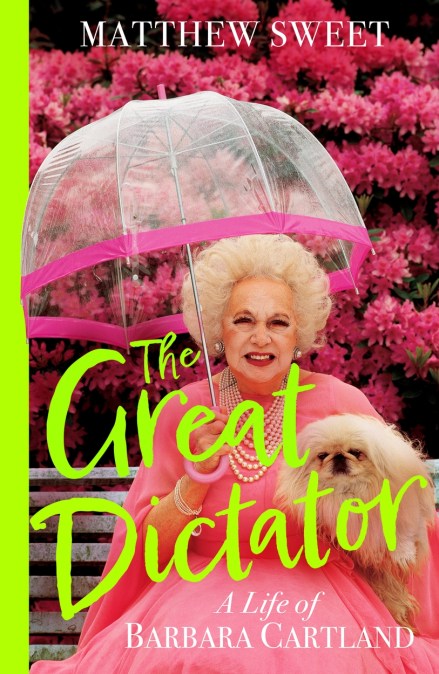
At times the genre can be harsh in its portrayal of women who do not conform to beauty ideals. Barbara Cartland's novels, as far as I can tell, generally feature hyper-slender young beauties as heroines. Her
The Unknown Heart is slightly different. Close to the beginning of the novel there is a hyperbolic description of an obese body which depicts it as monstrous and grotesque to the point where it seems to me to be more a manifestation of the terror and fear that some people have of fat, than a realistic description. It may be interesting to note at this point that
one of the symptoms of anorexia is that "there is a distortion in how the individual perceives their shape and size, with an excessive investment of their self-esteem in this, and an intense fear of being 'fat'." The heroine's mother exclaims
'Look at yourself! Take a good look!' Mrs. Clay said cruelly. 'And then find me the man who would marry you for anything but your fortune. Look! Look at yourself for what you are!'
Almost as if she were mesmerised into doing what her mother commanded, Virginia stared into the mirror. She saw her mother, thin almost to the point of boniness, with a small, elegant waist [...] a handsome woman [...] Then she looked at herself: small - hardly up to her mother's shoulder - and bulging with fat until she appeared utterly grotesque. Her eyes were lost in rolls of pink fat which puffed out her cheeks and gave her a number of double chins which almost hid her neck. Her balloon-like arms showed through the thin net of her sleeves; her hands, which went almost instinctively towards her face, were red and podgy.
She barely had a waist and in circumference she was three times the size of her mother. (12)
Soon after this, all the food Virginia had been forced to consume has "converted what was naturally a strong young body into a monstrous mountain of unhealthy flesh. Not only could your heart not stand the strain, but the poisons rose into your brain" (29) and gave her a "brain-fever" (29). When Virginia finally awakens from a coma which lasts "one year and two months" (35) she has been transformed into "a girl with very large eyes in a thin, pointed face. The cheek-bones were accentuated, the jaw-line sharp against the long neck" (32). Quite how, in a novel set around 1902, Virginia could have been kept alive while in a coma for this length of time is never fully explained, and again this creates the impression that Cartland's description owes less to reality than to attitudes towards fat and beauty. The near-death experience is presented as a positive one because it is only with a thin body that Virginia gains the love of the hero, and he comments on it admiringly: "'You are as light as the proverbial feather [...] It is not fashionable to be so thin, but you make every other woman seem fat and clumsy" (108). One can only hope that Cartland's exaltation of thinness didn't contribute to making any readers feeling "fat and clumsy" but it certainly reinforces the prevailing cultural attitudes about fat and women's bodies.
A real-life example of a woman who experienced her near-death experience as at least partly positive because it made her thinner and thus more beautiful is provided by Jennifer Crusie
who has described how
In 1983, as a single parent with an eight-year-old daughter, I was diagnosed with late stage colon cancer and given roughly six months to live. Through the surgeries and stress, I dropped down to pre-college levels, ten pounds below my recommended weight, and I was thrilled. I was dying, I was leaving a child behind, I was terrified and angry and exhausted and in pain, but by God I was THIN. I wore a bikini in September. Just my luck that my last six months were going to be fabulously thin and they were all in WINTER. [...] My world was being ripped out from underneath me, but I was dying svelte.(emphasis added)
The transformation of the heroine in Pade's
Hometown Cinderella is nowhere near as dramatic as that in Cartland's novel, but
Hometown Cinderella also seems to suggest to the reader that a woman must either be, or become, beautiful if she is to catch a man. Although I'm singling this novel out for detailed analysis as a recent romance which perpetuates the beauty myth, it should not be seen as an isolated example.
1 I have chosen it primarily because I read it recently and because its message about beauty jarred in a way that
RfP has described: Very stylized and didactic novels can jar me with how far they are from how I see the world. It's one thing to read about a fictional character's world and values, but something else to absorb the message that every woman should want to be her, be attracted to the same type of man, or want the same type of relationship. Some of that response originates with the reader, but surely some is about tone and specific messages.
There is something rather didactic about the way in which Pade describes Eden Perry's appearance, and the tone is one which takes for granted the reader's acceptance of particular beauty ideals. The benefits of being beautiful are made clear: everyone that Eden meets when she returns to her hometown seems to have an opinion to offer about the way she looks and "certainly it was a boost to her self-esteem to have everyone exclaiming over the improvements in her appearance" (113).
At high school Eden was considered ugly, the "geeky, braces-on-her-teeth, glasses-wearing, frizzy-haired, flat-chested brainiac in a grade she might have belonged in academically, but certainly hadn't belonged in socially" (11) or, as Cam Pratt, the hero recalls, as a teenager she'd had
hair that had been such a bright orange and so stick-out everywhere curly that it had looked as if it belonged on a clown wig, glasses as thick as the bottoms of mayonnaise jars, braces imprisoning crooked teeth, bad skin and a body that had been as flat as a pancake with only knobby knees and pointy elbows to give her any shape at all. (26)
Now that she's an adult:
lo and behold, the geek was gone.
No more braces - her teeth were completely straight now.
No more glasses - contacts had replaced them a decade ago and eye surgery had removed even the need for those more recently, so her ice-blue eyes were only adorned with mascara.
Her skin had cleared; in fact, there wasn't a single blemish or red mark marring it. Instead it was smooth and creamy and even-toned with just a little blush to brighten it. [...]
Her bustline had developed - there was no question that she was female now, she could fill out a bra with the best of them. Well, with the best of the B-cups, anyway.
Her hair had darkened to a burnt-sienna red - no one had called her pumpkinhead in fourteen years. And the relaxer she used eased the kinky curls into mere waves that she could keep manageable at shoulder length.
So, all in all, no, she wasn't odd-looking anymore. There was no reason she would be called names or taunted or teased or tormented. (13-14)
What really jarred me was the extent to which female beauty was depicted as being quite literally a construction. It's possible that Eden's eye surgery and tooth straightening were necessary for reasons beyond the merely aesthetic, but the fact that the alterations are judged to have improved her appearance sets a very clear standard for beauty and seems to legitimise the altering of the body should it not conform to that standard. To be beautiful, it seems, we need to have "completely straight" teeth, eyes which are not obscured by glasses, and a prominent bust which will permit us to "fill out a bra with the best of them." It's worth noting here that after they first meet as adults, even as Cam notes that her "body was better than it had been," he observes that it wasn't "centerfold better, but definitely better enough" (28).
Altering the body to make it "better," particularly through surgery of the kind which would be required by a woman whose small breasts didn't allow her to "fill out a bra with the best of them" or by a woman who wants to look "centerfold better," can be risky. For those who want to lose rather than gain flesh, and who can't stay in a medically implausible coma like Virginia's, cosmetic surgery offers the option of liposuction, of which the FDA notes that
In order to understand the size of the risk, one paper compares the deaths from liposuction to that for deaths from car accidents (16 per 100,000). It is important to remember that liposuction is a surgical procedure and that there may be serious complications, including death.2
Cosmetics aren't without their risks either:
the Campaign for Safe Cosmetics—a coalition of environmental, health, and women’s advocacy groups—had 33 name-brand lipsticks tested at an independent laboratory. The results were unsettling enough to wipe the glossy grin off anyone’s face: Fully one-third contained lead at levels exceeding the FDA’s 0.1 ppm (parts per million) limit for candy. [...]
The European Union has banned 1,132 known or suspected carcinogens, mutagens, and reproductive toxins from use in cosmetics, but only 10 such chemicals are banned in the United States, leaving us with mercury in mascara, petrochemicals in perfumes, and parabens in antiperspirants. And just as none of the offending lipsticks’ labels indicated the presence of lead, the FDA allows potentially hazardous chemicals like phthalates—industrial solvents linked to birth defects in boys’ reproductive systems and premature puberty in girls—to slip into ingredient lists under the umbrella term “fragrance.”
(Houton)
In
Hometown Cinderella, however, non-use of cosmetics is linked to patriarchal oppression since Eden's grandfather, a dour retired minister of the church who believes that "men are the rulers of the earth, women should know their place" (86) imposed a "no-makeup restriction" (82) on his wife.
The reader is given lots of detail about Eden's use of cosmetics. For example, late at night, before asking Cam for
help with her electrical outage, Eden decided that if she was going to have to be seen, she had to make sure she wasn't too unsightly [...] If she'd been about to meet up with anyone other than Cam Pratt she probably would have gone as she was - face scrubbed clean, hair stuck in an untidy ponytail. Only she wasn't meeting up with anyone else and she just couldn't go without reapplying blush and mascara. (38)
When attending a wedding she "added a taupe-colored eye shadow to her blush and mascara regimen [...] she'd been pleased with how she'd looked and had left home feeling comfortable and confident" (60). When Cam, who has spent all day with her, pops out to buy a pizza, Eden seizes the opportunity to "head for the bathroom to take her hair down [...] so she could run a brush through it. She also refreshed her blush and added lip gloss" (80-81). On another occasion she yet again makes "a speedy bathroom stop to fluff her hair and apply a little lip gloss" (114) and when she makes a decision to seduce Cam she applies "a hint of eyeliner, mascara, blush and her best lip gloss" (234).
However, even if a woman temporarily achieves the pinnacle of seductive beauty, she knows that she will age. Eden is perhaps more aware of this than most women because of her job: she's a forensic artist who's been "hired to do an age-progression" (8) of the face of a woman wanted for questioning by the police in relation to a very old case. Since the woman in question is Eden's grandmother, Celeste, when Eden discovers that Celeste has put on
"At least fifty - and maybe seventy-five - more pounds? Celeste really did gain," Eden marveled. "That takes her out of the fluffy-grandma-body and puts her into a whole other weight category."
"It would make her pretty big," Cam agreed.
"And because we share the same genes, I guess I won't have another cookie," Eden said [...].
Cam laughed [...] "I don't think you have anything to worry about," he said with enough appreciation to please her.
But still the thought of a grandmother who could be very large made her decide against any more cookies and instead she stood, brought a dish of sugar-free mints from the kitchen and popped one of those instead. (150)
And is there a racial aspect to the beauty myth? Is it just a coincidence that Eden's eyes are "ice-blue," her skin is "smooth and creamy" and her hair is now free of "kinky curls"? If "kinky curls" make a woman look "odd" and if "stick-out-everywhere curly" hair is associated with "clown wig[s]" the conclusion one might reach is that many black women
naturally have "odd" hair, which looks like a clown wig.
3 As
The Angry Black Woman observes, there are many issues other than aesthetics hiding beneath the beauty myth:
If you don’t think that black people’s hair isn’t a battleground for issues of race and culture and assimilation and bigotry, you haven’t been paying attention to the news. When a U.S. Congresswoman can be called names because of her hairstyle (or lack thereof) and people can be denied/fired from jobs for not wearing a hairstyle that makes white people feel comfortable, there is a serious, serious problem.
More subtle, though, is a pervasive feeling of never being good enough.
As Latoya Peterson writes:
In discussions of beauty - particularly those on women centered blogs - white women can understand being held up to an unrealistic standard of beauty. To be impossibly thin, impossibly blonde, impossibly clear skinned, with a body that defies the law of physics is presented as something that is attainable if you try hard enough and buy the right products, though many women find these efforts to be futile. What most of these conversations do not understand is that when black women pick up these kinds of magazines, or watch advertisements on TV, or popular television shows with popular white actresses, we do not get the message “try harder.”
The message we receive is never.
You will never look like this. Not if you straighten your hair, or lose weight, or work out every single day, or have the perfect body and the perfect wardrobe to match. Even if you fit all those requirements, you’re still “pretty for a black girl.”
The financial incentive to perpetuate the beauty myth and keep women of all races unhappy about their appearance is obvious when one considers the interests of the cosmetics, dieting, fashion and plastic surgery industries. The result, according to
a YWCA report, is that
Every woman in the United States participates in a daily beauty pageant, whether she likes it or not. Engulfed by a popular culture saturated with images of idealized, air-brushed and unattainable female physical beauty, women and girls cannot escape feeling judged on the basis of their appearance. As a result, many women feel chronically insecure, overweight and inadequate [...]. Moreover, the diet, cosmetic and fashion industries are often too willing to exploit these narrow beauty standards so women and girls will become cradle-to-grave consumers of beauty products, cosmetic surgery and diet programs.4
Ironically
Dove's recent "real beauty" campaign, which partially challenges the beauty myth, nonetheless illustrates this point:
Unlike most mass media images of beauty that we see, the Dove campaign includes women of colour, women over 40 and women who weigh more than 100 pounds. The campaign has won accolades for its social conscience, including in the feminist pop culture magazine Bitch.
However, there is a contradiction in this “Campaign for Real Beauty”. While the website and the ads are of “real women” who are proud of their “real curves,” the actual goal of the campaign is to convince women to buy “Dove Firming”: a product designed to reduce the appearance of cellulite in two weeks. [...]
Although the campaign presents more realistic role models for women than is the norm, the central message remains the same. Beauty is not something that comes naturally to women: it requires endless effort, as well as the purchase of various products designed to change or hide women’s problem areas. (Esmonde)
The financial aspect of the beauty industry helps to explain why it has been expanding to target men, too. Wolf's book was first published in 1990 and in it she warned that "Advertisers have recently figured out that undermining sexual self-confidence works whatever the targeted gender [...] advertising has begun to portray the male body in a beauty myth of its own" (288-89).
Hometown Cinderella perpetuates a muscular beauty standard for men. This may, to a certain extent, eradicate the inequality between the sexes with regards to the relentless pressure to become and remain beautiful, but it does so by putting more pressure on men. In addition, male beauty remains firmly associated with muscular power, whereas feminine beauty is associated with a slim, youthful appearance. Jane at Dear Author
recently observed that Romance alpha males are physically overpowering. In one Brenda Joyce book, the hero is described as having a “huge club-like manhood,” and a “slab” of pecs. In the last JR Ward book I read, John is described as needing “a fleece the size of a sleeping bag, an XXXL T-shirt, and a pair of size-fourteen Nike Air Shox.” In the recent Diedre Knight book, Red Fire, the hero was an ordinary 5′ 7″ until his immortal transmogrification when he became “between six-foot-four and six-foot-five. Depend[ing] on the day . . . A variety of factors.”
The disparity between heroic heights and that of the average size for men in various countries was
noted by RfP. Cameron Pratt isn't a vampire or other paranormal creature, but the connection between size, muscle power and super-heroic power is mentioned explicitly in
Hometown Cinderella. Eden fears that because he has "powerful pectorals [...] bulging biceps [...and] jaw-droppingly impressive shoulders" he may be "A magnificently muscled man of steel who might not technically think of himself as a super man" (93) but who nonetheless considers himself to be nearly "invincible. Indestructible" (93). Luckily Cam is aware that despite the physique that so impresses Eden, he's not endowed with paranormal or super-human abilities.
Cam's size and physical power are emphasised throughout the novel. Even as a teenager he'd had a "body that had been buff" (93) and he was considered "hot stuff [...] The guy every senior girl - except Eden - had wanted to end up with" (10) but he "had somehow matured into a more
colossally handsome specimen than he'd been the last time she'd seen him" (15, emphasis added). Later, looking out of her window and into his gym, she catches
a glimpse of him from behind, reaching long, well-muscled arms upward and grasping the bar [...] in his huge hands. [...] he was in very, very good shape [...] Her eyes lingered on that back. On those biceps flexing, bulging within glistening skin that seemed barely able to contain them [...] The man had stamina [...] and strength and a fabulous physique that she had some kind of irrational urge to get closer to. To touch. To test for herself if those muscles were as solid and unyielding as they looked.(32-33)
This isn't a one-off description. When Cam "rolled his massive shoulders," for example, it makes Eden's "eyes nearly pop out of their sockets to see it" (86), and she follows him from the room with "her gaze glued to the rear view of shoulders that were a mile wide and looked as if they had the power to easily carry sacks of cement" (87). When his "bulky arms and thick thighs had been all pumped up [...] he'd looked so sexy she'd hardly been able to breathe" (134). In fact, his body with its "supreme derriere" (167), "rock-solid chest" (193), "iron-hard rod" (197), "Glorious, glistening broad shoulders; pectorals taut and cut; narrow waist and tight abs" (198), "big hands" (216) and "massive thighs" (240) is a frequent focus of Eden's attention. There's no question that Cam's muscled body is one that Eden finds almost irresistibly attractive.
Men are catching up with women in their levels of dissatisfaction with their bodies:
One of Britain's leading eating disorder experts says as many as one in five young men are deeply unhappy with their body image.
Dr John Morgan said that for every man with an eating disorder there were 10 more who desperately wanted to change the way they looked. [...] Dr John Morgan said he believes images of male beauty in the media are part of the problem, and that there's now just as much pressure on young men to look slim as there is on women.
"The ideal male body image has changed into quite an unhealthy shape," he admitted.
In the past blokes have been comfortable with beer bellies. Now, men and boys are under huge pressures to look good."
He explains that while the slim but muscular look, a six-pack, big arms, and a slim waist, has become the cultural 'norm', it's not a naturally obtainable figure.
Dr Morgan added: "It's completely unhealthy, and to achieve that sort of shape you've got to be either working out for hours in a gym, making yourself sick, or taking certain kinds of illegal drugs." (BBC)
It seems a good time to stop and think about how some aspects of the romance genre perpetuate virtually unattainable beauty ideals for both men and women, why they do this, what the effects of the beauty myth are, and who really benefits.
- Cartland, Barbara. The Unknown Heart. 1969. London: Arrow, 1971.
- Esmonde, Jackie. "The Ugly Business of Women’s Beauty." New Socialist.
- Friedan, Betty. The Feminine Mystique. 1963. London: Penguin Books, 1992.
- Houton, Jacqueline. "Beauty Secrets: The New Cosmetic Cover-up." Bitch 41 (2008).
- Kleeman, Jenny. "This week a poster claiming cosmetic surgery 'just got easy' was banned. The truth is, even a quick nip and tuck can kill." The Guardian. 6 December 2007.
- Pade, Victoria. Hometown Cinderella. 2007. Richmond, Surrey: Harlequin Mills & Boon, 2008.
- Wolf, Naomi. The Beauty Myth: How Images of Beauty Are Used Against Women. 1990. London: Vintage, 1991.
- YWCA. Beauty at Any Cost. Washington DC: YWCA, 2008. The report and other resources are available from here.
1 For example,
Tumperkin wrote a review of Julia James's
The Italian's Rags-to-Riches Wife in which she observed sarcastically that despite the heroine being transformed into a beauty
there's a Big Mis that sends Laura hurtling back to England to defiantly regrow her eyebrows. Alessandro is presented with an horrific tableau when he rings her doorbell:
...She'd reverted. It was the only word for it. Her hair was hanging in lank soggy rags around her face, she wore no make up, her eyebrows were overgrown, her skin blotchy...
But no-one can accuse Alessandro of being shallow. Although he's disgusted when he sees her again, he's able to overcome his nausea. So long as he keeps his eyes shut
2 Serious complications and even death can also occur as a result of other forms of plastic surgery:
Surgery can never be easy or risk free - even when the patient can afford the very best care. [...] Kanye West lost his mother, Donda, who apparently developed complications following a tummy tuck and breast reduction. Donda was 58, a former professor of English who had given up a 31-year tenured post to manage her son's business affairs. Stella Obasanjo, the first lady of Nigeria, died in 2005, aged 59, after a tummy tuck in a Spanish clinic. James Brown's third wife, Adrienne, died in 1996, aged 47, following an undisclosed cosmetic procedure. In 2004, Olivia Goldsmith, author of the First Wives Club, suffered a fatal heart attack at 54 as she was being prepared for a chin tuck. (Kleeman)
Women also seem to be seeking surgical alteration to an increasing number of body parts and undergoing operations on which little research has been conducted:
A leading urogynaecologist has spoken out against the growing popularity of cosmetic vaginal surgery.
Professor Linda Cardozo, of King's College Hospital, London, says little evidence exists to advise women on the safety or effectiveness of procedures.
These include operations to make the external appearance more "attractive" and reshaping the vagina to counter laxity after childbirth, for example. (BBC)
3 Some of the clown wigs available for sale
here and
here are explicitly described as Afros.
4 Betty Friedan once asked concerning the feminine ideal of the fifties and early sixties
Why is it never said that the really crucial function, the really important role that women serve as housewives is to buy more things for the house? In all the talk of femininity and woman’s role, one forgets that the real business of America is business. But the perpetuation of housewifery, the growth of the feminine mystique, makes sense (and dollars) when one realizes that women are the chief customers of American business. (181)
As Wolf observes
Feminists, inspired by Friedan, broke the stranglehold on the women's popular press of advertisers for household products, who were promoting the feminine mystique; at once, the diet and skin care industries became the new cultural censors of women's intellectual space, and because of their pressure, the gaunt, youthful model supplanted the happy housewife as the arbiter of successful womanhood. (11)
I found the photo of the Madonna in Fouquet's Melun Diptych at Wikipedia. I feel compelled to add one final comment on Hometown Cinderella, which is that the sex scenes include some interesting phrases. One of Eden's breasts is described as a "smallish globe of yearning" (162) which Cam then starts "working [...] like a fragile mound of clay, kneading, lifting, pressing into it. Then he located that tightly knotted crest with his fingertips, tugging, tweaking, pinching, rolling it" (162). I suppose it's not completely unrelated to the topic of the post, since the globe is "smallish" and the metaphor of it as a "mound of clay" might, at a stretch, be taken to indicate the malleability of the female body.